
Executive Overview
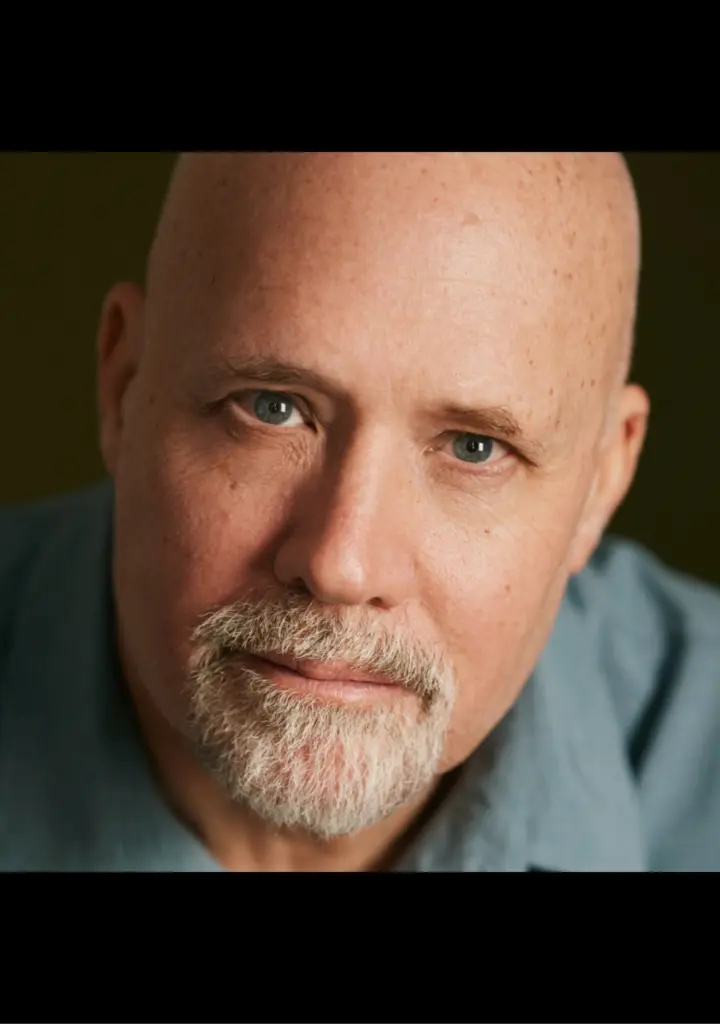
Nearly a decade after its initial publication as an award-winning short story in the summer 2015 edition of The Missouri Review, Mitch Wieland’s evocative narrative "Snow Angels" has undergone a monumental transformation. It has expanded into a deeply atmospheric, highly anticipated third novel: The Ghosts of Okuma. Earning a coveted starred review from Kirkus Reviews and securing selection as a Best Indie Book for March, the novel is slated for official release on November 3—a date that coincides with the thirtieth anniversary of the debut of Wieland’s first novel, Willy Slater’s Lane.
In a sweeping, career-spanning interview with Scout Hudson, Wieland reflects on a ten-year genesis that required discarding a 500-page draft, navigating the seismic aftershocks of the 2011 Tōhoku earthquake and tsunami, and channeling decades of literary pedagogy into an examination of national trauma, personal grief, and the sensory landscape of Tokyo. Beyond discussing his fiction, Wieland weighs his legacy as the founding editor of The Idaho Review and co-founder of Boise State University’s Master of Fine Arts program, charting a lineage of mentorship that continues to reverberate across the contemporary literary landscape.
Detailed Chronology: The Decade-Long Evolution of The Ghosts of Okuma
The journey of The Ghosts of Okuma is a masterclass in literary resilience, demonstrating how an author must occasionally raze their own work to discover its true center.
Read Also
The Seeds in Japan (1986–1991)
Wieland’s enduring relationship with Japanese culture and literary institutions began during a five-year residency in Japan from 1986 to 1991. Stationed overseas while the nation’s economy superheated into an unprecedented bubble, Wieland immersed himself in modern short fiction, haunting local bookstores for collections by Raymond Carver and Joy Williams. It was during this formative period that he first encountered The Missouri Review via the contributor notes of premier literary journals. Upon returning to the United States in 1991, The Missouri Review became his first-ever literary magazine subscription—a foundational touchstone that would later publish his story collection God’s Dogs.
The Turning Point: March 2011
Years later, Wieland was well into drafting an entirely different, 500-page novel about Japan under the guidance of legendary literary agent Wendy Weil (who famously represented Alice Walker). Then came the afternoon of March 11, 2011. Watching NHK news—Japan’s public broadcaster—Wieland witnessed footage of the tsunami surging ashore.
"I couldn’t quite understand what I was watching," Wieland recalls. "I eventually switched to CNN, and they were talking about the earthquake and tsunami. I just realized instinctively at that moment that I couldn’t write about Japan without this."
That realization forced a radical reckoning. Wieland permanently shelved the 500-page manuscript, retaining only a fleeting background character named Yoshimi.
Research, Grants, and Structural Discipline
Bolstered by a National Endowment for the Arts (NEA) grant and a one-year fellowship from Boise State’s Arts and Humanities Institute, Wieland secured the funding and time needed for a deep dive. In 2012, he spent eight weeks in Tokyo conducting immersive research, walking the grounds of the Yanaka Cemetery, and absorbing the sensory reality of a post-disaster metropolis. Seeking to master the mechanics of narrative architecture, he also traveled to Los Angeles to study plot and structure under industry authorities Robert McKee and Christopher Vogler.
Refining the Manuscript
By 2013–2014, Wieland had completed the short story "Snow Angels," which was published by The Missouri Review in the summer of 2015. But the process of scaling the narrative into a novel was marked by false starts and heavy editing.
"I would say a lot of it was hit and miss," Wieland admits. Initial drafts featured an entirely different plot centered around a four-person family. It was only when Wieland focused on the dynamic between Yoshimi and the protagonist, Wyatt, that the true heartbeat of the novel emerged.
After completing a draft by the onset of the 2020 pandemic lockdowns, Wieland signed with literary agent Julie Stevenson of Massie & McQuilken in 2021. Together, they executed another rigorous round of revisions, excising an additional 70 introductory pages set in San Diego to ensure the novel opens on the exact same scene as the original short story. In total, Wieland estimates he wrote roughly 2,000 pages to distill the final 275-page manuscript.
Supporting Context & Metrics: Sensory Detail and National Trauma
The Neuroscience of Literary Immersion
A central theme of Wieland’s creative philosophy—and his pedagogy at Boise State—is the absolute necessity of sensory texture. Trained by luminaries George Garrett and Ted Solotaroff, Wieland focuses on scene-by-scene immediacy. He notes that modern functional MRI (fMRI) brain scans validate Garrett’s intuitive teachings: when a reader processes rich sensory language (such as a character smelling "clove cigarettes and lavender"), the brain’s olfactory centers activate precisely as if the reader were experiencing the stimulus in reality.
In The Ghosts of Okuma, this philosophy manifests in hyper-vivid depictions of Tokyo—from the sensory overload of Shinjuku and Shibuya to the haunting, metallic rattle of wooden slats shifting in the wind at Yanaka Cemetery.
Comparing National Tragedies: 9/11 vs. Fukushima
Reflecting on the psychological weight of the 2011 Tōhoku disaster, Wieland draws parallels to America’s cultural reckoning following September 11, 2001. However, he emphasizes the unique ontological and existential nature of natural and technological catastrophes:
"Earthquakes are much more ontological and existential than terrorism is… The entire northern part of Honshu was very close to being completely overrun with radiation. [Japan] is only 150 miles wide. That’s not much at all."
Wieland highlights the profound sense of despair that rippled through Japan’s younger generations in the wake of Fukushima—where students questioned the viability of marriage, homeownership, and family planning in a fragile island nation. This societal anger toward institutional failure, corporate obfuscation by Tokyo Electric Power Company (TEPCO), and government delays directly informed the creation of the character Yoshimi, whose fierce resistance echoes real-world youth artist collectives like Chim↑Pom, who famously protested near the stricken power plant wearing hazmat suits and sneakers.
Official Statements & Key Insights
- On the Evolution from Short Story to Novel: "It was pretty messy… Writing ‘Snow Angels’ and having Yoshimi and Wyatt meet in the park, I realized those were the two characters I wanted to keep and tell the story with. That was the secret."
- On Writing Across Cultures and Identities: "That’s the goal of the writer, right? To try to connect so strongly with their characters that once they’ve got the character created, you can often just put them in the room and see what happens."
- On the Role of the Outsider: "Wyatt is an outsider. He’s only there for ten days, and he’s trying to find his sister… He also brought his mother’s [ashes] along. He has this inner need to find a place for her. That was part of what I used to write the scenes."
Future Outlook: A Literary Legacy at Boise State and Beyond
As Wieland prepares for the November 3 release of The Ghosts of Okuma, he is also approaching the twilight of a distinguished academic career at Boise State University. Having co-founded the university’s MFA program and served as the founding editor of The Idaho Review—steering it through 20 acclaimed issues featuring luminaries like Joyce Carol Oates and T.C. Boyle—Wieland leaves behind an extraordinary institutional legacy.
Though he has transitioned editorial duties of The Idaho Review to his colleague Anna Caritj, Wieland continues to take immense pride in the achievements of his students. Recent alumni have secured major book deals and prestigious accolades with elite publishing houses:
- Mary Pauline Lowry (The Roxy Letters, Simon & Schuster)
- Ariel Delgado Dixon (Sourland, Don’t Say We Didn’t Warn You, Penguin Random House)
- Jackie Polzin (Brood, winner of the Los Angeles Times Book Prize and the Sue Kaufman Prize for First Fiction)
- Ayotola Tehingbola (author of the forthcoming story collection Lagos Will Be Hard For You)
This unbroken chain of mentorship—passing down the teachings of George Garrett to a new generation of international voices—cements Mitch Wieland’s status not only as a master novelist of trans-global experience, but as a foundational pillar of the American literary community.

Comments
Facebook App ID not configured. Please add it in the Customizer.