
Executive Overview
For centuries, the concept of the haunted house has captured human imagination, raising the tiny hairs on the backs of our necks with a chilling blend of dread and fascination. From the earliest recorded ghost stories chiseled into ancient clay to modern Gothic thrillers pacing best-seller lists and streaming services, the structural architecture of terror has proven remarkably resilient. The same underlying themes, atmospheric devices, and psychological triggers appear over and over again, easily surviving the test of time.
Why do these narratives retain their grip on the cultural psyche? At its core, the haunted house is never merely about a building that goes bump in the night. It is a physical manifestation of grief, a concrete vault for historical trauma, and a vessel for generational sin. As society evolves, so too does the manifestation of the spectral. Yet, the foundational mechanics of the ghost story remain anchored to universal human truths: our mortality, our profound fear of loss, and our enduring hope that death is not the absolute end of consciousness.
This deep dive explores the historical lineage of the ghost story, the literary invention of the haunted house, the structural anatomy of the genre, and how contemporary authors continue to reinvent age-old tropes to reflect modern social justice and psychological landscapes.
Read Also
Detailed Chronology: From Babylonian Tablets to Modern Manors
The lineage of the haunted house narrative spans thousands of years, evolving from superstitious warnings into sophisticated psychological explorations of guilt and inheritance.
3500 BCE: The Dawn of Spectral Records
According to historical analyses from publications like Smithsonian Magazine, the earliest written account of a ghost was preserved not on paper, but chiseled onto a clay tablet in ancient Babylonia. Dating back roughly 5,500 years, this artifact serves as an early manual detailing specific instructions on how to appease and banish an unwanted spirit back to the underworld. Even at the dawn of written civilization, humanity was grappling with the logistical problem of the restless dead.
1st Century CE: Rome and the Rattling Chains
The recognizable trope of the bearded, chain-rattling specter driving terrified occupants out of a domestic space is not a modern cinematic invention. It dates back to the personal letters of Pliny the Younger in first-century Rome. Pliny documented accounts of a sprawling, haunted house in Athens so cheap to rent due to its paranormal reputation that philosophers and skeptics alike were eventually driven mad by the phantom noises and apparitions.
1764: The Birth of the Gothic Novel
While ancient and classical writers laid the thematic groundwork, the specific marriage of architecture and terror materialized in the 18th century. Horace Walpole’s The Castle of Otranto, originally published pseudonymously under the name William Marshall in 1764, is universally accepted as the first true haunted house novel. Clocking in at around 85 pages, the novella mirrored the structure of a five-act play. Walpole openly admitted that his work was heavily inspired by the supernatural elements found in the plays of William Shakespeare.
Aware that the hyper-analytical, rational thinkers of the European Enlightenment would dismiss unwashed superstitions about curses and ghosts as juvenile and barbaric—a dismissive attitude that birthed the derogatory label "Gothic"—Walpole deployed a clever literary ruse. He presented the first edition as a translated 15th-century Italian manuscript discovered in a forgotten medieval library. The gambit worked, lending the sensationalist tale an academic pedigree. It became an instant hit, inadvertently establishing the blueprint for centuries of speculative fiction.
19th and 20th Centuries: The American Adaptation
As the Gothic tradition crossed the Atlantic, American writers reimagined European castles to fit a New World landscape. The brooding aristocracy of the Old World was replaced by crumbling robber baron estates, brutal plantation houses, secretive religious orders, oppressive mental institutions, and desolate farmlands. The American Gothic tradition internalized the nation’s specific historical sins—colonial displacement, chattel slavery, and rapid industrial exploitation—and built haunted houses to house the collective guilt.
Supporting Context & Metrics: The Psychology of the Haunt
To understand why modern audiences willingly pay to be terrified by fictional phantoms, one must examine the psychological intersection of architecture, grief, and human memory.
The Architecture of Sin
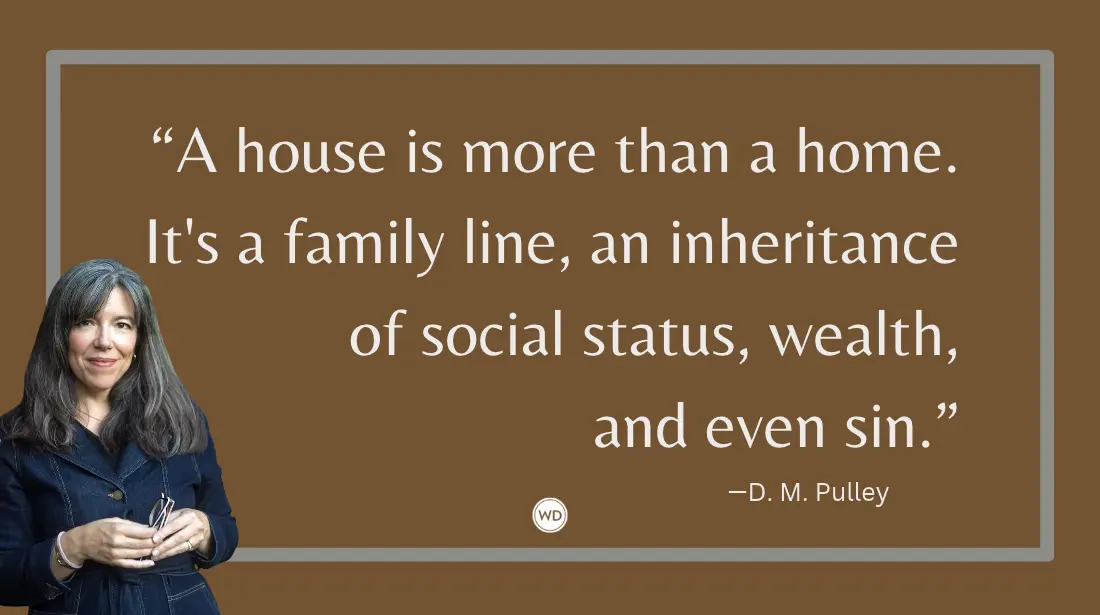
In literature and folklore, a house is rarely just a physical shelter; it is an extension of the family line. It serves as an inheritance of social status, accumulated wealth, and, crucially, unpunished sin. When a family builds or occupies a home, they imprint their psychological states onto the lath and plaster.
Consider how different structural settings generate distinct psychological reactions:
- The Urban Rust Belt Manor: Represents economic collapse, lost industrial promise, and systemic abandonment.
- The Isolated Country Estate: Amplifies themes of claustrophobia, generational stagnation, and inescapable familial legacy.
- The Modern Suburban Home: Subverts the promise of safety and the American Dream, proving that domestic abuse, trauma, and psychological decay can fester behind pristine vinyl siding just as easily as behind ancient stone walls.
Grief and the Paranormal Impulse
On a deeply personal level, our obsession with ghosts boils down to an inescapable biological reality: we will all die, and we will all experience the agonizing loss of loved ones. Because science offers no definitive empirical proof of an afterlife, humanity fills the void with theories, religions, and comforting suspicions. Chief among them is the belief that the dead do not vanish completely—at least not right away.
Cultural anthropological studies indicate that millions of people worldwide report sensing the presence of deceased loved ones through signs, omens, and synchronicities. Whether viewed as psychological coping mechanisms or genuine metaphysical encounters, these beliefs keep the deceased mentally active in our daily lives.
When walking through dimly lit historical buildings, abandoned hospitals, or dense, quiet forests, many individuals experience an uncanny sensation: the absolute certainty that they are not alone. Writers have tapped into this evolutionary hyper-vigilance for centuries, crafting narratives that exploit our inability to definitively prove what lies beyond the veil.
Official Perspectives and Literary Analysis
Authors, literary critics, and forensic professionals who cross over into fiction offer unique insights into why the haunted house remains a vital tool for social commentary.
The Anatomy of a Classic Haunt
Regardless of whether a story is set in a medieval Italian fortress or a 21st-century high-rise, the structural elements of a compelling haunted house narrative consistently include:
- The Burden of the Past: A dark history, curse, or unresolved crime that directly implicates the current inhabitants.
- The Sentient Environment: Architecture that actively resists visitors, manipulating space, temperature, and acoustics to induce disorientation.
- The Intrusive Dead: Ghosts or manifestations that demand justice, exposure, or revenge.
- The Portentous Dream: Subconscious visions that act as warnings, driving the protagonist toward inevitable confrontations.
- The Endangered Innocent: High stakes where the physical and spiritual survival of vulnerable characters hangs in the balance.
Modern Reinvention: Moving Beyond the Stereotype
Award-winning authors have successfully stretched the boundaries of the traditional ghost story, proving that a haunting does not require a creaking staircase or a sheet-wearing specter.
- Toni Morrison’s Beloved: Uses the haunted house framework to explore the historic trauma of slavery through the physical manifestation of a mother’s broken heart and agonizing choices.
- Stephen Graham Jones’s The Only Good Indians: Explores cultural guilt, generational expectations, and systemic alienation through a supernatural lens tailored to the modern indigenous experience.
According to contemporary thriller authors and structural experts, the key to keeping the haunted house trope fresh lies in shifting the point of view. By embedding real-world social justice issues and modern anxieties into the foundations of the setting, writers can transform a tired cliché into a searing mirror of contemporary society.
Future Outlook: The Evolution of the Haunted Space
As we look toward the future of speculative fiction and psychological horror, the haunted house genre shows no signs of slowing down. Its adaptability is its greatest asset.
Writers are no longer bound by geography. Modern haunted houses can be found in the cold vacuum of outer space on abandoned starships, within the digital architecture of corrupted server networks, or deep inside the fragmented psychology of an unreliable narrator. As societal anxieties shift toward environmental collapse, digital surveillance, and urban displacement, the architectural manifestation of terror will undoubtedly mutate to reflect these new fears.
Ultimately, the enduring popularity of the haunted house proves that humanity will always be fascinated by the things we cannot see and the truths we cannot fully know. Whether penned by Roman philosophers, Enlightenment-era satirists, or modern forensic engineers turned novelists, these stories endure because they thrill us, chill us, and—despite their dark subject matter—offer us the profound hope that even the deepest historical wounds can eventually be brought to light and laid to rest.




Comments
Facebook App ID not configured. Please add it in the Customizer.