
Executive Overview
In an era defined by a relentless digital churn and the compression of historical memory into transient algorithmic feeds, intellectual commentary requires a deliberate retreat from the immediate. The latest roundtable discussion from the editors of First Things confronts this cultural vertigo head-on, weaving together three seemingly disparate threads that together expose the fault lines of contemporary governance, public spectacle, and intellectual history.
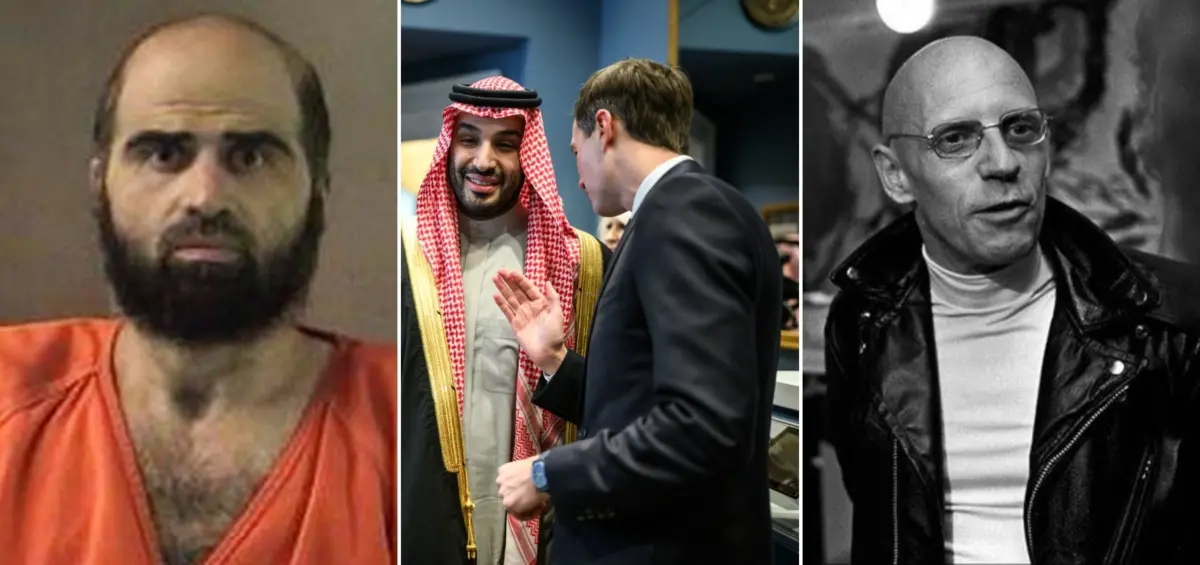
This installment of the podcast transcends standard political commentary by placing contentious public controversies into deep philosophical relief. The editors examine the abrupt cancellation of the livestream for the federal execution of Nidal Hasan—a decision that forces a reckoning with how the modern state manages the boundary between retributive justice and voyeuristic public entertainment. Moving from the machinery of capital punishment to the corridors of executive power, the panel addresses allegations of systemic corruption plaguing the Trump administration, analyzing how institutional decay has become normalized within modern statecraft. Finally, the discussion pivots to cultural history, marking the centenary of the birth of French philosopher Michel Foucault. Through Foucault, the editors interrogate the pervasive, invisible structures of power, knowledge, and surveillance that continue to shape the contours of twenty-first-century life.
As society grapples with artificial intelligence, escalating geopolitical conflicts, and an attention economy designed to fragment human focus, this discourse offers a vital anchor. It asks fundamental questions about accountability, public morality, and the philosophical underpinnings of institutional authority. This report provides an in-depth exploration of the themes debated by the First Things editorial team, contextualizing their arguments within the broader currents of contemporary socio-political and philosophical thought.
Detailed Chronology: The Three Pillars of the Editorial Roundtable
The conversation structured by the editors moves deliberately across distinct domains of modern life: the carceral state, executive ethics, and the history of ideas. Each segment of the discussion maps a different dimension of authority and its exercise in the contemporary world.
1. The Spectacle Denied: The Canceled Livestream of Nidal Hasan’s Execution
The opening segment of the editorial discussion centers on the heavily debated decision to abort the planned livestreaming of the execution of Nidal Hasan, the former U.S. Army major convicted of the 2009 mass shooting at Fort Hood, Texas.
- The Precedent of Transparency vs. Voyeurism: For months, legal scholars, civil libertarians, and proponents of open government debated whether the execution of a mass casualty perpetrator should be broadcast to the American public. Proponents argued that a digital public square demands absolute transparency regarding the ultimate exercise of state power—the termination of a citizen’s life.
- The Last-Minute Reversal: The sudden cancellation of the broadcast ignited a fierce debate over the ethics of state-sanctioned violence. The First Things editors interrogate the competing motivations behind the reversal. Was the decision driven by a genuine respect for human dignity and a refusal to reduce state execution to a high-stakes pay-per-view spectacle, or was it a tactical maneuver by federal authorities to mitigate public outrage, security risks, and the uncomfortable confrontation with the realities of capital punishment in the digital age?
- The Carceral State and Public Consumption: The discussion highlights a chilling paradox of modern media: while society demands unprecedented access to real-time violence and tragedy through social media feeds, the state simultaneously seeks to sanitize its own lethal actions, maintaining a monopoly over the-theater of punishment while shielding citizens from its raw, unmediated impact.
2. The Persistence of Executive Graft: The Stench of Corruption in the Trump Administration
Shifting from the execution chamber to the administrative state, the conversation addresses the enduring controversies surrounding the political and financial dealings of the Trump administration.
- Institutional Norms and Ethical Boundaries: The editors examine how successive waves of political scandals have eroded public trust in executive governance. Rather than focusing solely on individual statutory violations, the panel explores the broader, systemic degradation of institutional norms.
- The Normalization of Patronage: The discussion evaluates how allegations of self-dealing, conflicts of interest, and the instrumentalization of federal agencies have altered the American political landscape. The editors argue that the primary danger of modern political corruption is not merely illegal enrichment, but the pervasive cynicism it instills in the populace—a condition where corruption ceases to be an aberration and is instead accepted as the baseline operating procedure of modern power.
- The Media and the Memory Hole: The panel reflects on how the sheer velocity of the twenty-four-hour news cycle acts as an amnesty machine, allowing major ethical breaches to be rapidly overwritten by the next manufactured crisis, leaving the body politic perpetually disoriented and politically fatigued.
3. The Centenary of Michel Foucault: Power, Knowledge, and the Panoptic Society
In the intellectual anchor of the podcast, the editors mark the 100th anniversary of the birth of Michel Foucault (born October 15, 1926), one of the most influential and polarizing thinkers of the twentieth century.
- The Architect of Biopolitics: Foucault’s theoretical frameworks—particularly his analyses of how power is decentralized, institutionalized, and internalized through systems of knowledge, medicine, penology, and sexuality—form the backdrop for the editors’ critique of modern liberalism and technocratic control.
- The Prophet of the Digital Panopticon: The discussion draws a direct line from Foucault’s concept of the panopticon (derived from Jeremy Bentham’s architectural design for prisons) to the contemporary surveillance capitalism of Silicon Valley, social media algorithms, and state-sponsored data collection. The editors observe that while Foucault analyzed the disciplinary institutions of the nineteenth-century asylum, clinic, and prison, his insights are more urgent today than ever in diagnosing how digital platforms monitor, categorize, and modulate human behavior.
- A Conservative Critique of Radical Theory: Notably, the First Things roundtable approaches Foucault not from a celebratory, postmodern perspective, but through a critical lens. The editors question the nihilistic implications of Foucault’s assertion that truth is merely an effect of power, contrasting it with the publication’s foundational commitment to permanent truths, moral realism, and transcendent order.
Supporting Context & Metrics: The Attention Economy and Institutional Erosion
To fully understand the urgency of the First Things editorial, one must examine the socio-technical ecosystem in which it operates. The modern information landscape is characterized by specific structural pressures that directly impede deep intellectual reflection.
The Tyranny of the Present
Sociological and economic data regarding the modern media ecosystem reveal a profound crisis of attention:
- The Attention Span Deficit: According to studies by the Pew Research Center and academic media researchers, the average consumer’s continuous attention span on digital articles has dropped significantly over the past decade, heavily skewed toward short-form video content and real-time social media notifications.
- Polarization Metrics: Algorithmic platforms continue to prioritize high-arousal, emotionally charged content—particularly outrage politics and administrative scandals—over nuanced theological, philosophical, or historical analysis.
- The Geopolitical Backdrop: Compounding this domestic media fatigue are persistent global instabilities, including ongoing great power conflicts in Eastern Europe and the Middle East, the rapid, unvetted integration of Artificial Intelligence into labor markets, and the resurgence of radical political movements globally.
The Economic Model of Intellectual Journals
Publications dedicated to "permanent things"—such as First Things, founded by Richard John Neuhaus in 1990—occupy a precarious position in this landscape.
- The Funding Gap: Operating independently of corporate media conglomerates, journals of opinion and religion rely heavily on reader support, philanthropic grants, and targeted fundraising campaigns to maintain editorial independence.
- Current Campaign Objectives: As noted in the publication’s Fall Campaign appeal, First Things has set a critical financial target of $150,000 by November 1 to underwrite its operational continuity, literary output, and intellectual programming for the upcoming year. This metric underscores the fragile economic reality facing independent, high-culture journalism in an era dominated by free, ad-supported digital noise.
Official Statements and Editorial Perspectives
The viewpoints articulated during the podcast reflect the distinct intellectual tradition of First Things, merging traditional religious conservatism with sharp cultural criticism. While direct transcript excerpts capture the tone, the core arguments can be synthesized into several definitive editorial positions:
-
On State Executions and Public Morality:
"When the state executes justice, it does so on behalf of the entire political community. To hide the act behind closed doors out of squeamishness, or conversely, to broadcast it as entertainment for the masses, reveals a profound spiritual confusion regarding the sanctity of life and the gravity of retributive justice."
-
On Political Corruption and Cultural Cynicism:
"The danger of contemporary administrative corruption is not simply that laws may be bent for private gain, but that it trains the citizenry to expect nothing better. It substitutes a transactional cynicism for civic virtue, eroding the moral capital upon which self-governance ultimately depends."
-
On the Relevance of Michel Foucault:
"Foucault diagnosed the mechanisms of modern control with terrifying precision. Though we reject his philosophical skepticism—his refusal to anchor truth in anything higher than power structures—we must reckon with his warnings. Today, we live in a society governed not merely by laws, but by an omnipresent digital surveillance that would have exceeded even Foucault’s darkest imaginations."
Future Outlook: Navigating the Culture in an Age of Acceleration
As First Things looks toward the final quarter of 2026 and beyond, the trajectory of its editorial mission points toward an intensified defense of traditional institutions against the forces of digital fragmentation.
Key Trends to Monitor
- The Evolution of Carceral Transparency: The debate over the Nidal Hasan execution is unlikely to be an isolated incident. As public pressure mounts for greater accountability in the criminal justice system, courts and correctional facilities will face renewed legal challenges regarding what aspects of state punishment can—and should—be witnessed by the citizenry.
- The Technocratic State and Surveillance: Following the conceptual blueprints laid out by thinkers like Foucault, future debates will center on the expansion of algorithmic governance, digital identity verification, and corporate censorship. The tension between state security, corporate oversight, and individual liberty will remain a primary battleground for civil society.
- The Sustainability of Independent Media: The success or failure of funding initiatives like the First Things Fall Campaign will serve as a bellwether for the viability of serious intellectual discourse in the digital age. If independent journals fail to secure sustainable funding models, the public sphere risks being entirely monopolized by hyper-commercialized, algorithmically driven content platforms.
Conclusion
The latest dispatch from the First Things editorial desk is more than a review of current headlines; it is a diagnostic of a civilization at a crossroads. By linking the practical mechanics of state punishment, the ethical decay of political leadership, and the century-old philosophical critiques of modern power, the editors provide a much-needed framework for understanding the disquiet of our time. In an attention economy designed to keep citizens perpetually enslaved to the tyranny of the present, returning to first principles remains the only reliable path toward cultural renewal.





Comments
Facebook App ID not configured. Please add it in the Customizer.