
Executive Overview
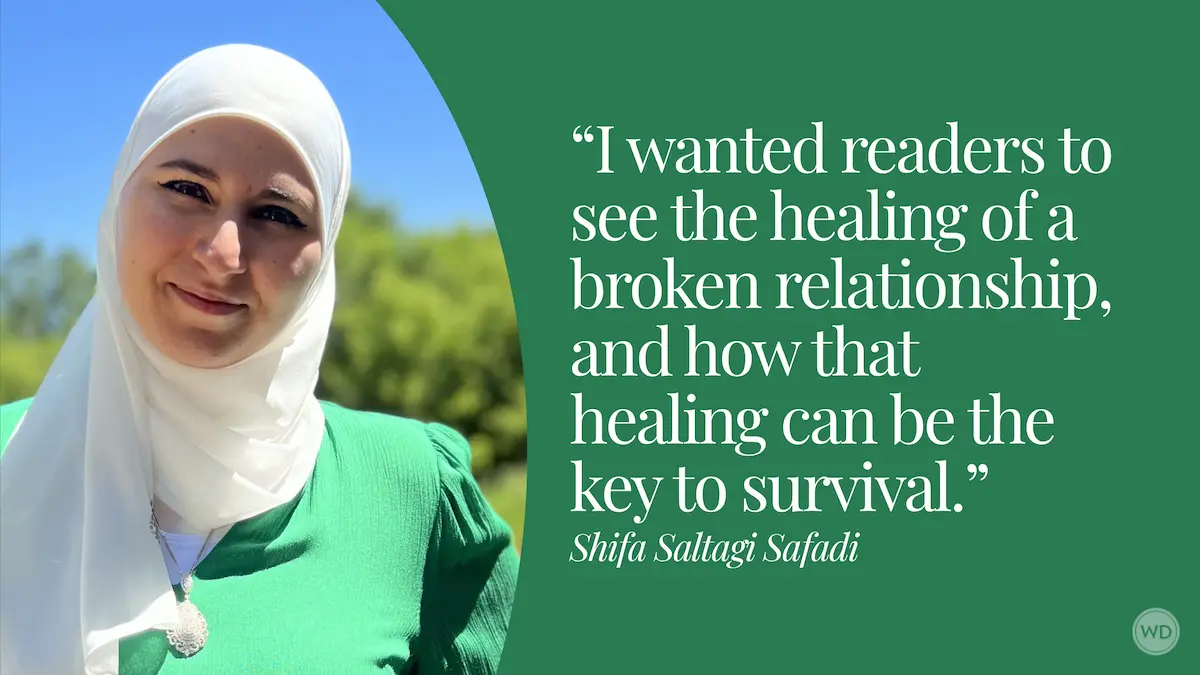
In the contemporary landscape of middle-grade literature, few voices manage to balance high-stakes survival with deeply internalized emotional processing quite like Shifa Saltagi Safadi. A National Book Award-winning author whose works span impactful middle-grade fiction, picture books like The Gift of Eid, and celebrated titles such as Kareem Between, Safadi has carved out a unique space for stories that champion resilience, identity, and familial bonds. Her literary journey—from her early immigration to the United States from Syria to her current life as a middle school English Language Arts (ELA) teacher and writer near Chicago—imbues her narratives with a rare blend of authenticity and emotional resonance.
Now, Safadi turns her pen toward the elements and the fragile, fracturing architecture of sibling relationships in her upcoming novel in verse, Sisters Alone, set for release on September 8, 2026, through G.P. Putnam’s Sons / Penguin Random House. Represented by Janine Le of the Janine Le Literary Agency, Safadi’s newest work follows two sisters trapped at home during a ferocious Chicagoland blizzard. As they confront sub-zero temperatures, power outages, and shrinking resources, they are forced to navigate an even more perilous interior landscape: the lingering grief of their mother’s death and the deep-seated fractures in their own relationship.
In this comprehensive interview, Safadi pulls back the curtain on the grueling, transformative two-year creative journey behind Sisters Alone. She discusses how a solitary survival story evolved into a dual-perspective exploration of sisterhood, the mechanical challenges of restructuring a manuscript from a three-act to a five-act plot, and the profound lessons learned about craft, voice, and emotional endurance in the publishing world.
Read Also
Detailed Chronology: From Concept to Publication
The path of Sisters Alone from a raw, solitary concept to a polished, highly structured novel in verse was neither linear nor easy. Safadi details a rigorous two-year timeline defined by massive conceptual overhauls, extensive structural edits, and deep emotional labor.
Phase 1: The Initial Spark and the Solitary Draft
The genesis of the project lay in Safadi’s deep appreciation for classic middle-grade survival narratives, such as Gary Paulsen’s Hatchet and Erin Entrada Kelly’s Alone. Fascinated by protagonists stripped of modern conveniences who must battle both external nature and internal doubt, she looked to her own environment for inspiration. Chicagoland blizzards offered a ready-made, high-stakes backdrop: a world where electricity fails, food supplies dwindle, and shelter becomes precarious.
In its earliest iteration, the manuscript focused entirely on a single protagonist trapped at home during a severe snowstorm. However, as Safadi worked through her first draft, she quickly recognized a fatal flaw in the narrative engine: the emotional stakes were flat. The scenes read more like an episodic checklist of survival milestones than a cohesive, compelling plot capable of delivering a true emotional catharsis.
Phase 2: Introducing the Sister and Structural Overhaul
Realizing she needed a dynamic catalyst to elevate the emotional stakes, Safadi made the bold decision to introduce a second sister into the narrative. While this instantly injected realistic sibling tension and humor into the premise, it also broke the manuscript’s mechanical pacing.
Adding a second point of view forced a massive rearrangement of scenes. The survival moments, originally intended to anchor the early chapters, were inadvertently pushed toward the middle of the book, deflating the immediate tension required by the premise. When Safadi’s editor stepped in with three lengthy, brilliantly detailed edit letters, the primary objective became clear: fix the pacing, pull the survival set-pieces forward, and fundamentally rethink the book’s architectural skeleton.
Phase 3: The Five-Act Evolution and Poetic Polish
To salvage the pacing and balance the dual perspectives, Safadi abandoned her initial three-act structure in favor of a complex five-act framework. She completely rewrote the exposition, delving deep into characterization to ensure that both girls possessed distinct, unmistakable voices.
During the final pass of the manuscript, Safadi shifted her focus entirely to the poetry itself—refining meter, tightening lines, and maximizing the vividness of the verse. When stacked against the original draft, the final published version of Sisters Alone bore almost no resemblance to its precursor, save for the biting, relentless presence of snow.
Supporting Context & Metrics
To fully understand the weight of Sisters Alone, it is valuable to examine the publishing metrics, structural shifts, and thematic underpinnings that shaped the project.
+-------------------------------------------------------------------+
|                  "SISTERS ALONE" AT A GLANCE                      |
+-------------------------------------------------------------------+
| Author                 | Shifa Saltagi Safadi                     |
| Literary Agent         | Janine Le (Janine Le Literary Agency)    |
| Publisher              | G.P. Putnam’s Sons / Penguin Random House|
| Release Date           | September 8, 2026                        |
| Genre / Category       | Middle-Grade Novel in Verse              |
| Previous Notable Works | Kareem Between, The Gift of Eid          |
+-------------------------------------------------------------------+
The Mechanics of Dual-POV Verse
Writing in verse presents a unique set of constraints: every word must carry maximum weight, and the economy of language must still leave room for complex character arcs. In Sisters Alone, Safadi had to manage two distinct emotional trajectories running parallel to one another.
- Rama and Leena’s Dynamic: The characters are processing the profound grief of losing their mother. Safadi noted that the physical isolation of the blizzard mirrors their emotional isolation. Even sharing the same roof, the cracks in their relationship run so deep that they can feel entirely alone.
- Thematic Resonance: The title Sisters Alone operates on a dual level. Physically, the presence of a sibling means a character is never truly alone. Emotionally, unresolved grief and resentment can create vast, seemingly unbridgeable chasms between people living under the same roof. Healing that bond becomes the ultimate key to their survival.
Contrasting Writing Processes: Debut vs. Sophomore Novel
Safadi points out a stark contrast between writing her award-winning debut, Kareem Between, and tackling Sisters Alone:
- Kareem Between: Heavily grounded in Safadi’s personal lived experiences as a Syrian-American immigrant navigating middle school. The emotional arc felt organic and intuitive, aided by a sports-centric narrative structure (football) that provided a natural, built-in plot sequence.
- Sisters Alone: Required world-building and speculative plotting around an extreme survival scenario—an experience Safadi thankfully has never lived through. Furthermore, juggling two distinct internal monologues and emotional arcs simultaneously pushed her far outside her comfort zone, forcing a rigorous re-examination of craft, voice, and plotting.
Official Statements & Insights from the Author
In her reflections on the publishing process, Safadi offers rare, candid insights into the psychological hurdles of writing and the realities of building a sustainable literary career.
On the Emotional Toll of Revision
Discussing the hurdles of revising Sisters Alone, Safadi admitted to unexpected personal challenges:
"I think I was mainly surprised at how much harder the process of revision felt for me, even though I had already been through it before. Part of it was likely that writing about anxiety and intrusive thoughts triggered my own anxiety each time I approached the manuscript."
Despite this friction, she views the arduous editing process as an invaluable crucible:
"It was also a learning moment for me: that each book has its own journey, even when you feel like you have figured it all out. And I truly am so grateful for this long process of revision and rewriting, because it taught me so much about craft, and especially voice… and the story was greatly improved."
Advice for Aspiring Writers: Prioritizing Craft Over Noise
In an era dominated by discussions of author platforms, social media metrics, and rapid-release schedules, Safadi offers a grounding, craft-first perspective for emerging writers:
"Keep improving your craft. I know there is a lot of conflicting advice online all the time about platform, sales track, and fame—all the requirements supposedly needed to get a book deal. But I truly believe that the main aspect of getting a deal is the book itself. Write a book that is high-quality writing, something meaningful, a page-turning story that you know no one will be able to put down, and make it the best craft you can manage. And then let go of the results."
Safadi speaks from personal experience, noting that her first two middle-grade manuscripts never saw the light of day—nor left her computer hard drive. She embraces those unpublished early works as a necessary part of her development:
"Because I want to put only my best work out in the world! Quality of writing might not achieve fame the first week the book is published, but it will gain a readership and a word-of-mouth reputation that will build and find readers that will fall in love. And that is all we can hope for as writers."
Future Outlook
As the literary community anticipates the September 8, 2026, release of Sisters Alone by G.P. Putnam’s Sons, Shifa Saltagi Safadi continues to balance her bustling life near Chicago—teaching ELA to middle schoolers, raising four children with her husband, and engaging with readers online via her blog and Instagram.
Her evolution from an autobiographically inspired debut novelist to a versatile creator capable of orchestrating high-tension, multi-perspective verse novels marks her as one of the most exciting voices in contemporary middle-grade literature. For Safadi, the ultimate metric of success is not immediate commercial fame, but the lasting impact of emotional resonance:
"The power of good writing is that it inspires emotion that will bring hearts to life, and yes, we do so much work for that fleeting moment of beautiful feeling. And it is absolutely worth it."
As readers prepare to step into the freezing, snow-locked house with Rama and Leena, they will find not just a masterclass in survival fiction, but a tender, deeply moving testament to the fact that healing broken relationships is the bravest, most essential journey any of us can undertake.

Comments
Facebook App ID not configured. Please add it in the Customizer.