
Executive Overview
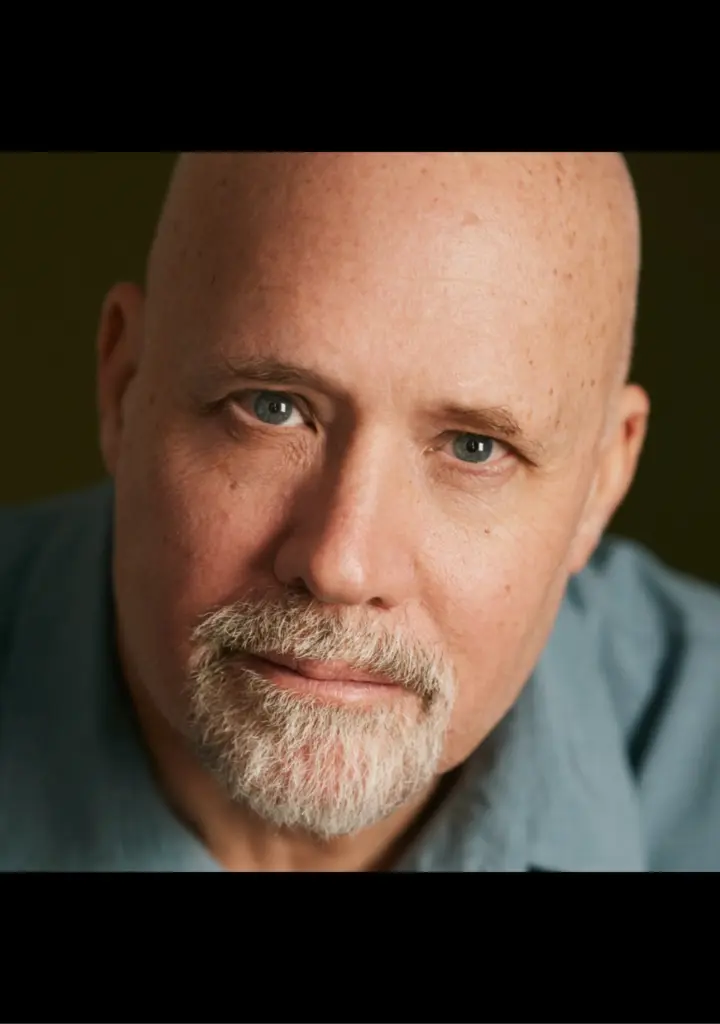
Nearly a decade after its initial publication as an award-winning short story, Mitch Wieland’s evocative narrative "Snow Angels" has blossomed into a sweeping full-length novel. Titled The Ghosts of Okuma, Wieland’s third novel arrives on November 3—a milestone that coincides with the thirtieth anniversary of the debut of his first book, Willy Slater’s Lane. Published in the summer 2015 edition of The Missouri Review, "Snow Angels" served as the foundational seed for a sprawling, emotionally complex work that has already earned a coveted Kirkus starred review and been named a Best Indie Book for March.
In a wide-ranging interview with Scout Hudson, Wieland reflects on the arduous, decade-long metamorphosis of turning an 8,000-word short story into a 275-page novel. Along the way, he discarded a 500-page manuscript, navigated the grieving process of the literary world following the passing of his iconic agent Wendy Weil, secured prestigious fellowships from the National Endowment for the Arts (NEA), and conducted deep on-the-ground research in post-disaster Japan. Beyond his literary accomplishments, Wieland discusses his enduring academic legacy: cofounding Boise State University’s MFA program in Creative Writing and editing the critically acclaimed The Idaho Review for twenty issues.
Detailed Chronology: The Evolution of a Modern Literary Masterpiece
The Genesis in The Missouri Review
Wieland’s relationship with The Missouri Review spans decades, rooted in his formative years living in Japan from 1986 to 1991. Immersing himself in contemporary literary fiction—purchasing collections by Raymond Carver and Joy Williams at local bookstores—Wieland continually encountered The Missouri Review referenced in the front pages of prominent literary journals. Upon returning to the United States in 1991, it became his very first literary magazine subscription.
Read Also
Years later, while living on a farm near the Oregon border with his wife, Cindy, Wieland experienced a moment that solidified his bond with the journal. Following a violent windstorm that scattered his mail across neighboring fields, Wieland waded through mud in his gumboots during a sweltering heatwave to retrieve a letter from editor Speer Morgan. Though a previous story submission had narrowly missed the mark, Morgan encouraged Wieland to try again. That subsequent submission was "Snow Angels."
The Turning Point: The 2011 Tohoku Earthquake and Tsunami
The trajectory of Wieland’s writing shifted abruptly in March 2011. At the time, he was deep into a 500-page manuscript about Japan, working alongside legendary agent Wendy Weil (who famously represented Alice Walker). While watching NHK news—Japan’s public broadcaster—Wieland witnessed footage of the historic tsunami crashing ashore.
"I couldn’t quite understand what I was watching," Wieland recalls. "I eventually switched to CNN… and I just realized instinctively at that moment that I couldn’t write about Japan without this."
In the wake of the disaster, Wieland made the radical decision to set aside the entire 500-page draft. Retaining only a minor character named Yoshimi, he restarted the project from scratch. The journey was further complicated by the passing of Wendy Weil a year later. However, a convergence of institutional support—including a National Endowment for the Arts (NEA) grant and a one-year fellowship from Boise State’s Arts and Humanities Institute—provided Wieland with the financial freedom and time needed to travel to Japan for eight weeks of intensive research.
Refining Craft and Structure
Seeking to master the architecture of long-form narrative, Wieland traveled to Los Angeles in 2012 to study under renowned structure theorists Robert McKee and Christopher Vogler, building upon earlier training with George Garrett and Ted Solotaroff.
By 2013–2014, "Snow Angels" was finalized and published in The Missouri Review. Yet, the road to book publication remained long. The manuscript was completed around the onset of the COVID-19 pandemic in 2020—an inhospitable climate for securing new representation. It wasn’t until 2021 that Julie Stevenson of Massie and McQuilken took Wieland on as a client.
Reflecting on the editorial process, Wieland notes that he wrote roughly 2,000 pages to produce the final 275-page novel. Under Stevenson’s guidance, an additional seventy pages—initially set in San Diego—were excised from the front of the book to drop readers directly into the visceral opening scene first established in "Snow Angels."
Supporting Context & Metrics: Researching National Trauma and Sensory Fiction
Experiencing Japan Across Eras
Wieland’s connection to Japan is deeply personal, spanning two distinct socio-economic epochs. His initial five-year residency coincided with Japan’s hyper-inflated bubble economy in the late 1980s—an era characterized by extreme consumer abundance, where residents routinely discarded functional appliances on "Big Trash Day."
Returning in 2012, one year after the triple disaster of the earthquake, tsunami, and Fukushima Daiichi nuclear meltdown, Wieland observed a profoundly transformed societal landscape. Tightened economic conditions had given rise to thriving secondhand markets, while the collective psychological trauma of the disaster lingered heavily over the population.
To capture the physical and emotional reality of contemporary Tokyo, Wieland visited nearly every location featured in The Ghosts of Okuma, purposefully avoiding the restricted Fukushima exclusion zone. From the quiet serenity of Yanaka Cemetery—where metal grates catch the wind against hanging wooden slats—to neighborhood diners in Shinjuku near the iconic Park Hyatt, Wieland gathered exhaustive sensory details. He also relied on accounts from his long-time friend Jack Perkins, a university professor in Tokyo whose students grappled with profound existential despair in the wake of the catastrophe.
The Neuroscience of Sensory Detail
Wieland’s approach to environmental worldbuilding is deeply rooted in the pedagogical teachings of George Garrett, who emphasized creating a "sensuously effective texture" to blur the line between fiction and reality for the reader.
Modern neuroscience validates this technique. Studies utilizing functional MRI scans demonstrate that when readers process vivid sensory language—such as a character smelling "clove cigarettes and lavender"—the brain activates not only its linguistic centers but also its olfactory cortex, simulating the physical experience of the scent in real time. For Wieland, writing about Tokyo—a metropolis defined by sensory overload—provided an organic framework to immerse readers fully in the narrative.
Official Statements & Author Insights
When asked about balancing identities across a diverse cast of characters spanning different generations, genders, and mental health spectrums, Wieland emphasized the fundamental duty of the novelist:
"That’s the goal of the writer, right? To try to connect so strongly with their characters that once they’ve got the character created, you can often just put them in the room and see what happens… A writer is often just exploring a scene. You go moment by moment and try to surprise yourself."
Addressing how he approached national trauma as an outsider, Wieland drew parallels between his childhood memories of the 1979 Three Mile Island nuclear accident and the systemic failures uncovered during the Fukushima crisis. Yoshimi’s fierce anger in the novel was partially inspired by Chim↑Pom, a radical young Tokyo art collective that marched into Okuma in hazmat suits and tennis shoes one month after the disaster, unfurling a modified Japanese flag that morphed into the international symbol for radiation.
Future Outlook: A Legacy of Mentorship at Boise State
As The Ghosts of Okuma prepares for its November 3 release, Wieland simultaneously reflects upon a remarkable three-decade career in academia at Boise State University. Having arrived on campus in 1996, Wieland cofounded the university’s MFA Program in Creative Writing, modeling its pedagogical framework after the University of Alabama’s program.
Under his stewardship, The Idaho Review published twenty landmark issues, securing numerous Best American anthologies and Pushcart Prizes before passing the editorial torch to colleague Anna Caritj. The MFA program itself has flourished into a fully funded incubator for literary talent, producing critically acclaimed authors such as:
- Mary Pauline Lowry, author of The Roxy Letters (Simon & Schuster)
- Ariel Delgado Dixon, author of Sourland and Don’t Say We Didn’t Warn You (Penguin Random House)
- Jackie Polzin, whose novel Brood won the Los Angeles Times Book Prize and the Sue Kaufman Prize for First Fiction
- Ayotola Tehingbola, a Nigerian lawyer-turned-writer whose debut story collection, Lagos Will Be Hard For You, emerged directly from Wieland’s foundational workshops on sensory immersion.
For Wieland, seeing his students run with the foundational lessons taught to him by literary giants like George Garrett represents the ultimate fulfillment of a life dedicated to the craft of storytelling. As he nears retirement, the publication of The Ghosts of Okuma stands as a capstone achievement—bridging a short story written in a farmhouse near the Oregon border with the complex, scarred, and resilient heart of modern Japan.

Comments
Facebook App ID not configured. Please add it in the Customizer.