
Executive Overview
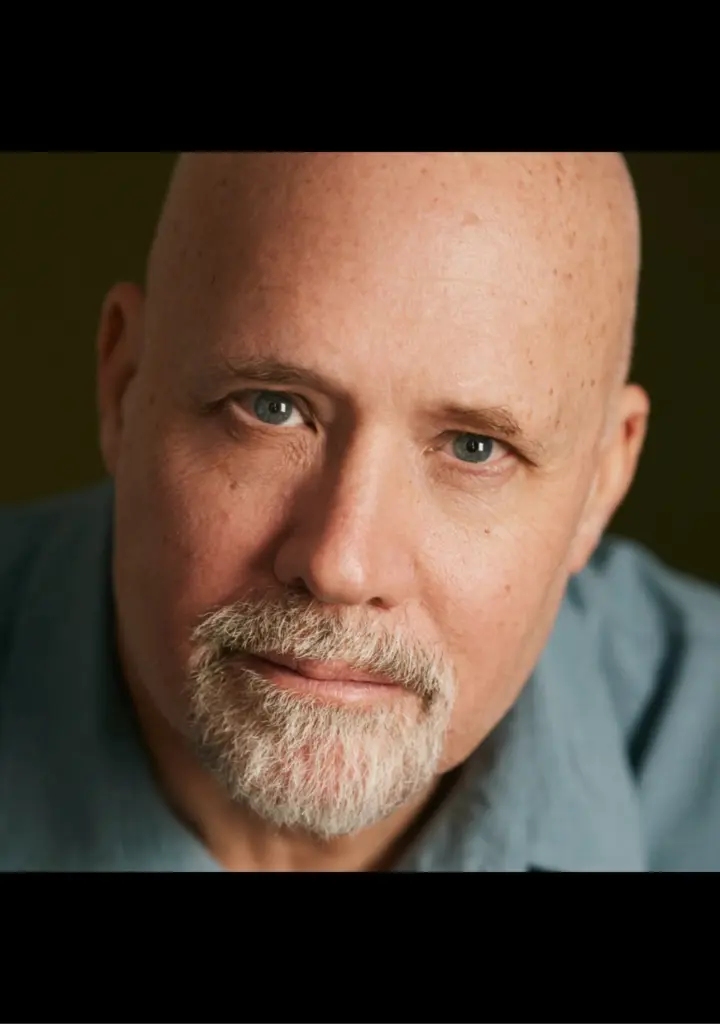
Nearly a decade after his poignant short story “Snow Angels” debuted in the summer 2015 edition of The Missouri Review, acclaimed author Mitch Wieland is expanding that narrative canvas into a sweeping, deeply resonant new novel. Titled The Ghosts of Okuma, Wieland’s third novel has already earned a coveted starred review from Kirkus Reviews and been named a Best Indie Book for March. Scheduled for publication on November 3—a date that marks the thirtieth anniversary of his debut novel, Willy Slater’s Lane—the book traces a decade-long crucible of writing, rewriting, international research, and historical reckoning.
In a wide-ranging, exclusive interview with Scout Hudson, Wieland reflects on the intricate metamorphosis of turning an 8,000-word piece of short fiction into a 275-page novel. He discusses the profound impact of living in Japan during the late 1980s, witnessing the devastating 2011 Tōhoku earthquake, tsunami, and Fukushima Daiichi nuclear disaster from afar, and translating the sensory overload of Tokyo onto the page. Beyond his creative endeavors, Wieland touches upon his formidable academic legacy: co-founding the Master of Fine Arts program at Boise State University and serving as the founding editor of the award-winning The Idaho Review. Ultimately, the conversation illuminates the intersection of personal grief, national trauma, and the timeless mechanics of narrative art.
Detailed Chronology: The Ten-Year Evolution of The Ghosts of Okuma
The journey of The Ghosts of Okuma is a masterclass in literary perseverance. It stretches across continents, decades, and thousands of pages of discarded drafts.
Read Also
Roots in the Literary Magazines of Japan
Wieland’s relationship with The Missouri Review and literary culture at large traces back to his time living in Japan from 1986 to 1991. Stationed abroad during an era when Japan’s economy was superheating, Wieland immersed himself in contemporary short fiction, frequenting local bookstores to purchase collections by Raymond Carver and Joy Williams. He soon noticed The Missouri Review cited frequently in the front pages of premier literary journals. When he returned to the United States in 1991, it became the first literary magazine subscription he ever purchased.
Years later, while living on a farm near the Oregon border with his wife, Cindy, Wieland experienced a moment straight out of a writer’s apocrypha. On a punishingly hot day marked by triple-digit temperatures, a windstorm blew open their mailbox, scattering mail across the fields. While flood-irrigating in his gumboots through the thick mud, Wieland retrieved a letter from The Missouri Review editor Speer Morgan. Though a previous submission had narrowly missed publication after an hour-long editorial debate, Morgan encouraged Wieland to send another piece. That subsequent submission was "Snow Angels."
The Catalyst of March 2011
Before "Snow Angels" was ever conceived as a novel, Wieland was working on an entirely different 500-page manuscript centered on Japan, represented by the iconic agent Wendy Weil (who notably represented Alice Walker).
Everything changed in March 2011. While watching NHK news—Japan’s public broadcaster—Wieland watched in disbelief as footage of the tsunami came ashore. Switching to CNN, he realized the full, catastrophic scale of the earthquake and tsunami.
"I just realized instinctively at that moment that I couldn’t write about Japan without this," Wieland recalls.
In the wake of the disaster, Wieland set aside the 500-page draft entirely, retaining only a minor character named Yoshimi. Bolstered by a National Endowment for the Arts (NEA) grant and a one-year fellowship from Boise State’s Arts and Humanities Institute, Wieland secured the funding and time needed to pivot. He spent eight weeks conducting rigorous research in Japan, walking the very streets where his novel would eventually unfold. To master structural mechanics, he also traveled to Los Angeles in 2012 to study under master story analysts Robert McKee and Christopher Vogler.
Refining the Manuscript
By 2013–2014, Wieland finalized "Snow Angels" and published it in The Missouri Review. Yet, the road to book publication remained long. The manuscript was completed around 2020 just as global lockdowns hit—arguably the most challenging climate to secure a new literary agent.
In 2021, Julie Stevenson of Massie and McQuilken took Wieland on as a client. Together, they embarked on a rigorous editorial phase. Out of roughly 2,000 generated pages, Wieland and Stevenson pared the manuscript down to its 275-page core, famously cutting an initial 70 pages set in San Diego to immediately anchor the reader in the atmospheric world of the novel.
Supporting Context & Metrics: Cultural Trauma and Sensory Mechanics
Contrasting National Tragedies: 9/11 and Fukushima
The novel uses the 2011 Fukushima disaster not merely as a dramatic backdrop, but as an existential crucible. Discussing the collective grief of a nation, Wieland draws parallels between the psychological weight of Fukushima and America’s post-9/11 landscape, while highlighting their fundamental differences.
Where the tragedy of September 11th provided America with a clear geopolitical adversary and a unified, albeit polarized, public grieving process, the disaster in Fukushima confronted Japan with an ontological crisis rooted in nature and technological hubris. Wieland notes the widespread public anger directed at Tokyo Electric Power Company (TEPCO) after investigations revealed shortcuts and a corporate denial that a 9.0-magnitude earthquake could ever breach seawalls.
For many young citizens in Tokyo, the disaster triggered a profound period of existential despair—shattering conventional milestones like marriage, homeownership, and family planning. This collective disillusionment breathes life into the novel’s protagonist, Yoshimi, whose fierce anger was directly inspired by real-life underground art troupes like Chim↑Pom, who marched into the nuclear exclusion zone in hazmat suits and tennis shoes to repurpose the Japanese flag into the international symbol for radiation.
The Neuroscience of Sensory Detail
Wieland’s approach to setting and atmosphere is heavily influenced by his studies under legendary writer George Garrett, who emphasized creating a "sensuously effective texture." Rather than relying on exposition, Wieland immerses readers moment-by-moment, heartbeat-by-heartbeat.
Modern neuroscience validates this pedagogical technique. Functional MRI studies confirm that reading evocative sensory descriptions—such as "she smelled of clove cigarettes and lavender"—lights up both the brain’s language processing centers and its olfactory cortex, simulating the physical experience within the reader. For Wieland, capturing Tokyo was a matter of rendering its inherent sensory overload—from the rhythmic clatter of wooden slats at Yanaka Cemetery to the hum of city trains—into visceral prose.
Official Statements & Key Figures
- Mitch Wieland on the Novel’s Core Dynamic: "Writing ‘Snow Angels’ and having Yoshimi and Wyatt meet in the park, I realized those were the two characters I wanted to keep and tell the story with. That was the secret… Wyatt is an outsider. He’s only there for ten days, and he’s trying to find his sister. He has a clear and visible outer goal. He’s also brought his mother’s [ashes] along. He has this inner need to find a place for her."
- Wieland on Academic Legacies and Student Success: Reflecting on the MFA program he co-founded at Boise State University, Wieland expresses immense pride in the generation of writers he has helped nurture. Notable alumni from the program have achieved widespread critical and commercial acclaim, including Mary Pauline Lowry (The Roxy Letters), Ariel Delgado Dixon (Sourland, Don’t Say We Didn’t Warn You), Jackie Polzin (Brood, winner of the Los Angeles Times Book Prize), and Ayotola Tehingbola (author of the forthcoming story collection Lagos Will Be Hard For You).
- Interviewer Scout Hudson: Highlighting the interconnected nature of the contemporary literary community, Hudson noted running into recent Boise State graduate Ayotola Tehingbola at the Unbound Book Festival in Columbia, Missouri, where Tehingbola’s reading left audiences "reeling."
Future Outlook
As Mitch Wieland prepares for the November 3 release of The Ghosts of Okuma, his dual identity as an institutional pillar of Western letters and an internationally minded novelist remains firmly intact.
Approaching his retirement from Boise State University—where he has spent three decades teaching fiction writing, narrative structure, and publishing while editing twenty landmark issues of The Idaho Review—Wieland’s influence on American fiction is indelible. Through The Ghosts of Okuma, he bridges local and global landscapes, offering readers an unflinching look at human resilience in the shadow of disaster.
The Ghosts of Okuma hits bookstores nationwide on November 3, coinciding with the thirtieth anniversary of Wieland’s literary debut. For readers, scholars, and aspiring writers alike, it promises to be a defining release for the fall literary season.

Comments
Facebook App ID not configured. Please add it in the Customizer.