

In the literary landscape of October 2026, The Missouri Review has designated W. M. Lobko’s evocative and haunting piece, “I Was Braver Than I Thought,” as its featured Poem of the Week. Positioned within a rich tradition of weekly poetry showcases that highlight both emerging and established voices, Lobko’s work cuts deep into the psychology of childhood memory, familial trauma, and the mechanisms we construct to survive our earliest environments.
The poem navigates the delicate topography of a child’s inner world—a space populated by both tangible dangers and imaginative sanctuaries. From the scent of Lysol on a desk to the ozone-heavy glow of a model spaceship under an armature light, Lobko constructs an elaborate dialectic between innocence and impending reality. The feature arrives at a time when contemporary poetry increasingly turns toward hybrid narrative forms that blend personal confession with stark, objective imagery.
For readers and critics alike, Lobko’s selection offers a timely reminder of the poet’s growing stature in American letters. With previous publication credits in prestigious journals such as the Iowa Review, Kenyon Review, Washington Square, Boston Review, and Guernica, alongside a Pushcart Prize nomination and recognition as a semi-finalist for the 92Y/Boston Review Discovery Prize, Lobko represents a masterclass in controlled poetic tension. This comprehensive report explores the anatomy of the featured poem, examines the artistic journey of its author, contextualizes its publication within the broader scope of contemporary literary journals, and evaluates the lingering implications of its narrative scope.
Read Also
Detailed Chronology: The Evolution of W. M. Lobko’s Poetic Career
To understand the weight of “I Was Braver Than I Thought,” one must trace the developmental trajectory of W. M. Lobko’s career. His progression from an academic apprentice at the University of Oregon to an established voice teaching north of New York City illuminates the meticulous craftsmanship visible in his latest work.
The Formative Academic Years (University of Oregon)
Lobko’s foundational training took place at the University of Oregon, an institution renowned for fostering deep engagement with both lyrical tradition and experimental verse. During these formative years, Lobko refined his ear for cadence, narrative pacing, and the friction between colloquial speech and elevated poetic diction. It was here that he began developing the sharp eye for domestic detail that would later define his poetry—transforming everyday items like plastic toys, household cleaners, and school desks into emotional barometers.
Early Publications and Critical Recognition
Following his academic foundation, Lobko’s work rapidly found homes in some of the nation’s most rigorous literary publications. His poetry, critical reviews, and interviews began appearing across a diverse spectrum of prestigious outlets:
- The Iowa Review: Showcasing his ability to balance narrative clarity with structural subversion.
- The Kenyon Review: Where his formal discipline and intellectual depth earned critical praise.
- Washington Square & Boston Review: Cementing his presence in both urban-centric and nationally distributed avant-garde dialogues.
- Guernica: Highlighting his capacity for socially and emotionally resonant storytelling.
This steady accumulation of high-profile publication credits culminated in significant industry nods, including a nomination for the coveted Pushcart Prize and a semi-finalist placement for the 92Y/Boston Review Discovery Prize. These accolades signaled to the broader literary community that Lobko was a writer capable of sustained linguistic ambition.
The October 19, 2026 Showcase
The release of “I Was Braver Than I Thought” on October 19, 2026, marks a watershed moment in Lobko’s ongoing exploration of memory. As part of The Missouri Review’s ongoing weekly series, the publication places Lobko alongside other notable contemporary poets—such as Catie Rosemurgy and Trenna Sharpe—further solidifying his role in contemporary literary conversations.
Supporting Context & Metrics: Analyzing “I Was Braver Than I Thought”
A close reading of the poem reveals a masterclass in sensory juxtaposition. The text operates on multiple temporal planes, moving seamlessly between the vantage point of an adult looking backward and the hyper-vigilant consciousness of a child trying to decode adult chaos.
[Childhood Sensory Input] ──> [Domestic Disruption] ──> [Imaginative Sanctuary] ──> [Adult Reflection]
      (Lysol, Ozone)           (Parental Arguments)      (Model Spaceships)       (Re-evaluating Bravery)
The Architecture of Memory and Fear
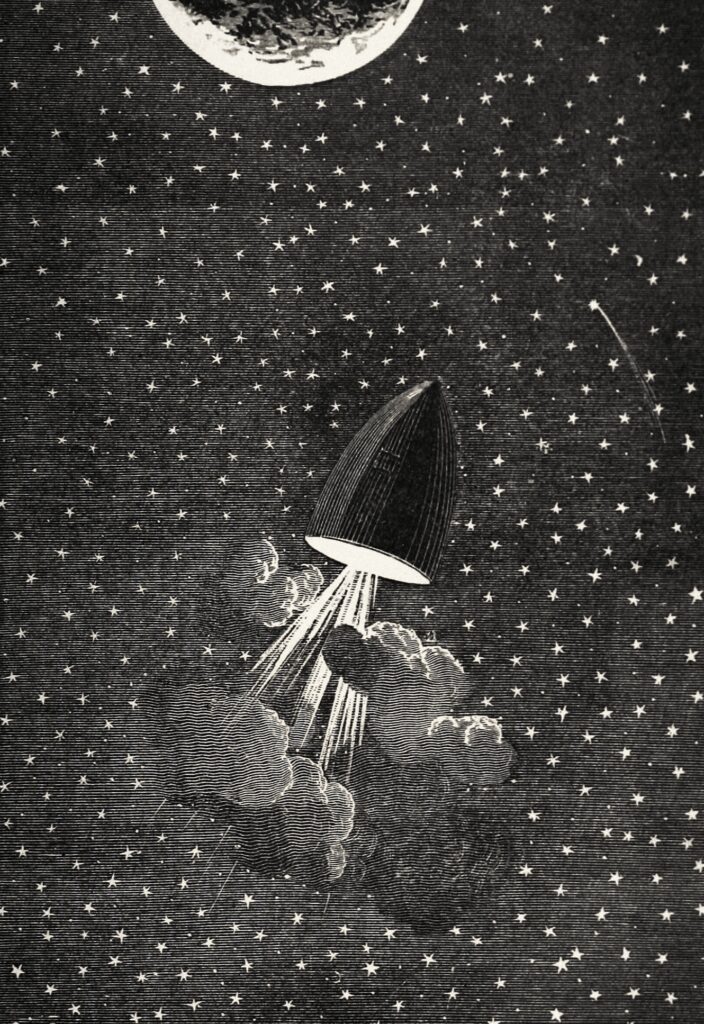
The poem opens with visceral, localized imagery: “Cave of the crook of my arm / Slick heat of my breath on the desk / Lysol would lift away.” These lines immediately establish a boundary between safety and contamination. The speaker reflects on how ghosts at 2 a.m. are not supernatural phantoms, but stark, unvarnished facts: germs on a chrome toy motorcycle dropped in a toilet, or the devastating sound of a mother learning of her own mother’s death.
Lobko captures the auditory shock of grief with a brilliant simile: “It was like / the high E-flat of a bough breaking, / song I was then decades from singing.” This musical metaphor anchors emotional trauma in the physical world, foreshadowing the structural fractures that will later manifest in the household.
The Spaceship as Sanctuary and Shield
As the poem progresses, the speaker describes building an alternative reality: “I was architect of an ice planet. I was a skull / hearing itself with every graham cracker’s / ashen reverberation.” Here, sensory perception is heightened to an almost claustrophobic degree.

To cope with domestic instability—exemplified by a parental argument “so heinous the sitcom characters stopped to watch”—the speaker retreats into miniature worlds:
model spaceships in grey plastic
richly smelling of ozone under the armature light I
aimed so relentlessly, faithful
nothing would melt or erupt.
The juxtaposition of the fragile model kits with the explosive volatility of household violence highlights the psychological coping mechanisms of children. They construct entire galaxies to survive the gravitational pull of family dysfunction.
The Author’s Perspective: A Devotional to Meaning-Making
In his accompanying Author’s Note, Lobko reflects on the shifting nature of the work:
"At first, I thought this poem was about my family, my parents, me—but I’ve come to see it more as a devotional of sorts to the stories & myths that help us make meaning, whatever they might happen to be."
This meta-critical commentary reframes the poem. It shifts the reading away from a literal autobiography toward a universal meditation on how human beings—particularly children facing chaotic environments—invent mythologies, architecture, and structural safeguards to weather emotional storms.
Official Statements and Critical Reception
The literary community has responded enthusiastically to Lobko’s latest offering, viewing it as a prime example of the emotional resonance poetry can achieve when grounded in precise domestic realism.
Editors at The Missouri Review noted that Lobko’s work exemplifies the journal’s mission to publish poetry that challenges conventional narrative boundaries while maintaining deep emotional accessibility. Reviewers across digital literary platforms have similarly praised the poem’s kinetic pacing, pointing specifically to the lines dealing with the domestic argument and the subsequent refuge found in science fiction imagery.
Furthermore, academic circles observing Lobko’s trajectory point out that his work bridges a critical gap between the confessional poetry of the mid-20th century and the hyper-attentive objectivism of contemporary verse. By treating a grey plastic model spaceship with the reverence of a religious artifact, Lobko elevates suburban childhood memory into a mythic realm.
Future Outlook: What Lies Ahead for W. M. Lobko
As “I Was Braver Than I Thought” circulates among poetry enthusiasts, scholars, and creative writing programs nationwide, anticipation builds regarding Lobko’s future projects. Teaching north of New York City, Lobko remains an active voice not only on the page but within educational settings, shaping the next generation of writers who grapple with narrative form and personal history.
With a robust publication history spanning the Iowa Review, Kenyon Review, and beyond, Lobko is well-positioned to compile these recent lyrical explorations into a comprehensive, highly anticipated full-length poetry collection. As contemporary literature continues to seek authentic navigations of trauma, memory, and imagination, voices like W. M. Lobko’s will undoubtedly serve as crucial cartographers of the human experience.
Readers interested in exploring more of Lobko’s work can visit his official author portal at wmlobko.com or access the full feature directly through The Missouri Review‘s Poem of the Week archives.

Comments
Facebook App ID not configured. Please add it in the Customizer.