
Executive Overview
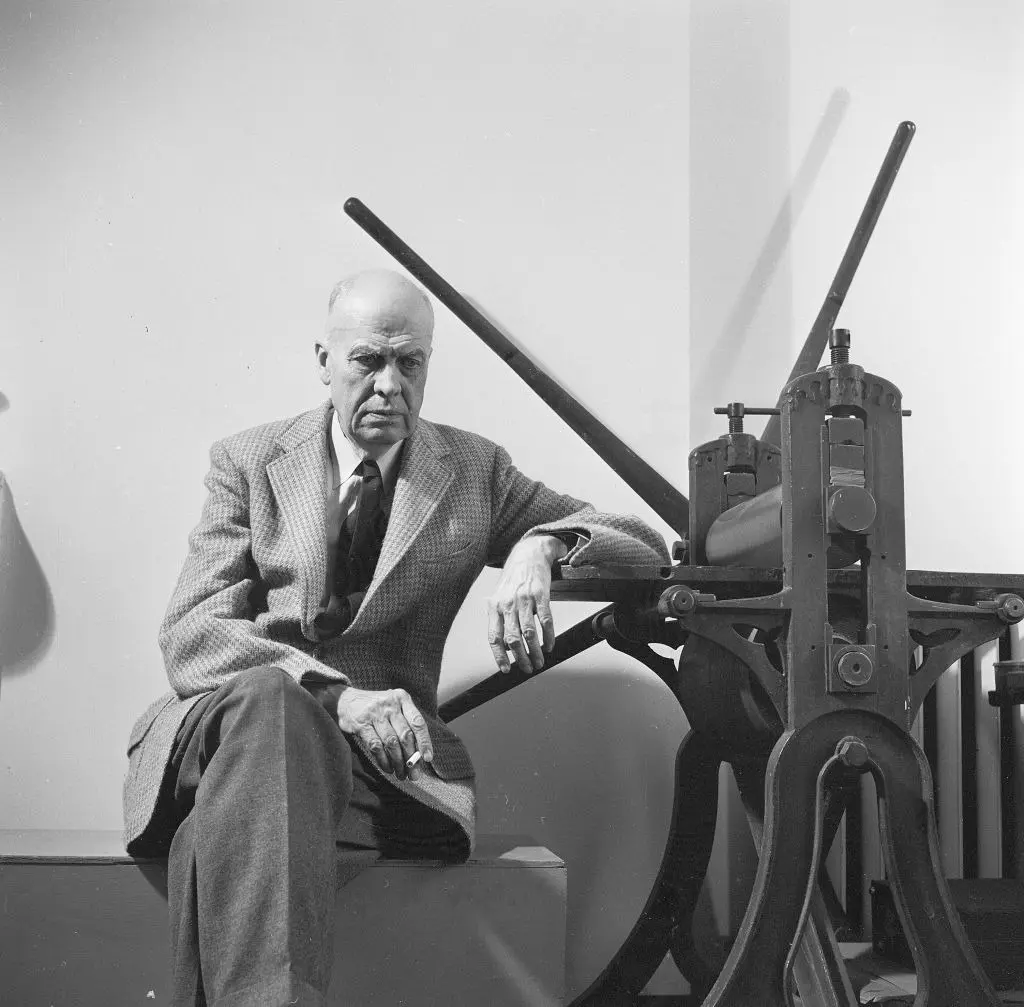
In the canon of American art history, few figures loom as large or evoke as distinct a mood of melancholic isolation as Edward Hopper. Known for his stark lighting, dramatic urban interiors, and profound depictions of modern alienation—exemplified by iconic canvases like Nighthawks (1942)—Hopper’s genius has long been perceived as an innate, self-contained phenomenon that blossomed organically during his youth in the Hudson River Valley.
However, a groundbreaking new biography by scholar Louis Shadwick, excerpted recently in The Art Newspaper, completely upends decades of conventional wisdom surrounding the artist’s formative years. Shadwick’s exhaustive research reveals a startling truth: all six of Edward Hopper’s known early oil paintings, long celebrated as original compositions reflecting his teenage observations of Nyack, New York, are in fact direct copies of works by other artists.
Rather than serving as the genesis of an independent realist vision, these adolescent exercises—executed when Hopper was roughly 15 or 16 years old—were meticulously copied from instructional color plates found in late-19th-century art periodicals. This revelation does not diminish Hopper’s stature; instead, it provides a much more grounded, historically accurate picture of how a master is made. It highlights a standard 19th-century pedagogical tradition of learning through master-copying, while simultaneously exposing how well-meaning but misguided archival stewardship in the late 20th century inadvertently constructed a misleading mythos around the young painter’s early originality.
Read Also
Detailed Chronology: From the Nyack Attic to Art Historical Revision
To understand the weight of Shadwick’s discovery, one must trace the physical journey of these canvases from a teenager’s makeshift studio to the archives of the Whitney Museum of American Art, and finally to the pages of modern biographical scholarship.
The Teenager in the Attic (Late 1890s)
In the closing years of the 19th century, a teenage Edward Hopper sat in the third-floor bedroom of his family home at 82 North Broadway in Nyack, New York. Long before he enrolled in the New York School of Illustrating and Design or the prestigious New York School of Art under the tutelage of William Merritt Chase and Robert Henri, Hopper was a self-taught boy experimenting with oil paints.
Working between roughly 1897 and 1899, the young Hopper carefully rendered landscapes, seascapes, and maritime scenes onto small panels and canvases. Proud of his technical execution—which already displayed a precocious grasp of handling viscous medium—he signed several of these works with his full name or initials. Unbeknownst to the broader world, these paintings were never intended for public exhibition; they were private milestones of a boy learning his craft.
The Posthumous Discovery (Late 1960s)
Following the deaths of Edward Hopper in 1967 and his wife, fellow artist Josephine Nivison Hopper, in 1968, the contents of their Greenwich Village apartment and the childhood home in Nyack became the subject of intense preservation efforts. Enter the Reverend Arthayer R. Sanborn, a local Baptist minister who lived down the street from the Hopper family in Nyack.
Sanborn had developed a close relationship with Hopper’s sister, Marion, and later with Edward and Josephine. Following their deaths, Sanborn played a crucial role in salvaging a vast trove of Hopper memorabilia—including letters, photographs, early sketchbooks, and these very same adolescent oil paintings—from both the Nyack house and the New York apartment.
While Sanborn’s efforts undoubtedly saved crucial ephemera from destruction or loss, his handling of the collection introduced romanticized interpretations. Much of this archive eventually found a permanent home in the Whitney Museum of American Art, but the provenance and contextual framing of the earliest paintings carried the imprint of Sanborn’s assumptions.
The Myth of Local Inspiration
Attributing the paintings to Hopper’s direct observations of his hometown, Sanborn assigned poetic, localized titles to works whose true origins had been forgotten or ignored.
- The Ice Pond: A canvas depicting a frozen body of water was christened Old Ice Pond at Nyack, encouraging generations of scholars to view it as a precursor to Hopper’s lifelong fascination with specific regional geographies.
- The River Scene: Another work showing a small watercraft was titled Rowboat on Hudson, binding it tightly to the visual vocabulary of the majestic river that defined Hopper’s Nyack upbringing.
For decades, art historians analyzed these pieces as spontaneous expressions of an intuitive genius reacting to his physical environment. They were cited as proof that Hopper’s artistic sensibilities were fully formed before formal training ever entered the equation.
The Shadwick Revelation (2026)
Louis Shadwick’s new biography shatters this romanticized narrative through rigorous art-historical detective work. By cross-referencing archival materials with late-19th-century print culture, Shadwick traced the true blueprints of Hopper’s early output.
The investigation proved that:
- Old Ice Pond at Nyack is a direct copy of A Winter Sunset, a painting by landscape artist Bruce Crane published as a color plate in the December 1890 issue of the instructional periodical Art Interchange.
- Rowboat on Hudson (also known as Rowboat in Rocky Cove) is a copy of Lake View, a watercolor by an unidentified artist featured in the February 1891 issue of the same magazine.
- Country Road was copied from A Landscape Study in Color by John Francis Murphy.
- Ships was derived from Marine View by Edward Moran.
- Clipper Ship Being Towed by Tug was lifted from Stormy Voyage by Fred Pansing.
Supporting Context & Metrics: Pedagogy in the Gilded Age
To fully appreciate why a young Edward Hopper was copying magazine plates, one must examine the pedagogical ecosystem of the late 19th-century United States.
The Role of Art Periodicals
In an era before widespread museum access, high-speed photography, or digital art repositories, instructional magazines like Art Interchange and The Art Amateur served as vital lifelines for aspiring artists, particularly those living in small towns far from major cultural centers like New York or Boston. These publications frequently included high-quality color plates, lithographs, and step-by-step technical instructions designed for home study.
For a 15-year-old boy in Nyack, these magazines were windows into the professional art world. Copying masterworks or contemporary Salon pieces from printed reproductions was not viewed as plagiarism; rather, it was considered a cornerstone of academic training. Copying allowed students to reverse-engineer brushwork, understand color mixing, and study compositional balance without the immediate need for a live model or a formal atelier.
Archival Footprint: The Hopper Holdings at the Whitney
The scope of the Hopper archive preserved by Reverend Sanborn and housed primarily at the Whitney Museum of American Art encompasses thousands of items. While the finished oil paintings represent a minute fraction of this collection—just six known adolescent canvases—they have carried an outsized weight in biographical interpretations.
| Painting Title (Historical Attribution) | True Source / Original Artist | Periodical / Publication Date | Hopper’s Age at Execution (approx.) |
|---|---|---|---|
| Old Ice Pond at Nyack | A Winter Sunset by Bruce Crane | Art Interchange (Dec 1890) | ~15–16 |
| Rowboat on Hudson | Lake View (Unidentified Artist) | Art Interchange (Feb 1891) | ~15–16 |
| Country Road | A Landscape Study in Color by John Francis Murphy | Periodical Source | ~15–16 |
| Ships | Marine View by Edward Moran | Periodical Source | ~15–16 |
| Clipper Ship Being Towed by Tug | Stormy Voyage by Fred Pansing | Periodical Source | ~15–16 |
The metrics of this discovery demonstrate that Hopper’s foundational years mirrored those of countless other Gilded Age adolescents: resourceful, reliant on print media, and engaged in standard technical mimicking.
Official Statements and Scholarly Perspectives
The publication of Shadwick’s excerpt has sent ripples through the art-historical community, prompting discussions regarding authorial intent, archival ethics, and the mythmaking that often surrounds canonical American painters.
Defending the Young Artist’s Intent
Crucially, Louis Shadwick is careful to absolve Hopper of any deception. In his biography, Shadwick argues that Hopper never intended to pass these exercises off as his own original inventions to trick the public or build a fraudulent resume.
"The signatures suggest the artist’s youthful pride in his earliest achievements in oil that were never intended to be seen publicly," Shadwick writes.
For a teenager handling oil paints for the very first time, successfully reproducing the atmospheric glow of a Bruce Crane landscape or the turbulent waters of an Edward Moran marine scene was a monumental technical victory. Signing these canvases was an act of adolescent milestone-marking—a private celebration of skill—rather than an effort to manufacture a fake provenance.
The Reassessment of Archival Stewardship
Scholars have also pointed to the role of Reverend Sanborn in shaping the modern perception of Hopper. While historians acknowledge a debt of gratitude to Sanborn for keeping the archive intact, his tendency to project local narratives onto the material has underscored the necessity of rigorous, source-critical biography.
By renaming the magazine copies with evocative local monikers like Old Ice Pond at Nyack, Sanborn inadvertently folded derivative student exercises into the hagiography of Hopper’s native topography, illustrating how easily archival framing can alter historical truth.
Future Outlook: Reimagining the Genesis of American Realism
The revelation that Edward Hopper’s earliest oil paintings are copies rather than original compositions marks a pivotal moment for Hopper studies, opening several new avenues for future research and museum curation.
Rewriting the Narrative of Self-Taught Genius
For decades, biographical texts have leaned into the trope of Hopper as a solitary prodigy whose realist eye sprang fully formed from his observations of American life. Shadwick’s findings force a healthy recalibration. By recognizing that Hopper began his journey by studying and copying established academic painters through print media, art historians can better trace the lineage of his visual education.
We can now see a direct line from his early technical exercises copying marine painters like Fred Pansing and Edward Moran to his lifelong obsession with light, water, architecture, and solitude. His mastery of composition was built brick by brick, starting with the imitation of masterworks.
Implications for Museum Interpretation
As institutions holding Hopper’s early works—most notably the Whitney Museum of American Art—review their exhibition labeling and provenance notes in light of Shadwick’s biography, visitors can expect a more transparent, nuanced presentation of the artist’s beginnings. Educational text panels will likely shift from framing these canvases as direct windows into Hopper’s Nyack childhood to contextualizing them as sophisticated pedagogical exercises of a talented teenager navigating the 19th-century print landscape.
Ultimately, this biographical revision does not diminish the towering legacy of Edward Hopper. Instead, it humanizes him. It replaces an unapproachable myth of effortless, spontaneous genius with the compelling, relatable reality of a young artist learning to see, copy, and eventually transform the visual culture of his time into an immortal artistic vision.

Comments
Facebook App ID not configured. Please add it in the Customizer.