
By the Tech & Media Desk
Published: October 2026
Executive Overview
In a monumental development for the digital publishing and e-reader ecosystem, Amazon has officially bid farewell to one of its most recognizable service monikers. Kindle Unlimited, the pioneering subscription service that defined a generation of digital reading, has undergone its first major brand overhaul and is now officially known as Kindle+.
The rebranding is far more than a superficial cosmetic change; it signals a fundamental strategic shift in how the Seattle-based tech giant positions its digital library. For over a decade, Kindle Unlimited was synonymous with unlimited e-book access. However, as consumer habits have evolved to favor cross-media consumption—blending text, audio, and visual mediums—the old nomenclature had become increasingly restrictive.
Read Also
By transitioning to Kindle+, Amazon is aligning its premier reading ecosystem with contemporary streaming conventions, matching the naming architecture of services like Apple TV+, Disney+, and Paramount+. Crucially, this evolution is accompanied by a massive feature upgrade: the deep, native integration of audiobooks. Millions of subscribers in the United States can now seamlessly transition between reading an e-book and listening to its audiobook counterpart at no additional charge.
Despite the fresh branding, structural overhaul, and expanded audio library, the core mechanics of the service remain reassuringly familiar. Subscribers can still borrow up to 20 titles simultaneously, free of pesky due dates or late fees. As the digital reading landscape shifts toward multi-format immersion, Kindle+ establishes a new benchmark for what consumers expect from an all-in-one literary subscription.
Detailed Chronology: The Road from "Unlimited" to "Plus"
To understand the magnitude of the Kindle+ transition, it is helpful to trace the trajectory of Amazon’s digital subscription strategy over the past decade.
The Inception of Kindle Unlimited (2014)
When Amazon launched Kindle Unlimited in July 2014, the digital reading market looked vastly different. E-readers were transitioning from niche gadgets to mainstream consumer electronics, and self-publishing was experiencing an explosive renaissance. Kindle Unlimited promised a "flat-rate" library model: for a monthly fee, users could read as much as they wanted from a selected catalog of hundreds of thousands of titles.
While initially met with skepticism from traditional publishers concerned about devaluing book prices, Kindle Unlimited quickly became a powerhouse for indie authors and a beloved utility for voracious readers. Over the next ten years, the library swelled from hundreds of thousands of titles to millions, gradually incorporating not just novels, but a robust selection of magazines, comic books, and short-form serials.
The Creeping Convergence of Text and Audio
As the years progressed, consumer demand increasingly blurred the lines between reading and listening. Amazon’s acquisition of Audible in 2008 had long positioned the company as an audiobook juggernaut, but Audible and Kindle remained largely distinct ecosystems. Users who wanted both formats often had to maintain separate, costly subscriptions.
Gradually, Amazon began testing the waters of audio integration. Features like "Whispersync for Voice" allowed users to sync their reading progress with their listening progress, but accessing the audiobook version usually required a separate purchase or an Audible credit.
The Catalyst for Change (2025–2026)
By 2025, market research indicated that modern consumers—particularly younger demographics—viewed reading and listening as interchangeable aspects of the same media consumption habit. The "Unlimited" label felt increasingly anachronistic. It spoke solely to volume ("unlimited books") rather than versatility or ecosystem depth.
Behind closed doors, Amazon executives greenlit the "Project Plus" initiative in late 2025. The goal was twofold: modernize the brand identity to match the streaming era and structurally integrate audiobooks directly into the core subscription tier without triggering a massive price hike.
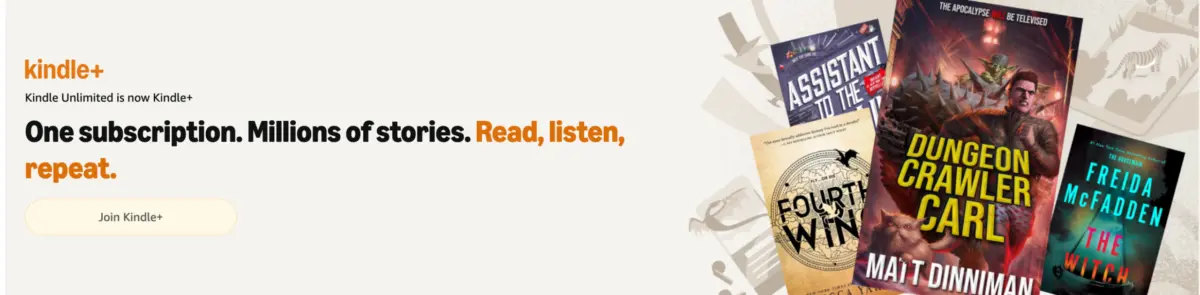
By October 2026, the rollout went live. All major Kindle Unlimited landing pages, promotional banners, and marketing assets were systematically scrubbed and replaced with the new Kindle+ branding, accompanied by the punchy new tagline: "One subscription. Millions of stories. Read, listen, repeat."
Supporting Context & Metrics: What Kindle+ Offers Today
The transition to Kindle+ is backed by significant upgrades to the platform’s content delivery, user interface, and cross-device functionality.
The Audiobook Integration: A Game Changer
The crown jewel of the Kindle+ update is the native bundling of audiobooks. Historically, audiobook streaming services have operated on rigid credit systems (such as Audible’s one-credit-per-month model) or expensive standalone tiers.

With Kindle+ in the United States, millions of participating titles now offer a "Read and Listen" toggle. If a subscriber is reading a novel on their Kindle Paperwhite during their lunch break, they can step into their car, open the Kindle app on their smartphone or connect to their vehicle via Alexa, and pick up the exact same story in audio format instantly. This synchronization happens seamlessly via upgraded cloud infrastructure, eliminating the friction that previously existed between text and audio libraries.
Core Mechanics and User Limits
Despite the expanded media formats, Amazon has preserved the user-friendly borrowing rules that made Kindle Unlimited popular:
- The 20-Book Cap: Subscribers can hold up to 20 titles (a mix of e-books, audiobooks, magazines, and comics) in their active library at any given time. Once the limit is reached, returning a title frees up a slot instantly.
- No Due Dates: True to its digital nature, there are zero late fees and no forced returns. Content remains accessible as long as the subscription is active and the title remains in the Kindle+ catalog.
- Universal Hardware Compatibility: Kindle+ content is accessible across the entire hardware and software spectrum. This includes dedicated Kindle e-readers (Paperwhite, Oasis, Scribe), Fire tablets, the free Kindle App available on iOS and Android, desktop reading apps, and Alexa-enabled smart devices.
Pricing Structure and Availability
At launch, Kindle+ maintains a competitive pricing model in the United States, holding steady at $11.99 USD per month.
Industry analysts have noted that keeping the price relatively close to the legacy Kindle Unlimited cost is a calculated aggressive move by Amazon to capture market share from competing services like Everand (formerly Scribd) and audio-exclusive platforms. International pricing varies by region, with localized rollouts scheduled to hit the United Kingdom, Germany, Japan, and other core markets over the coming months.
It is important to note for consumers that Kindle+ remains entirely separate from Amazon Prime. While Prime offers a rotating selection of books through Prime Reading, Kindle+ is the standalone, comprehensive flagship service designed for heavy readers and listeners.
Official Statements and Industry Reception
While Amazon has historically played its cards close to its chest regarding specific subscriber numbers—traditionally referring to the user base in vague terms of "millions of active readers"—the corporate messaging surrounding the Kindle+ rollout emphasizes a customer-first philosophy centered on convenience.
"The way people consume stories has fundamentally changed," noted an internal briefing shared with media outlets ahead of the launch. "Readers today are listeners tomorrow. They commute, they cook, they exercise, and they work while engaging with narratives. By evolving Kindle Unlimited into Kindle+, we are removing the artificial barriers between text and audio, delivering a unified experience that honors the way modern audiences consume media."
Independent publishers and authors—who rely heavily on the Kindle Unlimited "KENP" (Kindle Editions Normalized Pages) payout system—have expressed cautious optimism. Many creators hope that the inclusion of audiobooks will drive higher overall engagement, leading to increased reading and listening minutes across the board.
Meanwhile, competitors in the digital subscription space are taking notice. The streaming-style "Plus" nomenclature signals that Amazon is actively positioning its ecosystem to capture the attention of Gen Z and Millennial consumers who are already acclimated to bundled, cross-media digital subscriptions.
Future Outlook: Where is the Reading Ecosystem Headed?
The launch of Kindle+ marks a defining moment for the future of digital literature. As we look ahead to the late 2020s, several key trends are likely to shape the trajectory of Amazon’s reading ecosystem:
1. The Death of Single-Format Media Consumption
The rigid separation between "reading a book" and "listening to a book" is officially a relic of the 20th century. Kindle+ normalizes the hybrid reading experience. In the future, we can expect algorithms to make real-time recommendations based on a user’s blended reading and listening habits, perhaps even introducing dynamic narration features or AI-assisted read-along tools.
2. Publisher Relations and Catalog Expansion
As Kindle+ matures, the pressure will mount on major traditional publishing houses ("The Big Five") to reevaluate their hesitancy toward all-inclusive subscription models. While Kindle+ currently relies heavily on a mix of independent authors, Amazon publishing imprints, and participating traditional catalogs, the massive consumer adoption spurred by the audiobook integration may prove irresistible to mainstream publishers looking to capture younger, audio-first audiences.
3. Hardware Innovation
With audiobooks now deeply embedded in the service, hardware development at Amazon will likely lean further into audio integration. Future iterations of Kindle e-readers may feature native, high-efficiency Bluetooth pairing improvements, optimized speaker attachments, or streamlined voice-navigation controls designed to make jumping between text and audio effortless on e-ink screens.
Conclusion
Amazon Kindle Unlimited was a pioneer of the digital reading revolution, but its time had run its course. By transforming into Kindle+, Amazon has successfully modernized its flagship literary service for an era defined by multitasking, audio integration, and cross-device fluidity. For the millions of subscribers who rely on the platform to feed their literary habits, the shift promises more content, better integration, and the same beloved freedom of a boundless, overdue-free library—all for a price that remains remarkably grounded in an inflationary economy.
For more information or to sign up for a membership, visit the official Kindle+ landing page.





Comments
Facebook App ID not configured. Please add it in the Customizer.