
Executive Overview
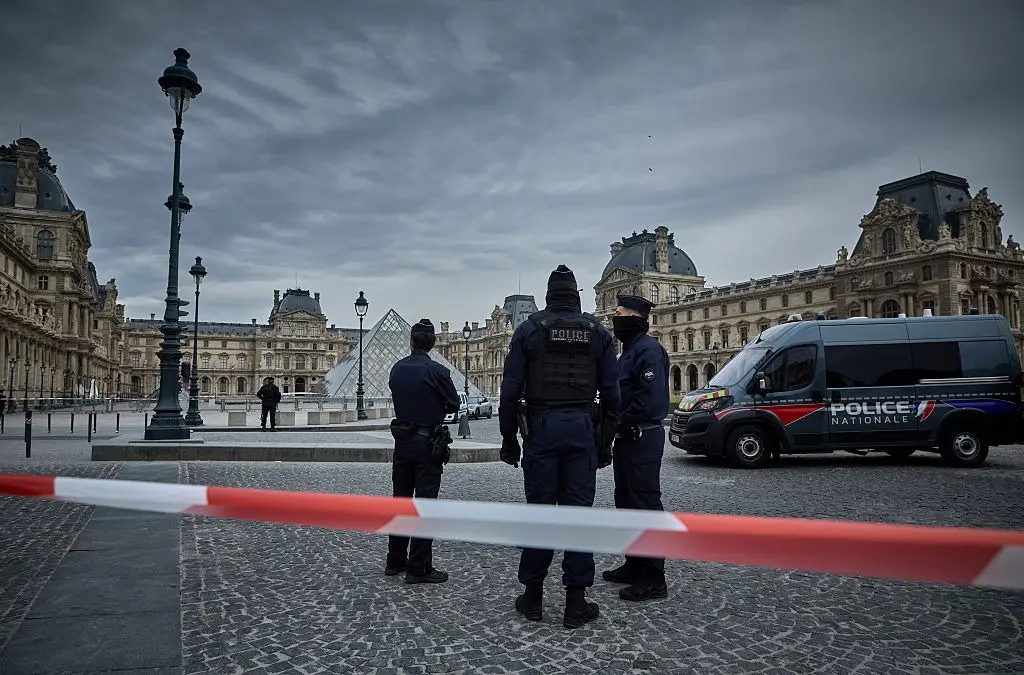
The global art and security communities were rocked to their foundations on a crisp Sunday morning in October 2025, when a daring, precision-engineered heist unfolded at the heart of Paris. In a mere seven minutes, a four-person commando team breached the world-renowned Louvre Museum, absconding with an irreplaceable cache of French crown jewels valued at an astronomical $100 million.
The investigation, characterized by high-speed pursuits, digital footprint tracing, and a web of underworld allegiances, has reached a critical juncture. According to judicial reports from the French daily Le Figaro, the Paris Court of Appeal has officially rejected a pre-trial release request for 40-year-old Rachid H., an alleged core member of the raiding party. Having been behind bars since November 2025, Rachid H. remains locked in legal limbo as magistrates untangle one of the most brazen cultural heritage thefts of the 21st century.
Despite swift police work that yielded multiple high-profile arrests within weeks of the break-in, the crown jewels themselves remain unaccounted for. The case has evolved from a standard museum robbery into a complex international mystery, featuring anonymous masterminds, shadowy underground sponsorships, conflicting testimonies from detained accomplices, and a gaping security vulnerability at the world’s most visited museum. This report provides an exhaustive examination of the chronology, the evolving police investigation, the forensic evidence, and the looming questions surrounding the missing treasures of the Second French Empire.
Read Also
Detailed Chronology: The Seven-Minute Strike at the Apollo Gallery
Prelude to the Incursion: Sunday, October 19, 2025
At approximately 7:30 AM local time on Sunday, October 19, 2025, central Paris was waking up to a quiet autumn morning. While tourists and locals trickled toward the banks of the Seine, a specialized tactical crew was executing the final phases of a meticulously planned operation.
Unlike cinematic portrayals of museum thefts that rely on laser-dodging acrobats or sophisticated electronic overrides, this crew favored raw, mechanical audacity. They utilized a heavy-duty utility truck equipped with a motorized telescoping ladder—a piece of industrial equipment typically reserved for facade cleaning or utility repairs.
The Breach (07:42 AM – 07:46 AM)
Positioning the truck discreetly against the exterior of the Louvre complex, the perpetrators targeted a vulnerable second-floor window leading directly into the legendary Apollo Gallery (Galerie d’Apollon). This historic chamber, famed for its opulent vaulted ceilings painted by Charles Le Brun, houses the remnants of the French Crown Jewels, glittering symbols of Bourbon, Napoleonic, and Imperial majesty.
With practiced efficiency, the motorized ladder extended upward, piercing the security envelope of the second story. Operatives smashed the reinforced glass of the window, breaching the perimeter before interior volumetric alarms could effectively mobilize on-site private security guards.
Once inside the gleaming gallery, the thieves bypassed lesser artifacts to focus on high-priority display cases. Brandishing heavy tools, they smashed two high-security glass vitrines, exposing an array of historic regalia. In their frantic, high-adrenalin haste, however, perfection eluded them: a priceless crown once owned by Empress Eugénie, wife of Napoleon III, was dropped onto the gallery floor, where it was later recovered by investigators.
The Escape (07:46 AM – 07:49 AM)
As the museum’s automated alarms shrieked across the Quai François Mitterrand, the thieves snatched eight distinct pieces of irreplaceable jewelry. Moving with the discipline of a military extraction, they scrambled back through the shattered window, descended the ladder to the waiting truck, and abandoned the heavy vehicle on-site.
Transitioning instantly to their secondary extraction plan, the four operatives mounted high-powered motorized scooters. Weaving expertly through the labyrinthine streets of central Paris, they vanished into the Sunday morning traffic before municipal police or rapid-response tactical units could establish a perimeter. The entire operation—from the initial elevation of the truck ladder to the final roar of disappearing scooter engines—lasted approximately seven minutes.
Supporting Context & Metrics: The Anatomy of a High-Stakes Theft
To understand the magnitude of the October 2025 Louvre heist, one must examine the context of cultural security, the staggering valuation of the stolen artifacts, and the historical vulnerability of France’s premier cultural institution.
The Stolen Inventory: Valuing the Unvaluable
While insurance appraisers and cultural ministers have pinned a conservative market value of $100 million on the eight stolen pieces, cultural historians argue that the true loss is fundamentally immeasurable. The items represent the pinnacle of 19th-century French goldsmithing, lapidary art, and monarchical symbolism.
- The Historical Weight: The French Crown Jewels were largely dispersed, sold, or broken up by the Third Republic in 1887 to prevent them from serving as rallying points for royalist factions. The surviving pieces housed in the Louvre’s Apollo Gallery are vanishingly rare remnants of imperial grandeur.
- The Liquidity Paradox: Unlike cash or marketable commodities, high-profile museum artifacts present a severe liquidity challenge. Because these items are globally cataloged, heavily photographed, and instantly recognizable, fences and illicit collectors cannot easily display or resell them on the open market. Experts suggest that such thefts are typically commissioned by private, clandestine collectors who are content to admire the stolen masterpieces in absolute secrecy, or executed by criminal syndicates intending to ransom the items back to governments or insurance firms.
Museum Security Vulnerabilities
The Louvre spans over 400,000 square meters, housing more than 35,000 works of art across its sprawling campus. Protecting such a massive historic structure presents an eternal logistical nightmare.
- Physical Access vs. Preservation: Historic preservation laws often restrict the installation of modern defensive architecture, such as blast-resistant exterior window treatments or structural bollards that might mar the aesthetic integrity of a Renaissance palace.
- Response Times: Even with state-of-the-art electronic surveillance, the physical distance between regional police precincts and the museum’s interior galleries allows a well-trained, highly mobile strike team a window of several minutes—an eternity for professional thieves.
The Suspect Profiles: A Mosaic of the Underworld
The investigation quickly mapped out a diverse network of alleged perpetrators, blending street-level muscle with logistical facilitators:
- Abdoulaye N. (40): Arrested within weeks of the heist. An unlicensed taxi driver with a history of prior robbery convictions, Abdoulaye N. also maintained an active digital footprint as a local motocross stunt enthusiast—a background that likely contributed to the precision scooter escape strategy.
- Ghelamallah A. (36): An unemployed Algerian national apprehended alongside Abdoulaye N. Both men quickly admitted their physical presence and involvement in the heist, though their subsequent depositions added layers of obfuscation rather than clarity.
- Rachid H. (40): Detained in November 2025 and currently fighting to overturn his pre-trial detention. Prosecutors allege Rachid H. served as the critical logistical bridge, supplying the physical keys to a secure parking facility in the Parisian suburb of Aubervilliers, where the stolen jewels were allegedly transferred to an intermediary.
Official Statements and Judicial Proceedings
The Legal Battles of Rachid H.
The recent ruling by the Paris Court of Appeal underscores the French judiciary’s hardline stance on organized cultural heritage crime. Rachid H.’s legal team has continuously argued for his release, pointing to a distinct lack of physical forensic linkages. Defense attorneys emphasize that Rachid H.’s fingerprints were discovered neither on the motorized ladder truck used to scale the Louvre nor within the Aubervilliers parking structure where the handover allegedly occurred.
Furthermore, Rachid H. has maintained a nuanced defense: while he reportedly admitted during interrogations in January to having "passed" a set of parking keys to "two people," he steadfastly maintains total ignorance regarding the Louvre robbery itself. He claims he was an unwitting pawn who had no idea his actions were facilitating a $100 million art heist.
The Paris Court of Appeal, however, remained unimpressed by these arguments. Weighing the gravity of the charges, the risk of flight, and the ongoing efforts to locate the missing crown jewels, the court ruled that Rachid H. must remain in pre-trial detention as the investigation deepens.
Conflicting Confessions and the "Ghost" Mastermind
Perhaps the most perplexing aspect of the judicial proceedings stems from the statements provided by Abdoulaye N. and Ghelamallah A. In June, during extensive questioning by investigating magistrates, the two confessed robbers introduced a narrative that shifted the paradigm of the case.
According to their testimony:
- The Mysterious Sponsor: They claimed they were recruited just days before the October 19 heist by an anonymous sponsor whose identity they steadfastly refuse—or claim to be unable—to reveal.
- The Inside Mastermind: The duo asserted that the principal accomplice who issued their orders and coordinated the tactical execution actually accompanied them inside the Louvre during the break-in. This alleged mastermind remains completely at large.
- The Scapegoat Claim: Most provocatively, Abdoulaye N. and Ghelamallah A. insisted that the men arrested in the subsequent sweeps—explicitly including Rachid H.—had absolutely nothing to do with the actual planning or execution of the crime.
Investigative magistrates are currently treating these claims with a high degree of skepticism. Law enforcement analysts view the narrative of an elusive, unnamed mastermind as a classic criminal trope designed to shield higher-level handlers, protect co-conspirators, or sow deliberate confusion within the judicial record.
Future Outlook: The Hunt for the Crown Jewels and Judicial Horizons
As the calendar turns deeper into 2026, the investigation into the Louvre crown jewels heist stands at a critical crossroads. The path forward for French authorities involves three primary operational imperatives:
1. Locating the Missing Regalia
The ultimate measure of success for this historic investigation will not be the number of convictions secured, but the safe recovery of the eight stolen pieces of imperial jewelry. With the primary suspects locked in detention and refusing to fully disclose the whereabouts of the loot, intelligence agencies are focusing on international illicit art tracking networks, digital currency transactions, and encrypted communication channels used by high-end criminal syndicates. Art recovery experts warn that with every month the jewels remain hidden, the risk of them being permanently altered—gems removed and melted down, or precious metals recast—increases exponentially.
2. Unmasking the Alleged Mastermind
French anti-gang units (Brigade de Répression du Banditisme) and the Central Office for the Fight against Trafficking in Cultural Goods (OCBC) are aggressively pursuing leads to verify or dismantle the claims made by Abdoulaye N. and Ghelamallah A. Identifying whether an internal security leak, a corrupt museum contractor, or a sophisticated international antiquities syndicate orchestrated the strike remains the ultimate objective.
3. Trial Preparations and Institutional Reform
As Rachid H.’s pre-trial detention is prolonged, magistrates are steadily building a comprehensive dossier aimed at bringing the accused to trial before a special criminal court. Simultaneously, the French Ministry of Culture and Louvre administration have faced intense parliamentary scrutiny, prompting a comprehensive overhaul of museum perimeter security, electronic surveillance redundancy, and rapid-response protocols to ensure that a seven-minute daylight invasion can never happen again.
For now, the French capital watches and waits, mindful that while the petty foot soldiers of the Apollo Gallery break-in sit behind bars, the glittering crown jewels of an empire remain lost somewhere in the shadows of the global underworld.


Comments
Facebook App ID not configured. Please add it in the Customizer.