
Executive Overview
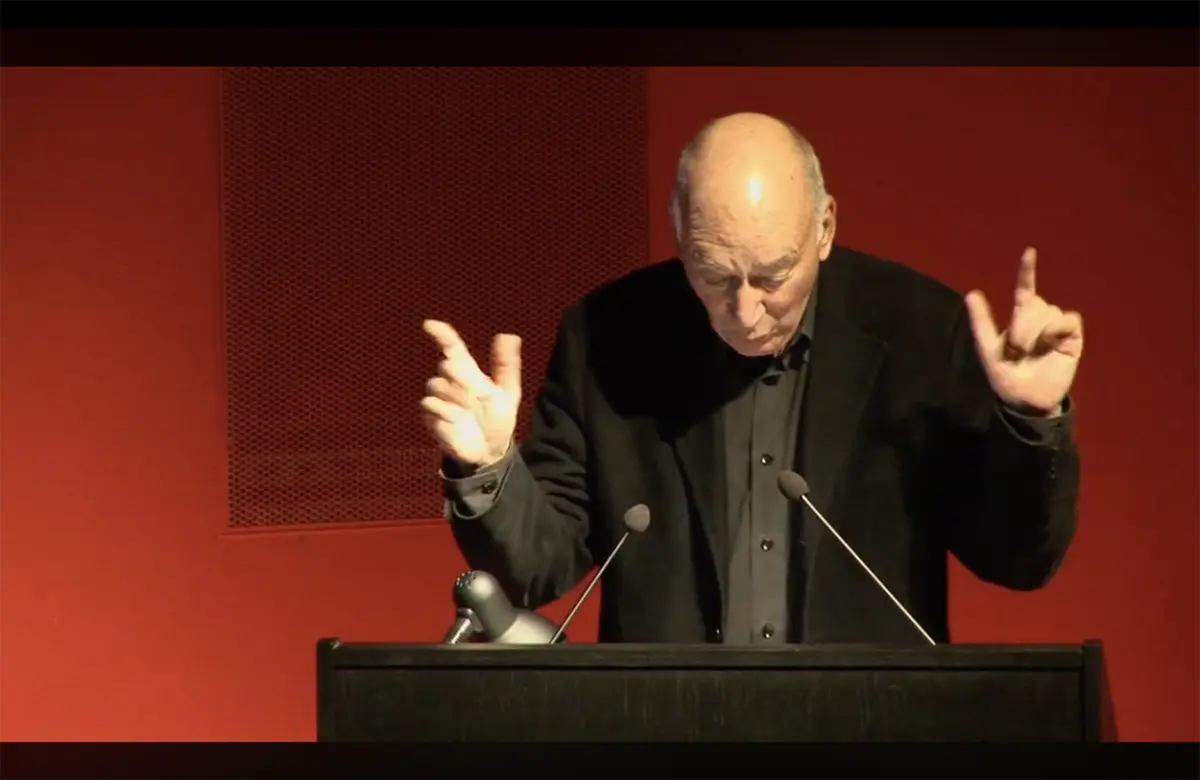
At a cultural juncture dominated by instant gratification, relentless algorithmic optimization, and the rising tide of generative AI imagery, the intellectual architecture of art critic and poet Michael Fried has rarely felt more urgent—or more radically counter-cultural. Bloomsbury’s landmark 2026 box set, Collected Writings: Essays, Poems, Interviews, serves as both a comprehensive retrospective and an intellectual provocation. Spanning decades of deep-seated engagement with modern art, literature, and philosophy, the collection captures the 87-year-old American critic not as the rigid, ivory-tower formalist of academic caricature, but as a visionary aesthete possessed of uncommon clarity, profound historical memory, and an unwavering moral compass.
Long misunderstood as a partisan defender of high-modernist orthodoxy—the stock villain of postmodern critiques who supposedly placed Édouard Manet on an unassailable pedestal while dismissing minimalist contemporaries—Fried emerges in this new light as a stealth optimist. He is a thinker deeply attuned to the mechanics of thought itself, resisting the frictionless consumerism of contemporary culture. Far from advocating for an elitist stagnation, Fried’s lifelong crusade against "theatricality" and "literalism" is revealed as a defense of art’s capacity to absorb its viewer: to pull the audience into an ornery, meditative orbit rather than pandering to prevailing market trends. As the modern forest burns around us, ignited by the hyper-convenient digital tools of our technological age, Fried’s body of work stands as a vital, stabilizing anchor—reminding us that art remains a mysterious, harmonizing pursuit independent of the viewer’s immediate self-gratification.
Detailed Chronology
To understand the weight of Bloomsbury’s new 2026 collection, one must trace the intellectual evolution of Michael Fried across a career that has continually challenged the prevailing orthodoxies of the art world.
Read Also
The Formative Years and the Shock of "Art and Objecthood" (1960s)
Fried’s notoriety was cemented indelibly in 1967 with the publication of his epochal essay "Art and Objecthood" in Artforum. Writing during a period when the post-Warhol scene was rapidly tilting toward Minimalist sculpture, Fried leveled a rigorous critique against figures like Donald Judd, Robert Morris, and Carl Andre. He charged their work with an over-reliance on literalism and theatricality—objects that depended entirely upon the physical presence and temporal experience of the viewer in a given space, rather than existing as self-contained aesthetic totalities.
While detractors weaponized the essay to paint Fried as an out-of-touch conservative attempting to halt the march of contemporary practice, this reading fundamentally missed his point. Fried was not rejecting performance or installation out of hand; rather, he was objecting to an art that collapsed the distance between object and subject, reducing the aesthetic experience to a self-referential game of "look at me."
The Expansion into Poetry, Introspection, and Memoir (1970s–2000s)
In the decades following his initial polemics, Fried’s output expanded well beyond traditional art criticism. He turned increasingly to art history—producing monumental studies on Caravaggio, Thomas Eakins, and Édouard Manet—while quietly cultivating a deeply personal practice as a poet.
The new Bloomsbury box set highlights this lesser-known dimension of his career by collecting his prose-poems and a remarkable, book-length intellectual autobiography structured as an interview with himself. Here, the rigorous polemicist softens into a Henry James-like figure: amiable, digressive, and obsessively attentive to the precise sound of a word and the internal architecture of a thought.
The Late Synthesis and the 2026 Retrospective
In recent years, Fried’s critical lens has expanded to embrace contemporary artists who share his disdain for easy viral success—creators like Jeff Wall, Douglas Gordon, and Philippe Parreno, alongside his lifelong championing of sculptor Anthony Caro. The release of Collected Writings: Essays, Poems, Interviews in 2026 synthesizes this sprawling legacy. It presents a unified vision of an intellectual who has spent more than half a century analyzing how art communicates across generations, insisting that true aesthetic value cannot be measured by market valuation, institutional blockbusters, or algorithmic engagement.
Supporting Context & Metrics
The release of a definitive three-volume or multi-part boxed set by an academic publisher of Bloomsbury’s stature is a rare event for a living art critic, signaling a systemic reassessment of mid-to-late 20th-century aesthetic theory.
Defining "Absorption" vs. "Theatricality"
At the heart of Fried’s critical framework are two foundational concepts that gain renewed clarity in the Collected Writings:

- Theatricality: The condition wherein a work of art overtly acknowledges and depends upon the viewer for its completion. Fried linked this directly to Minimalism, arguing that works demanding the physical navigation of the spectator reduce the art object to a mere prop in a theatrical space.
- Absorption: The counter-ideal. Absorptive art—typified by the stark, confrontational gazes in Manet’s Olympia (1863) or the intricate, self-contained spatial dynamics of Anthony Caro’s tabletop sculptures—draws the viewer into its own meditative orbit. The figures within the work appear entirely engrossed in their own internal worlds, ignoring the spectator entirely. This structural aloofness forces the viewer to chase after the object, preserving art’s autonomy from consumerist demands.
The Scale of the Retrospective
- Decades Covered: Over 60 years of continuous critical and poetic output, stretching from the height of 1960s Modernism into the generative AI era of the mid-2020s.
- Core Texts Unified: Brings together seminal art-historical essays, delicate prose-poems where "the medium is thought," and intimate biographical reflections on key collaborators such as Anthony Caro and Edward Said.
- Philosophical Lineage: Connects the Enlightenment criticism of Denis Diderot and the radical modernity of Charles Baudelaire to contemporary aesthetic dilemmas, bridging the gap between historical painting and twenty-first-century digital culture.
Official Statements and Intellectual Defense
Throughout his career, Fried has been a target for critics seeking to pigeonhole him as an elitist gatekeeper. Yet, a meticulous reading of the Collected Writings dispels these caricatures, revealing a thinker deeply engaged with the political, moral, and emotional realities of his world.
On the Moral Imperative of Art and Politics
Far from residing in an ivory tower detached from human suffering, Fried’s late-career reflections integrate deep moral outrage with poetic sensitivity. Reflecting on memories of intellectual giants like Edward Said, the diary entries of Franz Kafka, and the political grit of Shakespeare’s Coriolanus, Fried does not shy away from the brutalities of contemporary geopolitics. In his writings, he notes with searing clarity that "no thoughts of halcyon younger days can hold out long against present horrors," explicitly addressing human catastrophes such as the Israeli military campaigns against Palestinians.
Similarly, in a moving obituary dedicated to his lifelong friend and collaborator, sculptor Anthony Caro, Fried expressed an unbridled, romantic vision for how extraordinary artistic achievement should be met by society:
"I felt that fireworks should have been set off [for Caro’s Gagosian show in 2013], prisoners reprieved, travel made gratis, a bank holiday declared—something spectacularly out of the ordinary ought to have been arranged to mark so extraordinary an achievement."
Rebuffing the "Formalist" Label
Defenders and commentators reviewing the new collection emphasize that Fried’s primary objective has always been defensive of the individual’s capacity for deep, uncompromised attention. He rejects the knee-jerk modern mandate to consume whatever cultural products are force-fed by commercial markets and bourgeois trend cycles.
As noted in essays celebrating Baudelaire’s foundational premise that true criticism must be "partial, passionate, and political," Fried views the critic not as an impartial, bureaucratic judge, but as an active participant placing high-stakes bets on what will endure across time. His persistent use of the phrase "never before"—applied equally to Manet’s startling pictorial innovations and Caro’s radical re-scaling of abstract space—underscores his belief that art history is perpetually malleable, awaiting the eagle-eyed observer to intervene with conviction.
Future Outlook
As the cultural landscape hurtles blindly into an epoch defined by generative artificial intelligence—a technology that takes the superficial literalism of consumerist art and multiplies it infinitely through automated replication—the lessons of Michael Fried’s legacy take on prophetic urgency.
For decades, digital culture has sought to make every user the ultimate arbiter of meaning, turning the spectator into a passive consumer of customizable, hyper-personalized content. In 2006, Time magazine famously named "YOU" Person of the Year, celebrating a solipsistic culture where art and media do not exist until an individual walks up and triggers them. Fried’s lifetime of resistance against this exact impulse—his steadfast commitment to the "mighty oak of Modernism" first planted in the Enlightenment—provides a much-needed intellectual armor.
The publication of Collected Writings: Essays, Poems, Interviews (2026) arrives precisely when we need it most. It reminds the cultural sphere that the essence of art lies not in its ability to entertain, pander, or seamlessly integrate into an algorithmic feed, but in its stubborn, beautiful autonomy. By championing artists who are "hectic beavers" and "go-for-brokers"—creators entirely unconcerned with making a splash at contemporary mega-fairs—Fried charts a path forward. He invites us to step back from the burning forest of digital noise, slow down, read closely, and allow ourselves to be profoundly, wondrously absorbed once more.


Comments
Facebook App ID not configured. Please add it in the Customizer.