
Executive Overview
In the contemporary art landscape, few practices engage as deeply with the materiality of memory, loss, and institutional structures as that of Craig Jun Li. Merging the rigorous intellectual inquiry of 1980s and 1990s conceptual art with deeply personal interventions, Jun Li transforms found ephemera—faded photographs, discarded personal letters, and well-worn buttons—into haunting meditations on history, absence, and preservation.
His solo exhibition at Chapter NY, pointedly titled I Want to Love with No Fear, served as a masterclass in atmospheric and conceptual installation. Eschewing the traditional white cube aesthetic, Jun Li physically reconfigured the gallery’s environment, dropping the internal temperature to mirror the climate-controlled vaults of rare-book libraries and museum storage facilities. By blocking the radiators and inviting visitors into a crisp, chilled sanctuary, the artist did not merely display objects; he enacted a physical translation of the archival impulse.
This comprehensive feature explores the artistic trajectory, theoretical underpinnings, and profound biographical roots of Craig Jun Li’s practice. Drawing on institutional critiques of the archive, the influence of theorists like Jacques Derrida and Achille Mbembe, and the enduring legacy of queer artists navigating the AIDS crisis, this article examines how Jun Li bridges the personal and the political. Through meticulous installation strategies and an acute awareness of what remains unsaid and unseen, Jun Li continues to redefine the parameters of contemporary conceptual art on an international stage.
Read Also
Detailed Chronology: From Found Objects to Chapter NY
To understand the intellectual and physical rigor of Craig Jun Li’s exhibition at Chapter NY, one must trace the developmental arc of his artistic evolution. Jun Li’s journey is anchored in an unyielding fascination with the discarded, the overlooked, and the ephemeral—material remnants that carry the weight of lives half-remembered.
The Early Curiosity of the Archive
Long before his work entered international institutions such as the KW Institute for Contemporary Art in Berlin, François Ghebaly in New York, and Kurtkubin in Mexico City, Jun Li was an inquisitive student drawn to the mechanics of history-making. While pursuing his studies, he immersed himself in the writings of post-structuralist and post-colonial theorists. Scholars like Achille Mbembe, who interrogated the political life of archives and state-sanctioned memory, and Miwon Kwon, known for her incisive critiques of site-specific art and displacement, laid the theoretical foundation for Jun Li’s methodology.
Rather than looking to pristine, state-sanctioned repositories, Jun Li cultivated a practice rooted in the periphery. He developed a penchant for scavenging thrift stores, flea markets, and estate sales, rescuing items that had slipped through the cracks of formal preservation systems.
The Genesis of Benny’s Video
As part of his engagement with the broader arts community, Jun Li took on the operation of Benny’s Video, an artist-run space that serves as a vital incubator for experimental practices. Running an independent, artist-centric platform provided Jun Li with a firsthand understanding of alternative economies of display and the importance of autonomy in contemporary art curation. This grassroots sensibility permeates his studio practice, grounding his high-concept installations in a tactile, populist appreciation for everyday materials.
I Want to Love with No Fear: The January Exhibition at Chapter NY
The culmination of these diverse threads materialized in January at Chapter NY. Stepping into the gallery was an entirely immersive sensory experience. By physically blocking the radiators and manipulating the HVAC systems, Jun Li lowered the ambient temperature to simulate the stark, dry climate required to preserve centuries-old manuscripts.
"What I do is like a show-and-tell," Jun Li explained during our interview, describing his method of laying bare his personal collection of found objects. Yet, the exhibition’s title—I Want to Love with No Fear—betrayed a desperate yearning that cut against the clinical detachment of a museum vault.
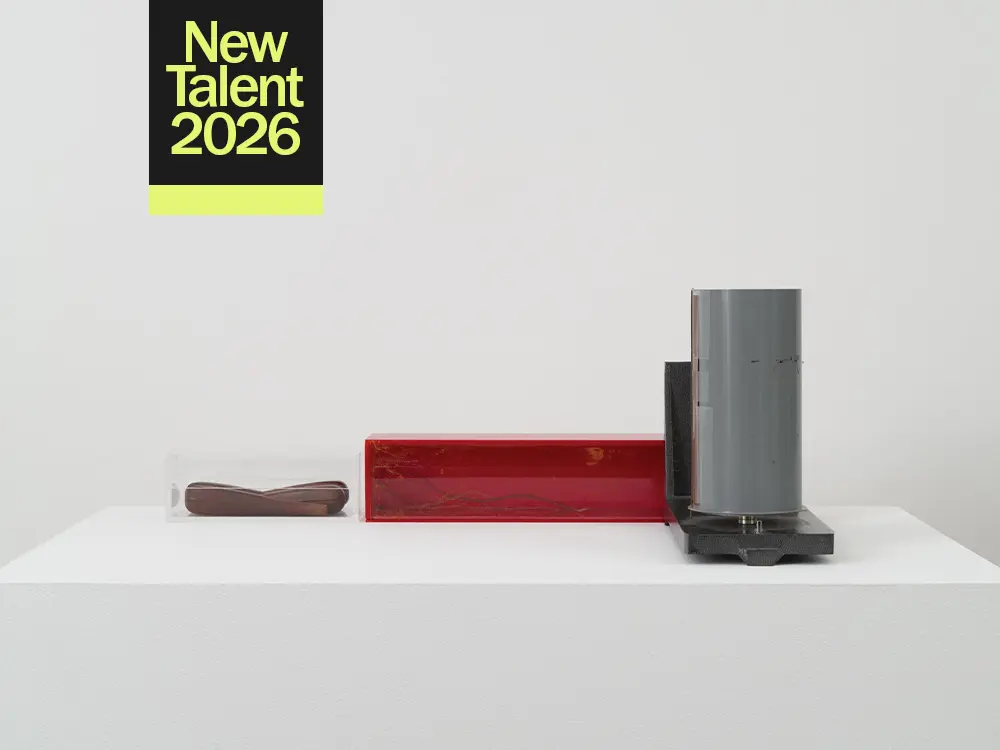
This tension between cold institutional preservation and warm, fragile human emotion was most evident in the treatment of his personal artifacts. Buttons harvested from his most cherished shirts were meticulously arranged into miniature, highly tactile archives. Placed atop a pair of foreboding metallic cooling units, the buttons looked less like clothing accessories and more like specimens undergoing cryopreservation, balancing vulnerability with industrial finality.
Supporting Context & Metrics: Theorizing the Archive and the Weight of Omission
To contextualize Jun Li’s work, one must examine the theoretical framework surrounding the concept of the archive in contemporary art, as well as the specific socio-political conditions that shaped the artist’s worldview.
Deconstructing "Archive Fever"
The exhibition’s chilly atmosphere was, by the artist’s own admission, born partly out of an ironic exhaustion. "I was getting sick of talking about ‘Archive Fever,’" Jun Li remarked, invoking French philosopher Jacques Derrida’s seminal 1995 text. Derrida’s psychoanalytic meditation explored humanity’s compulsive, destructive urge to accumulate, document, and institutionalize memory to stave off the terror of forgetting.
While traditional archives strive to present a complete, objective narrative, Jun Li’s installations actively foreground their own incompleteness. His work is profoundly shaped by the politics of omission: Who is left out of the historical record? What stories are deemed unworthy of preservation?
These questions were rendered physically manifest in a neat, austere yet intimate row of rectangular frames installed on the gallery walls. Inside these frames, rephotographed grayscale papers and vintage images were layered both behind and in front of the glass. Jun Li frequently utilizes materials that tell only half a story—such as one-sided correspondence between artists or anonymous photographs salvaged from thrift stores where the identities of the subjects are permanently lost to time.
+-------------------------------------------------------+
|              THE ARCHIVAL FRAMEWORK                   |
+--------------------------+----------------------------+
| Traditional Archive      | Craig Jun Li's Intervention|
+--------------------------+----------------------------+
| Focus on Completeness    | Focus on Omission & Absence|
| Controlled Climate       | Emulated Climate as Metaphor|
| State-Sanctioned Memory  | Marginalized & Found Ephemera|
| Objective Presentation   | Subjective, Intimate Display|
+--------------------------+----------------------------+
The Shadow of Childhood Tragedy and the AIDS Generation
Jun Li’s obsession with absence and survival is not merely academic; it is deeply rooted in his personal biography. Born in China in 1998, he was partly raised in a regional town devastated by a public health crisis involving widespread pediatric HIV infections due to institutional medical malpractice. Growing up in the shadow of this preventable tragedy instilled in him an early, visceral awareness of systemic neglect, societal trauma, and the fragility of life.
This formative experience aligned him naturally with the conceptual artists of the 1980s and 1990s—a generation devastated by the ravages of the AIDS epidemic. Confronted with mass mortality and institutional apathy, these queer artists prioritized living testimony, radical care, and the visualization of grief.
Jun Li found profound resonance in the strategies developed by queer artists to give form to absence. "Archival materials are structured around absence, while reminding us of their presence," he observes. This paradox is brilliantly mirrored in his wall-mounted works: while the frames are populated with historical images and texts, an equal and deliberate proportion of the composition is given over to blank space. This emptiness is not a void; it is a monument to the silenced, the missing, and the unrecorded.
Official Statements & Direct Insights
The conceptual depth of Craig Jun Li’s practice is best articulated in his own words, gathered through extensive discussions regarding his methodology, spatial interventions, and artistic philosophy.
On the Performance of Display
Discussing the theatricality of his exhibitions, Jun Li sheds light on why he rejects the passive viewing experience common in commercial galleries:
"What I do is like a show-and-tell. I want to show the effect these materials have had on me. When you walk into the gallery, I am signaling to you: You’re now entering an archive. Bring a jacket."
By forcing visitors to physically adapt to the environment—experiencing the goosebumps and crisp chill traditionally reserved for rare-book reading rooms—Jun Li collapses the psychological distance between the viewer and the historical artifact. The archive ceases to be a sterile, neutral site of study and becomes a bodily, visceral encounter.
On Archival Fatigue and Irony
Addressing the ubiquitous academic discourse surrounding preservation in contemporary art, Jun Li notes:
"I was getting sick of talking about ‘Archive Fever.’ The cold began as an inside joke, but it quickly evolved into a way to materialize the emotional detachment inherent in institutional preservation, juxtaposed against the intimacy of personal items like worn buttons and faded letters."
On the Geometry of Silence
Reflecting on the structural gaps within his salvaged source materials—such as partial correspondences and anonymous snapshots—Jun Li articulates his relationship with historical omission:
"The materials I collect—thrift store photographs, one-sided artist letters—are already fractured. They carry ghosts. My job is not to fill in the blanks, but to construct a frame that honors the weight of what is missing."
Future Outlook: The Trajectory of an Emerging Voice
As Craig Jun Li transitions from his critically acclaimed presentation at Chapter NY toward upcoming international projects, his practice stands at a vital intersection of contemporary conceptual art, historical critique, and personal testimony.
The art world’s increasing preoccupation with digital preservation, surveillance capitalism, and the erosion of collective memory makes Jun Li’s analog, deeply tactile investigations more relevant than ever. By insisting on the physical weight of paper, cloth, and cold air, he offers a vital counter-narrative to a culture hurtling toward digital ephemera and historical amnesia.
Anticipated Directions
- Expanded Spatial Interventions: Building upon the climatic manipulations tested at Chapter NY, future institutional presentations are expected to further explore environmental conditioning as a narrative tool, potentially incorporating humidity control, acoustic dampening, and architectural reconfiguration.
- Global Exhibitions: Following successful showcases across North America, Europe, and Latin America, Jun Li’s international footprint continues to expand, positioning him as a leading voice among a younger generation of conceptualists redefining institutional critique.
- Deepening Archival Interrogations: As he continues to source forgotten ephemera from international flea markets and private archives, his upcoming bodies of work promise to further investigate the geopolitical fault lines of migration, medical trauma, and queer diaspora.
In an era defined by overwhelming data accumulation, Craig Jun Li reminds us that true history resides not in the totality of what is saved, but in the profound, echoing spaces of what has been lost. Through chilled galleries, silenced buttons, and frames balanced delicately between image and void, Jun Li crafts an enduring testament to love, memory, and survival without fear.

Comments
Facebook App ID not configured. Please add it in the Customizer.