
Executive Overview
In an industry frequently dominated by narratives of cutthroat competition, high-pressure production schedules, and fleeting professional relationships, genuine acts of empathy often stand out as rare beacons of humanity. Recently, a touching display of inter-generational warmth captured the public imagination in Pakistan’s entertainment sector. Veteran television and film icon Bushra Ansari extended a heartfelt gesture of hospitality to acclaimed actress Saba Qamar, who had been separated from the comforts of her home for nearly a month due to demanding shooting schedules.
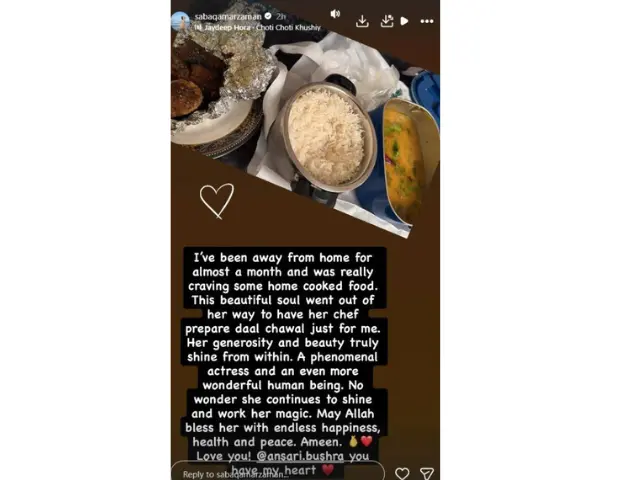
Upon learning that Qamar was desperately craving a traditional, comforting home-cooked meal, Ansari orchestrated a culinary surprise, deploying her personal chef to prepare a classic Pakistani comfort dish—daal chawal (lentils and rice) accompanied by savory kebabs. Qamar took to social media to express her profound gratitude, painting a vivid picture of industry camaraderie that extends far beyond the soundstages and television screens.
This seemingly simple act of sending lunch transcends a mere exchange of food; it serves as a powerful testament to the enduring bonds, mentorship, and mutual respect that unite Pakistan’s creative community. As the entertainment landscape undergoes rapid commercialization and digitalization, such gestures reinforce the foundational ethos of the industry: a tight-knit family of artists who look out for one another’s emotional and physical well-being. This report delves into the specifics of this heartwarming exchange, explores the broader context of industry relationships, reviews Qamar’s current professional renaissance across multiple television projects, and examines the cultural significance of food as a love language within South Asian creative circles.
Read Also
Detailed Chronology of Events
The Agony of Separation and Production Pressures
Modern television and film production schedules in Pakistan are notoriously grueling. With networks pushing for high-content volumes, extended seasons, and simultaneous multi-project commitments, actors frequently find themselves stationed away from home for weeks, sometimes months, at a time. Saba Qamar, one of the nation’s most sought-after leading ladies, found herself in precisely this predicament. Having spent nearly a month away from her permanent residence due to an intensive shooting block, Qamar experienced the quintessential homesickness familiar to frequent travelers and nomadic artists.
While long hours, makeup chairs, and script revisions are standard components of an actor’s daily routine, the psychological toll of isolation and the absence of domestic comforts can weigh heavily. For Qamar, the most acute manifestation of this homesickness was culinary: she was deeply craving the unpretentious, comforting flavors of a traditional, home-cooked meal—a stark contrast to the sterile catering services or fast food typically consumed on film sets.
The Word Reaches a Legend
In the interconnected ecosystem of Pakistan’s media fraternity, news travels fast, particularly among colleagues sharing mutual acquaintances or working within proximate production circles. Somehow, word of Qamar’s culinary longing reached the ears of Bushra Ansari. Ansari, a titan of the entertainment industry whose career spans decades of stellar performances, writing, and musical contributions, is as renowned for her warmth off-screen as she is for her unmatched comedic and dramatic timing on it.
Rather than dismissing the comment as casual industry chatter, Ansari saw an opportunity to practice a time-honored South Asian tradition: hospitality through food. Recognizing the emotional vulnerability of a younger colleague working hard far from home, Ansari took immediate, decisive action.
The Culinary Intervention
Demonstrating the kind of maternal care and collegial affection that money cannot buy, Ansari bypassed commercial dining options entirely. Instead, she mobilized her own domestic staff, instructing her personal chef to meticulously prepare a classic, soul-soothing Pakistani meal: piping hot, aromatic daal chawal paired with perfectly spiced kebabs.
The meal was packaged with care and delivered directly to Qamar, catching the younger actress completely by surprise. For Qamar, who had been mentally resigned to another generic set meal, the arrival of the home-cooked feast was nothing short of miraculous. The carefully curated dishes represented more than just carbohydrates and proteins; they were a tangible manifestation of care, validation, and emotional support.
The Public Expression of Gratitude
Overwhelmed by the thoughtfulness of the gesture, Qamar utilized her official Instagram platform to share the moment with her millions of followers. Posting a snapshot of the comforting spread, Qamar peeled back the curtain on the private dynamics of the showbiz elite.
She wrote extensively about how Ansari’s actions deeply moved her, noting that the veteran actress had gone completely out of her way to fulfill a simple craving voiced in passing. Qamar’s digital tribute was not merely a "thank you" for the food; it was a deeply articulated appreciation for Ansari’s character, humility, and enduring grace. By sharing the anecdote, Qamar allowed her audience a rare, unvarnished glimpse into the sisterhood that underpins Pakistan’s cultural production ecosystem.
Supporting Context & Metrics
The Psychology of Comfort Food in High-Stress Environments
To fully understand the resonance of Ansari’s gesture, one must examine the psychological role of food—specifically regional, traditional cuisine—within high-stress professional environments. Studies in environmental psychology and nutritional anthropology consistently demonstrate that "comfort foods" are deeply tied to autobiographical memory, emotional security, and a sense of belonging.
- The Nostalgia Factor: Dishes like daal chawal carry minimal culinary pretension but maximal emotional weight for South Asians. They evoke memories of family dining tables, maternal care, and childhood safety.
- Mitigating Burnout: In an industry characterized by high rates of burnout, anxiety, and transient living conditions, consuming a meal prepared in a home kitchen serves as an anchor. It temporarily grounds the individual, neutralizing the sensory overload of production sets, intense lighting, and constant public scrutiny.
Generational Bridges in Pakistani Media
The interaction between Bushra Ansari and Saba Qamar highlights a vital structural component of the Pakistani entertainment industry: the seamless transfer of cultural capital and emotional support across generations.

| Metric / Aspect | Historical Industry Dynamic | Modern Industry Dynamic | Ansari-Qamar Dynamic |
|---|---|---|---|
| Mentorship | Formal, rigid, hierarchical | Fragmented, commercialized | Fluid, affectionate, peer-like |
| Communication | Face-to-face, studio-bound | Digital, fast-paced, public | Blends private care with public appreciation |
| Support Systems | Family-centric networks | Agency-driven management | Inter-generational sisterhood |
Ansari belongs to the golden era of Pakistan Television (PTV), where actors were trained not just in performance, but in institutional ethics, ensemble building, and collective survival through socio-political upheavals. Qamar represents the contemporary apex of television and cinematic prowess—versatile, independent, and globally recognized. When a veteran of Ansari’s stature nurtures a star of Qamar’s caliber, it validates the continuity of artistic values. It signals that despite the hyper-commercialization of the digital age, the core values of empathy, respect, and mutual care remain intact.
Saba Qamar’s Professional Footprint: A Reign of Versatility
While this viral moment captured public attention for its emotional sweetness, it unfolds against the backdrop of an immensely productive professional phase for Saba Qamar. Far from resting on her laurels, Qamar has maintained a relentless pace, delivering a masterclass in versatility through a string of high-profile television projects that underscore her dominance in the drama sector.
- Case No 9: A gripping narrative that tests Qamar’s ability to navigate high-stakes dramatic tension, showcasing her mastery over complex psychological states.
- Pamaal (co-starring Usman Mukhtar): A visually rich and emotionally layered project that highlights her magnetic on-screen chemistry and ability to anchor heavy social dramas alongside accomplished co-stars.
- Muamma (featuring her portrayal of Jahan Ara): Perhaps her most critically discussed recent venture, where she breathes life into the multifaceted, deeply nuanced character of Jahan Ara. This role has been widely cited by critics as a benchmark for contemporary character acting on Pakistani television.
The concurrent management of these demanding roles explains why Qamar was away from home for an extended period, and consequently, why Ansari’s intervention arrived at such a psychologicially opportune moment. The ability to transition effortlessly between these diverse characters while managing the physical exhaustion of long shooting hours requires immense stamina—stamina that is undeniably replenished by acts of communal kindness.
Official Statements and Social Media Discourse
Deconstructing Saba Qamar’s Digital Tribute
The language deployed by Saba Qamar in her Instagram stories deserves close textual analysis, as it reflects the deep reverence she holds for Ansari. Rather than using casual internet vernacular, Qamar elevated the tribute to an artistic and personal homage:
"This beautiful soul went out of her way to have her chef prepare daal chawal just for me… Her generosity and beauty truly shine from within. A phenomenal actress and an even more wonderful human being. No wonder she continues to shine and work her magic."
By emphasizing that Ansari’s beauty "shines from within," Qamar connects physical and professional longevity with ethical integrity. In an industry youth-obsessed and appearance-driven, Qamar attributes Ansari’s decades-long relevance not merely to her talent, but to her character.
Furthermore, Qamar’s concluding prayer—"May Allah bless her with endless happiness, health and peace. Ameen. Love you! Bushra Ansari, you have my heart"—transforms a professional courtesy into an intimate declaration of familial affection. This public vulnerability resonates powerfully with fans, who increasingly demand authenticity from their favorite celebrities.
Public and Media Reception
The online reaction to the exchange was swift and overwhelmingly positive. Within hours of Qamar’s post, entertainment portals, fan pages, and independent commentators picked up the story, generating thousands of engagements across platforms like X (formerly Twitter), Instagram, and Facebook.
Commenters universally lauded Ansari for embodying the traditional values of South Asian matriarchal hospitality. Many users drew attention to the refreshing absence of ego in the interaction. In a cultural sphere where senior actors are sometimes stereotyped as aloof or critical of younger generations, Ansari’s proactive kindness dismantled such tropes entirely. Fans flooded comment sections with praises for both women, celebrating the "queen supporting queen" dynamic that has become a rallying cry for progressive, feminist solidarity within the regional arts community.
Future Outlook: The Evolution of Workplace Culture in Showbiz
Fostering Compassion in High-Pressure Industries
The Ansari-Qamar anecdote, while charming on the surface, opens up a broader, much-needed conversation regarding the mental health and workplace wellness of artists and technicians in Pakistan’s entertainment sector. As production houses scale up operations to meet the demands of streaming platforms, satellite television, and global audiences, the risk of professional burnout, alienation, and physical exhaustion increases exponentially.
Industry stakeholders are beginning to recognize that sustainable creative output requires robust support systems. While informal acts of kindness—such as Ansari sending daal chawal—will always remain the heartwarming bedrock of interpersonal relations, there is a growing institutional push toward formalizing welfare measures:
- Mental Health Awareness: Producers are slowly integrating on-set counselors and mental health breaks to manage the pressures faced by lead actors working away from home.
- Optimized Scheduling: Unions and production guilds are advocating for stricter adherence to humane working hours, reducing the necessity for month-long isolations from family and domestic life.
- Community Building: Initiatives that encourage cross-generational mentorship help mitigate the isolation felt by younger artists navigating rapid, high-stakes fame.
The Enduring Legacy of Cultural Icons
Ultimately, the story of Bushra Ansari feeding a homesick Saba Qamar is a reminder of the human heart beating beneath the glamour of the entertainment industry. It demonstrates that true stardom is measured not only by television ratings, box office numbers, or social media follower counts, but by the capacity to notice the quiet struggles of a colleague and respond with grace, generosity, and a warm plate of food.
As Saba Qamar continues to captivate audiences with her fearless performances in projects like Case No 9, Pamaal, and Muamma, and as Bushra Ansari continues to inspire successive generations of storytellers, this moment will be remembered as a sweet footnote in their respective legacies. It is a shining example of how simple acts of kindness can bridge generational divides, soothe the weary soul of an artist, and remind an entire nation why it fell in love with its television stars in the first place.



Comments
Facebook App ID not configured. Please add it in the Customizer.