
Executive Overview
In an era where modern psychology increasingly emphasizes the profound, long-lasting impacts of early childhood experiences, prominent Pakistani actor and public figure Urwa Hocane has stepped forward to champion a vital conversation regarding emotional safety. Recently taking to her social media platform, Hocane shared a deeply personal reflection on the psychological ramifications of fear-based parenting, drawing attention to how seemingly harmless threats, jokes, and disciplinary tactics employed by adults can leave indelible scars well into adulthood.
Resharing a video by renowned religious scholar Nouman Ali Khan, Hocane addressed a pervasive yet rarely scrutinized cultural norm: the use of fear, abandonment threats, and intimidation as casual instruments of control or amusement by adults interacting with children. The actor’s candid disclosure—revealing that the discourse brought her to tears and provided profound validation for her own "inner child"—sparked a widespread dialogue across digital platforms regarding the responsibilities of parents, caregivers, and society at large.
This report examines the core issues raised by Hocane’s public commentary, exploring the intersection of modern psychological insights on developmental trauma, the cultural normalisation of fear-based discipline in South Asian households, and the broader implications for child welfare. Furthermore, the article contextualizes Hocane’s advocacy within her established history of utilizing her platform to address social taboos, ranging from her pioneering work on the critically acclaimed drama Udaari to her current role as a mother to her daughter, Jahan Ara Saeed. Through a professional journalistic lens, we analyze the urgent need to transition from authoritarian, fear-driven environments to empathetic, emotionally secure spaces that foster genuine psychological well-being in the next generation.
Read Also
Detailed Chronology of Events and Digital Discourse
The public discourse initiated by Urwa Hocane unfolded through a series of digital touchpoints and reflective statements that resonated deeply with thousands of followers, eventually spilling over into mainstream cultural commentary.
The Catalyst: Nouman Ali Khan’s Discourse on Childhood Fear
The focal point of the discussion originated from a digital segment featuring religious scholar Nouman Ali Khan. In the video, Khan dissected a common behavioral pattern among adults: the deployment of fear, intimidation, and emotional manipulation as casual tools when dealing with children. The discourse specifically targeted everyday remarks that adults often dismiss as harmless humor or effective behavioral correction. Examples highlighted included telling children they are unwanted, threatening abandonment if they fail to comply with instructions, or using emotional blackmail to force compliance. Khan emphasized that while adults may view these statements as transient or trivial, children process them through an entirely different cognitive and emotional framework, frequently internalizing deep-seated fears of rejection and abandonment.
Urwa Hocane’s Instagram Reflection and Validation
Upon encountering the video, Urwa Hocane reshared the content to her Instagram audience, accompanied by a lengthy, emotionally charged caption that immediately captured public attention. She revealed that the message struck a deeply personal chord, writing:
"This made me teary-eyed. This was so important for me to hear to heal my inner trauma. I can remember so many incidents in my life as a child where adults didn’t act like adults, and such incidents have shaped so many of us grown-ups in more ways than we can elaborate on and pay attention to."
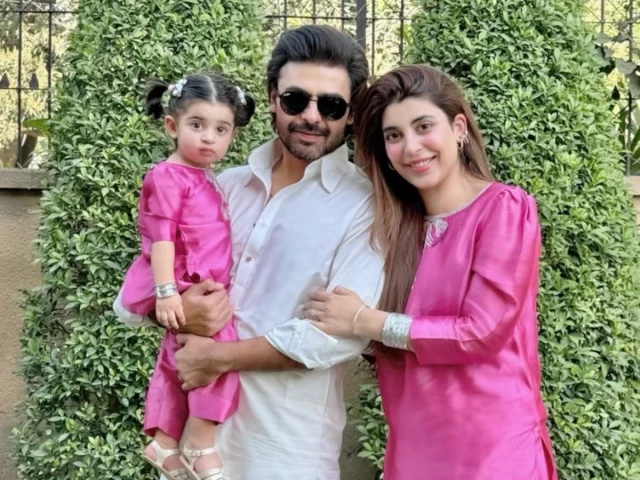
The actor noted that the discourse offered a profound sense of closure and emotional validation for her own upbringing, reinforcing her commitment to breaking generational cycles of psychological distress. As a mother—having welcomed her first child, Jahan Ara Saeed, with husband and fellow artist Farhan Saeed in January 2024—Hocane stressed that the insights reinforced her ongoing parenting philosophy. "Glad I always thought about this even as a parent today, and my inner child truly feels validated today after hearing this. We all must become mindful and not repeat these patterns so we protect our children better!" she added.
Public and Media Reception
Hocane’s vulnerability catalyzed a broader public conversation across digital networks. Followers, child psychologists, and parenting advocates flooded comment sections with their own anecdotes of childhood intimidation, ranging from threats of being left behind in public spaces to being subjected to emotionally coercive behavioral tactics. The rapid amplification of Hocane’s post underscored a collective yearning for open discussions surrounding gentle parenting, emotional literacy, and the dismantling of authoritarian parenting models that prioritize immediate compliance over long-term psychological health.
Supporting Context & Metrics: The Psychology of Childhood Emotional Trauma
To fully understand the weight of Urwa Hocane’s commentary, it is essential to examine the empirical research surrounding early childhood development, emotional security, and the long-term impact of fear-based disciplinary methods.
The Neurobiology of Fear in Developing Brains
Childhood is a critical window of neurological development. During the formative years, the human brain rapidly builds neural pathways in response to environmental stimuli and interpersonal interactions. When adults—who represent the primary source of safety, survival, and attachment for a child—utilize fear, rejection, or threats of abandonment as disciplinary tools, the child’s nervous system experiences a state of acute stress.
According to developmental psychologists, children lack the cognitive maturity to contextualize hyperbole, sarcasm, or "joking" threats. A statement such as, "If you don’t behave, I am going to leave you here," is not processed as humor by a young mind; rather, it triggers a primal survival response. The amygdala—the brain’s emotional processing center—signals an emergency, flooding the body with stress hormones like cortisol and adrenaline.
Long-Term Psychological Sequelae in Adulthood
When children are repeatedly subjected to environments where their emotional security is compromised, the consequences frequently extend well into their adult lives. Research in developmental psychology and childhood trauma indicates several recurring patterns among adults who experienced fear-based conditioning in their youth:
- Chronic Anxiety and Hypervigilance: Adults who grew up constantly walking on eggshells often exhibit heightened baseline anxiety, constantly scanning their environments for signs of impending conflict or rejection.
- Attachment Insecurity: Fear of abandonment during childhood frequently translates into insecure attachment styles in adult romantic and professional relationships, manifesting as either anxious clinging or avoidant detachment.
- Impaired Emotional Regulation: Individuals subjected to emotional invalidation often struggle to identify, express, and regulate their emotions constructively.
- Internalized Self-Doubt: When children are made to feel that their natural behaviors are unacceptable or deserving of emotional withdrawal from caregivers, they internalize a persistent core belief that they are inherently "bad" or "unlovable."
Cultural Normalization vs. Emotional Reality
In many traditional societies, including Pakistan and the broader South Asian region, hierarchical family structures have historically prioritized absolute obedience and respect for elders above individual emotional autonomy. Disciplinary methods grounded in fear, public embarrassment, emotional withholding, and physical intimidation have frequently been normalized under the guise of "tough love" or effective child-rearing.
However, contemporary cultural discourse—championed by public figures like Urwa Hocane—is challenging these legacy paradigms. There is a growing societal recognition that traditional methods of control, while successful in achieving short-term compliance, inflict long-term psychological damage that outweighs any superficial benefits.
Official Statements and Personal Advocacy
Urwa Hocane’s recent statements do not exist in a vacuum; rather, they represent the latest chapter in a long-standing commitment to addressing social taboos, protecting vulnerable populations, and advocating for systemic empathy through her platform as an artist and public figure.
Redefining Parental Responsibility
In her reflections, Hocane emphasized that modern parenting requires a conscious, active unlearning of toxic generational behaviors. She argued that true protection goes beyond physical safety, encompassing the vital necessity of emotional sanctuary. Children require clear boundaries and structured guidance, but these frameworks must be communicated through patience, respect, and emotional consistency rather than intimidation.
Her transition from reflecting on her own "inner child" to applying these insights as a mother highlights the proactive nature of generational healing. By examining her own past triggers, Hocane demonstrates how self-awareness can break cycles of emotional neglect, ensuring that the next generation grows up feeling fundamentally secure, heard, and valued.
A Legacy of Social Advocacy: From Udaari to Emotional Well-being
Hocane’s dedication to confronting uncomfortable societal realities is well-documented. In 2016, she starred in the groundbreaking television drama Udaari, a project that fearlessly tackled the deeply sensitive and heavily stigmatized subject of child sexual abuse. The drama served as a cultural watershed moment in Pakistan, forcing mainstream media and households to confront issues that had long been swept under the rug.
Reflecting on her involvement in Udaari during a past interview, Hocane noted:
"I felt that I am meant to be a part of the change. It is very important to talk about the taboos and the complexes this society possesses."
She underscored the vital role that media and public figures play in breaking societal silences, noting that Udaari successfully elevated conversations surrounding child protection to the forefront of national discourse. Her recent Instagram post regarding emotional trauma and fear-based parenting is a natural continuation of this advocacy, shifting the lens from institutional and criminal child abuse to the everyday, subtle psychological injuries inflicted within domestic spaces under the guise of casual discipline.
Future Outlook: Moving Toward a Culture of Gentle Parenting and Emotional Literacy
As public awareness surrounding mental health continues to expand globally, the cultural conversation in Pakistan and the wider region is undergoing a paradigm shift. The advocacy spearheaded by public figures like Urwa Hocane signals a departure from archaic disciplinary models toward modern, psychologically informed frameworks of child-rearing.
The Rise of Gentle and Conscious Parenting
The movement toward "gentle parenting" and conscious caregiving is gaining momentum among young parents, educators, and mental health professionals. This approach emphasizes:
- Empathy First: Acknowledging and validating a child’s emotions before addressing behavioral corrections.
- Co-Regulation: Acting as a stabilizing emotional anchor for children during tantrums or moments of distress, rather than escalating the situation through punishment or fear.
- Communication over Coercion: Replacing threats and ultimatums with clear explanations of consequences and collaborative problem-solving.
Educational and Institutional Implications
For this cultural shift to take permanent root, the conversation must extend beyond individual social media reflections into institutional spaces. Schools, pediatric healthcare providers, and community centers must incorporate emotional literacy and positive discipline training into their engagement with families. By equipping parents with modern psychological tools, society can systematically dismantle the normalization of fear-based behaviors.
Conclusion
Urwa Hocane’s candid reflection on childhood trauma and the pitfalls of fear-based parenting serves as a powerful reminder of the profound impact adults have on young minds. By publicly confronting her own experiences and advocating for mindful, emotionally secure environments, Hocane has contributed to an essential cultural dialogue. Ultimately, her message challenges society to reevaluate how it treats its most vulnerable members, urging a collective transition toward a future where childhood is defined by safety, validation, and unconditional emotional support rather than fear.





Comments
Facebook App ID not configured. Please add it in the Customizer.