
Executive Overview
In the contemporary landscape of international literature, the translation of poetry operates as both an act of cultural preservation and a delicate literary reincarnation. Recently, acclaimed writers and translators Idra Novey and Garth Greenwell have unveiled new English translations of two short, evocative poems by renowned Spanish poet Luis Muñoz: “Lupa” (“Magnifying Glass”) and “Mercado” (“Market”). Released with arrangements directly from the author, these translations offer English-language readers a rare window into Muñoz’s distinct aesthetic—one where expansive philosophical questions are compressed into the tight, exacting frames of miniature paintings.
Luis Muñoz, celebrated in the Spanish-speaking world for his precise diction and intellectual rigor, constructs poems that function much like optics. As demonstrated in “Magnifying Glass” and “Market,” his work investigates the friction between vast existential states and the micro-details of everyday perception. In these newly translated texts, the translators have carefully navigated the treacherous waters of Spanish-to-English poetic transposition, preserving not only the semantic meaning of the verses but also their rhythm, visual geometry, and breath.
This feature explores the publication of these two poems, examining their thematic architecture, the collaborative mechanics behind their English translation by Novey and Greenwell, and the broader implications of introducing Muñoz’s miniature masterpieces to a broader Anglophone audience. Through rigorous literary analysis and contextualization, we trace how these brief lyric encounters manage to encapsulate the weight of being, the phenomenology of observation, and the paradox of the modern marketplace.
Read Also
Detailed Chronology of the Translation and Publication
The journey of bringing Luis Muñoz’s poems into English is the latest chapter in a long-standing cross-cultural dialogue between Spanish poetry and American translation circles. While the precise genesis of this specific translation project began months prior with close consultations between the author and the translators, its public emergence marks a significant milestone in contemporary literary exchange.
Phase One: Conceptualization and Drafting
The collaboration between Idra Novey and Garth Greenwell—both esteemed figures in American letters with deep ties to international poetry—began as an exploration of Muñoz’s later lyric output. Muñoz, known for his reluctance to inflate his poems with unnecessary verbiage, presents a unique challenge to translators. Every line break and em-dash functions as a structural pillar.
During the drafting phase, Novey and Greenwell focused intensely on capturing the Spanish frescamente in "Lupa" and the cascading whitespace in "Mercado." Early drafts underwent numerous revisions to ensure that the English cadence mirrored the hushed, observational tone of the original texts. The translators aimed to avoid over-explaining the metaphysical implications in the poems, allowing the stark English equivalents—“refreshingly of being” and “nothing / or all of it / or nothing / is detail”—to resonate with the same ambiguous gravity as the Spanish.
Phase Two: Authorial Review and Finalization
Upon completing the initial English versions, the translations were submitted to Luis Muñoz for review. Author-translator collaboration is often fraught with negotiation over idiom versus literalism; however, Muñoz’s familiarity with the English literary landscape facilitated a smooth cooperative process. Minor adjustments were made to punctuation and spatial arrangement, particularly in “Market,” where the visual stepping-down of the lines on the page was deemed crucial to mimicking the physical layout of fruit displayed on a market counter.
Phase Three: Publication and Digital Archiving
The completed translations, paired alongside their original Spanish counterparts (“Lupa” and “Mercado”), were cleared for publication via dedicated literary platforms and international exchange channels. The release includes side-by-side interactive formats allowing readers to toggle between the English renditions and the Spanish originals. This presentation underscores the meticulous nature of the translation process, offering students of literature and poetry aficionados alike a direct look at how a poem transforms as it crosses linguistic borders.
Supporting Context & Metrics: The Art of the Miniature Poem
To understand the significance of Muñoz’s latest translated works, one must examine the metrics of his poetic economy. In an era dominated by sprawling narratives and sprawling free verse, Muñoz champions a poetics of compression.
Textual Metrics and Compositional Economy
- “Magnifying Glass” (“Lupa”): Comprising just five lines in both Spanish and English, the poem uses a parenthetical em-dash construction to suspend the speaker’s identity between two states of being.
- “Market” (“Mercado”): Consisting of eight lines, the poem employs a striking visual staircase effect in its second half, forcing the reader’s eye to descend physically across the page, mirroring the arrangement of goods on marble countertops.
| Poem Title (English) | Original Title (Spanish) | Line Count | Primary Thematic Focus | Translators |
|---|---|---|---|---|
| Magnifying Glass | Lupa | 5 lines | Existential dissolution, optics, self-effacement | Idra Novey & Garth Greenwell |
| Market | Mercado | 8 lines | Abundance, perception, detail vs. totality | Idra Novey & Garth Greenwell |
The Tradition of the Lyrical Miniature
Luis Muñoz belongs to a distinguished lineage of Spanish poets who find profundity in the microscopic. Rather than tackling grand historical themes through epic declarations, writers in this tradition zoom in on isolated phenomena—a lens, a piece of fruit, a moment of breathing air.
In “Magnifying Glass,” the speaker notes:
I am occasionally
—the air debossed
μεth images—
occasionally I let go
refreshingly of being.
The use of the word "debossed"—a brilliant translation by Novey and Greenwell for se troquela (to be die-stamped or embossed)—transforms the human body and the surrounding air into a pressed surface. The self is not an immutable fortress; it is impressionable, occasionally capable of releasing the exhausting burden of existence ("refreshingly of being").
In “Market,” the scope widens slightly to encompass a public space, yet the lens remains microscopically sharp:
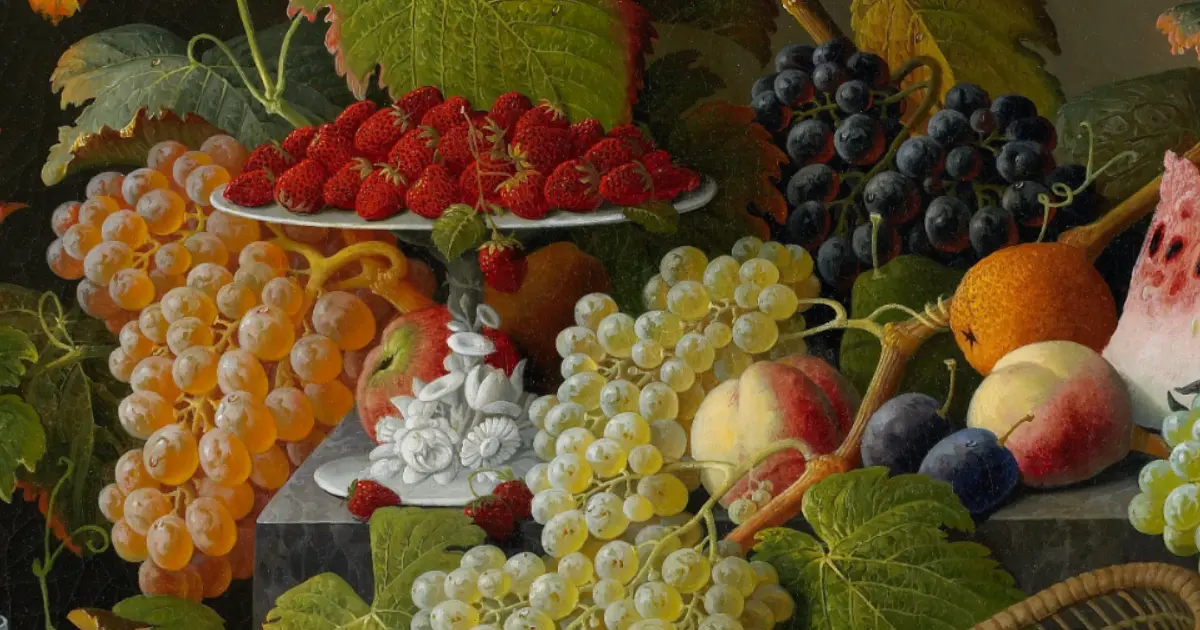
A bounty in minuteness
where—as in fruit displayed
on marble counters—
nothing
- or all of it*
- or nothing
is detail.*
Here, the marketplace ceases to be merely a commercial arena and becomes a philosophical testing ground. The viewer confronts a dizzying paradox: when looking at a profusion of goods, do individual details matter, or do they dissolve into an undifferentiated totality? The stepped typography of the poem physically enacts this cognitive hesitation.
Official Statements and Translators’ Perspectives
The collaboration between Idra Novey and Garth Greenwell brings together two distinct literary sensibilities known for their profound engagement with interiority and stylistic precision. While formal statements from the translators emphasize the honor of working with Muñoz, their broader essays and interviews on translation shed light on the philosophy guiding their work.
The Philosophy of Cross-Language Resonance
In discussions surrounding poetry translation, Novey has frequently emphasized that translating a poem is not an act of substitution, but of recreation. Every language carries a unique weight of history and sound. When translating “de vez en cuando dejo / frescamente de ser,” the choice to render frescamente as “refreshingly” rather than “freshly” introduces a modern psychological crispness into the English text that matches Muñoz’s contemporary tone.
Garth Greenwell, celebrated for his prose mastery and deep engagement with lyric poetry, brings an ear attuned to the emotional undertow of syntax. In rendering Muñoz, Greenwell and Novey worked to preserve the quiet audacity of a poet who treats silence and white space as active participants in the text.
“To translate Luis Muñoz is to step into a room where every object has been placed with absolute geometric and emotional intention,” notes a literary commentary accompanying the release. “Novey and Greenwell have not merely translated words; they have successfully imported an entire atmospheric pressure.”
Future Outlook: The Impact on Contemporary Poetry
The publication of these translations signals a growing appetite in the Anglophone literary world for works that resist maximalism in favor of distilled, meditative observation. As these poems circulate among American and international readers, several developments are expected to follow:
1. Broadened Reception of Muñoz in English
While Muñoz is a towering figure in contemporary Spanish poetry, his work has historically deserved a wider footprint in English translation. The involvement of translators of the caliber of Novey and Greenwell provides a critical bridge, drawing the attention of university literature departments, poetry journals, and independent presses to Muñoz’s broader bibliography.
2. Renewed Discourse on Spatial Poetics
The unique typographic layout of “Market” offers a valuable case study for contemporary poets experimenting with visual space on the page. As digital publishing and print media continue to evolve side-by-side, poems that utilize whitespace as a structural metric are gaining renewed appreciation for how they force readers to slow down, consume less automatically, and pay attention to the intervals between words.
3. Further Collaborative Translations
The success of the Novey-Greenwell partnership on these two miniature masterpieces suggests that collaborative translation models—long common in fiction and drama—are yielding extraordinary results in contemporary poetry. By pooling their linguistic instincts and editorial rigor, translators can capture nuances that might escape a single reader working in isolation.
Conclusion
Luis Muñoz’s “Magnifying Glass” and “Market,” as translated by Idra Novey and Garth Greenwell, stand as shining examples of how brevity can house immense philosophical complexity. In just a handful of lines, Muñoz invites us to reconsider the boundaries of the self and the overwhelming abundance of the physical world. Through careful attention to syntax, rhythm, and visual layout, the translators have ensured that these Spanish miniatures lose none of their luster in English. As these poems find their place in the library of international literature, they serve as a timeless reminder of the power of art to focus, distill, and illuminate the human condition.




Comments
Facebook App ID not configured. Please add it in the Customizer.