
Executive Overview
Sotheby’s officially
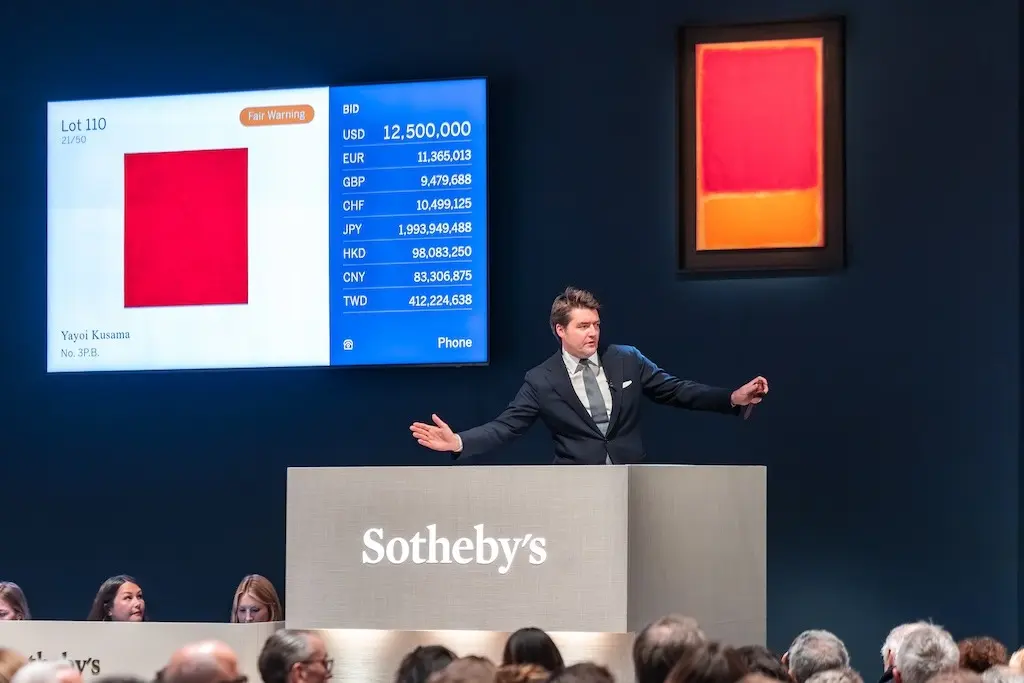
launched the high-stakes November marquee auction season with a dual-part evening event on Monday that generated a cumulative $378.7 million across 74 lots. While the top-line figures initially suggest a healthy and resilient market, a closer look at the proceedings reveals a different narrative. The marathon evening—which spanned nearly three hours—was defined by a stark bifurcation: a white-glove, high-energy opening dedicated to the collection of cable television magnate Ted Baum and interior designer Ruth Baum, followed by a sluggish, highly selective second half during the "Now and Contemporary" auction.
Although major blue-chip pieces and museum-quality trophy works continued to command intense competition, the broader atmosphere exposed a deeply cautious, highly discerning collector base. Buyers are demonstrating a clear preference for rare, historically significant blue-chip assets while showing a distinct lack of enthusiasm for speculative emerging art or unconventional auction experiments. As the contemporary art market navigates a shifting economic landscape, Monday night’s totals offered a masterclass in modern art-market psychology: when the quality is indisputable, the money flows freely; when questions linger, the room falls silent.
Read Also
Detailed Chronology of the Evening
Part I: The Baum Collection’s White-Glove Triumph
The evening commenced at a blistering pace with a dedicated single-owner sale featuring 24 works from the esteemed collection of Ted and Ruth Baum. The session achieved a pristine "white-glove" status, with 100% of the lots selling for a hammer total of $90.9 million. With buyer’s fees included, the session closed at $110 million, comfortably exceeding its presale high estimate of $109 million.
The room was electric from the very first strike of the gavel. Opening the evening was Roy Lichtenstein’s 1983 cut-paper work, Two Paintings: Sleeping Muse (Study), which immediately sparked a competitive four-minute bidding war between three telephone specialists and a determined bidder physically present in the saleroom. The piece ultimately fetched $3.8 million, prompting Sotheby’s CEO Charles Stewart to walk over to Chief Marketing Officer Gareth Jones and remark, "Well, that’s a good start."
Just three lots later, a Lucio Fontana copper canvas featuring a pristine, vertical razor-cut down its center ignited another fierce contest among three room bidders. It hammered at $3.5 million ($4.4 million with fees), soaring well past its $3 million high estimate.

Sotheby’s Europe Chairman Oliver Barker managed the proceedings with effortless theatricality, smoothing over slower stretches of bidding with dry wit. During the competition for Lot 7—Andy Warhol’s 1984 painting The Scream (After Munch)—Barker playfully heckled Jacqueline Wachter, chairwoman of private sales, as she negotiated with a telephone client. Asking if she was "doing her shopping or doing her conversions," Barker quipped to the amused crowd, "Amazon is always open. As is Sotheby’s Dot Com."
The Baum sale’s crown jewels were institutional-grade masterworks acquired decades prior. Joan Mitchell’s monumental Green Book of Barbara Guest led the session at $19.3 million, followed by Mark Rothko’s luminous Untitled at $17.7 million, and Ed Ruscha’s Dimple at $11.6 million. The Baums had purchased the Mitchell privately in 1986 for a modest $65,000, yielding a return nearly 300 times its original purchase price. Similarly, their 1983 acquisition of the Rothko for $115,000 appreciated more than 150-fold. The session concluded on a high note with Mario Merz’s neon sculpture Iguana, which, despite falling below its estimate, drew enthusiastic applause from the packed room.
+-----------------------------------------------------------------+
|               THE BAUM COLLECTION: TOP THREE LOTS               |
+--------------------------+------------------+-------------------+
| Artwork                  | Sale Price (W/F) | Original Purchase |
+--------------------------+------------------+-------------------+
| Joan Mitchell (Mitchell) | $19.3 Million    | $65,000 (1986)    |
| Mark Rothko (Untitled)   | $17.7 Million    | $115,000 (1983)   |
| Ed Ruscha (Dimple)       | $11.6 Million    | Private Acquire   |
+--------------------------+------------------+-------------------+
Part II: The Now and Contemporary Evening Auction
The mood shifted palpably as the evening transitioned into the broader "Now and Contemporary" auction. While the session ultimately posted a respectable hammer total of $224.8 million—climbing to $268.8 million with fees included—the path to get there was far more arduous. Out of 53 originally cataloged lots, three were withdrawn prior to the sale, and another five failed to find buyers, representing a notable washout rate.
Unsold lots included significant works by Kerry James Marshall, Ellsworth Kelly, Roy Lichtenstein, and Keith Haring. However, the most talked-about casualty of the night was an unexpected interloper: a Formula One racing car (specifically the Williams FW16B). Tom Eddison, Sotheby’s head of contemporary art in London, took over auctioneering duties and delivered a lengthy, preemptive explanation regarding the classic-car affiliate RM Sotheby’s terms of service. Despite a handful of opening bids, the vehicle failed to reach its low estimate and was bought in at $3.9 million—just $100,000 shy of its minimum valuation.
Despite the sluggish pacing of the second half, the auction did experience moments of genuine market electricity. Jeff Koons’s 1991 polychromed wooden sculpture Bob-Tail—depicting a shaggy English sheepdog—provoked a grueling six-minute battle among four specialists. Contemporary art specialist Bame Fierro March ultimately secured the piece for a hammer price of $9 million ($10.7 million with fees), tripling its high estimate and sparking debate over whether Koons’s secondary market is experiencing a structural rebound.
Just seven lots later, Agnes Martin’s sublime cream canvas Desert, hailing from the collection of Lenore and Bernard Greenberg, inspired a six-minute duel between specialist Alya Sama and Americas Chairman Lisa Dennison. Dennison clinched the lot with a $9.2 million hammer bid ($11.3 million with fees), outpacing its $8 million high estimate.

The night’s historic milestone belonged to Yayoi Kusama. Her seminal 1960 red Infinity Nets painting, No. 3P.B., hammered down at $12.5 million following a ten-bid contest spanning four minutes. With fees, the final price reached $15.1 million, establishing a new auction record for the legendary Japanese artist, who passed away in August.
The undisputed top lot of the contemporary sale was Roy Lichtenstein’s Reflections on “Painter and Model” (1990), which fetched $24.7 million with fees—though this figure notably landed shy of its ambitious $20 million to $30 million high estimate. Other major pillars of the post-war canon performed within expected parameters: Willem de Kooning’s Water… Soft Banks of a Window (Untitled VIII) cleared $20.3 million, and Francis Bacon’s Towards Disappearance I brought in $17.1 million.
Supporting Context & Market Metrics
To accurately contextualize Monday night’s results, industry analysts must examine both historical performance and prevailing macroeconomic conditions. The $268.8 million total for the Now and Contemporary sale comfortably surpassed the equivalent November 2025 benchmark of $178.5 million. However, veterans of the trade are quick to note the structural differences between auction cycles. Last year’s tally was heavily buoyed by an extraordinary, once-in-a-generation trove from the estate of late cosmetics heir Leonard Lauder, which generated a staggering $527.5 million—bolstered by three masterworks by Gustav Klimt.
Monday night’s auction lacked those monumental $30 million, $40 million, and $50 million trophy assets that historically galvanize global bidding momentum. Instead, the catalogue relied heavily on financial guarantees: 29 of the 45 sold lots in the contemporary sale featured third-party or house guarantees, as did every single lot in the Baum collection. Interestingly, however, outside guarantors were frequently outbid by aggressive floor and telephone clients, signaling that genuine, organic buying appetite remains robust when prime material is presented.
+-----------------------------------------------------------------+
|                  KEY FINANCIAL METRICS AT A GLANCE              |
+-----------------------------+-----------------------------------+
| Metric                      | Amount / Count                    |
+-----------------------------+-----------------------------------+
| Combined Doubleheader Total | $378.7 Million                    |
| Baum Collection Total       | $110.0 Million (100% Sold)        |
| Now & Contemporary Total    | $268.8 Million                    |
| Guaranteed Lots (Contemporary)| 29 out of 45 Sold Lots            |
| New Artist Record Set       | Yayoi Kusama ($15.1M for 'No. 3P.B.')|
+-----------------------------+-----------------------------------+
Despite these solid top-line returns, art advisor Nina Del Rio observed that the fundamental posture of collectors has not fundamentally shifted since the spring sales seasons. While top-tier masterworks continue to command fierce competition, speculative fervor for younger, mid-career artists has cooled significantly. The days when collectors used evening sales as a shortcut to bypass impossibly long gallery waiting lists appear to be entirely behind the market.
Expert Perspectives & Industry Commentary
The saleroom was packed with blue-chip art world heavyweights, including Dominique Lévy, Brett Gorvy, Amalia Dayan, David Schrader, Emmanuel Di Donna, Christophe Van de Weghe, and Bernard Lagrange of Gagosian Art Advisory. Their reactions to the evening’s pacing and pricing dynamics offered vital clues regarding the health of the broader art trade.

Art advisor Ed Dolman, texting live from the salesroom floor toward the conclusion of the evening, offered an encouraging assessment:
"The best works always do fine, [but] buyers were taking some risks again."
Dolman highlighted the surprising depth of bidding, noting that despite the prevalence of financial guarantees, independent buyers routinely stepped up to challenge underwriters and drive prices beyond initial expectations.
Lisa Dennison, Sotheby’s chairman of the Americas, cautioned market observers against over-interpreting a single evening’s anomalies. She noted that opening marquee week with contemporary art—rather than a traditional, balanced mix of modern and contemporary masterpieces—makes holistic market evaluation difficult. Commenting on the high-profile failure of the Formula One car, Dennison admitted she was left "scratching her head" over why a prospective buyer would walk away over a mere $100,000 gap when the final bid stalled at $3.9 million against a $4 million low estimate.
Comparing the automotive experiment to Christie’s successful 2020 sale of Stan the Tyrannosaurus rex skeleton—which fetched $31.8 million—Dennison maintained that auction houses should continue experimenting with non-traditional asset classes. "There’s something appealing about an evening sale that doesn’t draw a firm boundary around paintings and sculptures," she noted. "Not every experiment works the first time, or even the second. And if the object is truly one-of-a-kind, buyers are ready to shell out the cash."
Future Outlook & Marquee Week Horizon
As Sotheby’s November marquee week progresses, all eyes now turn toward the remainder of the schedule. Analysts point out that contemporary art is currently playing second fiddle to absolute historical scarcity. The true test of collector liquidity will arrive with upcoming sessions featuring ultra-rare Impressionist and Post-Impressionist masterpieces that surface only once every few decades.

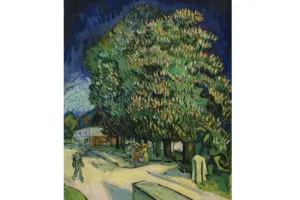
Chief among these is the highly anticipated Wednesday auction of the Blaquier Collection, an elite grouping of masterworks valued at approximately $450 million. Simultaneously, the market is closely monitoring a dramatic, last-minute restitution claim filed against a premier $180 million Vincent van Gogh painting scheduled to cross the block—a legal hurdle that introduces fresh volatility into an already sensitive market environment.
Ultimately, Sotheby’s Monday doubleheader proved that while the global art market has traded speculative frenzy for pragmatic caution, it remains abundantly capitalized. Collectors are no longer throwing money blindly at the wall; they are hunting for museum-grade perfection, historical importance, and undeniable provenance. As long as auction houses can supply those rare assets, the multi-million-dollar hammer will continue to fall.




Comments
Facebook App ID not configured. Please add it in the Customizer.