
Executive Overview
In an era defined by open access, digital humanities, and the democratization of knowledge, classical philosophy has historically lagged behind due to dense textual scholarship, stringent copyright restrictions, and the labor-intensive nature of historical-critical editing. While modern search engines and text repositories have made vast libraries available online, serious researchers of nineteenth-century German idealism have long faced a frustrating bottleneck: authoritative texts were either locked behind paywalls, hobbled by outdated and modernized spelling, or confined to poorly indexed, unverified PDF scans that rendered precise scholarly citation nearly impossible.
Today, that landscape is shifting dramatically. Dr. Giuliano Infantino, a postdoctoral fellow at the University of Toronto, has engineered and released pioneering, freely accessible digital editions of the collected works of two of history’s most influential and notoriously difficult thinkers: Georg Wilhelm Friedrich Hegel and Friedrich Wilhelm Joseph Schelling.
This monumental achievement is not merely another web archive of public-domain books. Infantino’s newly launched portals—the Hegel Collection and the Schelling Collection—bridge the chasm between raw digitization and rigorous philological scholarship. By utilizing an innovative, multi-stage, machine-assisted methodology that cross-references optical character recognition (OCR) with historical prints and legacy transcriptions, Infantino has built web-based corpora featuring original historical spellings, authentic typography (including crucial letter-spaced type for emphasis), native Greek typography, intact footnotes, and robust full-text search capabilities. Most importantly, these editions offer meticulous, line-by-line and page-by-page citation structures corresponding directly to the definitive print editions relied upon by global academia.
Read Also
As these repositories continue to expand—with Hegel volumes added dynamically as intellectual property protections expire—this initiative promises to permanently alter how students, translators, and tenured professors alike interact with German idealism. This report provides an in-depth look at the mechanics, motivations, and academic implications of Infantino’s groundbreaking digital infrastructure.
Detailed Chronology
The creation of these digital editions did not happen overnight; it represents the culmination of years of technical problem-solving, methodological refinement, and a deep engagement with the legal minefield of copyright law governing scholarly editions. While the public web launches of the Hegel and Schelling collections mark the visible milestones of this project, the chronological arc of their development reveals a sophisticated intersection of computer science and classical philology.
Phase 1: Identifying the Digital Divide in Idealist Scholarship
For decades, digital textual availability for major philosophers has been patchy. For Hegel, digital texts existed, but they routinely relied on nineteenth-century or early twentieth-century editions with modernized spelling, stripped-away structural markers, and absent letter-spacing (Sperrdruck), which Hegel used deliberately to emphasize key conceptual shifts. For Schelling, the situation was even more dire. His Sämmitliche Werke (Collected Works) remain the only complete edition available for his late philosophy, yet scholars seeking free digital access were forced to rely on unverified electronic transcriptions or difficult-to-read historical scans. Infantino recognized that modern digital humanities tools—if paired with strict philological rules—could bridge this gap without violating contemporary intellectual property rights.
Phase 2: Developing the Multi-Stage Production Pipeline
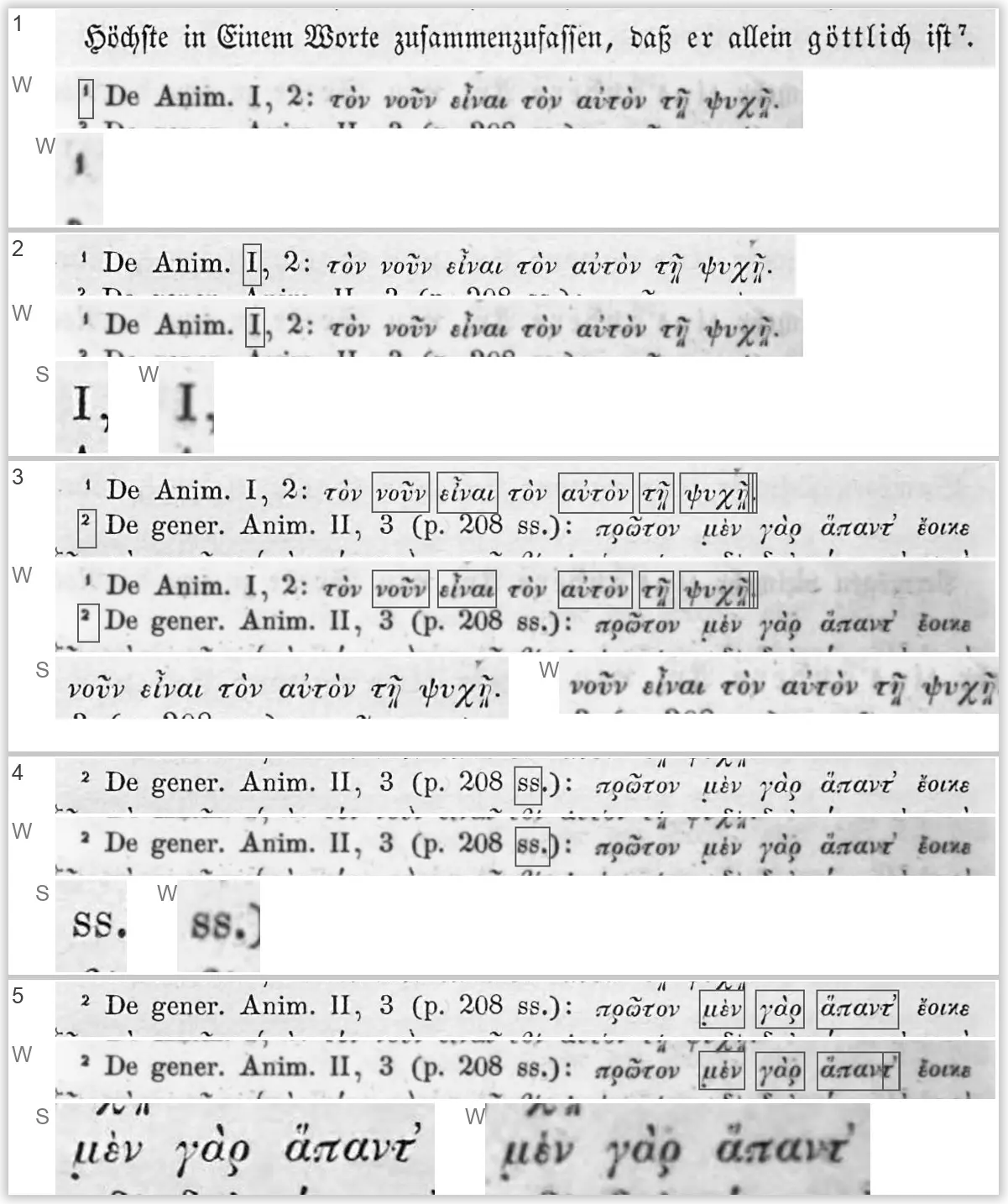
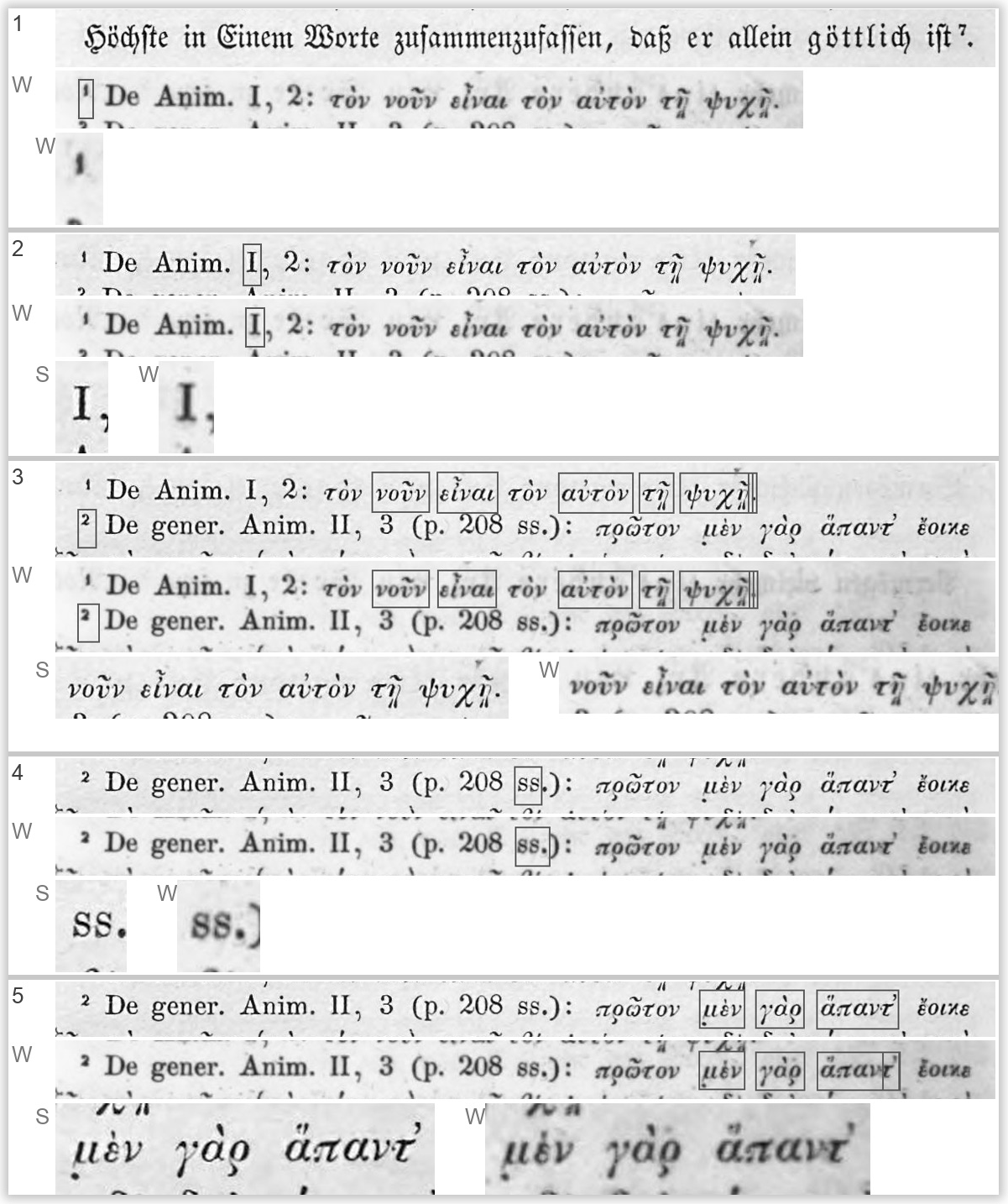
To overcome the limitations of standard OCR, which routinely stumbles over complex historical typography, foreign alphabets (such as ancient Greek), and intricate footnotes, Infantino devised a sophisticated three-pronged verification pipeline.
- For the Schelling editions, the process begins by drawing from an older electronic transcription to capture base wording, letter-spaced type, footnotes, and Greek characters.
- This base is then synthesized with high-resolution OCR scans of two independent physical copies of the print editions digitized by the Bavarian State Library.
- Through a rigorous algorithmic triage, wherever discrepancies arise among these three distinct sources, the system resolves the conflict by deferring to the primary page image.
This meticulous pipeline ensures that the resulting digital text is as close to an infallible transcription of the physical print as contemporary computational methods allow.
Phase 3: Launching the Web Portals and Navigating Copyright
With the computational pipeline refined, Infantino deployed two clean, minimalist, high-performance web applications equipped with full-text search engines. Crucially, the Hegel collection was structured around the Gesammelte Werke (GW)—the authoritative historical-critical edition. Because modern editorial apparatuses and introductions added by contemporary publishing houses remain fiercely protected by copyright, Infantino made the deliberate choice to publish only Hegel’s public-domain text, stripping away proprietary editorial apparatuses to keep the platform legally robust while maintaining maximum academic utility. A detailed breakdown of these legal frameworks and copyright mechanics has been thoughtfully documented by Infantino for fellow scholars navigating open-access publishing.
Supporting Context & Metrics
To truly appreciate the magnitude of Infantino’s project, one must understand the technical and structural demands of reading and citing Hegel and Schelling. These are not casual prose writers; their texts operate through rigorous conceptual scaffolding where typographical nuances carry heavy philosophical weight.
The Significance of Typographical Fidelity
In German idealist literature, formatting is part of the argument. Hegel and Schelling utilized specific typographical devices to guide the reader’s understanding of ontological and epistemological transitions:
- Letter-Spaced Type (Sperrdruck): Used extensively in German printing to denote conceptual emphasis or stress. Standard digital archives frequently strip this formatting away, flattening the text’s rhetorical cadence. Infantino’s editions explicitly mark and preserve letter-spaced type.
- Original Orthography: Modernizing spelling in philosophical texts can inadvertently alter nuances or flatten historical linguistic shifts. By retaining the original spelling of the Gesammelte Werke and the Sämmtliche Werke, Infantino preserves the authentic textual texture of the original publications.
- Multilingual Elements: Both philosophers frequently incorporate classical Greek terminology, particularly when engaging with Aristotle, Plato, and pre-Socratic thought. Standard OCR engines frequently corrupt Greek characters into gibberish. The multi-stage verification pipeline ensures authentic, readable Greek typography is embedded directly into the digital flow.
- Precision Citation Architecture: In academic philosophy, a citation is only as good as its verifiable anchor. The Hegel collection allows scholars to cite line-by-line according to the pagination of the Gesammelte Werke, while the Schelling collection anchors citations by division (Abtheilung), volume, and page number, matching the structure of the Sämmtliche Werke.
Technical Workflow Metrics
The production process relies on a unique marriage of automated processing and human-guided verification rules:
| Project Component | Primary Text Source | Verification Mechanism | Citation Standard |
|---|---|---|---|
| Hegel Collection | Gesammelte Werke (GW) | Rule-guided parsing of public-domain texts; exclusion of copyrighted editorial apparatus | Line-by-line, keyed to GW pages |
| Schelling Collection | Sämmtliche Werke | Three-way verification: legacy transcription + dual OCR scans from the Bavarian State Library | Division (Abtheilung), volume, and page |
Official Statements & Scholarly Philosophy
The underlying philosophy guiding these platforms is rooted in an unwavering commitment to open-access equity. In detailing the architecture of the Hegel collection, Infantino outlines the deliberate parameters of the project:
"Digital Hegel texts have existed for a long time; they mostly follow older editions of the works, often in modernized spelling and without Hegel’s letter-spacing. This digital edition presents Hegel’s text according to the Gesammelte Werke (GW), the authoritative historical-critical edition: in the spelling of the GW, with letter-spaced type marked, citable line by line according to the GW pages. It contains only Hegel’s public-domain text, without the editors’ protected apparatus."
Similarly, addressing the distinct challenges posed by Schelling’s corpus, Infantino highlights the historical scarcity of reliable electronic versions, particularly for the philosopher’s later, highly influential works:
"Schelling’s Sämmtliche Werke are widely cited, and for the late philosophy they remain the only complete edition to this day. Until now they could be read freely only as scans or in electronic versions that have not been checked against the print. This edition reads the text page by page from the print: original spelling, letter-spaced type, real Greek, the notes in their place, citable by division (Abtheilung), volume, and page."
These statements underscore a vital shift in digital humanities: moving away from convenient yet unreliable approximations toward high-fidelity, machine-assisted philology that respects the integrity of the material print record while harnessing the speed and searchability of the modern web.
Future Outlook
The launch of the Hegel and Schelling collections marks a major victory for open science and philosophical research, but it is very much an ongoing enterprise.
Because intellectual property laws protect modern editorial apparatuses and specific volumes until copyright terms expire, the Hegel collection operates as a living, expanding archive. As older scholarly editions transition into the public domain, Infantino plans to systematically integrate further volumes into the digital ecosystem. This dynamic growth model ensures that the platform will continually evolve alongside international copyright timelines.
Furthermore, the methodology pioneered by Infantino—utilizing a multi-stage, rule-governed machine pipeline that merges legacy electronic texts with dual-source library OCR—serves as a compelling blueprint for other disciplines. Scholars working on Kant, Fichte, Marx, or other figures burdened by complex historical printing conventions now have a technical framework to emulate.
As the academic community begins to fully integrate these resources into syllabi, research papers, and translation projects, the broader philosophical world waits to see how established publishing houses and university departments will respond to this new wave of independent, high-precision open scholarship. One thing is certain: the barrier to entry for studying nineteenth-century German idealism has never been lower, and the standard for digital textual integrity has never been higher.




Comments
Facebook App ID not configured. Please add it in the Customizer.