
Executive Overview
As the broader American right grapples with post-election introspection—attempting to decipher unexpected losses and the surprising leftward political drift of traditionally safe conservative bastions like Texas and Kansas—a radical faction within the movement is offering a radically different diagnosis. According to this fringe contingent, the traditional conservative establishment’s primary failing was not overreach, policy missteps, or negative polarization. Rather, they argue, the right lost because it was not aggressive enough.
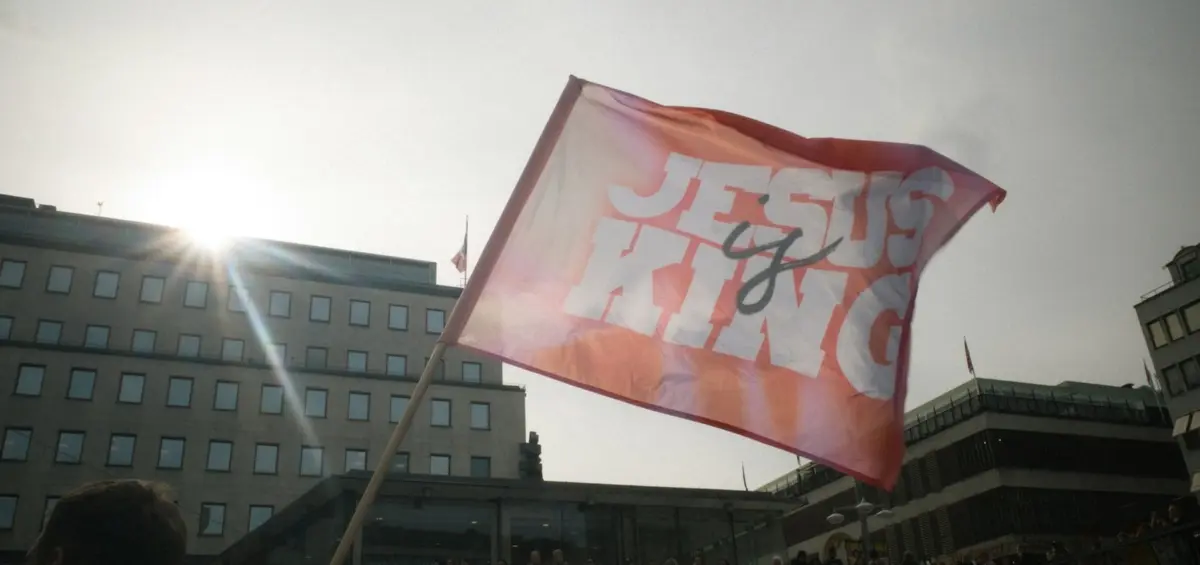
This ideological pivot took center stage at the recent “Christ Is King: America After Trump” conference. Organized by Texas-based pastor Joel Webbon, the gathering served as a public launchpad for what organizers have termed the New Christian Right (NXR). Eschewing the conventional coalition-building and electoral strategies of mainstream American conservatism, the NXR proposes an unvarnished sociopolitical framework anchored by four explicit pillars: anti-Zionism, hyper-patriarchal male leadership, racial hierarchy—euphemistically termed “race realism”—and the overriding slogan, “Christ is King.”
Far from representing a mere theological revival, the NXR merges fringe digital subcultures, white nationalist grievances, and hyper-individualistic religious dissent into a coherent political theology. Critics from both secular and traditional theological spheres argue that this movement abandons mainstream Christian doctrine in favor of ethnic identitarianism, weaponizing religious vocabulary to justify a deeply regressive social and political hierarchy. This report explores the origins, ideological architecture, key figures, theological contradictions, and broader implications of the New Christian Right as it attempts to infiltrate and transform the American political conversation.
Read Also
Detailed Chronology: The Genesis of the New Christian Right
To understand how the NXR emerged into public view, it is necessary to trace the convergence of several digital, cultural, and political vectors over the past decade.
- Pre-2020: The Incubation of Dissident Digital Communities
Following the 2016 presidential election and the subsequent splintering of the populist right, various internet-native subcultures began experimenting with radicalized fusions of religion and right-wing politics. Platforms like Telegram, X (formerly Twitter), and independent video-hosting sites fostered ecosystems where disaffected young men could commiserate over cultural alienation. Figures operating on the margins began systematically dismantling the boundary between orthodox Christian theology and secular ethno-nationalism. - The Post-2024 Election Vacuum
As conventional conservative strategists began post-mortems on unexpected legislative and gubernatorial headwinds in traditional red states, figures like Webbon capitalized on the uncertainty. Positioning mainstream conservatism as weak, controlled, and ineffectual, they framed recent electoral setbacks as a divine judgment against a compromised and insufficiently radical political agenda. - The “Christ Is King: America After Trump” Conference
The definitive coming-out party for the NXR occurred at last week’s conference. The event brought together an eclectic mix of internet shock jocks, disgraced plagiarists, itinerant pastors, and conspiracy theorists. The conference functioned not merely as a speaking tour, but as a formal declaration of intent: to wrest control of the populist right from traditional Republicans and reforge it into an uncompromising, identity-driven movement. - The Integration of Extremist Elements
A critical turning point in the conference’s visibility was the surprise appearance of internet shock jock Nick Fuentes, alongside figures like conspiracy theorist Alex Jones and sectarian figures who have bounced through numerous ecclesiastical denominations. By platforming these individuals, the NXR signaled its explicit willingness to bridge the gap between respectable paleoconservative religious discourse and overt white supremacy.
Supporting Context & Metrics: The Four Pillars of the NXR
The ideological architecture of the New Christian Right is deceptively simple in its nomenclature, yet radical and exclusionary in its practical application. According to conference materials and primary source statements from its organizers, the movement’s platform rests upon four distinct principles:
1. Anti-Zionism (Raw Anti-Semitism)
While framed in geopolitical terms, the NXR’s stance on Israel transcends standard foreign policy critique. Joel Webbon has explicitly urged his followers to “righteously despise Israel” and gone so far as to describe the biblical text itself as “anti-Semitic” when viewed through his ideological lens. This pillar serves to unite traditional theological supersessionism with modern conspiratorial anti-Semitism, framing global financial and cultural systems through a hostile, ethnocentric framework.
2. Race Realism (White Nationalism)
The NXR makes no secret of its racial worldview. Under the guise of “race realism,” leaders within the movement advance biological determinism and historic revisionism. Webbon, for instance, has publicly argued that chattel slavery was a “blessing” for Black Americans. This pillar provides a pseudo-scientific and historical justification for racial stratification, arguing that human society is naturally hierarchical and that egalitarianism is a rebellion against divine order.
3. Male Leadership (Institutional Misogyny)
The third pillar demands the complete dismantling of modern egalitarian norms regarding gender. In Webbon’s explicit formulation, women are systematically barred from leadership positions not merely on theological grounds, but due to an inherent intellectual and administrative deficit. Webbon asserted that “every time you see a woman in leadership . . . there were at least a thousand men who were more qualified for that position than her.” This hyper-patriarchal stance seeks to roll back decades of social progress by institutionalizing the subordination of women across civic, domestic, and religious life.
4. “Christ is King” (Ideological Appropriation)
The final pillar functions as a theological umbrella, deploying historical and religious rhetoric to sanitize the preceding three pillars. Speakers utilize a pastiche of citations from the margins of Christian history to lend intellectual weight to their platform. Notably, investigations into conference presentations revealed instances of AI-hallucinated citations used to bolster historical arguments—underscoring a reliance on manufactured authority to validate fringe claims.
Key Figures in the Movement
- Joel Webbon: Organizer of the NXR conference and founder of doctrinally independent ministries, known for provocative statements defending slavery and denigrating female leadership.
- Alex Jones: Veteran conspiracy theorist whose presence bridges the gap between fringe media entertainment and radicalized political theology.
- Dale Partridge: A serial plagiarist and religious commentator who has actively attempted to revive obsolete theological justifications for racial subjugation, such as the “Curse of Ham.”
- Calvin Robinson: An ecclesiastically fluid priest who has cycled through six different denominational affiliations over the past decade, lending an air of clerical legitimacy to the movement.
- Nick Fuentes: Internet shock jock and prominent white nationalist whose surprise appearance underscored the extremist underpinnings of the conference.
Official Statements and Theological Critiques
The emergence of the NXR has not gone unnoticed by mainstream theologians, historians, and ethicists. The movement’s claims to represent an authentic retrieval of historic Christian tradition have faced rigorous pushback from across the theological spectrum.
The Problem of Ungraced "Nature"
A central intellectual vulnerability of the NXR, according to critics, lies in its metaphysical framework. The movement relies on a two-tiered scheme where Christian grace is superficially appended to a self-subsistent, ungraced concept of “nature.”
Historically, this exact theological error—separating the created order from divine sovereignty and imbuing human-constructed racial and social hierarchies with immutable authority—powered the political theology of Nazi Germany. That distortion was famously resisted by Catholic theologian Henri de Lubac, as well as Protestant theologians Karl Barth and Dietrich Bonhoeffer, who argued that genuine transcendence shatters and judges human-made categories rather than sanctifying them.
Rejection of Historic Church Authority
Despite laying claim to Christian heritage, nearly all prominent NXR figures operate completely outside the bounds of historic, accountable Christian institutions. Most reject denominational affiliation, which would otherwise subject them to external oversight and historic creeds. For example, Dale Partridge’s church describes itself as operating “in the Anglican tradition” while possessing zero actual connection to a legitimate historic episcopate.
Writing on these dynamics, cultural analysts and theologians emphasize that true Christian tradition is a living, developing reality—as philosopher Alasdair MacIntyre argued—rather than an archive of fringe, weaponized grievances. By ignoring centuries of communal consensus, NXR leaders engage in radical individualism, allowing any internet commentator to redefine Christianity to suit their political objectives.
As critics have observed, when the definition of Christianity itself is entirely up for grabs by independent operators, "Christian nationalism" ceases to be Christian at all. Instead, it becomes a vehicle for ethnic identitarianism, subordinating universal doctrine to tribal loyalty.
Future Outlook: Implications for the American Right
As the New Christian Right attempts to transition from an online subculture into an organized political faction, its long-term viability and impact on the broader American political landscape remain subjects of intense debate.
- Fragmentation of the Populist Right: The aggressive posture of the NXR threatens to widen ideological fractures within the American conservative coalition. While populist movements have successfully mobilized working-class voters, the overt adoption of racial identitarianism and anti-Semitism risks alienating the broader electorate necessary for sustainable electoral victories.
- Radicalization of Digital Youth: By targeting disaffected young men through algorithmic echo chambers and provocative rhetoric, the NXR will likely continue to recruit individuals disillusioned with institutional failures. This poses ongoing challenges for social cohesion and civic discourse.
- Theological Immunization: Mainstream religious institutions—both Protestant and Catholic—face an urgent imperative to actively counter the theological distortions peddled by NXR figures. Articulating a robust, orthodox defense of human dignity, equality, and historic ecclesial accountability will be vital to preventing vulnerable believers from succumbing to extremist narratives.
Ultimately, while the NXR chants “Christ is King” from conference stages and digital pulpits, its core operational principles remain tethered to ethnic chauvinism and exclusion. Whether this faction remains a noisy, localized fringe or succeeds in permanently shifting the vocabulary of the American right will depend heavily on the willingness of mainstream conservatives and religious leaders to draw a bright, uncompromising line against its toxic ideology.





Comments
Facebook App ID not configured. Please add it in the Customizer.