
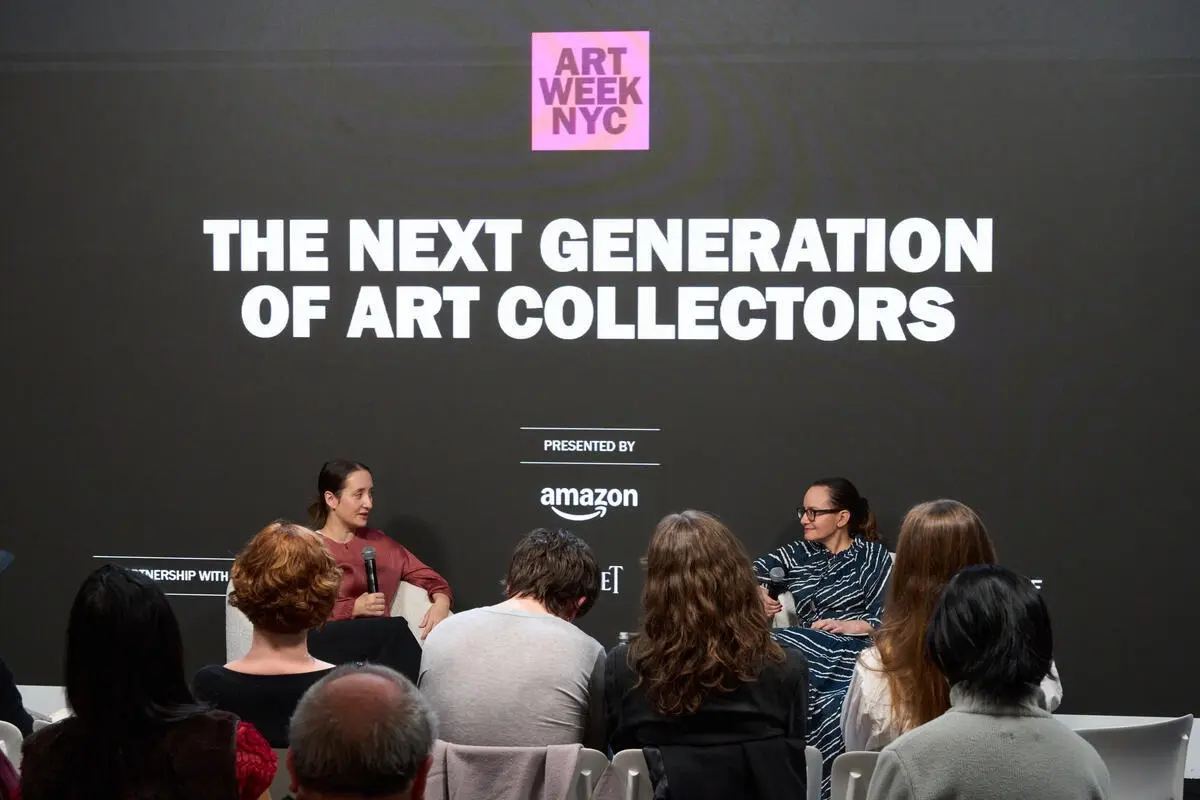
NEW YORK — Against the vibrant backdrop of Art Week NYC—the citywide festival organized by industry pillars ARTnews, Artforum, and Art in America—the conversation surrounding the future of the art market reached a fever pitch. Amidst the flurry of gallery openings, museum galas, and VIP previews, one fundamental question loomed largest: How are millennial and Gen Z collectors reshaping the dynamics of acquisition, curation, and philanthropy?
To unpack this shifting paradigm, I sat down for an exclusive, in-depth discussion with leading art advisor and curator Sophia Cohen. Held at the PMC Studio in Midtown Manhattan, our conversation cut to the heart of contemporary market mechanics, exploring the ethos of emerging patrons, the value of embracing early collecting missteps, and the structural evolution of modern museum stewardship.
Executive Overview
The art market is undergoing a seismic generational handoff. For decades, the upper echelons of art collecting were defined by a traditional playbook: established magnates acquiring blue-chip masters through legacy galleries, often prioritizing name recognition and historical pedigree above all else. Today, however, that architecture is being dismantled and rebuilt by a younger cohort of digital-native, globally minded collectors.
Read Also
Sophia Cohen sits squarely at the intersection of this transformation. As the founder of Siren, an independent art advisory and curatorial consultancy, Cohen bridges the gap between raw creative talent and sophisticated capital. Her perspective is forged by a diverse pedigree: formative years under the mentorship of legendary dealer Gavin Brown, followed by a six-year tenure at Gagosian—culminating as an associate director—which provided an insider’s view of the megagallery apparatus. Furthermore, as one of four co-chairs leading the Metropolitan Museum of Art’s prestigious Vanguard Council, Cohen has a front-row seat to how next-generation patrons are redefining institutional support.
This article explores the core insights from our Art Week NYC panel, tracing Cohen’s career trajectory, her actionable advice for nascent buyers, and the broader macroeconomic and cultural shifts dictating the future of global art patronage.
Detailed Chronology: From Gavin Brown to Gagosian and Siren
To understand how Cohen approaches the modern art market, one must examine the institutional and ideological crucible in which her career was forged. Her trajectory offers a microcosm of the structural shifts within the contemporary art world over the past two decades.
The Gavin Brown Era: Stewardship and Generational Synchronicity
Cohen’s professional journey began in the trenches of the contemporary gallery scene, working alongside legendary dealer Gavin Brown. Known for his iconoclastic exhibition spaces and fiercely loyal stable of artists, Brown instilled in Cohen a foundational philosophy that continues to inform her advisory work today.
During her time at the gallery, Cohen absorbed two primary lessons:
- The Power of Generational Alignment: Brown emphasized the profound importance of supporting and living among artists of one’s own generation. Art is not merely a static asset class; it is a living dialogue between contemporaries experiencing the same cultural, political, and technological moments.
- The Dealer as Steward: Rather than viewing galleries as mere retail storefronts for luxury goods, Brown modeled how a dealer must function as a dedicated steward for the artists they represent, safeguarding their long-term careers over short-term market speculation.
The Gagosian Pivot: Navigating the Megagallery Apparatus
When Gavin Brown’s enterprise closed its doors in 2020—a casualty of the shifting economic landscape accelerated by the global pandemic—Cohen executed what she playfully describes as "the exact opposite" career pivot. She transitioned to Gagosian, the undisputed leviathan of the global commercial gallery network.
Spending six years within the Gagosian ecosystem, eventually rising to the role of associate director, exposed Cohen to the upper stratosphere of the art market. Here, she navigated multi-million-dollar secondary market transactions, institutional-scale placements, and the complex logistics of global blue-chip commerce. This juxtaposition—moving from the gritty, artist-first incubator of Gavin Brown’s to the hyper-scaled machinery of Gagosian—gave Cohen a 360-degree view of the art market ecosystem, equipping her with the dual sensibilities required to advise today’s sophisticated collectors.
Founding Siren and Leading the Met’s Vanguard Council
Armed with this comprehensive industry experience, Cohen launched Siren, her own art advisory and curatorial consultancy designed to guide collectors through an increasingly noisy and hyper-financialized market. Siren acts as a trusted navigator for clients seeking depth over hype.
Simultaneously, Cohen’s influence extends deep into institutional philanthropy. As one of four co-chairs leading the Metropolitan Museum of Art’s Vanguard Council, she helps helm an invite-only collective of next-generation patrons. The council serves as a vital bridge between young wealth and the world’s foremost encyclopedic museum, ensuring that the institutions of tomorrow remain relevant, funded, and attuned to contemporary discourse.
Supporting Context & Metrics: The Mindset of the Next-Generation Collector
During our Friday, November 13 session at PMC Studio, Cohen unpacked the psychological and strategic framework that defines modern collecting. Her guidance directly challenges many of the speculative tendencies that have plagued the market in recent years, offering a roadmap for sustainable, meaningful engagement.
1. The Necessity of Making Mistakes
One of Cohen’s most refreshing pieces of advice to young collectors is permission to fail. In an era where data analytics, art market indices, and algorithmic trend-spotting encourage hyper-calculated purchases, Cohen champions the educational value of the "mistake."
"You have to allow yourself to buy the wrong thing, to outgrow a piece, or to realize that a particular aesthetic doesn’t resonate five years down the line," Cohen noted during the panel.
For young collectors terrified of making a financial misstep, this perspective is liberating. Collecting is an evolutionary journey of developing taste. The works that one acquires in their twenties often serve as stepping stones toward a more refined, mature collection in their forties and fifties. Stifling impulse and intuition in the pursuit of guaranteed appreciation strips the process of its personal meaning.
2. Strategic Timing: When and How to Buy
Navigating the primary market—where waiting lists for hot young artists often stretch into the hundreds—requires a delicate balance of patience, relationship-building, and conviction. Cohen advises young collectors to move away from reactive buying fueled by social media or auction house frenzy.
Instead, she encourages deep studio visits, direct dialogue with creators, and an understanding of an artist’s conceptual foundation. Buying well is not merely about securing a coveted allocation; it is about supporting an artistic practice through its various developmental phases.
3. Structuring Modern Philanthropy
The philanthropic habits of millennial and Gen Z collectors are drastically different from those of their predecessors. While older generations often favored legacy-building endowments tied to physical wings of museums, today’s patrons are prioritizing agility, transparency, and impact-driven giving.
Through her work with the Met’s Vanguard Council, Cohen observes firsthand how younger donors prefer collaborative funding models, support for diverse and underrepresented programming, and direct engagement with curators and living artists. Philanthropy is no longer viewed as a passive transactional obligation for social prestige; it is an active, participatory extension of the collector’s worldview.
Official Statements and Industry Perspectives
The sentiments shared by Cohen during Art Week NYC reflect a broader industry consensus regarding the maturation of the contemporary art market.
Industry analysts tracking the generational wealth transfer—estimated to reach tens of trillions of dollars over the coming decades—note that art is increasingly viewed by younger demographics as both a cultural currency and a community-building tool.
In a joint statement regarding the mission of Art Week NYC, organizers from ARTnews, Artforum, and Art in America emphasized the critical importance of fostering dialogue between veteran market participants and emerging voices:
"The health of the cultural ecosystem relies entirely on our ability to pass the torch gracefully. Platforms like Art Week NYC provide the physical and intellectual commons where foundational wisdom meets new-age innovation."
Cohen’s unique vantage point—spanning underground gallery incubation, megagallery sales, independent advisory, and museum governance—positions her as an authoritative voice on how this transition will actually manifest in practice. Her philosophy underscores that while the tools and technologies of collecting may evolve, the core tenets remain unchanged: genuine connection to the artist, intellectual curiosity, and a willingness to embrace the unknown.
Future Outlook: What Lies Ahead for the Art Market
As we look toward the horizon, several key trends will dictate the trajectory of art collecting and patronage over the next decade:
- The Democratization of Access vs. Hyper-Exclusivity: While digital platforms and fractional ownership models attempt to democratize art acquisition, the upper tiers of the market are likely to become even more insular. Advisors like Cohen will play an increasingly vital role in helping clients navigate this dichotomy, filtering out market noise to focus on enduring cultural value.
- Institutional Adaptability: Museums will continue to lean heavily on councils like the Met’s Vanguard group to bridge the generational divide. To remain vital, institutions must adapt to the philanthropic preferences of younger donors who demand transparency, inclusivity, and rapid responsiveness to contemporary social dialogues.
- The Return to Slow Collecting: Amidst the whiplash of digital-first art movements and speculative flipping, there is a palpable yearning for depth. Cohen’s advocacy for thoughtful, long-term patronage signals a potential cooling-off period for hyper-speculative markets, paving the way for a more contemplative, research-driven collector base.
Conclusion
The conversations sparked during Art Week NYC made one thing abundantly clear: the future of the art world is in capable, if radically reimagined, hands. Through advisors like Sophia Cohen, the next generation of collectors is learning that true patronage extends far beyond the acquisition of wall power. It is about stewardship, community, education, and—above all—a fearless commitment to growing alongside the artists of one’s time.
(To view the full, unedited video of the conversation between Sophia Cohen and Art Week NYC organizers, visit the embedded video player above or check the official channels of ARTnews, Artforum, and Art in America.)


Comments
Facebook App ID not configured. Please add it in the Customizer.