
Executive Overview
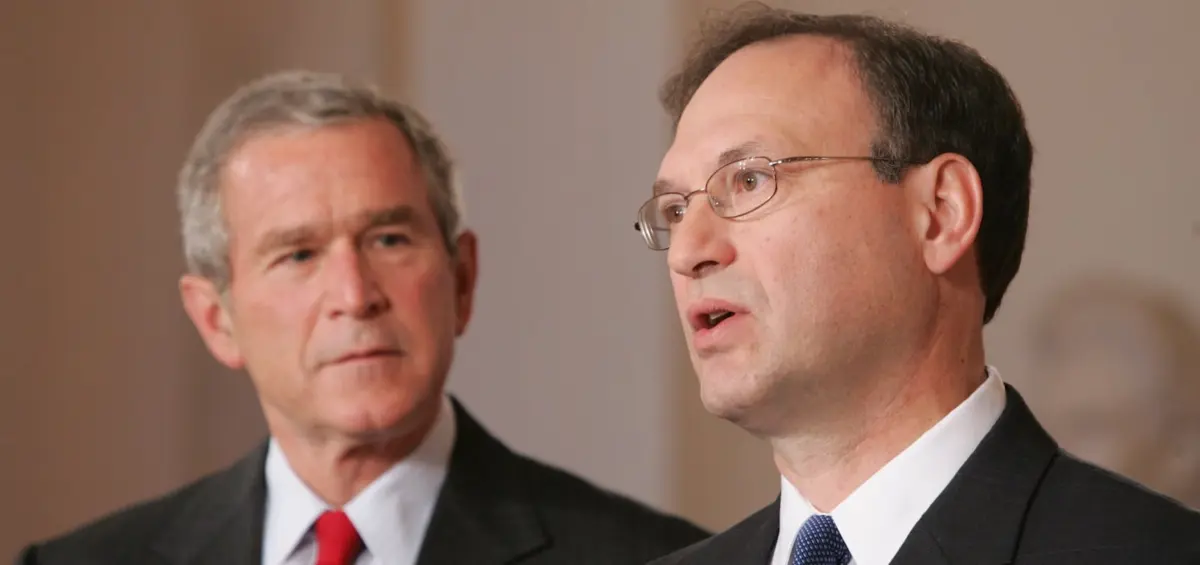
In the contemporary American political and legal landscape, few figures command as much polarizing intensity or exercise as profound an institutional footprint as Supreme Court Justice Samuel A. Alito Jr. As the author of the landmark Dobbs v. Jackson Women’s Health Organization opinion—which effectively dismantled the nearly half-century-old federal precedent of Roe v. Wade—Alito has long been viewed by progressive critics as a vanguard of judicial radicalism. Yet, a deeper examination of his intellectual pedigree, personal history, and judicial philosophy reveals a counter-narrative: Alito is perhaps the premier living exemplar of a deeply rooted, institutionalist conservatism that views the law not as a blank canvas for social engineering, but as a sacred trust bound by history, text, and tradition.
The release of his new collection of speeches, So Ordered: An Originalist’s View of the Constitution, the Court, and Our Country (Basic Books), arrives at a critical juncture in American history. The broader conservative movement is undergoing a violent internal realignment. The old guard of proceduralism, free-market orthodoxy, and deference to established legal norms is increasingly challenged by populist factions that view institutional mechanisms as compromised. Against this backdrop of ideological turmoil—accelerated by figures like Donald Trump and Elon Musk—Alito’s jurisprudence offers a stabilizing anchor. He represents a brand of conservatism that is cautious, historically tethered, and fundamentally skeptical of judicial overreach, whether that overreach emanates from the political left or from populist right-wing demands for a "common-good constitutionalism."
This article explores Alito’s trajectory: from his working-class upbringing in Trenton, New Jersey, through his formative academic battles at Princeton and Yale, to his decades on the federal bench and his role as a cornerstone of the modern conservative legal resurgence.
Read Also
Detailed Chronology: From Trenton to the Supreme Court
Roots in the Industrial Crucible (1950–1968)
Samuel Anthony Alito Jr. was born on April 1, 1950, in Trenton, New Jersey—a city whose industrial pride was boldly encapsulated by the famous sign on the Warren Street Bridge reading, "Trenton Makes, the World Takes." His father, Samuel Sr., was an Italian immigrant who ascended from working-class origins to establish the research office for the New Jersey State Legislature, earning a formidable reputation for rigorous nonpartisanship and meticulous standards. Alongside his mother, Rose, Samuel Sr. instilled in his children an uncompromising work ethic and a profound reverence for civic duty.
The Princeton Years and Counter-Cultural Friction (1968–1972)
Arriving at Princeton University in 1968 at the height of the Vietnam War protests, Alito was initially misread by peers as a reserved, plodding scholarship student. Uninterested in the radical campus politics of the era, he channeled his intellect into his studies and joined the Reserve Officers’ Training Corps (ROTC).
For a middle-class young man whose father had labored to earn his place in American society, the anti-American displays of privileged Ivy League elites struck a discordant note. While his peers treated their birthright cheaply, Alito developed a fierce protective instinct for American institutions—a perspective deeply reinforced by his Catholic faith and burgeoning conservative worldview.
Yale Law School and the Discovery of the "Expert" Class (1972–1975)
Alito’s skepticism of institutional elites deepened during his time at Yale Law School. Taking a constitutional law class with Charles Reich—author of the counter-cultural text The Greening of America—Alito witnessed firsthand the eccentricities of the academic establishment. In one notorious classroom episode, a student brought wine to class while Reich chanted, "Who put the acid in the wine?"
While Alito may have found little traditional constitutional instruction in such lectures, he extracted a vital lesson: the rule of technocratic "experts" was fundamentally incompatible with a constitutional republic grounded in popular consent. This insight would undergird his lifelong aversion to judicial policymaking.
Judicial Clerkships and Early Legal Career (1975–1985)
Following law school, Alito clerked for Judge Leonard Garth of the U.S. Court of Appeals for the Third Circuit. Garth, another working-class success story, modeled a judicial philosophy centered on restraint, famously declaring, "My own personal predilections have no place in the decisions that I make, and they should not have a place."
After being passed over for a Supreme Court clerkship, Alito entered public service, working as an assistant U.S. attorney under Maryanne Trump (older sister of Donald Trump) in New Jersey. His commitment to prosecuting cases without injecting personal politics eventually led him to the Reagan administration’s Office of Legal Counsel (OLC), where he navigated the complex legal machinery of the executive branch with characteristic reticence.
The Federal Bench and the Supreme Court Nomination (1990–2006)
Appointed to the Third Circuit by President George H.W. Bush in 1990, Alito earned a reputation as a meticulous, predictable jurist—earning the moniker "Scalito" from critics who sought to paint him as a clone of Justice Antonin Scalia. When President George W. Bush nominated him to the Supreme Court in 2005 (following the withdrawal of Harriet Miers), Alito faced a bruising confirmation fight. However, fifty-one of his former law clerks signed an attestation affirming that he had never pre-judged a case or allowed partisan ideology to dictate his rulings.
Supporting Context & Metrics: The Intraconservative Civil War and Judicial Philosophy
To understand Alito’s place in modern jurisprudence, one must analyze the broader ideological fractures within the American right. The contemporary conservative movement has long wrestled with an internal identity crisis: Is conservatism merely about preserving procedural norms, or must it actively wield state power to achieve substantive moral ends?
+-------------------------------------------------------------------+
|               THE INTRACONSERVATIVE SCHISM                        |
+-------------------------------------------------------------------+
|  Procedural Originalism / Textualism     |  Substantive / Common-Good  |
|  (e.g., Scalia, Alito)                   |  Constitutionalism          |
+------------------------------------------+------------------------+
| • Fidelity to original public meaning   | • Rejects mere procedure  |
| • Judges as umpires, not arbiters of good| • Demands active moral   |
| • Preserves social fabric via tradition  |   state intervention     |
+------------------------------------------+------------------------+
The Turning Point: Obergefell v. Hodges (2015)
While many analysts date the modern populist-conservative schism to Donald Trump’s descent down the golden escalator on June 16, 2015, the intellectual rupture on the right was crystallized ten days later with the Supreme Court’s decision in Obergefell v. Hodges. By discovering a constitutional right to same-sex marriage, the Court effectively bypassed democratic processes, outraging traditionalists who viewed the family as the cornerstone of civilization.
Yet, Alito’s dissenting opinion proved prophetic. He warned that the ruling would weaponize the law against traditional religious beliefs:
"Those who cling to old beliefs will be able to whisper their thoughts in the recesses of their homes, but if they repeat those views in public, they will risk being labeled as bigots and treated as such by governments, employers, and schools."
This warning materialized in subsequent years, notably in a 2021 lower court ruling determining that citizens holding traditional views on sexual morality were presumptively unfit for jury service. Alito noted that this case was merely "a foretaste of things to come."
Textualism vs. Judicial Drift: The Bostock Divergence
Alito’s adherence to original public meaning was tested during debates over statutory interpretation. In 2020’s Bostock v. Clayton County, Justice Neil Gorsuch authored a majority opinion concluding that Title VII’s prohibition of discrimination "on the basis of sex" encompassed sexual orientation and gender identity.
Alito exposed the fissures in this ostensibly textualist approach. By mobilizing contemporary unabridged dictionaries from the era of the law’s drafting, Alito demonstrated that no speaker of the English language in 1964 understood "sex" to include sexual orientation or gender identity. For Alito, textualism must remain anchored in historical reality rather than morphing into a vehicle for updating statutes to match modern sensibilities.
Official Statements and Judicial Insights from So Ordered
In his new speeches compiled in So Ordered, Alito continually returns to the foundational standard established in Washington v. Glucksberg (1997): that substantive due process protects only those liberties that are "deeply rooted in this Nation’s history and tradition."
Channeling Edmund Burke, Alito emphasizes the limits of human reason when tampering with foundational societal structures:
"At present, no one—including social scientists, philosophers, and historians—can predict with any certainty what the long-term ramifications of widespread acceptance of same-sex marriage will be."
Prudence Over Pure Theory
Alito distances himself from pure doctrinal abstraction, styling himself a "working judicial originalist." This pragmatism is evident in his lone dissents in cases balancing free speech against societal harm:
- Snyder v. Phelps (2011): Dissenting from a ruling protecting the Westboro Baptist Church’s protests at military funerals, Alito wrote: "In order to have a society in which public issues can be openly and vigorously debated, it is not necessary to allow the brutalization of innocent victims."
- United States v. Stevens (2010): Dissenting from a decision striking down a ban on animal "crush videos," he observed: "The First Amendment protects freedom of speech, but it most certainly does not protect violent criminal conduct, even if engaged in for expressive purposes."
Future Outlook: The Legacy of a Constitutional Statesman
As the American political landscape shifts toward a technocratic, populist right championed by figures like Donald Trump and Elon Musk—where libertine social ethics are increasingly merged with AI-driven revolutionary visions—Samuel Alito stands as a bulwark of traditional conservatism.
John Adams famously remarked that the American system of government was made exclusively for a moral and religious people, noting that it cannot be sustained by theory alone. It requires individuals of virtue exercising practical wisdom (prudentia) in the pursuit of justice.
Justice Samuel Alito embodies this classical American type: direct, unassuming, quietly pious, and erudite. Whether history judges his opinions from the bench or his extrajudicial writings, one reality remains undeniable: true constitutional stability cannot be manufactured by political will or judicial fiat; it must be cultivated, preserved, and defended by judges anchored in the enduring wisdom of the past.



Comments
Facebook App ID not configured. Please add it in the Customizer.