
Executive Overview
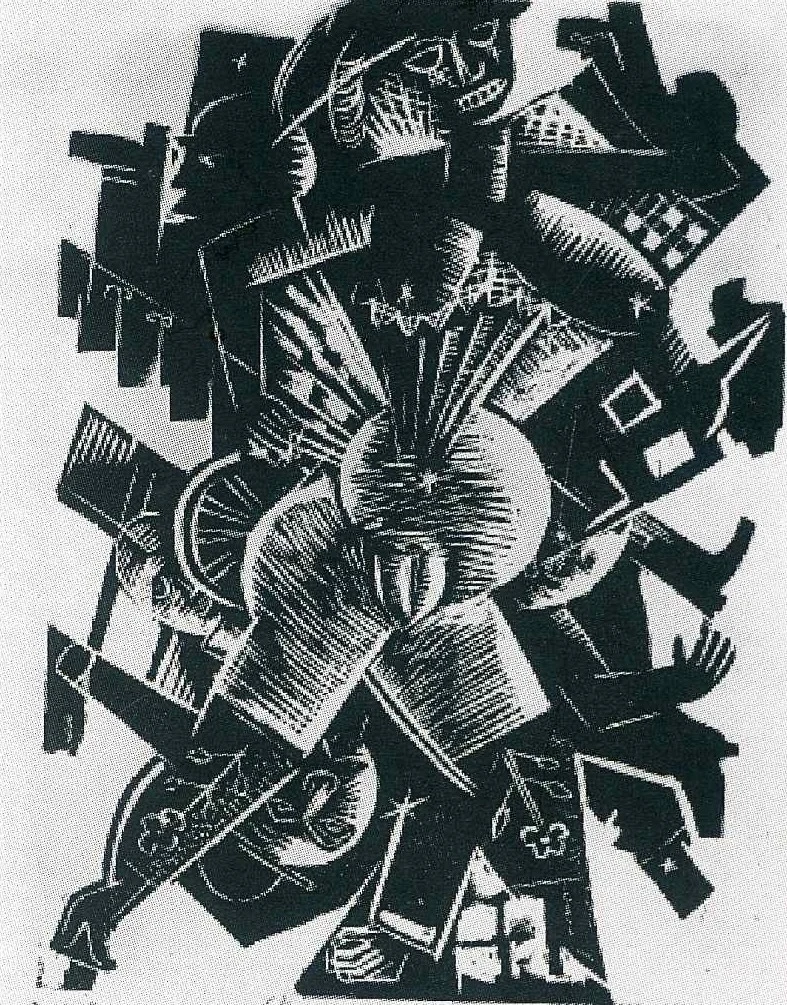
In the contemporary literary landscape, few voices interrogate the intersection of systemic violence, bodily vulnerability, and geopolitical displacement with the visceral precision of Ghanaian writer and poet Denoo Edinam Yawo. Her evocative new poetry piece, featured recently alongside Otto Dix’s haunting anti-war masterwork Apotheosis, serves as a stark micro-analysis of how structural conflict permeates the most intimate spaces of human existence. Through arresting imagery—where a bullet transitions from the predatory mouth of a shark into the maternal womb—Yawo maps the architecture of trauma, displacement, and survival.
This reporting examines the cultural and political weight of Yawo’s recent work, contextualizing her poetic exploration within her broader literary trajectory. Recognized as a 2025 Black Atlantic Residency Fellow and an alumna of prestigious creative incubators across the continent, Yawo has carved out a distinct niche in contemporary African letters. Her poetry does not merely observe violence; it dissects the mechanics of survival, the politics of language under duress, and the ways in which historical and contemporary conflicts rewrite the physical boundaries of the human body. By placing her work in dialogue with the harrowing visual lexicon of German Expressionism—specifically Otto Dix’s grotesque, unflinching depictions of the First World War—this feature explores how modern poetry continues to function as an indispensable witness to state-sponsored and structural aggression.
Detailed Chronology: The Rise of an Urgent Literary Voice
The trajectory of Denoo Edinam Yawo’s ascent within contemporary African poetry is marked by a rapid accumulation of critical accolades, artistic residencies, and literary milestones that trace an evolving dedication to interrogating sociopolitical reality.
Read Also
Early Foundations and Regional Recognition
Yawo’s emergence on the literary scene began with her sharp, philosophically resonant explorations of faith, bodily autonomy, and the weight of post-colonial existence. Writing from within the vibrant cultural ecosystem of Ghana, her early works quickly drew the attention of regional editors and poetry curators. Her distinctive voice—characterized by an unflinching willingness to gaze directly at grief and spirituality—paved the way for broader institutional recognition.
The Breakthrough Years: 2024–2025
The years 2024 and 2025 proved to be a watershed period for Yawo’s professional and creative development.
- The Adinkra Poetry Prize Honors: Yawo established her competitive dominance within African poetry by securing the position of Second Runner-Up in the 2024 Adinkra Poetry Prize, followed swiftly by being named First Runner-Up in the 2025 iteration of the same prestigious award.
- Pan-African Fellowships and Residencies: Expanding her footprint across the continent and the diaspora, Yawo was selected as a 2025 Black Atlantic Residency Fellow, an intensive program designed to foster transatlantic dialogues among writers engaging with history, memory, and migration.
- Editorial and Creative Development: Demonstrating a commitment to the broader literary craft, Yawo became an alumna of the 2025 CAINE Online Editing Program, refining her editorial acumen alongside some of the continent’s sharpest emerging minds. Furthermore, her participation in the 2025 Johannesburg Institute of Advanced Studies (JIAS) Creative Writing Workshop for Emerging Writers cemented her reputation as a formidable intellectual force in contemporary literature.
- The New Voices Poetry Triumph: Capping off a stellar run of accolades, Yawo claimed victory as the winner of the 2025 New Voices Poetry award, signaling the arrival of a fully formed aesthetic capable of moving fluidly between lyrical beauty and brutal political critique.
International Publication and Visual Dialogue
With her work appearing in esteemed literary publications such as Rowayat and the Kalahari Review, Yawo’s audience expanded globally. The publication of her latest poem—paired with Otto Dix’s 1932 masterpiece Apotheosis, which depicts the nightmarish, apocalyptic devastation of mechanized warfare—marked a critical maturation in her career. The pairing bridges twentieth-century European critiques of total war with contemporary African reflections on violence, displacement, and the haunting inheritance of conflict.
Supporting Context & Metrics: The Anatomy of a Bullet
To fully appreciate the impact of Yawo’s verse, one must examine the socio-cultural and literary mechanics embedded within the text itself. Her poetry operates as a diagnostic tool, examining how violence travels from macro-political arenas down to the cellular level of the human body.
Deconstructing the Metaphor: From Predator to Maternal Sanctuary
In the opening movement of her latest work, Yawo constructs a chilling genealogical chain of aggression:
When a bullet leaves the mouth of a shark
into the belly of my mother,
it renders the skin away from fat,
teachers her / to rent space in my body / for secrets.
By juxtaposing the primal, aquatic hunger of a shark with the manufactured lethality of a bullet, Yawo collapses the distance between natural predation and human warfare. The bullet does not merely kill; it acts as an architect, carving out real estate within the maternal body to house state secrets and generational trauma. The imperative that follows—"Hide, hide, hide / God between her gums and / fold, fold, fold / enough hope"—speaks to the frantic, spiritual preservation required of those who inhabit conflict zones or navigate the precarious margins of safety.
The Spatial Poetics of Grief and Loss
Yawo utilizes spacing, enjambment, and visual typography to mirror the physical constriction of trauma:
The entrance
to fear
from grief
is narrow.
The barrel,
is [only] wide
enough to
allow loss.
The visual narrowing of the text on the page mimics the claustrophobia of a gun barrel and the psychological funneling of human experience under the threat of violence. Language itself is rationed; words are forced into single-file columns, symbolizing how political conflict strips away the superfluous, leaving only the stark mechanics of survival and mourning.
The Dialogue with Otto Dix’s Apotheosis
The curatorial decision to pair Yawo’s text with Otto Dix’s Apotheosis deepens the poem’s historical resonance. Dix, a veteran of the First World War and a leading figure of the Neue Sachlichkeit (New Objectivity) movement, dedicated much of his career to exposing the grotesque reality of industrialized combat, stripping it of romantic nationalism.
Similarly, Yawo strips modern violence of its abstract political rhetoric. When she writes that a bullet is "a wound / watching the future / alchemize into ash," she aligns with Dix’s vision of a world consumed by its own destructive technologies. Both artist and poet document how state-sanctioned violence mortgage the futures of the vulnerable—transforming living communities into historical casualties.
Official Statements and Critical Reception
Literary critics, fellowship directors, and peers have increasingly noted the unique urgency of Yawo’s literary contributions. While traditional journalistic accounts of conflict often rely on detached statistics and geopolitical analysis, cultural commentators argue that Yawo’s poetry provides an irreplaceable emotional ledger of survival.
In reflections accompanying her recent residencies and awards, mentors at institutions such as the Johannesburg Institute of Advanced Studies and the Black Atlantic Residency program have praised Yawo’s ability to weave complex theological questions into secular realities. Her work consistently interrogates the paradox of faith: how communities living under the shadow of systemic violence maintain spiritual resilience while their physical environments crumble.
Cultural critics reviewing her placement in platforms like Guernica have highlighted her mastery of what scholars term "corporeal geography"—the mapping of socio-political boundaries onto human flesh. By treating the body as a contested borderland, Yawo challenges readers to confront the human cost of global conflicts that are too often sanitized by institutional media narratives.
Future Outlook: The Expanding Horizon of African Letters
As Denoo Edinam Yawo looks toward the future, her expanding body of work promises to remain at the vanguard of contemporary African and global poetry. Her recent sweep of honors—culminating in her 2025 fellowships and poetry awards—positions her as a vital intellectual and creative leader for a generation of writers grappling with the compounding crises of the twenty-first century.
Upcoming Projects and Transatlantic Dialogues
Building upon her work as a Black Atlantic Residency Fellow, Yawo is reportedly expanding her exploration of historical memory, migration, and the transatlantic circulation of trauma and resilience. Her engagement with international literary networks ensures that her localized Ghanaian perspective continues to dialogue with global conversations on human rights, post-colonial identity, and artistic resistance.
The Enduring Role of Poetry in Times of Crisis
In an era marked by resurgent militarism, mass displacement, and ideological polarization, Yawo’s poetry offers a vital counterweight to political rhetoric. As demonstrated by her searing diagnosis of the "bullet that watches the future alchemize into ash," literature retains its ancient power to bear witness where journalism falls silent.
Denoo Edinam Yawo does not offer easy consolations or tidy resolutions. Instead, she provides a language for the unnamable—a linguistic sanctuary where grief is mapped, survival is documented, and the raw anatomy of human endurance is laid bare for the world to see.

Comments
Facebook App ID not configured. Please add it in the Customizer.