
Executive Overview
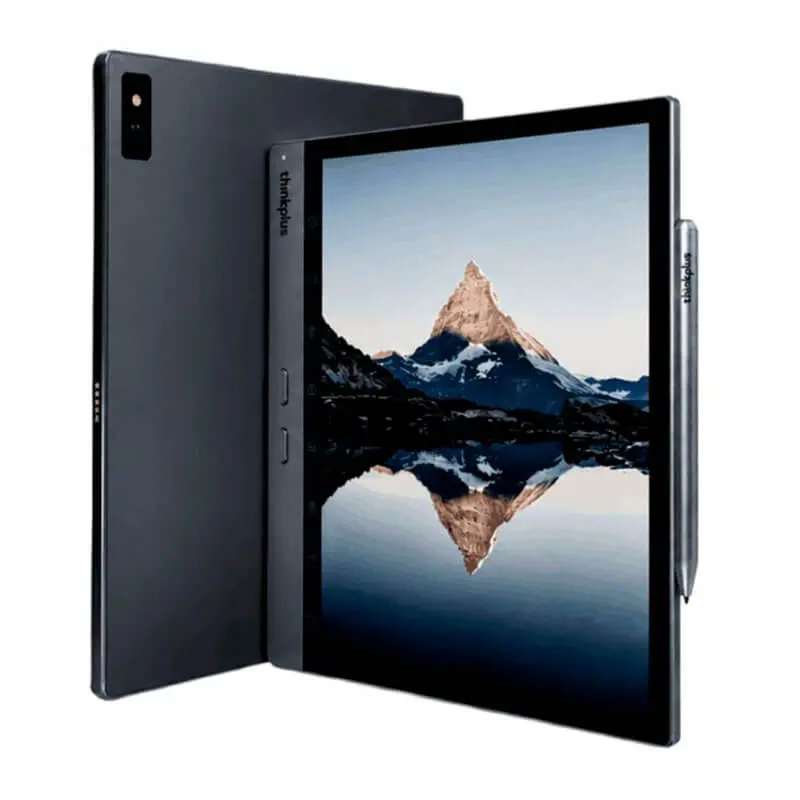
The landscape of professional mobile computing is undergoing a quiet yet seismic shift. As digital fatigue—stemming from endless hours staring at high-emission, glossy LCD and OLED screens—reaches an all-time high, enterprise users and mobile professionals are increasingly seeking alternatives that prioritize ocular health without sacrificing modern computational capabilities. Enter the Lenovo ThinkPlus AI Smart E-Ink Screen Office Notebook A510, a specialized, premium E-Ink tablet that seeks to redefine what a digital notepad and mobile office workstation can achieve.
Running on the versatile Android 14 operating system, the ThinkPlus A510 is not merely an e-reader designed for casual fiction consumption. Instead, it is a meticulously engineered, enterprise-grade productivity hub. By combining a rare and vibrant color E-Ink display, advanced artificial intelligence integrations, robust cellular connectivity, and a suite of professional hardware additions—such as an eight-microphone array and a high-resolution document-scanning camera—Lenovo has crafted a device targeted directly at executives, researchers, field agents, and corporate road warriors.
Positioned comfortably within the niche luxury tier of the e-paper market, the A510 commands a retail and import price point ranging between $850 and $950 USD via global e-commerce platforms. This comprehensive review examines the hardware innovations, software ecosystem, enterprise capabilities, and market implications of Lenovo’s most ambitious E-Ink office notebook to date.
Read Also
Detailed Chronology: The Evolution of E-Ink in the Modern Workplace
To understand the significance of the Lenovo ThinkPlus A510, one must trace the evolutionary trajectory of E-Ink technology within the corporate sphere. For well over a decade, electrophoretic displays—commonly known as E-Ink—were pigeonholed into a singular, narrow category: dedicated e-readers like the Amazon Kindle or Kobo devices. These monochrome, low-refresh-rate panels were celebrated for their paper-like readability under direct sunlight and their extraordinary battery efficiency, but they were fundamentally unequipped for the dynamic demands of the modern office.
The Monochrome Era and Early Digital Paper
The first generation of enterprise-focused E-Ink devices, which emerged in the late 2010s, focused primarily on digital note-taking. Brands like reMarkable and Onyx Boox proved that professionals were eager to shed physical legal pads in favor of cloud-synced, pressure-sensitive electronic paper. However, these early iterations suffered from several critical bottlenecks:
- Limited operating systems that restricted third-party application integration.
- Sluggish monochrome panels that struggled to display complex PDF annotations, charts, or corporate presentations with visual clarity.
- A complete absence of integrated communication and recording tools, necessitating a sprawl of separate gadgets for note-taking, voice recording, and document scanning.
The Rise of Color E-Paper (Kaleido Technology)
The introduction of E Ink Kaleido technology marked a watershed moment for the industry. By placing a specialized color filter array on top of a traditional black-and-white electronic paper panel, manufacturers could suddenly offer color without sacrificing the eye-comfort benefits of reflective display technology. Early color implementations were heavily criticized for muted palettes and darkened backgrounds, but subsequent iterations—culminating in the Kaleido 3 technology utilized in the Lenovo ThinkPlus A510—solved many of these historical compromises.
The Convergence of Android and AI
As E-Ink hardware matured, the software layer underwent a parallel transformation. The adoption of modern versions of Android—culminating in Android 14 for the A510—unlocked access to the vast global ecosystem of enterprise applications, cloud storage solutions, and communication tools. Concurrently, the explosion of generative artificial intelligence and edge computing provided hardware manufacturers with the tools necessary to bridge the gap between passive note-taking and active meeting management.
Lenovo’s entry into this space with the ThinkPlus series represents the convergence of these historical threads: a mature color E-Ink panel, a modern, open Android operating system, and deep, hardware-level AI integration built specifically for the demands of the 21st-century workplace.
Hardware Engineering and Display Technology
At the physical heart of the Lenovo ThinkPlus A510 lies a sophisticated 10.3-inch display assembly engineered to balance the conflicting demands of monochrome text clarity and color visual fidelity.
The Dual-Resolution Kaleido 3 Advantage
The tablet utilizes E Ink’s Kaleido 3 technology, a design choice that results in a unique dual-resolution architectural profile:
- Monochrome Text (300 DPI): When displaying standard text—such as corporate emails, e-books, or word processing documents—the device delivers a crisp, high-definition 300 dots per inch. This ensures that typography remains sharp, eliminating the jagged edges often associated with older electronic paper displays.
- Color Canvas (150 DPI): When rendering graphics, charts, highlighted annotations, or artistic sketches, the resolution adjusts to a functional 150 DPI. While this is lower than standard modern smartphone or tablet displays, it is more than adequate for business graphics, PDF markups, and color-coded organizational workflows.
Comfort Lighting and Ocular Ergonomics
Recognizing that modern office environments span from brightly lit boardrooms to dimly lit home offices, Lenovo has integrated a sophisticated dual-temperature front-light system. Unlike traditional LCD or OLED screens that project light directly into the user’s eyes, the A510’s comfort lighting system illuminates the reflective E-Ink surface from the side. Users can seamlessly adjust between warm amber tones (ideal for late-night reading and reducing melatonin suppression) and cool white tones (suited for high-contrast daytime office work) without incurring eye strain.
Ergonomic Input and Precision Stylus
Digital note-taking lives and dies by its input latency and tactile feedback. The ThinkPlus A510 ships with a wireless magnetic stylus that attaches securely to the chassis of the device. This stylus supports 4,096 levels of pressure sensitivity, allowing for nuanced line-weight variations during sketching or handwritten annotation. The friction between the stylus tip and the textured glass screen has been meticulously tuned to mimic the physical sensation of a ballpoint pen gliding across high-grade bond paper, effectively neutralizing the slippery, glass-on-plastic feel that plagues consumer-grade tablets.
Enterprise-Grade Features: AI, Audio, and Connectivity
What separates the Lenovo ThinkPlus A510 from standard consumer e-readers and general-purpose tablets is its heavy focus on enterprise productivity hardware. Lenovo has embedded several specialized tools designed to streamline corporate workflows and eliminate administrative friction.

Advanced Audio Capture and Real-Time Transcription
Corporate meetings generate vast amounts of unstructured data that are frequently lost or inaccurately captured in handwritten minutes. The A510 addresses this pain point via an advanced eight-microphone array embedded within its chassis.
- AI-Driven Noise Reduction: The microphone matrix is paired with proprietary, edge-processed noise-reduction algorithms designed to filter out ambient room chatter, HVAC hums, and keyboard clatter.
- Seamless Transcription: This hardware pairing enables the device to capture crystal-clear audio from multiple speakers in a conference room and translate those recordings into editable digital transcripts in real time, significantly reducing the administrative burden on project managers and executives.
Document Digitization via High-Resolution Optics
Field workers and corporate auditors frequently encounter physical contracts, receipts, whiteboards, and paper documents that must be integrated into digital archives. Rather than forcing users to rely on smartphone scanning apps, Lenovo equipped the A510 with a 20-megapixel rear-facing camera. Engineered specifically for document capture, this sensor utilizes optical character recognition (OCR) software to instantly convert physical pages into searchable, editable digital formats (such as PDF and Word documents) directly on the device.
Standalone 4G LTE Connectivity
Security-conscious professionals often find themselves hesitant to connect corporate hardware to unsecured public Wi-Fi networks in airports, cafes, and hotels. To circumvent this vulnerability, the ThinkPlus A510 features built-in 4G LTE cellular connectivity. This allows mobile workers to maintain secure, continuous cloud synchronization, access enterprise resource planning (ERP) tools, and download large attachments from virtually anywhere without compromising corporate cybersecurity protocols.
Supporting Context & Metrics
To fully appreciate the market positioning and practical utility of the Lenovo ThinkPlus A510, it is helpful to analyze its technical specifications, battery performance metrics, and pricing structures in quantifiable detail.
Comprehensive Technical Specifications Matrix
| Feature / Component | Specification Details |
|---|---|
| Operating System | Android 14 (Optimized for E-Ink Refresh Rates) |
| Display Size & Type | 10.3-inch E Ink Kaleido 3 Color Paper Display |
| Resolution | 300 DPI (Monochrome/Text) / 150 DPI (Color Canvas) |
| Front Light | Dual-Temperature Comfort Light (Adjustable Warm/Cool Tones) |
| Input Device | Wireless Magnetic Stylus (4,096 Levels of Pressure Sensitivity) |
| Battery Capacity | 6,900 mAh High-Density Lithium-Polymer Cell |
| Connectivity | 4G LTE Cellular Support, Wi-Fi, Bluetooth |
| Audio Hardware | 8-Microphone Array with AI-Driven Noise Reduction |
| Camera | 20 Megapixel Rear-Facing Document Scanning Camera |
| Target Audience | Enterprise Executives, Researchers, Mobile Professionals |
| Baseline Pricing | $850 – $950 USD (via Global E-Commerce & Export Platforms) |
Longevity and Battery Performance Metrics
One of the primary engineering triumphs of E-Ink architecture is its power efficiency. Because electrophoretic displays only draw electrical current when the image on the screen is actively changing, power consumption during static reading or note-taking is virtually negligible.
When paired with a massive 6,900 mAh battery—a capacity significantly larger than those found in most dedicated e-readers and comparable to small-format tablets—the ThinkPlus A510 achieves extraordinary longevity. Under typical office usage conditions (comprising two hours of daily reading, one hour of handwritten note-taking, and intermittent Wi-Fi/LTE syncing), the device can easily last for several weeks on a single charge. Even under heavy enterprise workloads involving constant AI voice transcription, camera document scanning, and active cellular data usage, the A510 comfortably outlasts traditional LCD office tablets by a factor of three to four.
Global Market Pricing and Import Dynamics
Priced between $850 and $950 USD when acquired through global e-commerce and export channels (such as AliExpress, Giztop, or specialized distributors like Good e-Reader), the ThinkPlus A510 occupies an unapologetically premium financial bracket.
Industry analysts note that this price point reflects the niche, low-volume nature of color E-Ink manufacturing combined with heavy investments in custom enterprise hardware (such as the 8-mic array and high-res camera). While casual consumers accustomed to $300 mainstream Android tablets may view the cost as prohibitive, corporate procurement departments targeting specialized knowledge workers often evaluate the device against the combined cost of dedicated voice recorders, professional scanners, physical notebooks, and ergonomic office accessories.
Future Outlook: The Trajectory of Professional E-Paper
The launch of the Lenovo ThinkPlus AI Smart E-Ink Screen Office Notebook A510 serves as a bellwether for the future of mobile office hardware. As remote and hybrid work models become permanent fixtures of the global economy, the demand for specialized, health-conscious, and ultra-secure productivity tools will only intensify.
The Convergence of E-Ink and Generative AI
Looking ahead, the integration of artificial intelligence into E-Ink devices will likely move beyond simple voice transcription and noise reduction. Future iterations of office-focused e-paper notebooks are expected to incorporate localized, on-device large language models (LLMs) capable of summarizing lengthy PDF contracts, drafting email responses based on handwritten bullet points, and organizing complex project management workflows entirely offline—ensuring absolute data privacy for enterprise users.
Mainstream Adoption vs. Niche Specialization
While color E-Ink technology has advanced exponentially with Kaleido 3 and emerging gallery displays, it still faces challenges regarding refresh rates and color saturation when compared to traditional emissive displays. Consequently, devices like the ThinkPlus A510 will likely remain specialized tools for knowledge workers, academics, lawyers, and corporate executives rather than replacing general-purpose media consumption tablets.
Nevertheless, by successfully marrying the eye-comfort benefits of electronic paper with the computational muscle of Android 14 and advanced AI hardware, Lenovo has established a compelling blueprint for the modern digital office. The ThinkPlus A510 demonstrates that the future of mobile productivity is not about cramming more flashing pixels into our line of sight, but rather about engineering smarter, more ergonomic tools that harmonize with human biology while meeting the rigorous demands of enterprise work.





Comments
Facebook App ID not configured. Please add it in the Customizer.