
Executive Overview
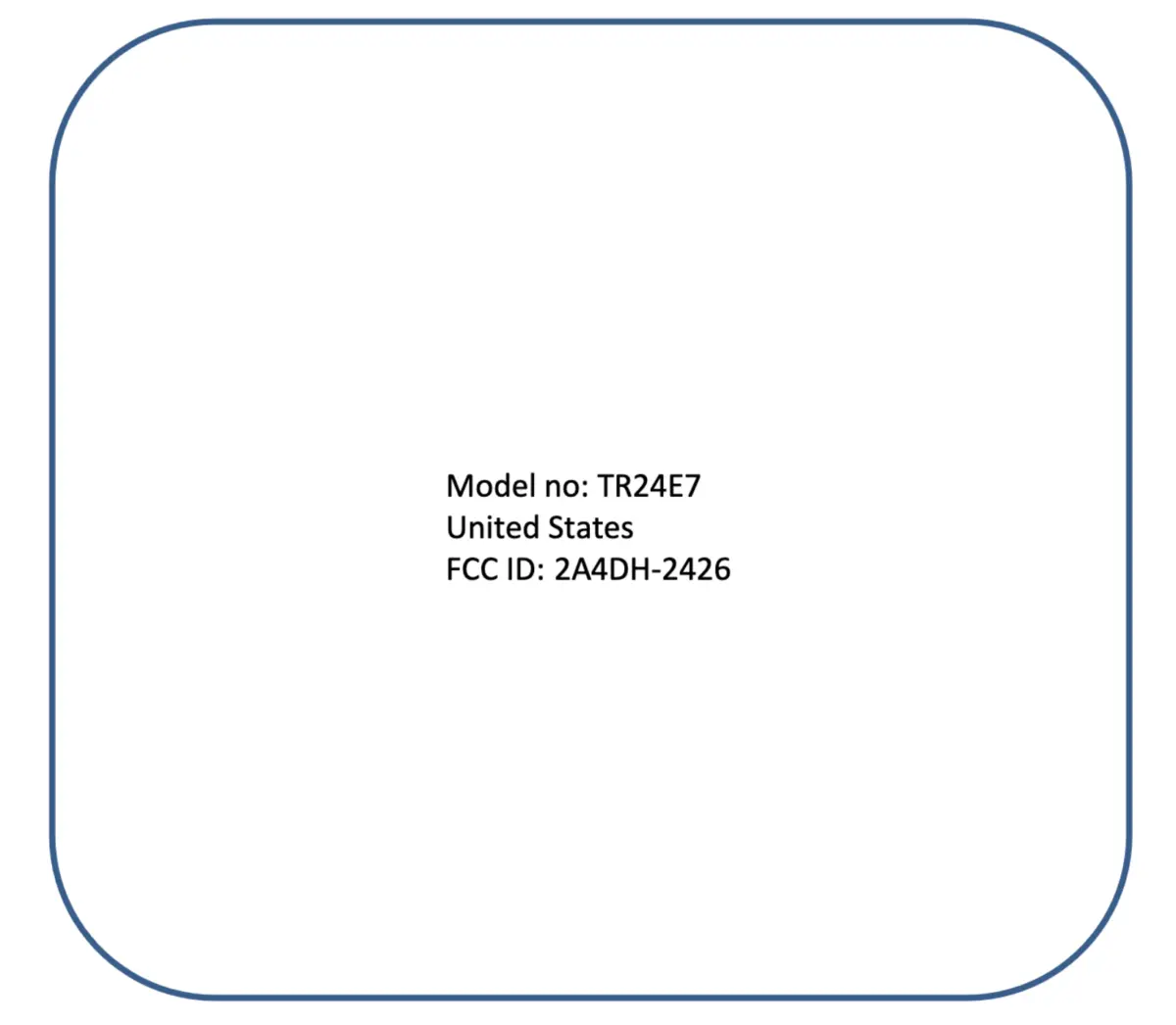
Amazon is moving closer to expanding its hardware ecosystem with a newly secured Federal Communications Commission (FCC) certification for an unreleased digital media device. Identified in regulatory filings under model number TR24E7 with the FCC ID 2A4DH-2426, industry analysts and hardware trackers have closely scrutinized the documentation.
The filings point definitively toward a forthcoming successor to the popular Fire Max 11 tablet, a device that has experienced notable retail stock shortages over recent months.
Securing FCC approval is widely recognized as the critical final hurdle for consumer electronics manufacturers before commercial deployment and retail distribution can legally commence in the United States.
Read Also
The forthcoming device marks a significant generational leap for Amazon’s premier tablet tier. While previous iterations of the Fire Max line targeted the budget-conscious consumer seeking basic media consumption capabilities, preliminary specification sheets embedded in the regulatory filings reveal a strategic pivot.
Amazon is injecting substantially more processing power and memory into its hardware roadmap. Powered by a modern MediaTek octa-core system-on-chip and boasting a much-needed doubling of random access memory (RAM), the upcoming tablet positions itself to handle heavier multitasking, enhanced productivity apps, and more demanding entertainment workloads.
This comprehensive report explores the technical architecture of the newly certified device, evaluates the strategic implications of its hardware choices, examines its position within the broader budget-to-midrange tablet landscape, and projects its commercial impact upon release.
Detailed Chronology: From Regulatory Filings to Retail Pipeline
The path of a consumer electronics device from the laboratory workbench to the consumer’s hands is governed by rigorous regulatory compliance. For hardware intended for the United States market, the FCC serves as the ultimate gatekeeper, ensuring that wireless transmissions adhere to strict electromagnetic compatibility and radio frequency safety standards.
The FCC Filing and Model Identification
In late August, public databases maintained by the FCC updated to include documentation for a digital media device submitted under applicant parameters linked to Amazon’s hardware development division.
- Model Number: TR24E7
- FCC ID: 2A4DH-2426
- Filing Classification: Digital Media Device / Portable Computing Hardware
Regulatory filings typically include external and internal photographs, operational descriptions, test reports covering Wi-Fi and Bluetooth spectrums, and physical label placement diagrams.
While manufacturers frequently request confidentiality for internal components and schematic diagrams to protect proprietary designs ahead of a commercial launch, baseline specifications regarding processing architecture and hardware capabilities inevitably surface through mandatory compliance documentation and regulatory test logs.
Retail Absence Preceding the Announcement
Speculation regarding a refreshed Fire Max 11 has been circulating within tech communities for months, primarily driven by supply chain indicators.
Throughout the early and middle portions of the year, the first-generation Fire Max 11 experienced chronic out-of-stock statuses across Amazon’s primary retail channels and major third-party vendors.
In the consumer electronics industry, the deliberate depletion of inventory for a flagship product line is a classic precursor to a hardware refresh. Manufacturers wind down production lines for older iterations to clear manufacturing capacity, supply chain logistics, and warehousing space for incoming next-generation hardware.
With FCC certification now secured, the timeline for public unveiling and pre-orders is expected to compress rapidly, pointing toward an imminent autumn or holiday shopping season release window.
Technical Specifications and Hardware Architecture
A granular examination of the preliminary documentation submitted to regulatory bodies reveals several key performance upgrades over Amazon’s current tablet portfolio.
While Amazon’s Fire OS ecosystem has historically emphasized aggressive cost-to-performance ratios over raw benchmark dominance, the hardware specifications outlined in the TR24E7 filing suggest a concerted effort to address long-standing user criticisms regarding memory constraints and multitasking fluidity.
Processing Power: The MediaTek MT8189
At the heart of the newly certified tablet is the MediaTek MT8189. This silicon choice represents a strategic departure or evolution from previous chipsets utilized in Amazon’s ecosystem.
- Core Architecture: The MT8189 is an eight-core (octa-core) ARM-based system-on-chip (SoC).
- Target Market: MediaTek engineered this specific processor family to power the next wave of budget-to-midrange Chromebooks and performance-oriented portable tablets.
- Performance Profile: Featuring a heterogeneous mix of performance and efficiency cores, the octa-core arrangement allows the device to scale power consumption dynamically. Lightweight tasks—such as reading e-books, browsing text-heavy websites, or streaming audio—run on low-power efficiency clusters to maximize battery endurance. Conversely, resource-intensive operations—including high-definition video playback, cloud gaming via Amazon Luna, and split-screen multitasking—engage the performance cores to maintain frame rate stability and responsive user interface navigation.
Memory Upgrades: Addressing the RAM Bottleneck
One of the most consequential disclosures in the regulatory data centers around system memory. The certified device is slated to ship with 8 GB of RAM.

To contextualize this upgrade, the current-generation Fire Max 11 relies on 4 GB of RAM. For years, power users and tech reviewers have noted that Fire OS, despite its heavy optimization and streamlined interface, routinely encountered memory bottlenecks when running multiple modern applications simultaneously or managing background processes while streaming media.
- Doubled Capacity: Moving to 8 GB represents a 100% capacity increase, bringing Amazon’s premier tablet in line with contemporary mid-range Android tablets and entry-level laptops.
- Multitasking Benefits: The expanded RAM pool ensures that applications remain resident in memory longer, drastically reducing redraw lag when switching between productivity suites, web browsers, and entertainment apps.
Storage Configurations and Expansion
Internal storage configurations for the upcoming device are listed at 64 GB. While 64 GB serves as an adequate baseline for cloud-reliant users who stream media and store documents in digital lockers, it can fill up quickly in modern computing environments where application footprints, high-resolution cached media, and offline downloads routinely demand substantial capacity.
Recognizing this limitation, Amazon has retained a critical hardware feature: MicroSD card expansion support.
By incorporating a physical card slot capable of accepting high-capacity memory cards, the device empowers users to expand their local storage exponentially. This proves particularly valuable for consumers who utilize their tablets for offline media consumption—such as downloading entire seasons of Prime Video series, large Spotify playlists, or extensive comic book and e-book libraries—while traveling or in areas with intermittent internet connectivity.
Supporting Context, Metrics, and Market Comparison
To fully understand the market positioning of Amazon’s upcoming hardware release, it is necessary to examine the broader economic and technological landscape of the budget tablet sector in 2026.
The Evolving Consumer Tablet Market
The global tablet market has evolved past the era of casual media consumption devices. Consumers now view tablets as versatile productivity tools, remote learning portals, and secondary workstations.
At the same time, inflationary pressures and economic caution have heightened consumer sensitivity to pricing. Buyers demand higher value, longer software support lifecycles, and hardware that resists obsolescence.
| Feature / Metric | Current Fire Max 11 (1st Gen) | Upcoming Fire Tablet (TR24E7 / FCC ID: 2A4DH-2426) |
|---|---|---|
| Processor | MediaTek MT8188 (or equivalent octa-core) | MediaTek MT8189 (Advanced 8-core ARM SoC) |
| RAM | 4 GB | 8 GB (Substantial upgrade for multitasking) |
| Internal Storage | 64 GB / 128 GB options | 64 GB baseline with MicroSD expansion |
| Regulatory Status | Available / Stock Depleted | FCC Certified (Pending Official Launch) |
| Target Ecosystem | Prime Video, Kindle, Alexa, Silk Browser | Enhanced Fire OS with Expanded App Capabilities |
The Software Ecosystem Factor: Fire OS vs. Standard Android
A defining characteristic of Amazon’s hardware strategy is its reliance on Fire OS, a heavily modified fork of the Android Open Source Project (AOSP).
- The Walled Garden: Fire OS replaces Google Mobile Services (GMS)—including the Google Play Store, Google Maps, and YouTube integration—with Amazon’s proprietary app store, Silk browser, and Alexa voice assistant ecosystem.
- The Value Proposition: By controlling both the hardware manufacturing margins and the software storefront, Amazon is able to subsidize the physical cost of its tablets. This allows the company to retail hardware at price points significantly lower than competing offerings from Samsung, Lenovo, or Apple.
- Hardware Synergies: The inclusion of 8 GB of RAM and the MediaTek MT8189 processor will provide Fire OS with the computational headroom needed to run smoother animations, faster app launches, and potentially more robust enterprise or productivity integrations without pushing retail prices into premium tier territory.
Official Statements and Industry Perspective
While Amazon has not yet issued a formal press release detailing the commercial launch, pricing, or exact market nomenclature of the TR24E7 device, industry observers and consumer technology analysts have offered unified perspectives on the strategic timing of the FCC filing.
Industry analyst consensus highlights that Amazon’s hardware division operates on predictable seasonal product lifecycles. Major hardware refreshes are routinely timed to capture consumer demand ahead of the autumn shopping season, Black Friday, and the end-of-year holiday rush.
Furthermore, supply chain audits indicate that component pricing for mid-range ARM processors and memory modules has stabilized, allowing hardware manufacturers to deliver spec-bumped devices without imposing aggressive price hikes on budget-conscious consumers.
Tech editorial desks have noted that while 64 GB of internal storage might feel modest when evaluated against modern flagship smartphones, the combination of a discounted retail price point, expandability via MicroSD cards, and a robust 8 GB RAM allocation makes the upcoming tablet an exceptionally competitive option for families, students, and casual media consumers.
Future Outlook: What Lies Ahead for Amazon’s Hardware Lineup
As the ink dries on the FCC certification documents, attention turns to Amazon’s next strategic moves regarding its smart home and portable computing divisions.
1. Official Announcement and Pre-Order Phase
With regulatory approval secured, Amazon is cleared to officially announce the device, unveil its final commercial branding (whether it debuts as the Fire Max 11 (2nd Generation) or under an entirely new product designation), and open pre-order channels. Industry insiders expect marketing campaigns to emphasize the performance gains delivered by the upgraded 8 GB RAM configuration and the enhanced MediaTek processor.
2. Ecosystem Integration and Ambient Computing
Beyond raw hardware specifications, the new tablet will serve as a mobile control hub for Amazon’s expanding smart home ecosystem. Integrated deeply with Alexa, the device is expected to feature upgraded far-field microphones, enhanced smart home dashboard capabilities (acting as an Echo Show alternative when docked or idle), and seamless interoperability with Ring security cameras, Blink smart lighting, and Fire TV streaming sticks.
3. Long-Term Viability in the Budget Sector
By addressing the historical memory bottlenecks that plagued earlier budget hardware generations, Amazon is ensuring that its devices remain functional and responsive over multi-year ownership cycles. As app developers continue to demand more computational resources, the inclusion of 8 GB of RAM future-proofs the hardware, protecting consumer investment and reinforcing brand loyalty within the Amazon digital ecosystem.
As autumn progresses, all eyes remain fixed on Amazon’s storefronts for the official unveiling of the TR24E7—a release poised to redefine the standard for value and performance in the sub-$300 tablet market.




Comments
Facebook App ID not configured. Please add it in the Customizer.