
Executive Overview
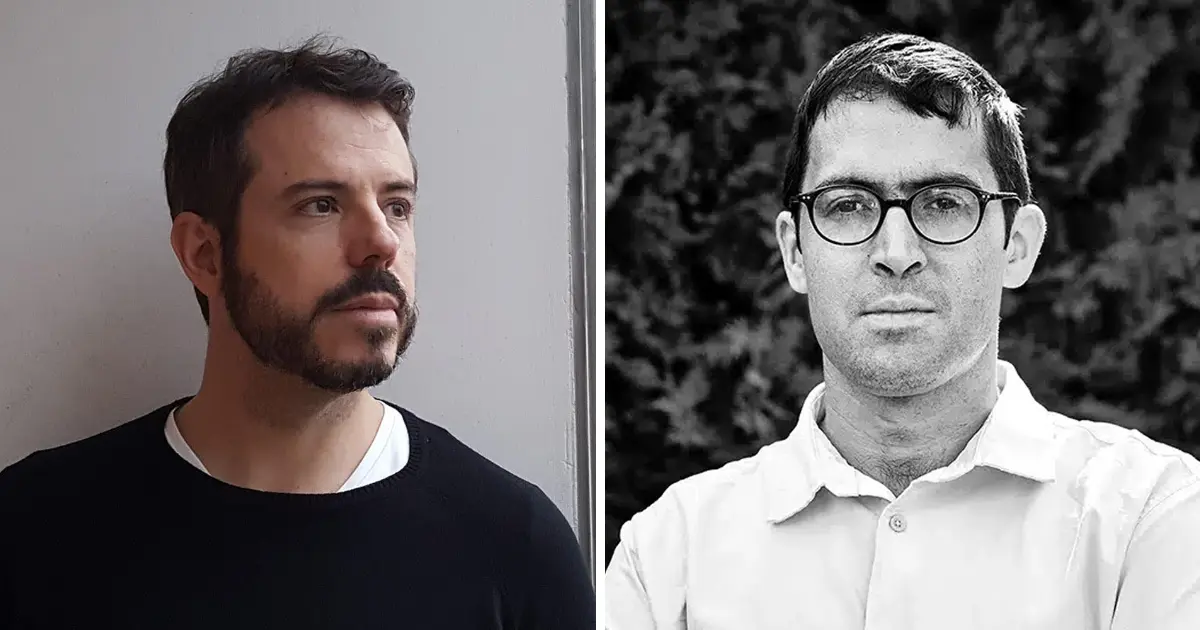
Literary translation is rarely a mere act of linguistic substitution; at its highest levels, it is a harrowing exercise in literary architecture, cryptographic puzzle-solving, and trans-lingual re-engineering. Few recent works illustrate this reality quite as vividly as Centroeuropa, the acclaimed novel by Spanish writer Vicente Luis Mora, which has found a brilliant, arduous, and critically celebrated second life in English thanks to award-winning translator Rahul Bery. Published initially in Spanish in late 2020, the novel made its way into the United Kingdom via Peninsula Press before crossing the Atlantic under the imprint of Bellevue Literary Press, captivating North American audiences and earning high praise for its stark originality and formal audacity.
At the heart of Centroeuropa lies a haunting, hallucinatory premise: a cluster of ancient Prussian soldiers, frozen in time and rooted to the earth, standing upright like spectral scarecrows in a timeless landscape. Yet the book’s conceptual weight is matched—and arguably surpassed—by the extreme formal constraints imposed by its author. Mora subjected the text to an "infernal" matrix of rules, including strict, mathematically escalating word counts per chapter and a rigid historical lexicon excluding any words or concepts that did not exist approximately two centuries ago, during the book’s historical setting.
For Bery, translating this labyrinthine text was not merely a professional assignment, but a formidable challenge that demanded absolute ruthlessness with syntax, structural rebalancing, and historical lexicography. In a deep-dive dialogue, Mora and Bery unpack the genesis of this spectral novel, the grueling mathematical and linguistic gymnastics required to bring it into English, the deep collaborative synergy between author and translator, and the enduring metaphors that define one of the most remarkable transatlantic literary transfers of recent years.
Read Also
Detailed Chronology: From Prussiana Epiphany to Transatlantic Acclaim
To fully appreciate the scope of Centroeuropa, one must trace its evolution from a fleeting historical spark in the author’s mind to its meticulous physical construction and subsequent multilingual life.
The Germ of Inspiration (Pre-2020)
The genesis of the novel was sudden and visceral. Several years prior to its Spanish publication, Vicente Luis Mora was immersed in a historical text concerning the history of Prussia. Suddenly, completely unbidden, a stark visual epiphany materialized in his mind’s eye: an array of frozen corpses of ancient soldiers, firmly rooted to the ground, standing upright with the silent rigidity of scarecrows.
The image was so commanding that Mora felt an immediate, inescapable moral and artistic obligation to chronicle these men. Over the subsequent weeks, supplemental visions cascaded into his consciousness. It was during this creative surge that he encountered Redo, the novel’s central protagonist, lingering in what Mora describes as "a luminous corner of my mind." In an imaginative dialogue, Mora posed a direct question to his character: "Do you want to write a novel?" Redo accepted the proposition, and the sprawling architectural project commenced.
Structural Torture and the Spanish Launch (Late 2020)
When Centroeuropa debuted in Spanish in the winter of 2020, it was accompanied by a revealing blog post penned by Mora. In this digital dispatch, the author laid bare the hidden and overt constraints that governed his writing process. Among them was a structural requirement that would terrify most novelists: strict word counts for each chapter that double exactly as the narrative progresses. Mora openly categorized the structural labor as "infernal."
The Discovery and UK Publication (2021–2023)
Shortly after its Spanish release, translator Rahul Bery encountered the novel. Struck by its brilliance and deeply unsettling atmosphere, Bery found himself continuously haunted by its imagery. He tracked down Mora’s explanatory blog post, reread the novel with the author’s hidden mechanics in mind, and perceived an immeasurable richness beneath the surface.
Though cognizant of the punishing formal rules Mora had enforced, Bery recognized a personal gauntlet he felt compelled to run. Following an intensive pitch process, Peninsula Press secured the UK rights, bringing the English version to life across the Atlantic.
The North American Wave (2024–Present)
Following its UK release, Erika Goldman of Bellevue Literary Press encountered the finished English text. Struck by the same compelling magnetism that had hooked Bery years earlier, Bellevue acquired the North American rights. The reception in the United States and Canada has since exceeded expectations, giving Centroeuropa a vibrant second life and cementing its status as a landmark of translated contemporary fiction.
Supporting Context & Metrics: The Mechanics of an Impossible Translation
Translating Centroeuropa required a level of technical precision that pushes the boundaries of traditional literary translation. Because Spanish is inherently more concise than English, literal translations almost invariably expand in word count—a fatal flaw when dealing with mathematically fixed chapter lengths.
The Word-Count Matrix
The most daunting hurdle Bery faced was Mora’s mathematical constraint: chapter word counts that double precisely from chapter to chapter. When translating text that expands naturally, reducing the English word count lower than the Spanish original demanded an uncharacteristic ruthlessness in revision. Bery noted that while revising is typically a struggle, the strict word-count limits forced him to become mercilessly economical.
The editing phase introduced further complications. Standard copyediting suggestions—traditionally designed to improve flow or clarify syntax—inevitably altered word counts, necessitating meticulous rebalancing. While minor adjustments are manageable at smaller thresholds (such as a 750-word chapter), rebalancing massive blocks of text—reaching up to 24,000 words—proved exceptionally arduous. Thanks to meticulous post-publication edits for the US edition, Bery successfully locked in the structural integrity of the word counts.
Historical Lexicography and the "Paceified" Neologism
Beyond mathematics, Bery was bound by a temporal constraint: avoiding any vocabulary or phrases that did not exist roughly two hundred years ago. This required diligent historical vetting of every lexeme.
A notable close call occurred with the word "narcissist." Thanks to the sharp eye of Will Rees, editor at Peninsula Press, a historical anachronism was caught—revealing that the term had slipped into both the English translation and Mora’s original Spanish manuscript, despite not entering common usage until the twentieth century.
On a sentence level, however, the prose was largely accessible, save for occasional stylistic curveballs. Mora introduced the neologism "enrutecido"—a portmanteau combining "embrutecido" (stupefied) and "ruta" (route or track)—to describe a character who combats obsessive thoughts by undertaking massive walking journeys. Bery’s inventive solution was the coinage "paceified," a brilliant rendering that captures the essence of the original, even if it occasionally risked brief confusion with editorial proofreaders assuming a typo.
Official Statements & Dialogue
To fully understand the collaborative dynamic behind Centroeuropa, we turn to the direct reflections of the author and translator, whose ongoing correspondence shaped the English edition.
The Genesis and Collaboration
Vicente Luis Mora: "A few years ago, I was reading a text about the history of Prussia and suddenly, out of nowhere, I clearly saw in my imagination a bunch of frozen corpses of ancient soldiers rooted to the ground, standing upright like scarecrows. It was a sort of epiphany. As soon as the image came, I understood that I was now obliged to write a story about these men. Other visions followed over the next few weeks, and then I met Redo, the main character, in a luminous corner of my mind. And I said to Redo, ‘Do you want to write a novel?’ Redo accepted, and then it all started."
Rahul Bery: "I read the novel not long after it came out in Spanish in late 2020. It was so brilliant and unsettling that I couldn’t stop thinking about it. I found Vicente’s blog post where he explains the many hidden and not-so-hidden procedures and restrictions he imposed on its writing… For some reason, though Vicente described the work that went into, for example, having strict word counts which double exactly in each chapter as ‘infernal,’ I felt it was a challenge I wanted to take on."
On Authorial Support and the Nature of Translation
Rahul Bery: "Vicente already helped hugely, before we had even spoken, by dissecting the novel so thoroughly on his blog. We had a long Zoom call at the beginning, followed by many, many emails over the course of 2023 and then 2024. Nowadays it’s almost a cliché or truism to talk of translations as entirely new texts, but thanks to Vicente, I feel this to be true on both a literal and deeper level."
Vicente Luis Mora: "Throughout the translation process, I was available for Rahul and I did my best to clarify for him the obscure references or the tricky words with double meanings. But he is a great translator and understood the novel better than me. Now, reading the text in English is for me like going through it in Spanish."
Metaphors of the Ineffable
When asked to describe the essence of the novel through an image, metaphor, or musical analogue, both creator and recreator offered striking visions:
- Rahul Bery’s Metaphor: Bery returns to the foundational image of the novel—the frozen soldiers from the distant past and future standing sentinel in an open field, impervious to damage and bearing witness to the flow of life. Invoking literary critic Samuel Beckett’s famous observation on James Joyce’s Finnegans Wake, Bery suggests that Mora’s work "is not about something; it is that something itself."
- Vicente Luis Mora’s Metaphor: Mora frames the reading experience as an inverted psychological journey: "It’s like experiencing a nightmare backwards: At the end, you’ll wake up comfortably numb."
Future Outlook & Critical Legacy
The trans-national journey of Centroeuropa marks a significant milestone in contemporary speculative and historical fiction. By successfully navigating the treacherous waters of mathematical word-count constraints, historical lexicons, and cross-cultural translation, Rahul Bery has proven that extreme formal literature can cross linguistic boundaries without sacrificing its structural integrity.
For Vicente Luis Mora—a distinguished Spanish novelist, poet, essayist, literary critic, former director of the Instituto Cervantes in Albuquerque, and current literature professor at the University of Málaga—this North American debut introduces a major European voice to a broader international readership.
As Centroeuropa continues to find receptive audiences across the United States, United Kingdom, and beyond, it stands as a testament to the power of rigorous artistic collaboration. It demonstrates that when a visionary author and a fearless translator join forces, even the most rigidly frozen literary landscapes can thaw, move, and speak across languages with breathtaking clarity.



Comments
Facebook App ID not configured. Please add it in the Customizer.