

In the highly competitive landscape of contemporary higher education and elite research fellowships, few accolades carry the prestige and transformative potential of the National Science Foundation (NSF) Graduate Research Fellowship. This elite federal program identifies and supports outstanding graduate students who are pursuing research-based master’s and doctoral degrees in science, technology, engineering, and mathematics (STEM) fields.
In a landmark achievement that underscores both personal ingenuity and rigorous academic preparation, Zoe Lee—an alumna of the prestigious Rhode Island School of Design (RISD) with a specialized background in Industrial Design—has been awarded a prestigious NSF grant. This competitive fellowship will fully fund her upcoming graduate studies, providing robust financial backing as she transitions into her Master’s program at the Massachusetts Institute of Technology (MIT) this fall, with an automatic extension to support her eventual Ph.D. studies.

This milestone represents far more than an individual triumph; it highlights the evolving intersection of industrial design, human-centered engineering, and scientific research. Traditionally viewed through the lens of aesthetic creation and commercial product development, the discipline of industrial design is increasingly recognized as a vital catalyst for technological innovation. Lee’s transition from RISD’s rigorous studios to the world-renowned laboratories of MIT signals a paradigm shift. It proves that the synthesis of creative design thinking and hard scientific research is essential for solving complex global challenges.
Read Also
This comprehensive report examines Zoe Lee’s academic trajectory, the profound significance of the NSF grant, the institutional context of her progression from RISD to MIT, and the broader implications of her work within the innovation ecosystem.
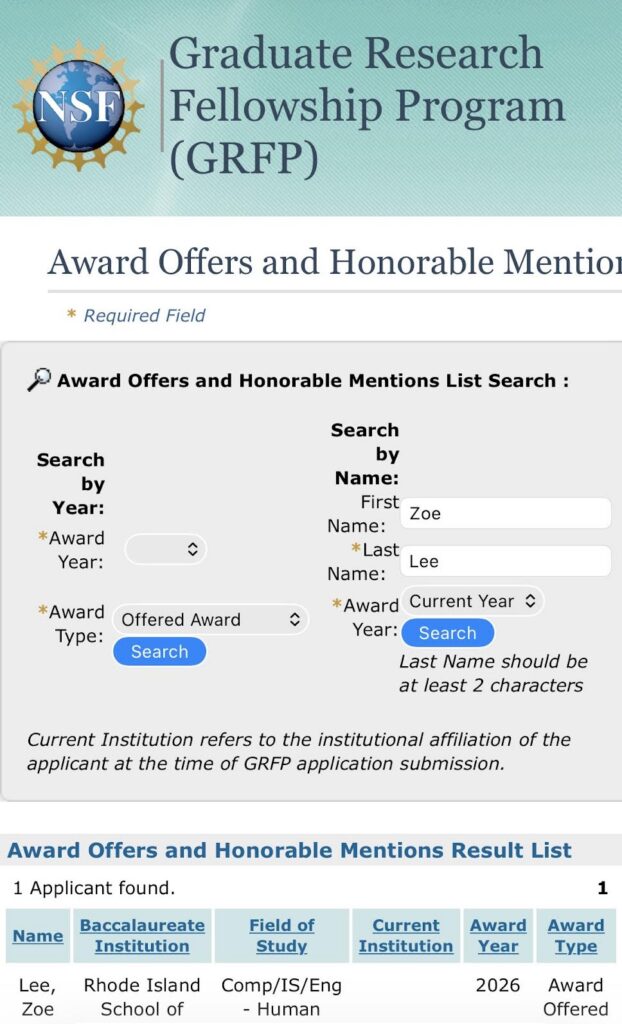
Detailed Chronology: From RISD Studios to MIT Laboratories
The Foundation: Cultivating a Design-Driven Mindset at RISD
Zoe Lee’s academic journey began at the Rhode Island School of Design, an institution globally revered for cultivating avant-garde artists, designers, and thinkers. Within RISD’s demanding Industrial Design department, students are challenged to look beyond surface-level aesthetics, diving deep into materials science, ergonomics, user experience, manufacturing processes, and systems thinking.
During her undergraduate years, Lee did not merely learn how to sketch or build prototypes; she engaged in deep-dive investigative projects that challenged conventional boundaries. Her curriculum required an understanding of how physical objects interact with human behavior, environmental sustainability, and mechanical constraints. This cross-disciplinary environment laid the groundwork for her unique ability to bridge the gap between creative conceptualization and technical execution.
Her undergraduate tenure was marked by notable collaborative and individual achievements. Notably, Lee participated in regional innovation circuits, including her involvement with the Rhode Island BlueGreen Innovation Challenge. Her team’s work in this arena—focused on sustainable design practices and ecological problem-solving—demonstrated her early commitment to leveraging design as a tool for positive environmental and societal impact. These foundational experiences proved instrumental when she began formulating proposals for elite federal funding.
The Professional Pivot: Entrepreneurship and Creative Fellowships
Before stepping onto the MIT campus, Lee’s trajectory was further enriched by diverse professional and creative endeavors. Her work extended into the entrepreneurial sphere, notably through her involvement with startup initiatives such as BEAM and her participation in programs like NEW INC, the first museum-led incubator for art, design, and technology (run by the New Museum).

Furthermore, her recognition as a MacDowell Fellow placed her in the company of some of the nation’s most distinguished writers, composers, and visual artists. This fellowship provided her with the dedicated time and space to refine her conceptual frameworks, bridging the gap between applied industrial design and critical cultural discourse. These experiences cultivated a rare versatility, allowing Lee to speak fluently across multiple domains—from venture incubation and artistic residency to rigorous scientific inquiry.
The Horizon: Entering the MIT Ecosystem
This fall, Lee begins the next chapter of her academic career as a graduate student at the Massachusetts Institute of Technology. Entering MIT’s ecosystem demands an extraordinary level of intellectual stamina and technical proficiency. By securing the National Science Foundation fellowship prior to her arrival, Lee enters the institution not only as an incoming master’s candidate but as a fully funded doctoral-track researcher.

The transition from a specialized art and design school to a premier technological institute reflects a growing recognition within higher education: the solutions to tomorrow’s most pressing engineering and scientific problems require the holistic, empathetic perspective characteristic of top-tier industrial designers.
Supporting Context & Metrics: The Weight of the NSF Fellowship
Understanding the National Science Foundation Graduate Research Fellowship Program (GRFP)
To comprehend the magnitude of Zoe Lee’s achievement, one must examine the competitive nature and historical significance of the NSF GRFP. Established in 1952, the GRFP is the nation’s oldest fellowship program directly supporting graduate students in STEM fields. Its alumni include thousands of scientists and engineers who have achieved distinction in their respective fields, including numerous Nobel laureates and national academy members.

The selection process is notoriously rigorous. Applicants are evaluated based on two primary NSF merit review criteria:
- Intellectual Merit: The potential to advance knowledge, encompassing demonstrated academic performance, research experience, communication skills, and the originality of the proposed research plan.
- Broader Impacts: The potential to benefit society and contribute to the achievement of specific, desired societal outcomes, such as broadening participation of underrepresented groups, fostering STEM education, and enhancing public scientific literacy.
Nationwide, thousands of applicants compete for a limited number of fellowships each year. Acceptance rates fluctuate, but winning the award requires a proposal that demonstrates exceptional scientific rigor, clear methodological frameworks, and a compelling vision for societal impact. For an industrial design graduate to secure this federal backing is a testament to the scientific validity, innovative potential, and societal relevance of her research trajectory.

Financial and Institutional Impact
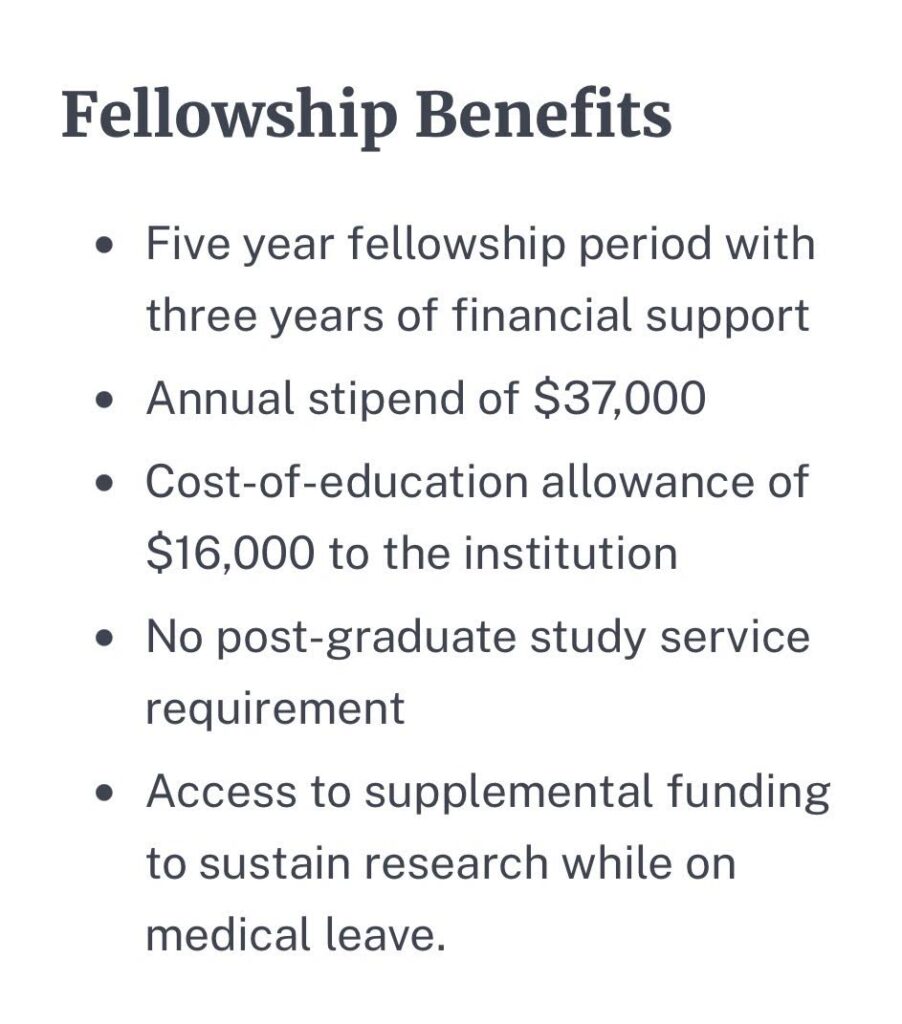
The economic and structural support provided by the NSF grant is substantial. The fellowship typically provides:
- Three years of financial support over a five-year fellowship period.
- An annual stipend of approximately $37,000, ensuring that the fellow can dedicate themselves fully to research without the financial distraction of mandatory teaching or outside employment.
- A cost-of-education allowance paid directly to the institution to cover tuition and fees.
- Access to professional development opportunities, international research collaborations, and supercomputing resources.
By securing this funding independently, Lee enters MIT with complete autonomy over her research direction. Rather than being tethered to a specific professor’s grant-funded project from day one, she has the freedom to pursue her own innovative inquiries at the intersection of design, technology, and engineering. Furthermore, because the fellowship is structured to fund both her master’s studies and her anticipated Ph.D., it provides a secure financial and institutional runway for the next half-decade of intensive research.

Official Statements & Perspectives
While the formal announcement reflects a proud milestone for family and academic mentors alike, the broader academic community has taken note of this unusual yet increasingly celebrated pathway.
In statements reflecting on the achievement, family and close mentors emphasized the tenacity required to pivot from a traditional design school framework into the hyper-quantitative environment of MIT research. The journey demanded not only exceptional artistic and structural portfolios but also a rigorous retraining in scientific methodologies, data analysis, and technical writing.

Academic advisors across both RISD and prospective MIT networks have pointed to Zoe Lee’s success as a case study for the future of cross-disciplinary education. In an era where complex global crises—from climate change to human-robot interaction—defy single-discipline solutions, the ability to merge the empathetic, user-centered ethos of industrial design with the empirical rigor of engineering is invaluable.
"Design is no longer just about making things look good or function smoothly on a commercial scale," notes an academic observer familiar with elite design-tech crossovers. "At its highest level, industrial design is a form of applied research. Zoe Lee’s NSF fellowship proves that federal funding bodies are recognizing design-led inquiry as legitimate, rigorous science when paired with deep technical execution."

Future Outlook: The Intersection of Design and Advanced Research
As Zoe Lee packs her bags for Cambridge, Massachusetts, the academic and professional communities are watching closely to see how her unique skill set will manifest within MIT’s laboratories.
Redefining Industrial Design in the Age of Advanced Technology
The traditional boundaries separating art schools from technical institutes are rapidly dissolving. Fields such as tangible interaction design, soft robotics, biomaterials, sustainable manufacturing, and human-computer interaction require practitioners who can conceptualize physical form while simultaneously understanding complex underlying algorithms, material chemistries, and structural physics.

At MIT, Lee will likely immerse herself in research environments that value this hybrid approach. Whether exploring sustainable material futures, developing novel human-machine interfaces, or reimagining physical infrastructure for a changing climate, her background as a RISD-trained industrial designer will provide her with a distinct competitive advantage: the ability to prototype rapidly, visualize complex systems, and always keep the human user at the center of technical innovation.
The Ph.D. Horizon and Beyond
Looking further ahead, the backing of the NSF grant through her doctoral studies ensures that Lee will have the runway necessary to conduct deep, foundational research rather than rushed, short-term experiments. Doctoral research in fields intersecting design and engineering often requires years of iterative prototyping, user testing, data collection, and theoretical refinement. With her funding secured, she is positioned to push the boundaries of what industrial design can achieve in an academic and scientific research context.

Ultimately, Zoe Lee’s achievement serves as an inspiration for a new generation of creative practitioners. It demonstrates that imagination and rigorous scientific methodology are not mutually exclusive; rather, when combined, they form a formidable engine for discovery. As she begins her Master’s and eventual Ph.D. journey at MIT this fall, Lee carries with her the lessons of the design studio and the validation of the federal scientific establishment—a powerful combination poised to shape the future of innovation for years to come.





Comments
Facebook App ID not configured. Please add it in the Customizer.