

Executive Overview
In the landscape of contemporary American poetry, few pieces manage to seamlessly bridge the gap between abstract metaphysical inquiry and visceral, grounded reality quite like Kathryn Kimball’s latest work. Selected as the Poem of the Week for November 2, 2026, Kimball’s evocative poem, “Dreams of Birth,” investigates the strange, liminal spaces of the subconscious mind. The piece traverses the terrain of mortality, transformation, and the persistent human compulsion to interpret the nocturnal messages sent by our sleeping minds.
Kimball, a distinguished writer and scholar based in New York City with deep roots in Montgomery, Alabama, brings a wealth of academic and artistic rigor to her verse. Holding both an MFA and a PhD, her career spans decades of teaching nineteenth-century British and American literature, translating foreign-language texts—an endeavor honored by the Columbia Journal 2023 translation prize—and publishing celebrated collections of poetry, including a 2021 chapbook and a full-length volume in 2025.
Read Also
“Dreams of Birth” captures the essence of Kimball’s artistic philosophy: a steadfast commitment to recording the emotional truths of human experience, however fragmented, strange, or difficult they may be to translate into the material world. Centering on a series of profound nocturnal visions—ranging from encounters with the long-dead to metamorphic shifts into fauna and flora—the poem challenges readers to reconsider their relationship with selfhood, grief, and the ultimate horizon of existence: death.
Detailed Chronology: The Evolution of a Poetic Vision
To understand the weight of “Dreams of Birth,” one must trace the biographical and creative milestones that culminated in its publication. Kimball’s journey as a writer has been defined by a deep engagement with language, memory, and the mechanics of grief.
Growing up in Montgomery, Alabama, Kimball developed an early ear for cadence, narrative, and the Southern tradition of storytelling. This foundation eventually led her into academia, where she specialized in the intricate, often turbulent literary landscapes of nineteenth-century British and American authors. Immersed in the Romantic and Victorian preoccupations with mortality, the sublime, and the inner life, Kimball cultivated a literary voice that looks backward to classical traditions while remaining thoroughly modern in its psychological acuity.
Over the years, Kimball’s creative output expanded across genres and linguistic borders. Her work as a translator sharpened her sensitivity to nuance, rhythm, and the subtle shifts in meaning that occur when transferring an emotion from one lexicon to another. This meticulous attention to craft bore fruit in her 2021 chapbook and her subsequent 2025 full-length volume of poetry, establishing her as a vital voice in contemporary American letters. The trajectory reached a notable peak when she was awarded the Columbia Journal 2023 translation prize, a testament to her technical mastery and interpretive depth.
The genesis of “Dreams of Birth” lies in a deeply personal chronology of loss and memory. The poem draws directly from Kimball’s real-life experiences with grief—specifically, the prolonged illness and death of a close friend, an agnostic polyglot fluent in Greek, English, French, and Italian. Kimball spent two quiet, agonizingly tender days with him at the end of his life. In his final hours, he rested his head on a soft gray cashmere sweater worn by Kimball, remaining motionless in her arms for a long duration.
Out of this profound sorrow emerged a series of dreams that would eventually dictate the imagery of her award-winning poem: encounters with the deceased, transformations into a bear, and, most strikingly, the sensation of becoming a seed pushing upward through the dark, fertile earth.
Supporting Context & Metrics: The Anatomy of "Dreams of Birth"
[The Architecture of "Dreams of Birth"]
 ├── Stanza 1: Universal Dreamscapes (Flight, Death, Ancestors)
 ├── Stanza 2: The Encounter (*Benedetto* and the Dead Friend)
 ├── Stanza 3: Metamorphosis (From Human to Bear to Seed)
 └── Stanza 4-5: The Spindly Unfolding (Birth, Sex, Death, and Rebirth)
To fully appreciate Kimball’s craft, an examination of the poem’s internal mechanics and thematic architecture is required. Composed of five short, rhythmic stanzas, “Dreams of Birth” balances colloquial directness with lyrical intensity.
The Universal and the Particular
The poem opens with a nod to collective human psychology:
We’ve all had them—
dreams in which we fly
or die
or meet those long buried.
By grounding the poem in universally recognized phenomena, Kimball immediately establishes a contract of shared empathy with the reader. She moves swiftly from the general to the profoundly specific in the second stanza, recounting a visit from a departed friend. When asked what dying was like, the friend responds with a single Italian word: “Benedetto.”
For Kimball, who had to look up the word upon waking—meaning "blessed"—the term encapsulates a radical reframing of mortality. It strips away the clinical terror of dying and replaces it with an unexpected grace.
Metamorphosis and the Green Heart
The central movement of the poem charts a series of bizarre yet emotionally resonant transformations:
I’m mostly me in dreams
but was once a bear,
and on one strange night
a seed.
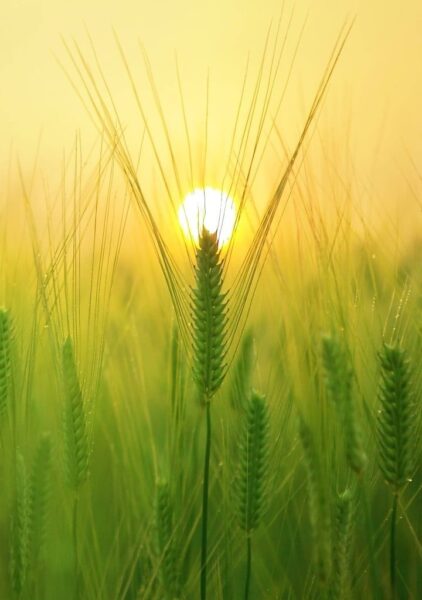
The transition from human to beast, and finally to a dormant seed, allows Kimball to explore the primal mechanics of existence. The imagery shifts to the botanical, utilizing words like "spindly unfolding," "green heart," and "dirt and dark." Here, birth, sex, death, and the desire for new life are compressed into a single, upward-thrusting motion. The poem closes with a haunting echo of the departed friend’s voice: Benedetto.
Official Statements and Authorial Insight: Behind the Verse
In her accompanying author’s note, Kimball offers a rare, intellectually rigorous window into her creative process and philosophical worldview. Addressing the ancient skepticism surrounding art—most notably Plato’s proposal to banish poets from the ideal city for imitating imitations—Kimball defends the unique epistemic value of poetry.
"This poem is true, at least the part about the dreams I’ve had. Of course, a poet has license to lie, a questionable business for some, like Plato… I don’t know what death is or what comes after. Yet poets tap into something real when writing or dreaming, however flawed and full of holes the transference of feeling to materiality may be."
Kimball acknowledges that human beings are "woefully conditioned receivers." Whether one adheres to orthodox beliefs in an afterlife or rejects them entirely, the imperative remains the same: we must bear witness to our subjective realities.
Reflecting on her friend’s final moments, Kimball expands upon the themes of ego, transience, and endurance:
"More and more, I see the futility of attaching to the personal self, protecting the personal self, arguing for the primacy of the personal self. So much energy is expended clinging to what is transient, when being simply aware of what endures can be counted as joy."
She recalls the tactile memory of her friend’s head resting on her gray cashmere sweater—a garment that provided physical comfort during his final, wordless hours. The realization that “We all have to die” remains a shocking and incomprehensible cultural truism, yet it is met in the poem not with despair, but with the quiet benediction of her friend’s final word.
Future Outlook: The Enduring Legacy of Kimball’s Work
As “Dreams of Birth” finds its audience through its feature as Poem of the Week, it marks another significant milestone in Kathryn Kimball’s literary career. In an era dominated by rapid digital communication and ephemeral media, Kimball’s work serves as a necessary antidote—an invitation to slow down, to inhabit the unsettling spaces of the unconscious, and to re-examine our collective relationship with grief and transformation.
Looking forward, Kimball’s contributions to both poetry and translation signal a lasting impact on contemporary letters. Her ability to synthesize deep academic knowledge of nineteenth-century literature with raw, unvarnished emotional honesty ensures that her voice will continue to resonate across literary journals and anthologies.
Ultimately, “Dreams of Birth” reminds us that while the self is transient, the act of recording our deepest nocturnal visions—our flights, our deaths, our transformations into seeds pushing through the dark—is an essential human endeavor. Through her precise language and courageous vulnerability, Kathryn Kimball transforms the final mystery of existence into something remarkably, hauntingly benedetto.





Comments
Facebook App ID not configured. Please add it in the Customizer.