
Executive Overview
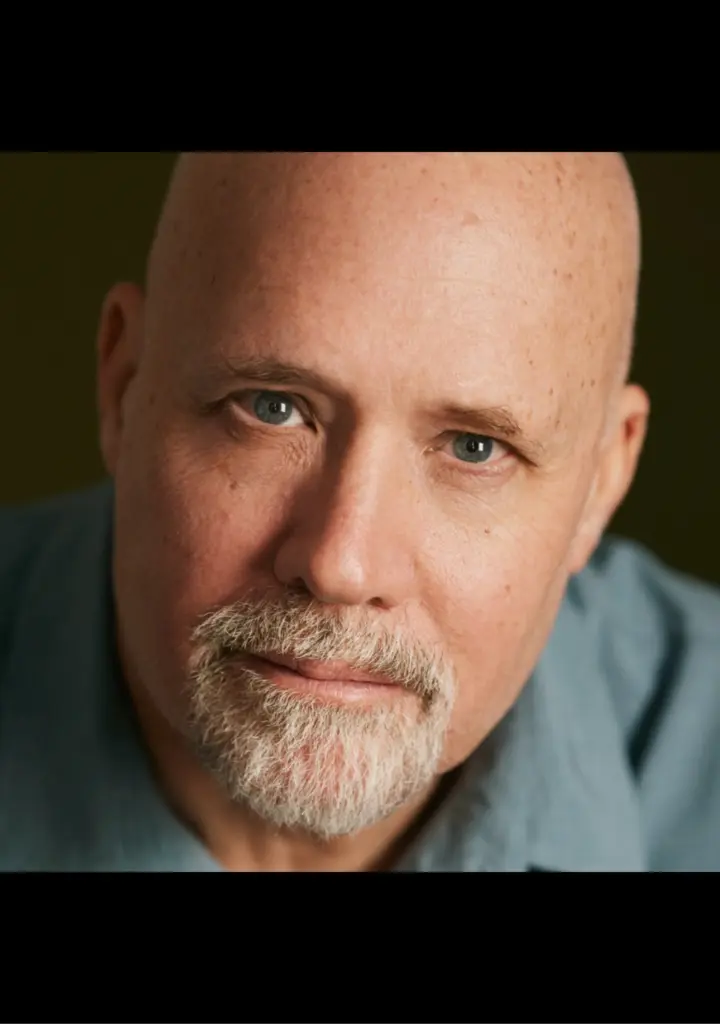
It took nearly a decade, thousands of pages of discarded drafts, and a profound global tragedy to transform a short story into a masterwork of contemporary fiction. In this expansive, exclusive interview with Scout Hudson, acclaimed author and educator Mitch Wieland reflects on the arduous, decade-long journey behind his highly anticipated third novel, The Ghosts of Okuma.
Originally debuting as the short story “Snow Angels” in the Summer 2015 edition of The Missouri Review, the narrative has since blossomed into a fully realized novel that has already earned a coveted starred review from Kirkus Reviews and a designation as a Best Indie Book of the Month. Scheduled for publication on November 3—a date that marks the thirtieth anniversary of the release of Wieland’s debut novel, Willy Slater’s Lane—The Ghosts of Okuma bridges personal grief with national trauma, exploring the indelible scars left by the 2011 Tōhoku earthquake, tsunami, and Fukushima nuclear disaster.
Beyond the book’s thematic resonance, this conversation illuminates Wieland’s deep roots in the American literary landscape. As the founding editor of The Idaho Review and co-founder of the Master of Fine Arts program in Creative Writing at Boise State University, Wieland has spent three decades cultivating a powerhouse of literary talent. From mentoring a new generation of award-winning authors to passing down the sensory-driven pedagogical traditions of legendary mentors like George Garrett and Ted Solotaroff, Wieland’s career is a testament to the enduring power of narrative craft.
Read Also
Detailed Chronology: The Ten-Year Genesis of a Novel
The path from an 8,000-word journal entry to a 275-page novel was neither linear nor straightforward. It was an exercise in rigorous endurance, structural reinvention, and emotional excavation.
The Seed: From The Missouri Review to Muddy Fields
Wieland’s relationship with The Missouri Review stretches back to his formative years living in Japan from 1986 to 1991, where he immersed himself in the short fiction of Raymond Carver and Joy Williams. Upon returning to the United States, he became one of the journal’s earliest subscribers.
The connection deepened years later while Wieland was living on a farm near the Oregon border with his wife, Cindy. Amid a scorching summer heatwave, a windstorm blew open their mailbox, scattering mail across the fields. While flood irrigating in gumboots through the blistering mud, Wieland retrieved a letter from The Missouri Review editor Speer Morgan. Though a previous submission had narrowly missed publication, Morgan encouraged him to try again. That encouragement birthed “Snow Angels,” which eventually found its home in the journal’s Summer 2015 issue.
The Catalyst: The 2011 Fukushima Disaster
Before “Snow Angels,” Wieland had spent years working on a massive, 500-page manuscript about Japan under the guidance of iconic literary agent Wendy Weil (who notably represented Alice Walker). Everything changed in March 2011.
While watching NHK news—Japan’s public broadcaster—Wieland watched in disbelief as footage of the tsunami came ashore. Switching to CNN confirmed the unimaginable scale of the catastrophe.
"I just realized instinctively at that moment that I couldn’t write about Japan without this," Wieland recalls.
He courageously set aside the 500-page draft, keeping only a minor character named Yoshimi. Armed with a National Endowment for the Arts (NEA) grant and a one-year fellowship from Boise State’s Arts and Humanities Institute, Wieland secured protected time and funding. He returned to Japan for eight weeks of intensive research, retracing the geography of the novel from the quiet paths of Tokyo’s Yanaka Cemetery to the neighborhoods of Shinjuku and Shibuya. Seeking to master narrative architecture, he also attended seminars by master plotters Robert McKee and Christopher Vogler in Los Angeles throughout 2012.
The Editorial Crucible
By 2013 and 2014, Wieland completed “Snow Angels” and recognized its structural potential as the heartbeat of a larger book. However, the manuscript’s journey through the publishing world faced unprecedented hurdles, including the disruptions of the 2020 COVID-19 lockdowns.
After partnering with literary agent Julie Stevenson of Massie & McQuilken in 2021, the pair embarked on another rigorous round of revisions. In total, Wieland estimates he wrote nearly 2,000 pages of material to distill the final 275-page novel, cutting an entire 70-page opening set in San Diego to preserve the original, gripping opening scene inherited from “Snow Angels.”
Supporting Context & Metrics: Cultural Trauma and Sensory Architecture
The Ghosts of Okuma operates on two distinct planes: the intimate terrain of personal bereavement and the massive, existential shockwaves of collective national trauma.
Parallels of Grief: 9/11 and Fukushima
When Hudson draws a parallel between America’s post-9/11 collective grief and Japan’s reckoning with Fukushima, Wieland notes the profound ontological and existential nature of natural disasters. While terrorism invites a clear human adversary and a public, politicized grief, earthquakes and nuclear meltdowns strike at the very fabric of physical safety, upending foundational assumptions about modern civilization.
Wieland draws on his own childhood memories of growing up in rural Ohio during the Three Mile Island incident to channel the public’s deep-seated anger toward the Tokyo Electric Power Company (Tepco) and government authorities. Citing Richard Lloyd Parry’s acclaimed book Ghosts of the Tsunami, Wieland highlights how institutional hubris—such as Tepco’s flawed assumption that a 9.0-magnitude earthquake was impossible—fueled a profound sense of betrayal among Japanese citizens, leading to delayed evacuations and a lingering cultural despair.
The Neuroscience of Sensory Writing
A cornerstone of Wieland’s writing philosophy, inherited from George Garrett, is the creation of a "sensuously effective texture." Wieland notes that modern functional MRI (fMRI) studies validate Garrett’s intuitive teachings: when readers process sensory descriptions (such as "clove cigarettes and lavender"), the olfactory cortex lights up in real-time, making the fictional experience indistinguishable from reality in the reader’s brain.
This neurological realism finds a natural home in Tokyo, a city Wieland describes as a masterclass in sensory overload. By walking every single setting in the novel—excluding the immediate nuclear exclusion zone—Wieland ensured that ambient details, such as the wind rattling wooden slats at Yanaka Cemetery, anchored the reader directly into the pulse of the narrative.
Official Statements & Key Figures
The novel’s thematic power is anchored by its diverse cast, led by Wyatt—an outsider searching for his missing sister while carrying his mother’s ashes—and Yoshimi, a young woman whose fierce anger mirrors that of real-life Japanese avant-garde art collectives like Chim↑Pom, who famously protested the nuclear disaster in hazmat suits and tennis shoes under a smoldering power plant.
Wieland’s reflections on his craft underscore the empathetic demands of fiction:
"That’s the goal of the writer, right? To try to connect so strongly with their characters that once they’ve got the character created, you can often just put them in the room and see what happens."
Future Outlook: A Literary Legacy at Boise State
As The Ghosts of Okuma prepares to hit shelves on November 3—coinciding with the 30th anniversary of Willy Slater’s Lane—Wieland’s influence extends far beyond his own bibliography.
Having founded The Idaho Review in 1998, Wieland oversaw twenty issues that garnered unprecedented acclaim, placing work in nearly seventeen prize anthologies, including multiple Best American Stories and Pushcart Prizes. Though he has recently passed editorial duties to his colleague Anna Caritj as he approaches retirement, Wieland’s impact on the Boise State MFA program remains monumental.
Since co-founding the program with a cohort of just four students, Wieland has helped build a fully funded, fifteen-assistantship powerhouse that regularly launches major literary voices. Recent alumni successes read like a who’s who of contemporary publishing:
- Mary Pauline Lowry, author of The Roxy Letters (Simon & Schuster)
- Ariel Delgado Dixon, author of Sourland and Don’t Say We Didn’t Warn You (Penguin Random House)
- Jackie Polzin, whose novel Brood won the Los Angeles Times Book Prize and the Sue Kaufman Prize for First Fiction
- Ayotola Tehingbola, a Nigerian lawyer-turned-author whose debut short story collection, Lagos Will Be Hard For You, was recently celebrated on the national literary festival circuit.
For Wieland, seeing his students run with the pedagogical torch passed down from George Garrett and Flannery O’Connor represents the ultimate fulfillment of a life dedicated to letters. As The Ghosts of Okuma enters the world, it stands not only as the triumphant culmination of a decade’s work for its author, but as a shining example of the enduring vitality forged when rigorous craft meets profound human empathy.

Comments
Facebook App ID not configured. Please add it in the Customizer.