In the waning days of August 1914, as the European continent plunged headfirst into the catastrophic abyss of the First World War, an eccentric and highly improbable convoy rolled onto the blood-soaked theater of the Western Front. Comprising 25 civilian motorists—aristocrats, ex-Olympic athletes, big-game hunters, Boer War veterans, and flamboyant daredevils—the Royal Automobile Club (RAC) Volunteer Force shipped their private roadsters and racing machines across the English Channel to offer their services to the British Expeditionary Force (BEF).
Led unofficially by Alfred "Toby" Rawlinson, a 47-year-old adventurer and decorated polo player, these men brought neither state-issued rifles nor formal military orders; they brought speed, mobility, and personal wealth. At a historical juncture when horses and cavalry charges still dominated military thinking, these gentlemen drivers became chauffeurs, couriers, scouts, and inadvertent combatants. Their high-powered Hudsons, Rolls-Royces, and Diattos plugged critical intelligence gaps, carried top-secret dispatches between high-command structures, and helped stave off Allied collapse during the chaotic opening phase of the war.
More than mere auxiliary drivers, however, these wealthy enthusiasts found themselves standing at the vanguard of a chilling historical pivot: the birth of mechanized, industrialized warfare. The exploits of the RAC Volunteer Force illuminate the precise moment when the romanticized, 19th-century theater of war was permanently dismantled by the relentless, unfeeling efficiency of modern military technology.
Detailed Chronology: From the Pall Mall Clubhouse to the Killing Fields
1. The Prelude: Edwardian Luxury and the Illusion of Peace
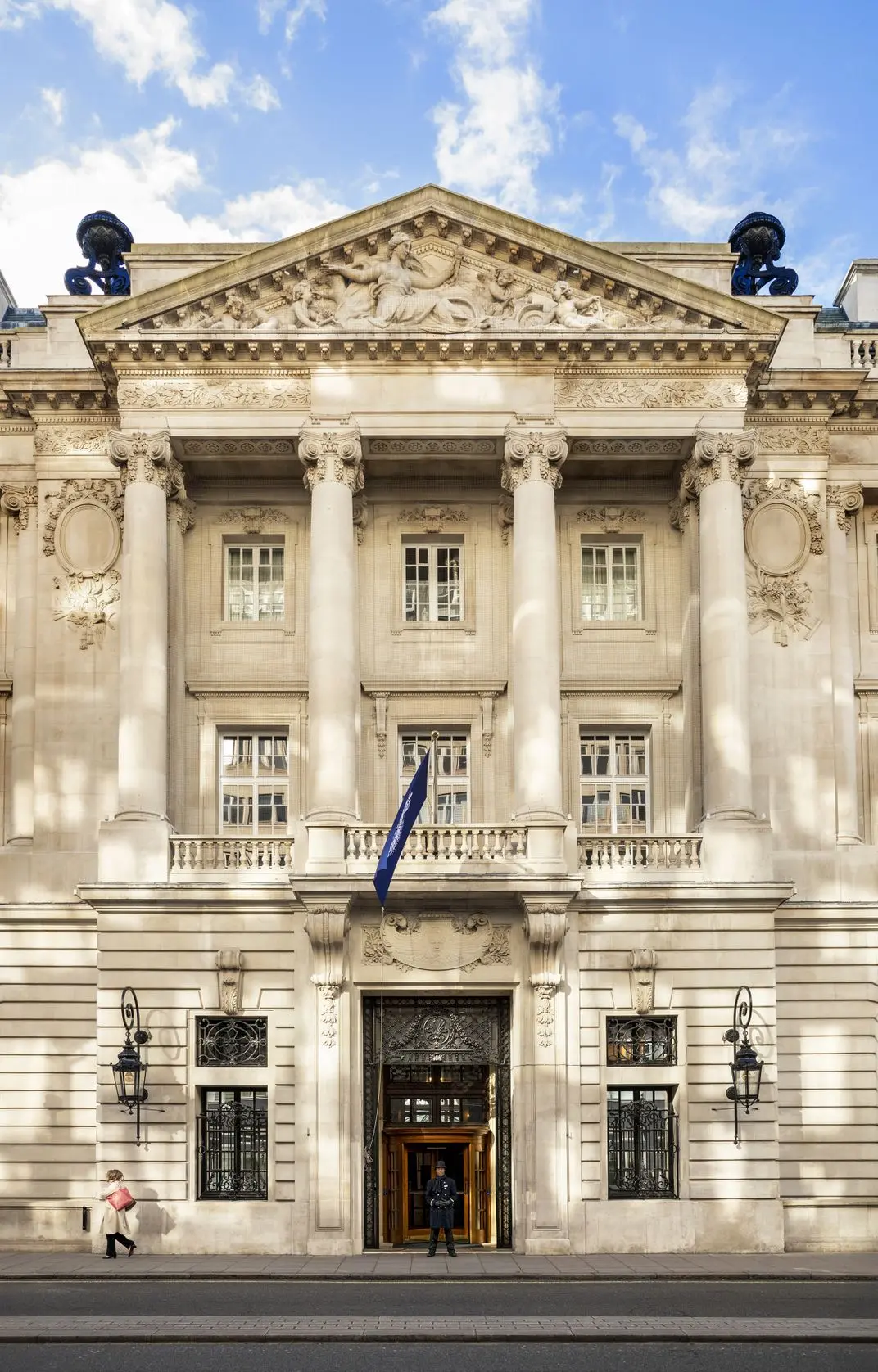
Before the catastrophic dominoes of July 1914 fell, the British motoring class lived in an era of unprecedented industrial optimism. Founded in 1897 by engine pioneer Frederick Richard Simms, the Royal Automobile Club opened a magnificent Pall Mall headquarters in London in 1911. Complete with Turkish baths, a domed atrium, and a heated indoor swimming pool, the club served as a fraternity for luminaries such as Winston Churchill and Arthur Conan Doyle.
Yet, beneath the polished mahogany and fine crystal of the clubhouse dining rooms, anxieties concerning a burgeoning European conflict brewed. While military theorists debated the integration of motor transport, civilian motorists continued to cross international borders for sport. As late as July 1914, drivers competed at the French Grand Prix in Lyon—where German Mercedes outpaced French Peugeots—completely misinterpreting the industrial superiority that would soon dictate the terms of modern carnage.
2. August 1914: The Mobilization and Crossing
The assassination of Archduke Franz Ferdinand shattered this illusion. When Great Britain declared war on Germany on August 4, 1914, thousands rushed to recruiting offices. Among them was Christopher D’Arcy Baker-Carr, a retired infantry officer who sought out the quartermaster general, expressing an eager desire to join the fight. The military directed him to the RAC, which had already offered to supply the British Expeditionary Force with civilian vehicles and drivers.
From hundreds of applicants, 25 men were chosen. On the evening of August 21, 1914, they assembled at Southampton and loaded their vehicles into the hold of the troopship Gloucester Castle. Among them was Jimmy Radley, an aviator and heir who drove a pastel-blue 50-horsepower Rolls-Royce Silver Ghost (having christened it earlier by pouring a glass of champagne into the radiator); Frederic Coleman, an American representative for the White Motor Car Company; and H. Stanley Westcott, a connoisseur of rare automobiles driving an Italian Diatto racer.
3. Baptism by Fire: The Retreat to Paris and the Marne
Docking at Le Havre on August 22, the convoy drove inland amid a sea of cheering French villagers. Toby Rawlinson, fluent in French and intimately familiar with local roadways, led the convoy toward Amiens with a Union Jack mounted on the hood of his silver Hudson roadster.
The reality of total war, however, quickly stripped away any romantic notions of grand motoring adventures. The drivers were immediately thrust into the frantic, high-stakes retreat of the BEF under Field Marshal John French. Operating in unarmored civilian attire, they ran reconnaissance, mapped devastated road networks, and ferried panicky dispatches between British and French commanders. The danger was pervasive: German cavalry patrols hunted Allied couriers, while jittery French and British sentries frequently fired upon oncoming automobiles at checkpoints.
By early September, German armies pushed to within 25 miles of Paris, sparking a massive civilian exodus. During the historic Battle of the Marne, the RAC drivers traversed no-man’s-land under moonlight, dodging artillery shells and ferrying wounded soldiers in the blood-stained tonneau seats of their luxury roadsters. Their mobility proved invaluable in coordinating the Allied counter-offensive that broke the Schlieffen Plan and saved Paris from occupation.
4. The Siege of Antwerp and the Birth of Trench Warfare
In late September and October 1914, the conflict shifted northward toward the Belgian fortress city of Antwerp and the coastal corridors. Rawlinson, demonstrating the escalating lethality of his mission, bought machine guns in London and mounted one directly onto his Hudson roadster. Operating alongside his brother, General Henry Rawlinson, and naval commander Winston Churchill, Toby engaged German infantry directly, utilizing his vehicle as a mobile combat platform.
By November 1914, the First Battle of Ypres cemented the grim reality of the Western Front. As heavy artillery pulverized medieval towns and ground infantry down in shallow, muddy ditches, the era of fluid, mobile warfare championed by the gentleman driver officially ended. Replaced by the brutal realities of industrial attrition, barbed wire, and poison gas, the RAC Volunteer Force disbanded, its members dispersing to other branches of the burgeoning mechanized military machine.
Supporting Context & Metrics
The integration of motor transport during the opening months of World War I marked a fundamental pivot in global military history. The quantitative scale of the transformation is illustrated by the following baseline metrics:
British Motorization Baseline (1913–1914): Great Britain possessed approximately 140,000 cars and 180,000 motorbikes on the eve of war, signaling a rapidly growing industrial foundation that civilian enthusiasts were uniquely qualified to harness.
The RAC Contingent: Exactly 25 elite civilian drivers formed the core of the Volunteer Force, bringing their personal high-performance roadsters (including Hudson, Rolls-Royce, White, and Diatto chassis) to the front lines.
The Scale of Attrition at the Marne and Ypres: The mobile opening phase of the war rapidly deteriorated into static slaughter, culminating in battles like the First Battle of Ypres, which yielded roughly 130,000 casualties on both sides, demonstrating the industrial slaughter enabled by modern ordnance.
Logistical Pivot: General Joseph-Gallieni’s historic deployment of 3,000 reservists via 600 Parisian taxis during the Battle of the Marne signaled the first large-scale tactical use of motor vehicles to avert a strategic military collapse.
Official Statements & Historical Perspectives
The unique contributions of the RAC Volunteer Force have largely been overlooked by mainstream historical narratives, but contemporary accounts and modern scholarship underline their strategic significance.
On the psychological and symbolic impact of the civilian drivers:
"The French military had a lot of questions about what the British commitment was going to be," notes Christopher Phillips, a lecturer in the history of warfare at Aberystwyth University. "The cars charging through villages gave a sense of presence. They announced that ‘the British are here.’ These guys conveyed real purpose."
On the brutal awakening to industrialized combat:
Reflecting on the rapid dissolution of 19th-century cavalry tactics into mechanized slaughter, Christopher D’Arcy Baker-Carr wrote in his memoir, From Chauffeur to Brigadier:
"Little did we dream that we had before us more than four years of misery, mud and slaughter."
On the shift in the character of warfare:
Writing to his wife as the landscape filled with the charred wreckage of modern machinery, James Armand de Rothschild observed:
"Modern warfare… has become largely a question of machinery and chemistry. Explosives, airplanes… wireless and motor transport."
Future Outlook: The Legacy of Mechanized Warfare
The disbandment of the Royal Automobile Club Volunteer Force in late 1914 did not mark the end of its members’ influence on military strategy; rather, it served as a crucible for the future of mechanized warfare.
Veterans of the unit directly shaped the technological evolution of the British Armed Forces throughout the remainder of World War I and beyond:
Christopher Baker-Carr successfully lobbied the War Office to establish the Machine Gun Corps and played a foundational role in the development and deployment of the world’s first military tanks on the Western Front in 1916.
Toby Rawlinson transitioned from frontline scouting to organizing London’s anti-Zeppelin air defenses, later bringing his accumulated tactical experience to intelligence and disarmament operations in the Caucasus and Anatolia.
Today, while the physical trophies—such as Rawlinson’s tattered Union Jack, his bullet-riddled Hudson roadster, and German Pickelhauben trophies—have been lost to time, the legacy of the RAC Volunteer Force endures within military archives and private estates like Heydon Hall in Norfolk. They stand as a haunting monument to the generation that bridged the gap between the age of the horse and the age of the machine.

/https://tf-cmsv2-smithsonianmag-media.s3.amazonaws.com/filer_public/eb/d3/ebd30cee-30cc-48d1-ad21-bc873dda36fd/opener1_-_sepoct2026_d15_royalautoclub.jpg)
:focal(414x275:415x276)/https://tf-cmsv2-smithsonianmag-media.s3.amazonaws.com/filer_public/eb/d3/ebd30cee-30cc-48d1-ad21-bc873dda36fd/opener1_-_sepoct2026_d15_royalautoclub.jpg)
/https://tf-cmsv2-smithsonianmag-media.s3.amazonaws.com/filer_public/35/48/35489bf6-eff4-4de1-906e-60996f79b10c/20260326_royalautomobileclub19_copy.jpg)
/https://tf-cmsv2-smithsonianmag-media.s3.amazonaws.com/filer_public/cf/28/cf286f90-d279-4803-9ef1-618c9c09152a/sepoct2026_d16_royalautoclub.jpg)
/https://tf-cmsv2-smithsonianmag-media.s3.amazonaws.com/filer_public/95/d5/95d56bbb-2a4f-4499-8902-1f2927f6ac40/pic.jpg)
/https://tf-cmsv2-smithsonianmag-media.s3.amazonaws.com/filer_public/0c/c8/0cc89476-19b3-4557-988d-b484acf3e4ab/img_6075.jpeg)
/https://tf-cmsv2-smithsonianmag-media.s3.amazonaws.com/filer_public/68/98/6898f8df-b9f5-4622-aa28-dfbf415c27c4/20260326_royalautomobileclub3_copy.jpg)
/https://tf-cmsv2-smithsonianmag-media.s3.amazonaws.com/filer_public/e7/38/e738fb19-ba52-49ac-8d9f-bc8e09bafe30/sepoct2026_d06_royalautoclub.jpg)
/https://tf-cmsv2-smithsonianmag-media.s3.amazonaws.com/filer_public/55/dc/55dcd6c7-6620-4f7a-a92c-5e181313ad07/28_6_25_vincennes_i_e_longchamp_agence_rol_btv1b53149291r.jpg)
/https://tf-cmsv2-smithsonianmag-media.s3.amazonaws.com/filer_public/ff/de/ffde1c9a-e1da-49d9-9f3d-afd9c8133f87/cavalry_-_gettyimages-591949596.jpg)
/https://tf-cmsv2-smithsonianmag-media.s3.amazonaws.com/filer_public/77/45/77455b84-88a1-4cf4-90f9-4f2817968986/d45405.jpg)


Comments
Facebook App ID not configured. Please add it in the Customizer.