
Executive Overview
The consumer electronics landscape is no stranger to incremental updates, iterative form factors, and predictable spec-sheet bumps. However, every so often, a device emerges that challenges the conventional trajectory of an entire market segment. Enter the Onyx Boox Picco, a device that made its dramatic global debut at the IFA consumer electronics trade show in Berlin.
Positioned as an ultra-compact, pocket-sized micro e-reader, the Picco breaks away from the industry’s standard 6-inch to 10.3-inch sizing convention. Featuring a diminutive 3.97-inch grayscale E-Ink display, the device mirrors the physical footprint of a modern compact smartphone rather than a traditional book or tablet. Designed to fit effortlessly into the tightest pockets, the Picco targets digital minimalists, commuters, and readers seeking a hyper-portable, distraction-free reading companion.
What makes the Onyx Boox Picco particularly fascinating—and disruptive—is its underlying architecture and commercial positioning. Eschewing the ubiquitous Android operating system that has long powered Onyx Boox’s diverse lineup, the Picco runs a streamlined, lightweight Linux distribution. This strategic architectural choice, combined with a projected retail price point of approximately $100, signals a radical pivot for a manufacturer historically known for feature-rich, high-end, and often expensive productivity-focused e-notetakers.
Read Also
Scheduled for an official market launch by late 2026 or early 2027, the Picco has already ignited intense debate across tech forums and reading communities. Journalists and early hands-on reviewers at IFA have uncovered a device that prioritizes extreme minimalism, physical button navigation, and a stripped-down software experience. While its lack of internal storage, DRM support, and modern audio features present notable limitations, the Picco’s ultra-affordable price tag and pocketable design could carve out a completely new niche in the e-reader ecosystem.
Detailed Chronology: From IFA Berlin to the Horizon of 2027
The IFA Berlin Unveiling
The tech world’s attention converged on Berlin for IFA, Europe’s largest consumer electronics show, where global brands and nimble innovators alike showcase the hardware that will define the upcoming year. Amidst a sea of high-refresh-rate OLED monitors, AI-integrated appliances, and foldable smartphones, Onyx Boox quietly captured the imagination of reading enthusiasts with the unexpected showcase of the Picco.
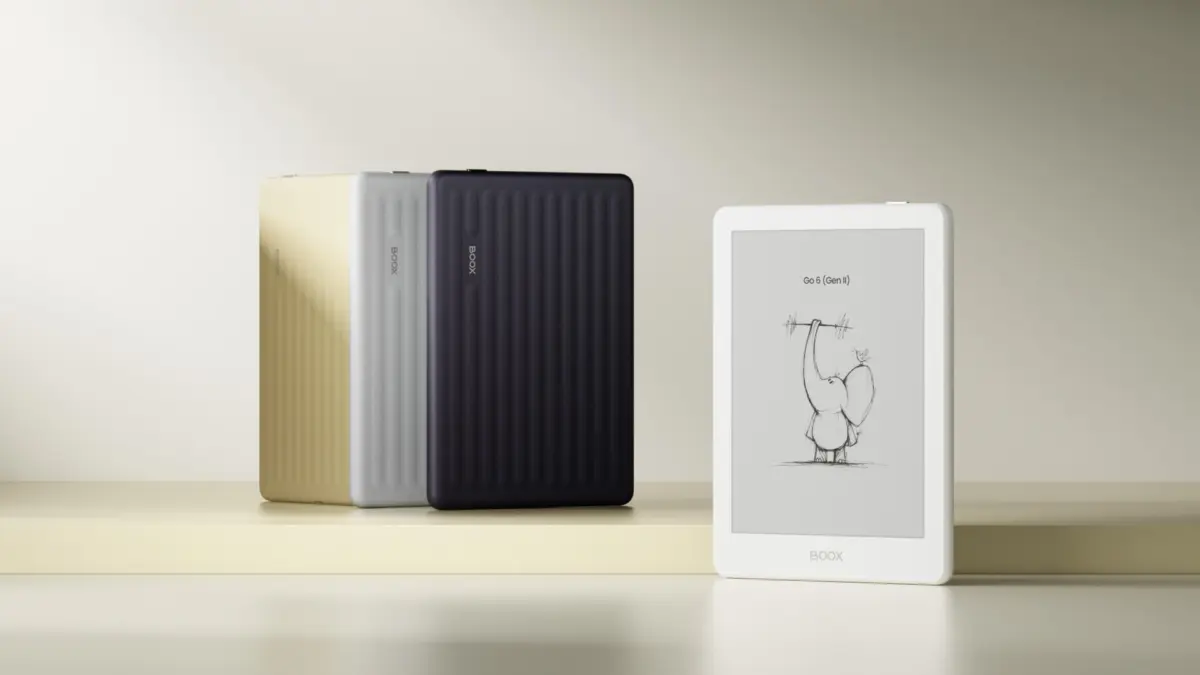
Displaying a refined product aesthetic—showcased proudly on exhibition shelves alongside ribbed color cases in cream, gray, and navy—the white-bodied micro e-reader immediately stood out. Journalists milling around the Onyx booth were quick to gravitate toward the tiny device, which featured intricate digital sketches and clean typography rendered on its grayscale E-Ink screen.
Unlike major product launches accompanied by glossy stage presentations and polished marketing videos, the Picco’s debut was understated. Industry insiders and tech reporters engaged in hands-on demonstrations, extracting vital details about the hardware specifications, software limitations, and target release window directly from company representatives.
The Development and Engineering Timeline
Behind the scenes, the conceptualization of the Onyx Boox Picco represents a calculated response to a growing consumer demand for digital detox tools. While the mainstream market raced toward larger screens, color E-Ink panels (such as Kaleido 3), and complex productivity suites featuring stylus integration, a counter-movement began to bubble up. Users increasingly expressed fatigue with notification-heavy, multi-purpose devices.
Onyx engineers tackled this challenge by scaling down the physical and electronic footprint to absolute minimums. By opting for a 3.97-inch display, the R&D team could significantly reduce power consumption, structural bulk, and manufacturing costs. The decision to bypass Android in favor of a custom Linux environment was finalized late in the hardware design phase. This pivot was driven by the necessity to run smoothly on lower-tier processors and smaller batteries while hitting that crucial psychological and economic price barrier: the $100 mark.
The Road to Commercial Release
Following its reception at IFA Berlin, the Picco has entered its final pre-production phase. Supply chain partners and manufacturing pipelines are currently gearing up for mass production, with regional rollouts anticipated to begin late in the fourth quarter of 2026, extending into early 2027.
As the device moves toward store shelves, industry watchers are monitoring how Onyx will package and market a product so fundamentally different from its core catalog. Early software builds shown in Berlin were notably rudimentary, leaving a window of several months for the engineering team to refine the user interface, finalize physical button mappings, and decide on peripheral hardware inclusions like Bluetooth modules.

Supporting Context & Metrics: Hardware, Software, and Economics
Form Factor and Display Engineering
At the heart of the Onyx Boox Picco is its 3.97-inch grayscale E-Ink display. In a market where 6 inches has long been considered the absolute floor for comfortable reading, dropping below four inches is a daring design choice.
- Physical Dimensions & Ergonomics: The device mimics the aspect ratio and vertical orientation of a compact smartphone. It easily slips into jeans pockets, shirt pockets, or small evening bags—places where traditional dedicated e-readers or tablets simply cannot go.
- Aesthetic & Build: Early hands-on reports highlight a clean, minimalist aesthetic characterized by a flat-bezel design. The review unit displayed in Berlin featured a crisp white chassis, complemented by modular, ribbed protective cases in sophisticated neutral tones (cream, gray, and navy).
- Lighting: Despite its micro footprint, Onyx has integrated a front-light system, ensuring that users can read in low-light environments, bedchambers, or dim transit commutes without straining their eyes.
Navigation and Tactile Controls
Abandoning touch-centric navigation interfaces in favor of physical tactility, the Picco relies heavily on dedicated hardware buttons:
- Page-Turning Mechanism: Located on one side of the screen are physical up-and-down buttons, specifically engineered for turning pages forward and backward. This design choice nods to classic e-reader layouts of the past, offering tactile feedback that many users prefer over capacitive touch zones.
- Front-Light Control: A dedicated physical button governs the illumination system, allowing users to toggle the front light on or off instantaneously without diving into software menus.
Storage Architecture and DRM Constraints
One of the most provocative aspects of the Picco’s specification sheet is its storage architecture:
- MicroSD Expansion Only: The device appears to completely lack internal flash storage. Instead, all content management relies entirely on an integrated SD card slot. Users must physically load their downloaded e-books onto an SD card via a computer before inserting it into the micro e-reader.
- Absence of DRM Functionality: Early reviewers have confirmed that the Picco’s stripped-down operating system does not support Digital Rights Management (DRM). Consequently, users cannot access mainstream storefronts like Amazon Kindle, Kobo, or Google Play Books through native applications. Reading material is strictly limited to royalty-free public domain texts (such as those from Project Gutenberg) or side-loaded, DRM-free content. For commercial viability, this presents a unique hurdle, effectively positioning the device for tech-savvy users comfortable sourcing their own digital libraries.
Software, Audio, and Linux Integration
The choice of operating system is perhaps the most defining characteristic of the Picco project:
- Why Linux? Running Android on ultra-cheap, low-RAM hardware typically results in sluggish performance, high battery drain, and frustrating user experiences. By utilizing a lightweight Linux kernel, Onyx ensures rock-solid stability, instantaneous boot times, and optimized power management. This architectural efficiency is what makes a $100 retail price point economically feasible.
- The Audio Vacuum: In its current pre-release state, the software lacks an audiobook player. There is no native interface for listening to audiobooks, podcasts, or music files. Furthermore, hardware specifications regarding Bluetooth connectivity remain unconfirmed. If Bluetooth is absent, wireless headphone pairing will be impossible, solidifying the Picco’s status as a pure, text-only reading device.
- The Hacking Community Lockdown: Onyx Boox maintains a famously closed software ecosystem, keeping its OS architecture strictly internal rather than opening it to open-source development. Because the Picco runs Linux, tech enthusiasts naturally speculated about community-driven modifications—such as installing custom launchers like Crossink or Crosspoint. However, industry analysts warn that Onyx’s proprietary lockdown measures will likely frustrate the hacking community, restricting deep system-level modifications.
Official Statements and Industry Perspective
While Onyx Boox executives have maintained a relatively measured public relations campaign following the IFA unveiling, conversations between company representatives and tech journalists have illuminated the strategic vision behind the device.
According to statements gathered at the Berlin conference, the Picco was conceptualized not as a replacement for flagship productivity tablets like the Onyx Boox Tab Ultra series, but as an experiential gadget. A company spokesperson emphasized that consumer feedback has increasingly pointed toward "fatigue with hyper-connected devices." By stripping away web browsers, social media integration, email clients, and audio distractions, Onyx aims to deliver a sanctuary product—a dedicated tool for uninterrupted reading.
Industry analysts have offered varied perspectives on this positioning:
- The Skeptics’ View: Market researchers note that restricting a device to SD card-only storage and zero DRM support drastically narrows its addressable market. In an era where cloud syncing, Wi-Fi bookstore integration, and subscription services (like Kindle Unlimited) dominate consumer expectations, a completely offline, side-loading-only micro e-reader may be viewed as anachronistic by the general public.
- The Enthusiasts’ View: Conversely, digital minimalists and pocket-carry gadget enthusiasts have championed the Picco concept. The appeal of a $100, ultra-durable, highly portable screen that demands zero digital attention outside of turning pages holds immense psychological value for users looking to disconnect from the modern attention economy.
Future Outlook: Will the Micro E-Reader Find Its Market?
As the Onyx Boox Picco barrels toward its late 2026 / early 2027 commercial launch, several critical questions remain unanswered. How the company addresses software feature requests—specifically regarding Bluetooth inclusion and potential audio support—will heavily dictate consumer adoption outside of hardcore gadget collectors.
The Pricing Advantage
At a projected price point of roughly $100, the Picco enters impulse-buy territory. Traditional e-readers often command prices ranging from $130 to upwards of $400 for large-format color note-taking tablets. By undercutting the market significantly, Onyx lowers the barrier to entry for secondary e-readers—devices that users might keep in a glove compartment, travel bag, or jacket pocket specifically for transit reading.
The Rise of the Micro-Tech Trend
The Picco arrives at a cultural inflection point. Across consumer technology, there is a visible resurgence of interest in "dumb phones," single-purpose gadgets, and retro-analog aesthetics. Consumers are actively seeking ways to reclaim their focus from algorithmic feeds and notification overload. An offline, Linux-powered micro e-reader fits snugly into this cultural zeitgeist.
Final Verdict
The Onyx Boox Picco is an audacious experiment. It trades away modern conveniences—Wi-Fi storefronts, cloud syncing, audio playback, and open-source hackability—in exchange for rock-bottom pricing, pocket-sized portability, and absolute reading purity. Whether it becomes a cult classic among digital minimalists or a niche footnote in E-Ink history will depend entirely on how smoothly the Linux software performs at launch and whether consumers are willing to embrace the friction of side-loading their libraries. What is certain, however, is that Onyx Boox has proven once again that it is unafraid to push the boundaries of what an e-reader can be.





Comments
Facebook App ID not configured. Please add it in the Customizer.