
Executive Overview
In the heart of America’s most secular academic bastions—campuses historically defined by rigid rational
ism, progressive orthodoxy, and institutional skepticism—a quiet revolution is underway. While mainline Protestant denominations struggle with generational attrition and many legacy Catholic universities drift from their doctrinal roots, a surprising spiritual vitality is taking root among the nation’s brightest young minds.
From the sprawling land-grant universities of the South and Midwest to the storied, ivy-draped brick courtyards of the Northeast, a growing cohort of Gen-Z students is seeking refuge, meaning, and absolute truth within the Roman Catholic Church. This phenomenon, often described by observers as "Land-grant Catholicism" and its parallel Ivy League awakening, defies conventional sociological expectations.
Read Also
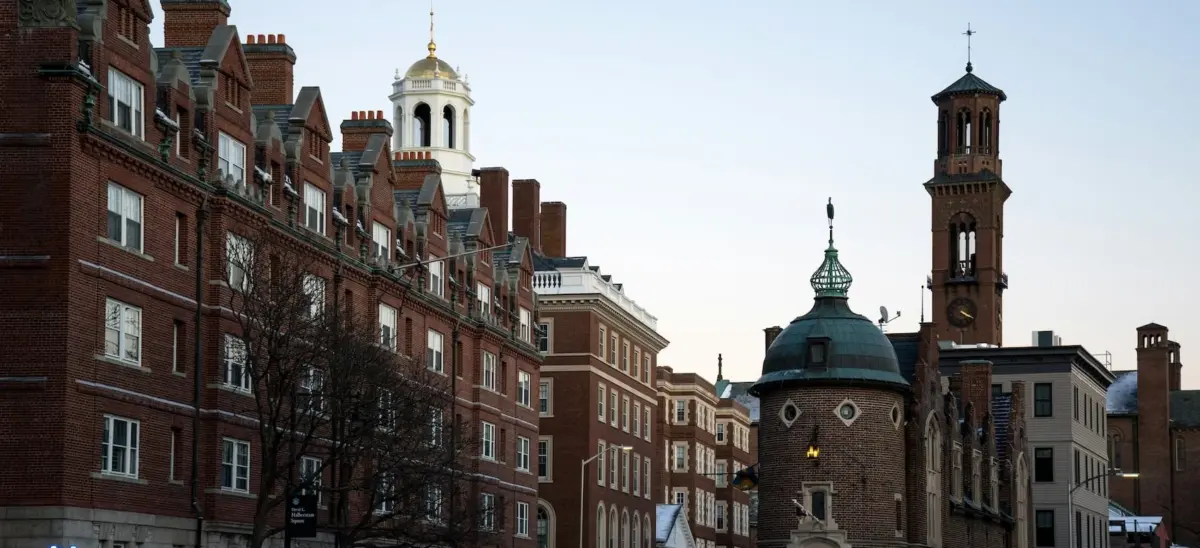
Nowhere is this shift more sharply defined than at Harvard University, an institution founded in 1636 by Puritans that long ago evolved into a secular titan. According to campus ministry reports, the undergraduate Catholic chaplaincy is experiencing exponential growth in sacramental initiations. Last year, more than forty students and faculty members were baptized or received into the Catholic Church at Harvard. This year, that number is projected to reach at least sixty, with countless others joining programs of formation.
This article explores the anatomy of this unexpected religious revival. Drawing on firsthand accounts from campus chaplains, sociological analysis of modern youth culture, and institutional metrics, we examine why a generation raised in unprecedented digital hyper-connectivity and secularism is turning toward ancient liturgy, demanding intellectual rigor, and countercultural faith. Far from a localized anomaly, this trend signals a profound cultural realignment among America’s future leaders.
Detailed Chronology: The Trajectory of a Quiet Revival
To understand the magnitude of the current spiritual shift, one must trace its recent history within elite higher education. The awakening did not happen overnight; it is the culmination of a decade-long, compounding trajectory that caught many university administrators and outside observers entirely off guard.
The Decade of Small Beginnings (2010–2018)
Just fifteen to twenty years ago, the demographic landscape of Catholic campus ministries at elite institutions looked drastically different. At Harvard and its peer institutions—such as Yale, Princeton, Dartmouth, and Brown—undergraduate conversion rates were modest. Chaplains routinely reported that the number of students entering the Catholic Church via the Rite of Christian Initiation of Adults (RCIA, now often referred to as the Order of Christian Initiation of Adults, or OCIA) hovered consistently in the single digits, rarely exceeding ten individuals per academic year.
During this period, campus ministries operated largely as maintenance organizations. Their primary function was providing Sunday Mass for "cradle Catholics" who came from practicing families, while struggling to retain students who faced the intense secularizing pressures of rigorous academic environments.
The Tipping Point (2019–2022)
The inflection point began to materialize shortly before the COVID-19 pandemic, followed by a sharp acceleration in the post-lockdown era. Chaplains noted a subtle but distinct shift in the types of questions students were asking. Existential anxiety, exacerbated by isolation, political polarization, and digital burnout, created a vacuum that modern therapeutic secularism failed to fill.
At Harvard, the numbers began an upward climb that defied historical trends. The annual cohort of converts rose from single digits into the low teens, then doubled to the twenties. By the early 2020s, the growth curve had transformed into an exponential trajectory, jumping to over forty receptions and baptisms in the 2022–2023 academic year. Similar patterns were quietly reported by chaplains across the Ivy League and elite northeastern colleges, signaling that a broader cultural current was at play.
The Present Surge (2023–Present)
Today, the movement has moved from an anecdotal curiosity to a measurable demographic trend. With Harvard’s chaplaincy anticipating upwards of sixty conversions and baptisms in a single academic year, the institutional footprint of traditional faith on campus is expanding. Public universities in the South and Midwest have simultaneously reported record-breaking classes entering the Church, proving that the phenomenon transcends regional and socioeconomic boundaries.
Supporting Context & Metrics: The Anatomy of Modern Conversion
To contextualize this revival, analysts must look beyond raw numbers and examine the institutional, theological, and sociological factors driving young adults toward Catholicism.
The Failure of Legacy Catholic Universities vs. Public and Elite Surges
It is an ironic paradox of modern American religion that rising conversion rates among young people have frequently bypassed many prominent Catholic universities. Apart from a select few institutions whose incoming student bodies arrive already deeply formed in the faith, many nominally Catholic universities have struggled to maintain their distinct identity. Attracting student bodies that often treat the faith with casual indifference or intellectual laxity, these institutions have occasionally neglected their core mission: handing on the uncompromised truths of the tradition.
Conversely, the most dramatic surges are occurring in two distinct environments:
- Large Public Universities (Land-Grant Institutions): Powered by dynamic outreach programs—most notably the Fellowship of Catholic University Students (FOCUS)—campuses across the South and Midwest are seeing massive numbers of students embrace Catholicism.
- Elite Secular Ivies: Institutions like Harvard, Dartmouth, and Brown are experiencing high-profile movements of intellectual seekers who find the uncompromising nature of Catholic doctrine uniquely compelling.
The Four Pillars of the Revival
Campus chaplains and religious sociologists point to several intersecting factors fueling this trend:
1. The Primacy of Grace
At the foundational level, clergy and ministry leaders emphasize that human strategies alone cannot manufacture spiritual renewal. Each conversion is viewed through the lens of the Holy Spirit actively working within the hearts of young seekers. The movement is sustained by an invisible, spiritual momentum that defies purely sociological explanations.
2. The Power of Being Countercultural
For generations, mainstream American Christianity sought to accommodate modern secular culture to remain relevant. Ironically, this strategy often rendered the faith uninspiring to youth seeking authentic distinction. Today, Catholicism stands out as profoundly countercultural.
Students arrive on campus from diverse backgrounds, all sharing an innate human desire for objective meaning, moral structure, and a deep cultural narrative. The Church offers a comprehensive, unflinching account of what it means to be human. When institutions present these truths boldly rather than defensively, seekers find answers to the dislocation of modern life.
3. The Collapse of Ideological Alternatives
The modern university experience is saturated with secular philosophies, yet many students find these systems intellectually hollow. Liberalism and contemporary secularism excel at critiquing existing power structures, but they often struggle to answer ultimate questions: Why is existence good? Why is it good that you exist?
When alternative traditions fail to provide existential footing, the Church steps into the void. Rather than entering as a combative culture-warrior, the Catholic student center functions as a quiet refuge—a place offering a complete intellectual and spiritual home.
4. Peer-to-Peer Witness and Dynamic Evangelization
Contrary to popular misconceptions, few young people are converted solely by aesthetic appreciation for elaborate liturgy, nor are they typically swayed by dense syllogisms or abstract apologetics. Instead, the catalyst is almost universally relational.
At Harvard and peer institutions, the journey frequently begins through peer networks:
- An athlete inviting teammates to an undergraduate Bible study.
- A classmate offering a compelling, personal account of hope amidst academic stress.
- Encounters with FOCUS missionaries stationed in campus quads.
Data from campus ministry intake forms reveal that nearly every student entering the OCIA process does so because of the direct, personal encouragement of a Catholic peer.
Official Statements & Expert Perspectives
The shifting spiritual landscape has drawn commentary from clergy, campus ministers, and cultural observers who witness the phenomenon firsthand.
"We expect at least sixty this year, along with many more who will complete their sacraments of initiation… Just a few decades ago, that number at Harvard was consistently smaller than ten. Over the past five years, it has increased steadily, growing to double digits, then doubling, then doubling again."
— Catholic Chaplain, Harvard University
Reflecting on the unique role of campus ministries operating within secular institutions, ministry leaders emphasize the necessity of maintaining institutional independence from secular pressures:
"The role of a Catholic student center, which has a particular privilege in a secular institution, is to provide the faith and culture of Catholicism… Independent of the institution of the university, without needing to absorb its commitments, a Catholic student center can serve that purpose directly and without scruple."
Cultural analysts note that this generation of young Catholics approaches their faith with a distinct psychology compared to their baby-boomer and Gen-X predecessors. Having grown up in an intensely secularized, post-Christian society, they do not view Catholicism as a default cultural inheritance, but as a deliberate, high-stakes choice.
"To be a Catholic now involves true courage every step of the way, a courage not demanded in earlier times," notes a campus ministry observer. "Harvard is an institution full of students capable of forming our culture. The more who know God and themselves, the better our society will be."
Future Outlook: A New Generation of Catholic Leadership
While chaplains are quick to temper their enthusiasm with sobering realities—noting that overall national Mass attendance remains well below mid-twentieth-century peaks—the qualitative shift on elite and public campuses cannot be ignored.
The emergence of this new generation of young Catholics points toward several long-term implications for American society:
- Intellectual Confidence: Unlike previous decades where faith was often compartmentalized or apologetically defended, today’s young converts are characterized by intellectual self-possession. They are willing to engage secular academic theories on their own terms while remaining firmly anchored in traditional dogma and sacramental practice.
- Cultural Influence: Institutions like Harvard, Yale, and premier land-grant universities continue to supply the nation’s legal, political, corporate, and academic leadership. A generation of professionals entering these fields with a deeply formed, countercultural Catholic worldview will inevitably impact public discourse, bioethics, law, and education in the decades to come.
- Resilience Through Adversity: Because practicing the faith on an elite secular campus requires social and intellectual courage, the attrition rates among these converts tend to be remarkably low. Those who make the deliberate choice to enter the Church under the watchful eye of a secular academic environment are battle-tested before they even graduate.
Ultimately, the quiet awakening occurring within America’s top universities serves as a powerful reminder of the enduring pull of transcendent truth. For a generation searching for roots in a rootless age, the ancient traditions of the Catholic Church are proving not to be a relic of the past, but an anchor for the future.




Comments
Facebook App ID not configured. Please add it in the Customizer.