
Executive Overview
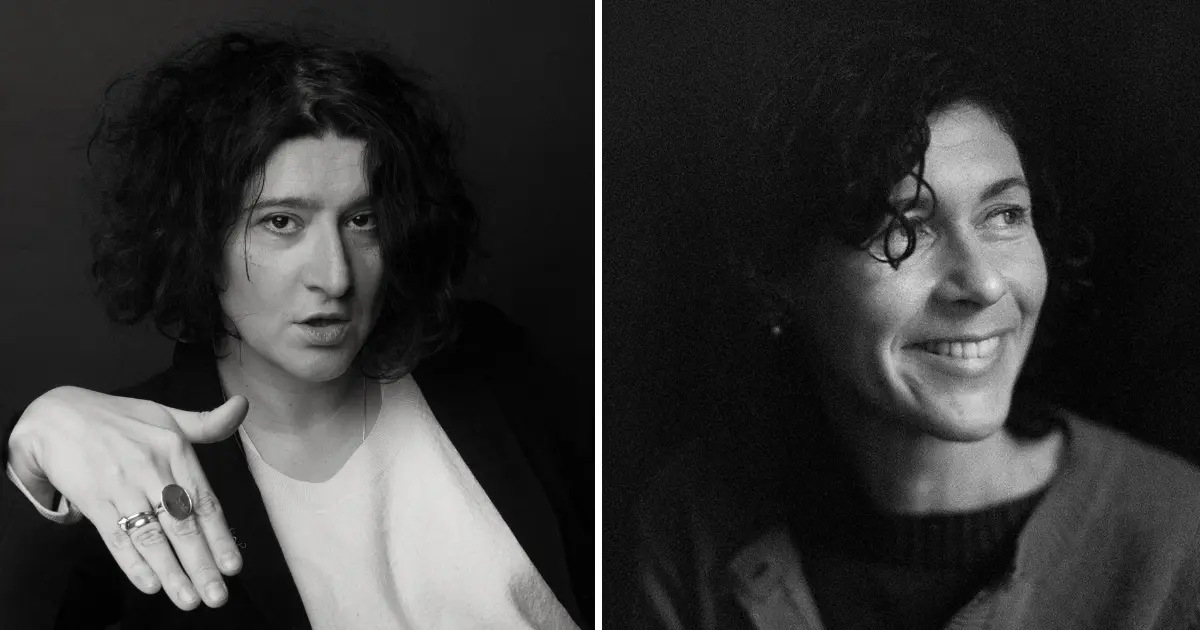
In the contemporary literary landscape, few creative partnerships possess the intellectual and aesthetic synergy shared by acclaimed Russian author Maria Stepanova and celebrated British poet and translator Sasha Dugdale. Their ongoing dialogue across linguistic, cultural, and political divides has consistently yielded works of profound resonance, bridging the gap between Eastern European historical trauma and the Anglophone literary consciousness.
At the heart of this collaborative phenomenon is a shared dedication to capturing the elusive "germ" of a literary work—that singular, highly concentrated moment of inspiration that transforms an abstract thought or fleeting experience into a sprawling, immersive narrative. For Stepanova, whose genre-defying works explore memory, history, and survival, writing is an act of preservation akin to recording a fading dream before daylight washes it away. For Dugdale, translating Stepanova is not merely an exercise in lexical substitution, but an intricate process of cultural negotiation, requiring an ear attuned to the delicate cadence of philosophy, poetry, and social turbulence.
This deep-dive investigative feature examines the genesis of Stepanova’s latest creation, unpacking the monumental translation challenges overcome by Dugdale, exploring the symbiotic dynamic between author and translator, and contextualizing their work within the broader ecosystem of contemporary international literature. Drawing from exclusive insights provided by both creators, this article traces the life of a book from its accidental inception in an unfamiliar European city to its reincarnation in the English language—illuminating how words can be simultaneously soiled by history and redeemed by art.
Read Also
Detailed Chronology: From a Canceled Train to the Anglophone Page
The journey of any major work of literature is rarely linear, but the path traveled by Stepanova’s prose is uniquely marked by serendipity, disruption, and an almost hypnotic creative urgency.
The Incubation Phase: The "Germ" of the Idea
Literary history is replete with origin myths regarding how major works are conceived. Patricia Highsmith famously spoke of the visual "germs" that sparked her psychological thrillers—most notably, a solitary young man walking under the blazing Italian sun, an image that catalyzed her legendary Ripley series. When asked about her own creative spark, Stepanova expresses a desire to offer something similarly condensed and luminous. Yet, her reality was born not of calculated artistic plotting, but of modern transit disarray: a canceled train and an extended, unplanned afternoon stranded in an unfamiliar, nameless city.
Instead of yielding to the frustration typical of delayed travelers, Stepanova was struck by a powerful, contemplative wonder: What if I were to stay here forever?
That existential pause served as the seed. Once planted, the writing process unfolded with visceral speed and emotional immediacy. Stepanova describes the experience not as a labored construction, but as an act of transcription—capturing a dream in real-time, racing against the inevitable fading of the morning memory. This fugitive quality remains embedded in the prose, giving it its trademark shimmering, dreamlike texture.
The Anglophone Metamorphosis
Once the Russian manuscript was finalized, it fell into the hands of Sasha Dugdale, who read the complete work and fell under its spell immediately. However, falling in love with a text and translating it are two entirely different endeavors. The chronology of the English translation was defined by a meticulous, obstacle-laden navigation of two distinct linguistic systems.
Dugdale faced the daunting task of bridging the gap between Stepanova’s dense, intellectual essayistic rigor and her propulsive, near-realist narrative drive. The translation process demanded an extended phase of stylistic alignment—a literary balancing act designed to ensure that the English-language reader experienced the same intellectual stimulation and narrative momentum as the Russian reader. Through an iterative dialogue between author and translator, the text slowly took its English form, shifting from a Russian internal monologue into a cross-cultural artifact capable of resonating with international audiences.
Supporting Context & Metrics: The Architecture of Translatability
To understand the magnitude of Dugdale’s achievement in translating Stepanova, one must examine the linguistic, historical, and aesthetic metrics that define their collaboration. Translating contemporary Russian literature in an era of geopolitical fracture carries stakes far higher than standard literary exchange; it requires an acute awareness of how language itself is weaponized, altered, and traumatized by historical events.
The Problem of Le Mot Juste and Politically Soiled Lexicons
One of the most profound challenges Dugdale encountered during the translation process involved words that had undergone historical contamination. In Stepanova’s original Russian text, certain terms had been "besmirched" or corrupted by recent history and the ongoing war. Direct translation of these terms would have failed to capture the specific emotional and political weight they carried for a contemporary Russian-speaking audience.
Rather than relying on literal equivalents that would land flat in English, Dugdale undertook a rigorous search for semantic equivalents—words in the English language that carried an identical sense of being morally or historically "soiled" by real-world events.
A prime example of this translational alchemy is Dugdale’s selection of the word "collateral." Permanently colored and haunted by the modern military euphemism "collateral damage," the word carries an inherent baggage of institutionalized violence and casual devastation. By deploying "collateral" in specific structural contexts, Dugdale successfully mirrored the subtle, ominous undertones of Stepanova’s original phrasing, proving that effective translation requires cultural equivalence rather than mere dictionary definitions.
The Artistic Ecosystem: Stepanova and Dugdale’s Critical Accolades
Both creator and translator occupy towering positions in the contemporary literary ecosystem. Their individual and collaborative track records underscore the high-level intellectual rigor they bring to their craft:
- Maria Stepanova: Operating fluidly across poetry, novels, essays, and journalism, Stepanova is the author of ten poetry collections and three books of essays. Her works have consistently broken boundaries and collected international acclaim. Her poetry collections Holy Winter 20/21 and War of the Beasts and the Animals both earned Poetry Book Society Translation Choices and PEN Translates awards, with the latter shortlisted for the 2021 Warwick Prize for Women in Translation. Her monumental novel In Memory of Memory swept the literary world, winning Russia’s prestigious Big Book Award in 2018, the Berman Literature Prize, and earning shortlists for the International Booker Prize, the James Tait Black Prize for Biography, and the Warwick Prize.
- Sasha Dugdale: A celebrated poet and translator in her own right, Dugdale’s translation of In Memory of Memory was shortlisted for the International Booker Prize and secured the MLA Lois Roth Award. Beyond her work with Stepanova—having translated two of her poetry collections alongside her prose—Dugdale has championed Russian-language women writers, including Elena Shvarts and Marina Tsvetaeva. Furthermore, she has built a formidable reputation translating contemporary Russian drama for premier theater institutions in the UK and US, including the New York Public Theater, the Royal Court Theatre, and the Royal Shakespeare Company.
Official Statements & Creative Insights
The collaborative bond between Stepanova and Dugdale extends far beyond the traditional boundaries of the author-translator relationship. It functions as an ongoing, symbiotic dialogue.
On the Nature of Collaboration
When asked about Stepanova’s involvement in the translation process, Dugdale rejects the idea of passive handoffs or isolated editing sessions. Instead, she characterizes the project as a natural extension of an unending conversation between the two women. While technical questions regarding specific thoughts, sentences, or historical allusions frequently arose, they were always contextualized by this overarching, long-term intellectual exchange.
This sustained dialogue allowed Dugdale to internalize Stepanova’s voice so thoroughly that her translation choices bypass mechanical transliteration and instead operate from a place of deep intuitive alignment.
Metaphors of the Text: Carrington, Tarot, and the Fool
To fully capture the essence of the book, both creator and translator turned to visual and symbolic metaphors, revealing the deeply pictorial nature of Stepanova’s literary imagination.
- Sasha Dugdale on Leonora Carrington: Dugdale compares the prose to the paintings of surrealist artist Leonora Carrington. She points to the dreamlike, almost shimmering color palette of the writing, married as it is to a profound, searching intellectualism—not to mention the explicit tarot references woven throughout the text. Carrington’s visionary, mythic, and boundary-pushing artistic style serves as an apt visual analogue for Stepanova’s narrative landscapes.
- Maria Stepanova on the Tarot and the Fool: Embracing the tarot motif, Stepanova identifies her book with a specific card from the deck: The Fool, who marches fearlessly into the unknown with a loyal dog snapping at his heels. Notably, Stepanova’s metaphor connects directly back to Carrington, who famously designed her own visionary tarot deck. Upon discovering Carrington’s deck—shared with her by Dugdale—Stepanova felt a profound sense of artistic kinship and gratitude, viewing the Carrington version of the Fool as the ultimate visual embodiment of her literary creation.
Future Outlook: The Resonances of Translingual Art
As the literary world continues to grapple with the complexities of globalization, censorship, and geopolitical conflict, the collaboration between Maria Stepanova and Sasha Dugdale offers a masterclass in how literature can cross borders without losing its native soul.
The successful translation and international reception of Stepanova’s work—championed by Dugdale’s rigorous, poetic sensibility—proves that deeply localized trauma and hyper-specific cultural reflections can achieve universal resonance when rendered with care, precision, and mutual respect. As both artists continue their respective and joint creative journeys, their work sets a new benchmark for contemporary translation. It reminds readers that books born out of disrupted journeys and canceled trains can ultimately map the vast, uncharted territories of human memory, resilience, and imagination.





Comments
Facebook App ID not configured. Please add it in the Customizer.