
Executive Overview
A devastating government investigation has thrown one of France’s most prestigious cultural institutions into severe turmoil. Pierre-Olivier Costa, the suspended president of Marseille’s renowned Musée des civilisations de l’Europe et de la Méditerranée (MuCEM), stands accused of a staggering array of infractions, including sexual and moral harassment, systemic abuse of power, and severe breaches of public procurement regulations.
According to a scathing report published by Le Monde, the findings compiled by France’s General Inspectorate of Cultural Affairs (IGAC)—the investigative arm of the Ministry of Culture—portray a toxic leadership culture under Costa and managing director Véronique Haché. Investigators warned that the combination of ethical lapses, administrative malfeasance, and disregard for oversight has put the southern French city’s sole national museum “at risk.”
The fallout extends far beyond internal administrative disciplinary actions. Marseille’s public prosecutor has significantly expanded an ongoing criminal inquiry into Costa’s tenure, focusing heavily on allegations of preferential treatment in hiring and the unlawful awarding of public contracts. Both Costa and Haché were suspended from their leadership posts for four months in late June, catching the French cultural sector off guard. The suspension was particularly jarring given Costa’s formidable political connections: he previously served as chief of staff to French First Lady Brigitte Macron and as a close advisor to President Emmanuel Macron before taking the helm at MuCEM in 2022.
Read Also
As the Ministry of Culture weighs disciplinary proceedings against the museum’s top leadership, the scandal has ignited intense public debate regarding governance, accountability, and the protection of workers within France’s publicly funded cultural institutions.
Detailed Chronology: From Political Appointment to Administrative Collapse
The unraveling of MuCEM’s leadership did not happen overnight. It represents the culmination of mounting internal tensions, ignored warning signs, and a protracted leadership crisis that ultimately drew the intervention of federal inspectors.
2022–2023: A Prominent Arrival and Early Discontent
When Pierre-Olivier Costa was appointed president of MuCEM in 2022, his appointment was widely viewed through the lens of his influential political pedigree. Having worked closely with Emmanuel and Brigitte Macron, Costa stepped into the role with high expectations. However, internal friction developed rapidly. Staff members later reported a sharp shift in workplace dynamics, characterized by top-down management styles, mounting performance pressures, and an erosion of traditional administrative safeguards.
June 2024: Open Rebellion Among Staff
The simmering discontent boiled over in June 2024, when MuCEM employees staged a public protest to denounce what they termed a toxic corporate culture. The protest was accompanied by an open letter signed by 79 museum staff members. The signatories detailed an oppressive environment defined by “rising pressure and threats,” signaling to external observers that the institution was suffering from deep-seated cultural dysfunction. Despite these public red flags, executive operations continued largely unchanged for months.
April 2025: Judicial Inquiries Take Shape
By the spring of 2025, external oversight mechanisms began to catch up with internal grievances. Media reports, notably from Le Monde, revealed that judicial authorities in Marseille had opened a preliminary investigation into the museum’s administrative practices. Confronted with these early disclosures, Costa maintained a posture of innocence, telling reporters in April that he had “full confidence” in the judicial system and welcomed transparency to clear his name of what he described as extremely serious accusations.
June 2025: Suspension and IGAC Intervention
In late June 2025, the pressure reached a breaking point. Acting on the preliminary findings of an unreleased IGAC report, the French Ministry of Culture intervened directly, slapping both President Pierre-Olivier Costa and Managing Director Véronique Haché with four-month preventive suspensions. The sudden sidelining of the museum’s top executives stunned the Parisian political establishment and the southern art community alike, prompting federal inspectors to finalize their comprehensive audit.
August 2025: The IGAC Report and Expanded Criminal Probes
The full scope of the government’s findings became public in late August 2025 via a front-page exposé in Le Monde. The published IGAC report went far beyond general workplace complaints, detailing specific instances of sexual harassment, predatory behavior, and illegal procurement maneuvers. Simultaneously, Marseille’s public prosecutor formally expanded the ongoing criminal investigation, transforming what began as a localized labor dispute into a high-stakes legal battle involving potential criminal corruption charges.
Supporting Context & Metrics: The Anatomy of a Toxic Workplace
The 12-page IGAC report paints a bleak picture of governance at MuCEM. Investigators characterized the leadership dynamic using blunt language, describing Costa as a leader “as regarded as untouchable as he is incompetent,” supported by an inner circle that failed in its fundamental duty to act as an administrative safeguard.
Allegations of Harassment and Predatory Conduct
At the heart of the scandal are detailed allegations of sexual and moral harassment involving multiple former employees. While initial reports focused on general toxicity, the IGAC investigation uncovered specific, corroborated accounts of predatory behavior.
- The First Complainant: A former MuCEM worker filed a formal complaint detailing relentless harassment. According to the IGAC report, the worker stated that on the evening of August 8, 2025, Costa made persistent, explicit sexual propositions. Independent witnesses interviewed by investigators corroborated seeing Costa engage in “inappropriate behavior” toward this specific employee on multiple occasions.
- The Second Complainant: During the course of their audit, federal investigators identified a second former employee who came forward with strikingly similar experiences. In testimony cited by the IGAC, the individual stated: "Costa made sexual propositions to me, like oral sex, it happened a thousand times… I pushed him away by making jokes about it."
In addition to explicit sexual advances, the report indicted the management pair for engaging in remarks of a “sexual, sexist, or degrading nature,” unwarranted intrusions into subordinates’ private lives, and retaliatory salary policies designed to marginalize dissenters.
Public Procurement Violations and Financial Irregularities
Beyond interpersonal misconduct, the IGAC report uncovered systemic financial and administrative irregularities that exposed the public museum to serious legal liabilities and financial loss.
Investigators found that Costa routinely bypassed standard competitive bidding regulations. Public procurement laws in France mandate strict transparency and fair competition for institutional contracts. However, the report highlights multiple instances where contracts were awarded outside of legal frameworks, often directed toward favored individuals and corporate entities at inflated costs.
Key procurement violations cited in the report include:
- Tyrex Conseil: Substantial consultancy contracts awarded to Bastien Baudoin, head of the firm Tyrex Conseil, executed at costs well above market value and in non-compliance with public bidding thresholds.
- Ludoparc: Irregularities surrounding the contracting process for the construction of a children’s playground managed by the firm Ludoparc.
Investigators noted that these actions did not merely reflect poor administrative judgment; they constituted clear “risks of conflict of interest or criminal offenses,” directly prompting the expansion of the public prosecutor’s financial crimes investigation.
Official Statements and Institutional Defense
The revelations have triggered defensive posturing from the accused alongside measured responses from regulatory bodies.
When questioned by government investigators during the audit, Pierre-Olivier Costa vigorously denied all allegations of personal misconduct and administrative corruption.
"I don’t speak to people in that manner," Costa told IGAC investigators, categorically rejecting the descriptions of his workplace interactions.
Regarding the financial and procurement probes, Costa maintained his earlier stance communicated to Le Monde, asserting his desire for total transparency:
"I want transparency and for everything to be brought to light… These are extremely serious accusations, and I dispute them."
Véronique Haché, the suspended managing director, has similarly faced scrutiny over her complicity in the administrative bypasses and workplace climate, though her direct public statements have remained sparse as legal counsels prepare formal defenses.
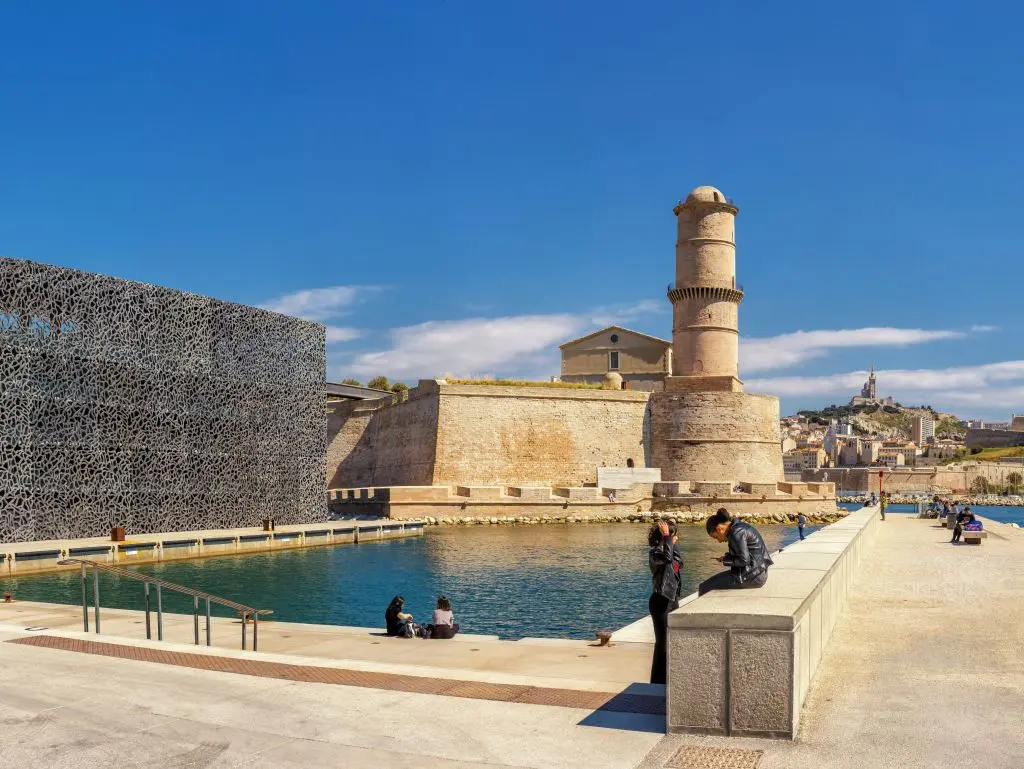
Meanwhile, the Ministry of Culture has faced intense pressure to reform oversight mechanisms for national museums located outside Paris. MuCEM, inaugurated in 2013 as a flagship cultural symbol of Marseille’s urban revitalization, represents a massive investment of public funds and national prestige. The IGAC report concluded with an urgent warning that the institutional damage caused by the leadership crisis threatens the museum’s operational stability:
"Beyond the sense of distress, it is the institution itself that is now at risk."
Future Outlook: Accountability and Institutional Reform
As the four-month suspension period for Costa and Haché draws toward its conclusion, the path forward for MuCEM remains fraught with uncertainty. The findings of the IGAC report have left the Ministry of Culture with limited options, heavily biasing toward permanent removal and formal disciplinary action.
Legal and Disciplinary Proceedings
The immediate future will likely see the formal initiation of disciplinary proceedings recommended by IGAC inspectors, potentially resulting in the termination of both executives. Concurrently, the judicial branch in Marseille will determine whether to advance the expanded criminal inquiry into indictments. If prosecuted and convicted under French law for corruption, favoritism, and misuse of public funds, the accused could face significant fines and prison sentences.
Restoring Cultural and Administrative Integrity
For MuCEM, the crisis serves as a stark reminder of the vulnerabilities inherent in politically appointed cultural leadership. Stakeholders, labor unions, and museum staff are demanding a comprehensive overhaul of internal governance structures to ensure transparency in hiring, strict adherence to public procurement laws, and robust protections for whistleblowers.
As Marseille’s premier national museum attempts to turn the page on one of the darkest chapters in its history, the cultural sector at large will be watching closely to see whether the French government’s decisive investigative actions translate into lasting structural reform and genuine institutional accountability.


Comments
Facebook App ID not configured. Please add it in the Customizer.