
Executive Overview
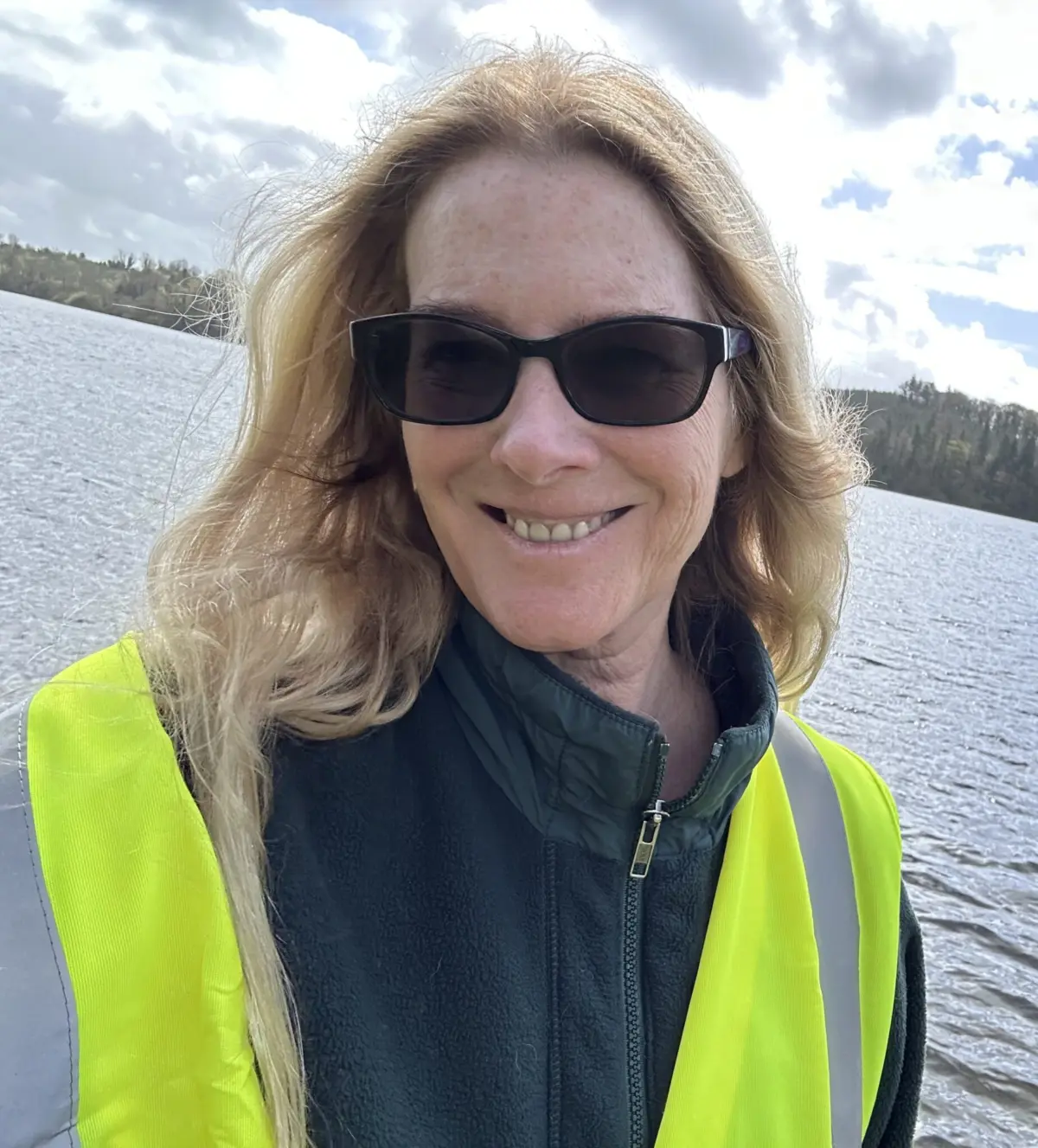
In the contemporary literary landscape, poetry often grapples with the fleeting nature of modern consciousness, capturing micro-moments of digital anxiety, urban alienation, or transient domesticity. Yet, every so often, a piece of verse emerges that deliberately divorces itself from the frantic pace of the twenty-first century to anchor the reader in the vast, indifferent expanse of deep geological and cultural time. Such is the achievement of "Iveragh," penned by award-winning poet Kathleen Winter and selected as the Missouri Review Poem of the Week for July 13, 2026.
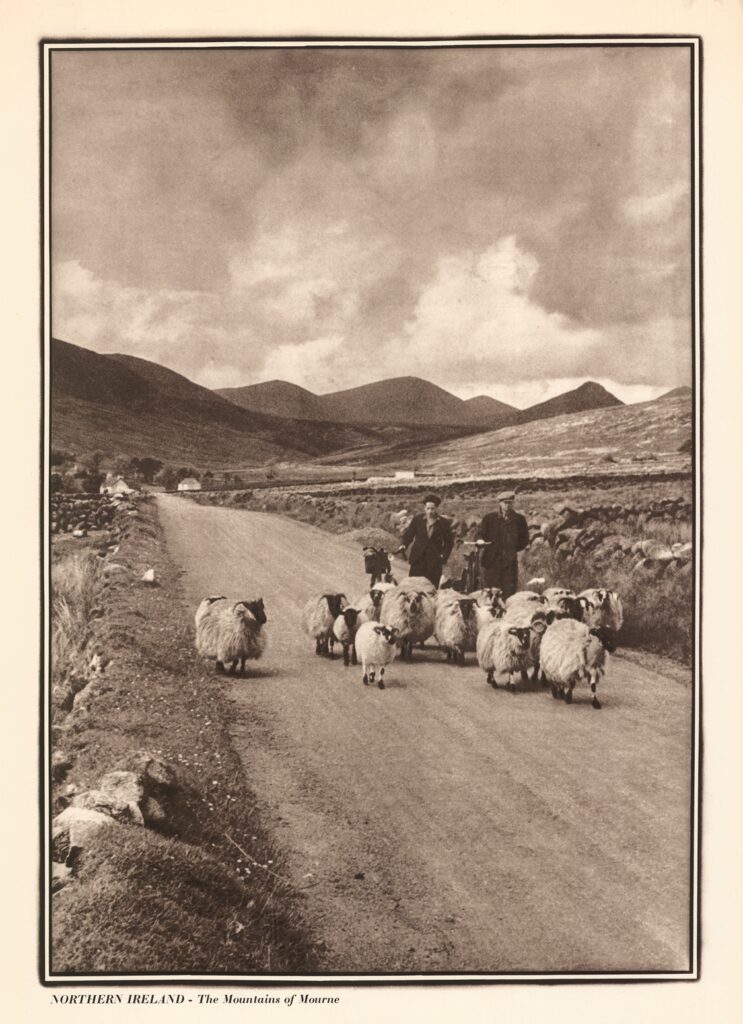
Set against the rugged, wind-battered backdrop of the Iveragh Peninsula in County Kerry—the largest and arguably most dramatic finger of land extending into the Atlantic from Ireland’s southwest coast—Winter’s poem strips away the romanticized gloss common to pastoral tourism. Instead, it offers a stark, tactile, and uncompromising meditation on the landscape’s most ubiquitous inhabitants: its sheep.
Through startlingly visceral imagery—comparing the livestock not to ethereal clouds or storybook figures, but to dense, heavy custard inside eclairs—Winter forces an immediate confrontation with materiality, weight, and survival. This feature article explores the structural and thematic anatomy of "Iveragh," contextualizes Winter’s burgeoning literary career and her deep-seated artistic relationship with Ireland, and examines how the poem bridges the chasm between prehistoric ecology and human articulation. By investigating the genesis of the piece, the socio-historical weight of its subjects, and the author’s conscious rejection of conventional pastoral tropes, this review illuminates why "Iveragh" stands as a masterclass in contemporary ecological verse.
Read Also
Detailed Chronology: The Evolution of a Transatlantic Manuscript
The publication of "Iveragh" in mid-2026 represents the culmination of a decade-long engagement with the landscapes, literature, and histories of Ireland and France—an artistic journey that has steadily solidified Kathleen Winter’s reputation as one of America’s most astute observers of place.
The Catalyst: The 2016 County Kerry Residency
The genesis of the manuscript that houses "Iveragh" traces back to 2016, during Winter’s inaugural trip to County Kerry. It was during this foundational residency that the poet first encountered the breathtaking topography of the Iveragh Peninsula, where mist-shrouded hills collide with the crashing white foam of the Atlantic Ocean, and where human history is written in dry-stone walls, monastic ruins, and ancient ring forts.
More arresting to Winter than the dramatic vistas, however, were the sheep. Ubiquitous, stubborn, and woven into the very fabric of the agrarian terrain, these animals presented themselves not merely as elements of the scenery, but as stubborn witnesses to history. As Winter noted in her reflections on the poem, she found herself haunted by a persistent creative temptation: the urge to render these creatures without falling into the trap of tourist-gaze sentimentality.
The Fellowship Circuit and Transatlantic Crafting
Over the ensuing years, Winter’s creative process was nurtured through a series of prestigious international residencies designed to give writers uninterrupted time to hone their craft. Her engagement with the landscapes of Ireland and Europe deepened significantly through grants and fellowships from:
- The Cill Rialaig Project: Situated in a restored pre-famine village on the cliffs of County Kerry, offering a direct, visceral connection to the isolation and stark beauty of the Irish coast.
- Maison Dora Maar: Located in the medieval village of Ménerbes in the south of France, providing a complementary European counterpoint to her Irish explorations.
- The Heinrich Böll Cottage: Set on Achill Island off the coast of County Mayo, immersing the writer in the haunting vestiges of the Gaeltacht and Atlantic weather patterns.
- The James Merrill House: In Stonington, Connecticut, offering a domestic yet intensely literary harbor for revision.
- The Sewanee Writers’ Conference: Serving as a crucial crucible for peer critique and structural refinement.
Towards Serial Fabulist (2027)
"Iveragh" emerged as one of the final poems written for a comprehensive, cross-cultural manuscript exploring the intersections of French and Irish topography, memory, and endurance. This body of work is scheduled for full publication in 2027 by Texas Review Press under the title Serial Fabulist.
By the time "Iveragh" was selected by the Missouri Review editorial team in July 2026, it had undergone years of subterranean gestation, evolving from an initial, impressionistic sketch of mountain livestock into a tightly controlled four-stanza meditation on language, value, and survival.
Supporting Context & Metrics: The Literary Pedigree of Kathleen Winter
To fully appreciate the resonance of "Iveragh," one must examine the formidable literary scaffolding upon which Winter’s career rests. Based in Sonoma, California, Winter has spent over a decade quietly amassing critical acclaim, national fellowships, and prestigious book awards that mark her as a voice of uncompromising precision and intellectual depth.
Published Collections and Major Awards
Winter’s trajectory in American poetry is defined by a consistent ability to secure top-tier independent press awards, each collection serving as a stepping stone toward her upcoming 2027 release:
| Year | Title | Publisher | Major Accolade |
|---|---|---|---|
| 2012 | Nostalgia for the Criminal Past | Elixir Press | Winner of the Antivenom Prize |
| 2018 | I will not kick my friends | Elixir Press | Winner of the Elixir Prize |
| 2020 | Transformer | The Word Works | Winner of the Hilary Tham Capital Collection Award |
| 2027 | Serial Fabulist | Texas Review Press | Forthcoming collection featuring "Iveragh" |
Critical Recognition and Periodical Placements
Beyond her book-length publications, Winter’s verse has become a staple of high-caliber literary journals on both sides of the Atlantic. Her poems have appeared in:
- The New Republic
- The New Statesman
- Cincinnati Review
- Yale Review
- Poetry London
- The Adroit Journal
- Michigan Quarterly Review
Her shelf of individual honors is equally distinguished, including the Poetry Society of America’s The Writer Magazine/Emily Dickinson Award, the Rochelle Ratner Memorial Prize, and the Ralph Johnston Fellowship. This extensive pedigree ensures that when Winter turns her gaze toward a rural Irish peninsula, the resulting text is freighted with deep technical mastery, formal awareness, and historical consciousness.
Official Statements & Authorial Insight: Unpacking "Iveragh"
In her official author’s note accompanying the Missouri Review publication, Winter provides crucial insight into the aesthetic philosophy driving "Iveragh." Rather than approaching the Irish landscape as an outsider seeking picturesque pastoralism, Winter sought a vernacular of hard-edged reality.
Rejecting the Touristic Lens
"Though I’m a shameless gazer at sheep-covered landscapes," Winter explains, "in ‘Iveragh’ I aimed for an unsentimental, non-touristic approach."
This commitment to anti-sentimentalism is immediately apparent in the poem’s opening lines, which dismantle any cozy, storybook notions of farm life:
The sheep are not light.
They’re like custard inside eclairs,
thicker and heavier than expected.
By introducing the unexpected simile of pastry and heavy cream, Winter subverts the weightlessness often attributed to animals in pastoral verse. These sheep possess a dense, recalcitrant mass. They are "thicker and heavier than expected," grounding the reader in physical reality. Instead of the delicate white fleece of nursery rhymes, their backs bear "a splash of paint"—the utilitarian brand of the modern farmer, marking property and survival within an unforgiving economy.
The Geography of the Peninsula
Winter takes pains to ground the poem in specific geographical and historical realities. Iveragh is not a generic rural idyll; it is a distinct, demanding thumb of land in County Kerry where human habitation has constantly negotiated with the elements.
In the wind they hunker like larger
limestone rocks: redundant, repetitive,
fungible, too small to be boulders,
bereft of language, or so we say.
Here, the sheep blur the boundary between animate life and inanimate geology. They mimic the grey limestone karst of the Burren or the Kerry uplands—repetitive, functional, and seemingly locked out of human discourse. Yet, Winter immediately undercuts human arrogance with the biting caveat: "or so we say."
Pre-Linguistic History and Ecological Continuity
In the poem’s final movements, Winter expands her scope from the contemporary hillside to deep evolutionary and cultural history. The sheep are framed not merely as agricultural commodities, but as ancient entities whose lineage predates human articulation:
Like bog-wood and the Irish elk,
their presence preceded language.
When the gatherers arrived,
when they gathered to hunt,
sheep watched from the cliffsides,
their black mouths ceaselessly grinding
like a troubled sleeper almost awake
before the last day’s dawn.
By linking sheep to bog-wood—ancient timber preserved for millennia in the acidic peatlands—and the extinct Irish elk (Megaloceros giganteus), Winter places the animals within Ireland’s deep palaeontological record. They watched the earliest human hunters arrive on the coast. Their continuous chewing is likened to the grinding anxiety of "a troubled sleeper almost awake," merging rural realism with an almost apocalyptic, timeless vigilance.

Future Outlook: The Ongoing Vitality of Ecological Verse
The selection and reception of "Iveragh" in July 2026 highlights a broader, encouraging trend in contemporary American and international poetry: a growing appetite for rigorous, place-conscious ecological writing that avoids both hollow corporate environmentalism and uncritical pastoral escapism.
As readers and critics look ahead to the publication of Kathleen Winter’s Serial Fabulist in 2027 by Texas Review Press, "Iveragh" serves as a brilliant signpost for the collection’s thematic preoccupations. It demonstrates how a contemporary poet, rooted in the American West (Sonoma, California), can successfully engage with the complex palimpsest of European history and landscape without resorting to lazy pastiche.
Furthermore, the poem’s reception via digital literary institutions like the Missouri Review underscores the enduring power of the "Poem of the Week" format to elevate meticulous, slow-crafted art above the dizzying churn of online content. In an era defined by artificial intelligence text generation and rapid-fire digital discourse, Winter’s painstaking attention to the weight of a sheep, the stain of farmer’s paint, and the ancient grind of a jawbone reminds us of poetry’s unique capacity to anchor us in the physical world.
As Winter continues her literary career—balancing academic fellowships, international residencies, and editorial acclaim—"Iveragh" will undoubtedly stand as a high-water mark: a poem that looks at the ancient hills of Kerry and sees not a postcard, but a living archive of stone, wool, and unspokens.


Comments
Facebook App ID not configured. Please add it in the Customizer.