
Executive Overview
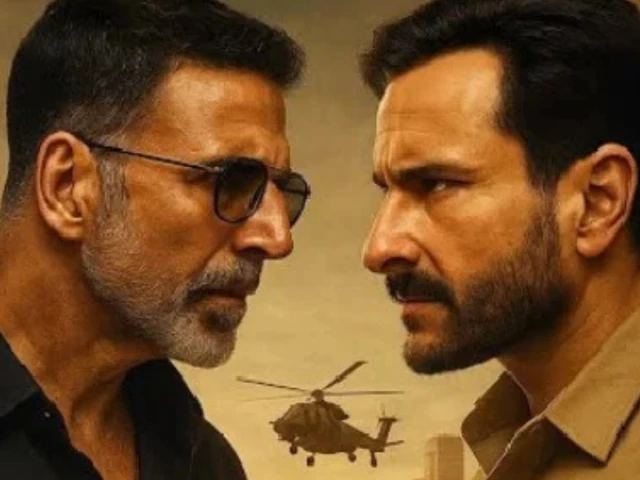
Eighteen years after they last shared the silver screen in the 2008 action-comedy Tashan, two of Bollywood’s most enduring leading men are staging a dramatic cinematic reunion. Akshay Kumar and Saif Ali Khan—actors who defined an era of 1990s and 2000s Indian cinema with blockbusters like Main Khiladi Tu Anari—are returning together in a radically different avatar. Titled Haiwaan, the upcoming feature is a gritty, high-stakes psychological thriller that trades lighthearted camaraderie for psychological warfare, institutional corruption, and a relentless cat-and-mouse chase.
The recently dropped official trailer has ignited significant buzz across the Indian sub-continent and international diaspora markets, positioning Haiwaan as one of the most anticipated theatrical releases of the autumn season. Directed with a dark, suspenseful aesthetic, the film centers on an unequal and terrifying conflict: a cold, calculating psychopath on a mission of revenge, pitted against a visually impaired man fighting desperately for his survival.
With Saif Ali Khan stepping into the shoes of a vulnerable yet resilient protagonist falsely accused of a heinous crime, and Akshay Kumar embracing a chillingly dark persona as his tormentor, Haiwaan promises to push both actors out of their traditional commercial comfort zones. Supported by a powerhouse ensemble cast featuring Saiyami Kher, Boman Irani, Shriya Pilgaonkar, and Sharib Hashmi, the film is slated for a major cinematic release next month. This comprehensive report explores the trajectory of the project, the significance of the Kumar-Khan reunion, the narrative architecture of the thriller, and what industry analysts anticipate from this high-profile box-office contender.
Read Also
Detailed Chronology: From 90s Icons to Psychological Adversaries
To understand the magnitude of Haiwaan, one must trace the cinematic lineage shared by its two principal leads. Akshay Kumar and Saif Ali Khan are not merely contemporary actors; they are cultural touchstones of a transitional period in Hindi cinema. Their shared filmography includes classic commercial hits that cemented their status as versatile performers capable of balancing intense drama, romance, and high-octane action.
The Genesis of a Partnership: Main Khiladi Tu Anari (1994)
Their collaborative journey truly began with the 1994 action thriller Main Khiladi Tu Anari, directed by Mukesh Uttamchandani. Playing an earnest, no-nonsense cop alongside Khan’s suave, carefree Bollywood actor caught up in the underworld, the duo displayed an effortless chemistry that made the film a massive box-office success. The title track remains an iconic anthem of 90s pop culture, instantly cementing their status as a bankable cinematic duo.
Exploring Dynamics: Yeh Dillagi (1994) and Aarzoo (1999)
Later that same year, they starred in Yeh Dillagi, a romantic drama produced by Yash Raj Films that offered a fresh take on the classic Sabrina narrative. Here, Kumar and Khan played brothers caught in a complex love triangle, showcasing their range beyond pure action. Although their subsequent collaboration Aarzoo (1999) faced a delayed release and mixed commercial fortunes, their on-screen rapport remained a favorite among fans.
The Hiatus: Tashan (2008)
Nearly a decade later, the duo reunited alongside Kareena Kapoor Khan and Anil Kapoor for Yash Raj Films’ stylish action-comedy Tashan. While the film received mixed reviews upon release, it marked the last time Kumar and Khan shared cinematic space. In the 18 years that followed, both actors carved out distinct, formidable paths. Kumar evolved into one of the most prolific box-office workhorses in global cinema, dominating national holidays with patriotic dramas, comedies, and action thrillers. Khan, meanwhile, embraced complex, anti-heroic, and experimental roles in both commercial cinema and the burgeoning digital streaming landscape, earning critical acclaim for projects like Sacred Games.
The Announcement and Trailer Launch of Haiwaan
The announcement of Haiwaan in trade circles sent immediate shockwaves through the industry. Unlike their previous lighthearted or action-heavy collaborations, Haiwaan plunges both actors into a bleak, psychologically taxing narrative universe. The release of the official trailer has since validated these expectations, showcasing high production values, moody cinematography, and a palpable sense of dread. The cat-and-mouse dynamic revealed in the promotional footage has set a high bar for contemporary Indian suspense thrillers.
Narrative Architecture and Character Dynamics
At the heart of Haiwaan lies a deeply unsettling premise that plays on primal fears: vulnerability, institutional betrayal, and targeted malice.
The Visually Impaired Protagonist: Navigating a Trap
Saif Ali Khan portrays a man who is visually impaired—a creative choice that immediately strips away conventional action-hero tropes. In the world of Haiwaan, Khan’s character does not have the luxury of visual foresight; he cannot spot an ambush from afar or read the body language of his pursuers.
According to reports from prominent entertainment outlets like the Khaleej Times, the narrative takes a harrowing turn when Khan’s character is falsely implicated in a violent crime and swiftly arrested. This development exposes him to the cold machinery of the justice system, before casting him out into a world where danger lurks unseen. Forced to rely entirely on his heightened auditory senses, tactile instincts, and spatial memory, his journey transforms into a desperate, visceral battle for survival. Every footstep, every rustle of wind, and every spoken word becomes a vital clue in a deadly game he never asked to play.
The Cold-Blooded Psychopath: Kumar’s Dark Turn
Opposite Khan stands Akshay Kumar, stepping away from his familiar heroic archetypes to portray a chilling, cold-blooded psychopath. Driven by a deep-seated desire for revenge, Kumar’s character orchestrates the persecution of Khan’s protagonist with methodical cruelty. The psychological warfare waged by Kumar’s character relies not merely on physical intimidation, but on psychological manipulation, exploiting the protagonist’s perceived vulnerabilities and turning his environment into an inescapable trap.
Industry insiders note that Kumar’s performance strips away the charm and moral righteousness that usually define his filmography, offering audiences a rare glimpse into pure, unadulterated menace. The interplay between Khan’s desperate resilience and Kumar’s calculated sadism forms the emotional and psychological core of Haiwaan.
A Formidable Supporting Cast
A psychological thriller of this magnitude requires a robust supporting ensemble to anchor its world-building and legal-procedural dimensions. Haiwaan boasts a critically acclaimed supporting lineup:
- Saiyami Kher steps into the boots of a dedicated, sharp-witted police officer tasked with untangling the web of deception surrounding the central crime.
- Boman Irani brings gravitas and institutional authority to the screen as a presiding judge, navigating the precarious intersection of law, evidence, and hidden agendas.
- Shriya Pilgaonkar and Sharib Hashmi round out the cast, adding layers of nuance, tension, and narrative unpredictability to the unfolding mystery.
Supporting Context & Production Metrics
The production of Haiwaan reflects broader shifts within the Indian film industry, particularly the growing appetite for high-concept thrillers that challenge traditional formulas.
Genre Evolution in Bollywood
For decades, mainstream Hindi cinema relied heavily on formulaic romances, family melodramas, and straightforward masala action flicks. However, the rise of global streaming platforms and changing domestic audience demographics have catalyzed a renaissance for high-concept genre cinema. Psychological thrillers—traditionally a niche segment in commercial Indian filmmaking—have gained significant traction. Films that prioritize suspense, intricate plotting, and moral ambiguity are increasingly capturing box-office attention. Haiwaan positions itself squarely at the vanguard of this movement, marrying the star power of two legacy actors with a dark, sophisticated narrative style.
Technical and Aesthetic Ambitions
Early promotional material for Haiwaan highlights a distinct visual and auditory philosophy. Abandoning the sun-drenched palettes of commercial entertainers, the film employs deep shadows, claustrophobic indoor framing, and a muted color grading to mirror the psychological state of its characters. Sound design plays an exceptionally crucial role, given the protagonist’s visual impairment. The soundscape is engineered to plunge the audience directly into his sensory reality, amplifying ambient noises, heartbeats, and spatial echoes to heighten cinematic tension.
Official Statements and Industry Reception
The unveiling of Haiwaan has prompted widespread commentary from trade analysts, critics, and the creative team behind the project.
Industry Buzz and Anticipation
Trade analysts have pointed out that casting two stars of Kumar and Khan’s stature in opposing roles is a calculated and high-stakes gamble. In an era where audiences demand fresh narrative risks from legacy actors, Haiwaan represents a significant departure from safe commercial bets.
A prominent trade analyst noted:
"Bringing Akshay Kumar and Saif Ali Khan back together after 18 years is a nostalgic event in itself. However, the real triumph of Haiwaan’s marketing so far is that it completely subverts their previous on-screen dynamics. Instead of fighting side-by-side against a common villain, they are tearing each other apart in a psychological arena. The trailer has immediately elevated expectations across all trade circles."
Fan Reactions and Social Media Impact
Upon the release of the official trailer, social media platforms experienced a surge in engagement, with hashtags dedicated to the film trending nationally. Cinephiles expressed particular enthusiasm for Saif Ali Khan’s intense portrayal of a vulnerable yet defiant protagonist, as well as Akshay Kumar’s unsettling physical transformation and villainous demeanor. The juxtaposition of a visually impaired man outmatched by a calculated adversary has sparked countless fan theories regarding the true nature of the crime, the framing, and the ultimate resolution of the revenge plot.
Future Outlook & Box Office Implications
As Haiwaan locks in its theatrical release for next month, all eyes are on how the film will perform in a competitive global box-office landscape.
Theatrical Positioning
Scheduled to debut during a lucrative theatrical window, Haiwaan will test the appetite of audiences for dark, adult-oriented thrillers. While family entertainers continue to command massive box-office revenues, critically acclaimed and suspense-driven narratives have proven capable of breaking records when backed by strong word-of-mouth and compelling performances.
Long-Term Legacy
Beyond its immediate commercial prospects, Haiwaan holds symbolic importance for Bollywood’s veteran leading men. By embracing morally ambiguous, dark, and physically demanding roles, Kumar and Khan are demonstrating a willingness to evolve alongside an increasingly sophisticated viewing public. If the film succeeds in translating its tense trailer into a critically and commercially triumphant feature, it could pave the way for more risk-taking collaborations among veteran stars, proving that star power paired with substantive storytelling remains an unbeatable combination in modern Indian cinema.
As the countdown to next month’s release continues, anticipation remains at a fever pitch. Haiwaan is not merely a reunion of two old friends; it is a cinematic collision of two distinct acting forces, set to test the limits of fear, survival, and revenge on the big screen.





Comments
Facebook App ID not configured. Please add it in the Customizer.