
Executive Overview
In the sprawling landscape of contemporary American poetry, few voices capture the friction and fleeting grace of urban existence quite like Mike Carlson. Selected as the Missouri Review Poem of the Week for August 10, 2026, Carlson’s piece, "Anonymous Report of Unsafe Conditions," serves as an exquisite autopsy of modern metropolitan life. Blending the mundane indignities of city living—stolen bicycles, exorbitant produce prices, and vanishing pharmacies—with moments of surreal, accidental beauty, Carlson constructs a lyrical monument to New York City’s eternal paradox: it is a place where everything we do is executed at our own peril, yet we remain irresistibly bound to its rhythm.
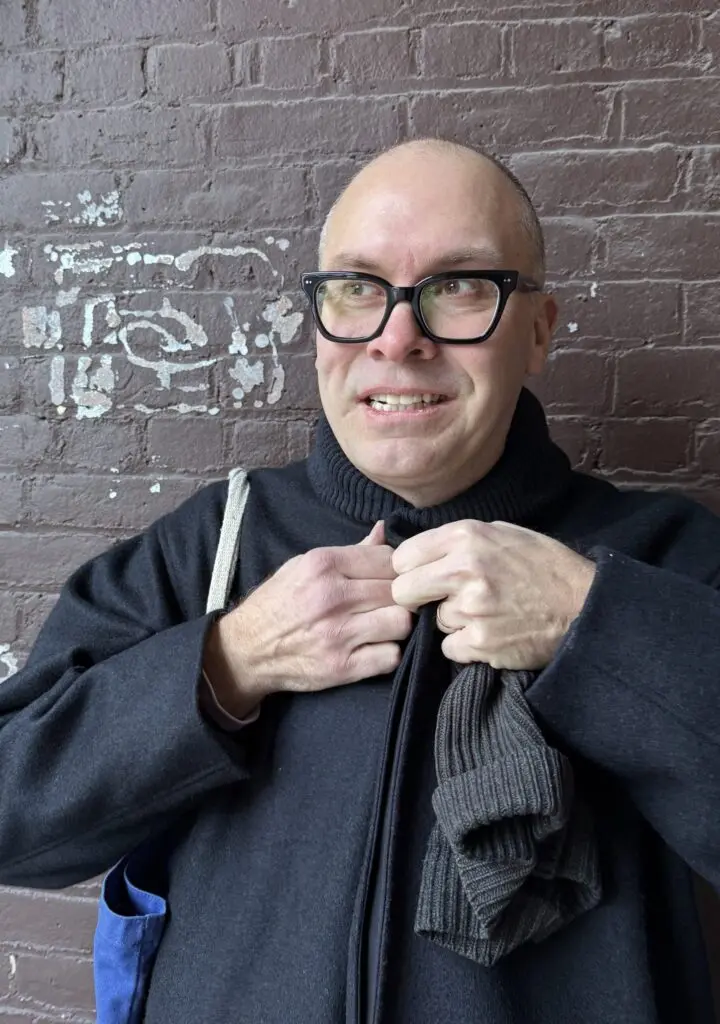
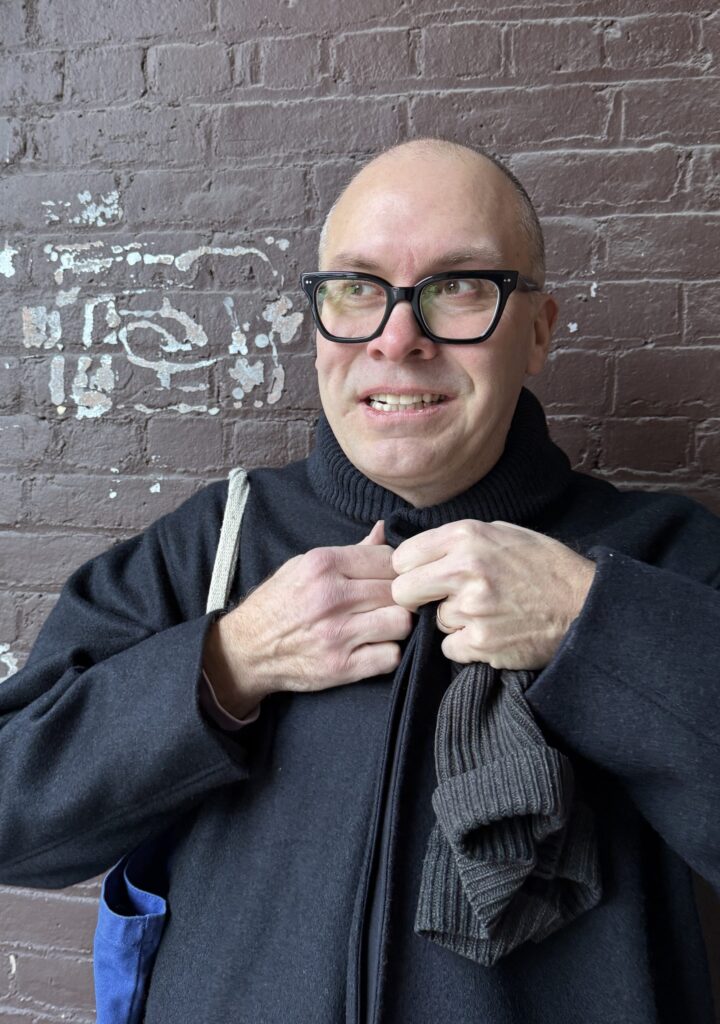
Carlson, a Brooklyn-based educator at P.S. 107 and an accomplished literary voice whose debut collection Cement Guitar earned the prestigious Juniper Prize, brings a teacher’s observant eye and a veteran resident’s thick skin to his craft. Following the 2025 release of his collection Tips to Help You Do Your Best via Tupelo Press, "Anonymous Report of Unsafe Conditions" demonstrates an evolution in Carlson’s poetic architecture. It moves effortlessly from the desolate asphalt of Flatbush Avenue to the cinematic fakery of Prospect Park West, offering readers a meditation on oblivion, loss, and the uncanny persistence of urban memory.
This feature explores the architecture of Carlson’s celebrated poem, dissects the genesis of its opening lines, examines its broader thematic weight within the contemporary literary landscape, and contextualizes it alongside fellow contemporary works featured in the Missouri Review’s prestigious weekly showcase.
Read Also
Detailed Chronology: From a Stolen Childhood Bike to the Pages of the Missouri Review
To understand the emotional geography of "Anonymous Report of Unsafe Conditions," one must trace its lineage back nearly two decades, to a sidewalk outside a workplace where a young Mike Carlson confronted an immutable rite of passage for any New York City cyclist.
The Genesis: Eighteen Years Ago
As Carlson notes in his reflections on the poem, the spark for this sprawling meditation ignited eighteen years prior to its publication milestone. Leaving work one afternoon, he discovered that the bicycle he had owned since the eighth grade—purchased with the hard-earned wages of his first job as a busboy—had vanished.
When confronted by his then-girlfriend (now his wife), who casually asked about the missing transport, Carlson’s response was laconic: "I don’t know. I guess someone stole it." That matter-of-fact resignation, an unintentional brush with Albert Camus’s existential detachment, left an indelible mark. It encapsulated the precise emotional armor required to navigate the five boroughs: an acceptance of loss so total it borders on the absurd.
The Crafting Process
The first line of the poem—"What is true about New York is that / your bike will be stolen"—sat dormant for years, a solitary seed waiting for the right soil. Over time, Carlson began accumulating fragments of daily observation: the quality of the mist hitting traffic lights on Flatbush Avenue, the theatrical illusion of cotton-stuffed "snow" standing in for early February despair, and the quiet historical erasures hidden beneath community gardens.
Slowly, through a meticulous process of addition and subtraction, the poem took shape. Carlson aimed for a register that graphic design legend Milton Glaser—creator of the iconic "I ♥ NY" logo—might appreciate if he happened to spot the verses scribbled hastily on a diner napkin in the backseat of a yellow cab.
Publication and Recognition
The culmination of this artistic journey arrived in August 2026, when the Missouri Review selected "Anonymous Report of Unsafe Conditions" as its Poem of the Week. The feature brought renewed critical attention to Carlson’s distinctive poetic voice, placing his urban vignettes alongside other notable contemporary voices in the literary journal’s rotating weekly showcase, including works by Michael Broek and Amanda Gaines.
Supporting Context & Metrics: The Literary Profile of Mike Carlson
To fully appreciate Carlson’s contribution to modern poetry, it is essential to examine his trajectory within the American literary ecosystem. His work bridges the gap between academic rigor and the gritty, unvarnished reality of working-class urban education.
Published Works and Accolades
- Cement Guitar: Carlson’s debut poetry collection established his reputation for lyric precision and narrative momentum. The manuscript was awarded the Juniper Prize, a competitive distinction that recognizes exceptional first or second collections of poetry, published by the University of Massachusetts Press.
- Tips to Help You Do Your Best (Tupelo Press, 2025): Released to critical acclaim, this collection further solidified Carlson’s thematic preoccupations: the friction between domestic stability and external chaos, the burden of history in contemporary spaces, and the quiet heroism of everyday survival.
- Periodical Appearances: Carlson’s poems have found homes in some of the nation’s most respected literary magazines and reviews, including Antioch Review, Gulf Coast, New Letters, Seneca Review, and The Southern Review.
The Dual Life: Teaching and Writing
Operating out of P.S. 107 in Brooklyn, Carlson balances the high-energy demands of primary education with the solitary discipline of poetic composition. This dual existence deeply informs his writing. Classrooms are micro-cities governed by chaos, schedules, unexpected emotional outbursts, and moments of profound clarity—much like New York City itself. The patience required to guide young minds translates directly into the patient unfolding of his verse, where street-level banalities are elevated into philosophical inquiries.
Deconstructing the Poem: Text and Analysis
Anonymous Report of Unsafe Conditions
What is true about New York is that
your bike will be stolen.
Decent apples cost too much.
Anyone might write a song.
Mist works differently
after it hits the traffic lights
on the most desolate part of Flatbush Avenue
with the box elders on one side
and the rest of your day on the other.
You can turn onto Prospect Park West
and see old snow against the trees
in late summer and then see film trucks and realize
it’s only piles of cotton
with dead leaves in them set down
to embody the despair of early February.
You can be entirely wrong.
Oblivion is almost a requirement. Old men leafing
through catalogs for wildflowers
will never know that their community garden
was once a gas station where a puppeteer
was killed. In the city, days themselves
can be monsters, but seasons usually stop
long enough for us to acknowledge
the beauty of a sunfish being devoured by yellowjackets
on the sidewalk in front of the German
preschool. Everything we do
is done at our own peril: taking the bus
an extra stop to see the ruined mural, walking
ten blocks to find that even our least favorite pharmacy
no longer carries our brand of toothpaste.
In the movies, you call the police
and they say you have to go twenty-four hours
without seeing a person before
they’re officially missing. In New York,
they’re gone. They’re missing right now.
They stay that way.
The Poetic Machinery
"Anonymous Report of Unsafe Conditions" operates as a catalogue of urban micro-traumas and accidental wonders. The opening declaration establishes an air of absolute authority: “What is true about New York is that / your bike will be stolen.” It is not a possibility; it is a law of nature, as reliable as gravity or inflation (“Decent apples cost too much”).
Yet, immediately following these dismal certainties comes democratic democracy: “Anyone might write a song.” This juxtaposition—the systemic theft of personal property set against the boundless, uncontrollable urge toward artistic creation—defines the emotional register of the poem.
The Theater of the Everyday
Carlson’s imagery relies heavily on the jarring theatricality of the metropolis. Consider the transition from the desolate stretch of Flatbush Avenue to Prospect Park West, where film trucks materialize artificial winter: “piles of cotton / with dead leaves in them set down / to embody the despair of early February.” Here, artificiality mimics psychological reality. The city constantly stages our moods for us, externalizing grief and melancholy into prop-department snowbanks.
Later, the poem touches on the palimpsest of urban history. Old men browse wildflower catalogs in a community garden, blissfully unaware of the violent history beneath their boots—a former gas station where a puppeteer met their end. Carlson suggests that survival in New York requires a degree of historical amnesia; “Oblivion is almost a requirement” to walk these streets without being crushed by the weight of what came before.
The Macabre and the Mundane
One of the most striking turns in the poem occurs when Carlson balances macro-level dread with startling, hyper-localized specificity: “…the beauty of a sunfish being devoured by yellowjackets / on the sidewalk in front of the German / preschool.” It is a moment of pure urban gothic—grotesque, vivid, and strangely mesmerizing. It forces the reader to confront the reality that urban life is an unyielding collision between civil society (the German preschool) and raw, indifferent biology (insects consuming a fish on the concrete).
The Concluding Resonance
The poem closes on a haunting note regarding human transience. While cinematic tropes demand a twenty-four-hour waiting period before a person is classified as missing, New York operates under a starker, more immediate law of disappearance: “In New York, / they’re gone. They’re missing right now. / They stay that way.” Whether referring to physical people, former selves, or vanished pieces of personal history (like an eighth-grade bike bought with busboy wages), loss in the city is instant, absolute, and woven permanently into the architectural fabric.
Official Statements and Literary Perspectives
While Carlson’s author’s note provides a personal window into the poem’s origins—blending the memory of a lost bicycle with an ambition to impress Milton Glaser—critics and editors at the Missouri Review have consistently highlighted his work for its rare combination of narrative accessibility and lyrical depth.
The Missouri Review Editorial Vision
The inclusion of "Anonymous Report of Unsafe Conditions" as the Poem of the Week aligns with the journal’s mission to champion poetry that speaks directly to contemporary human experience without resorting to opaque academic posturing. Carlson’s work exemplifies the "middle distance" of American poetry—where free verse retains traditional music, narrative momentum, and acute observational humor.
Broader Critical Reception
Reviewers of Carlson’s 2025 collection, Tips to Help You Do Your Best, noted his unique ability to locate grace in moments of domestic and civic strain. Critics frequently point to his background as a public school teacher in Brooklyn as the anchor of his empathy. He is a poet who listens closely to how people speak, how they complain, how they rationalize hardship, and how they find humor in the face of structural absurdity.
Future Outlook: What Lies Ahead for Mike Carlson
As "Anonymous Report of Unsafe Conditions" continues to circulate among poetry enthusiasts and literary critics following its August 2026 feature, anticipation builds for Carlson’s future literary endeavors.
Continuing the Work
Balancing his creative output with his vocation as an educator at P.S. 107, Carlson remains an active voice in the vibrant Brooklyn literary scene. His ability to distill decades of urban residency into sharp, memorable vignettes ensures that his work will continue to resonate far beyond the boundaries of New York City.
The Expanding Landscape of the Missouri Review Showcase
Platforms like the Missouri Review Poem of the Week continue to serve as vital incubators for contemporary verse, pairing established and emerging voices—such as Michael Broek’s "Stem" and Amanda Gaines’s "In Another Life"—with foundational talents like Carlson. For readers seeking poetry that addresses the precarity, beauty, and quiet resilience of modern life, Mike Carlson’s latest work stands as an essential checkpoint in the ongoing conversation of American letters.
Summary Table: Key Milestones of Mike Carlson’s Poetic Career
| Milestone / Work | Details / Significance |
|---|---|
| First Collection: Cement Guitar | Awarded the Juniper Prize; established Carlson’s reputation for narrative lyricism. |
| Second Collection: Tips to Help You Do Your Best | Published in 2025 by Tupelo Press; expanded his thematic exploration of domestic and urban friction. |
| Professional Life | Serves as an educator at P.S. 107 in Brooklyn, balancing teaching with poetic composition. |
| Poem of the Week Feature | "Anonymous Report of Unsafe Conditions" featured by the Missouri Review on August 10, 2026. |
| Literary Periodicals | Work published widely in journals including Antioch Review, Gulf Coast, New Letters, Seneca Review, and The Southern Review. |
Through "Anonymous Report of Unsafe Conditions," Mike Carlson has not only provided a definitive account of what it means to inhabit New York City in the twenty-first century, but he has also crafted a timeless reminder that even amidst stolen bicycles, artificial snowbanks, and the relentless march of oblivion, the human impulse to bear witness remains undefeated.

Comments
Facebook App ID not configured. Please add it in the Customizer.