
Executive Overview
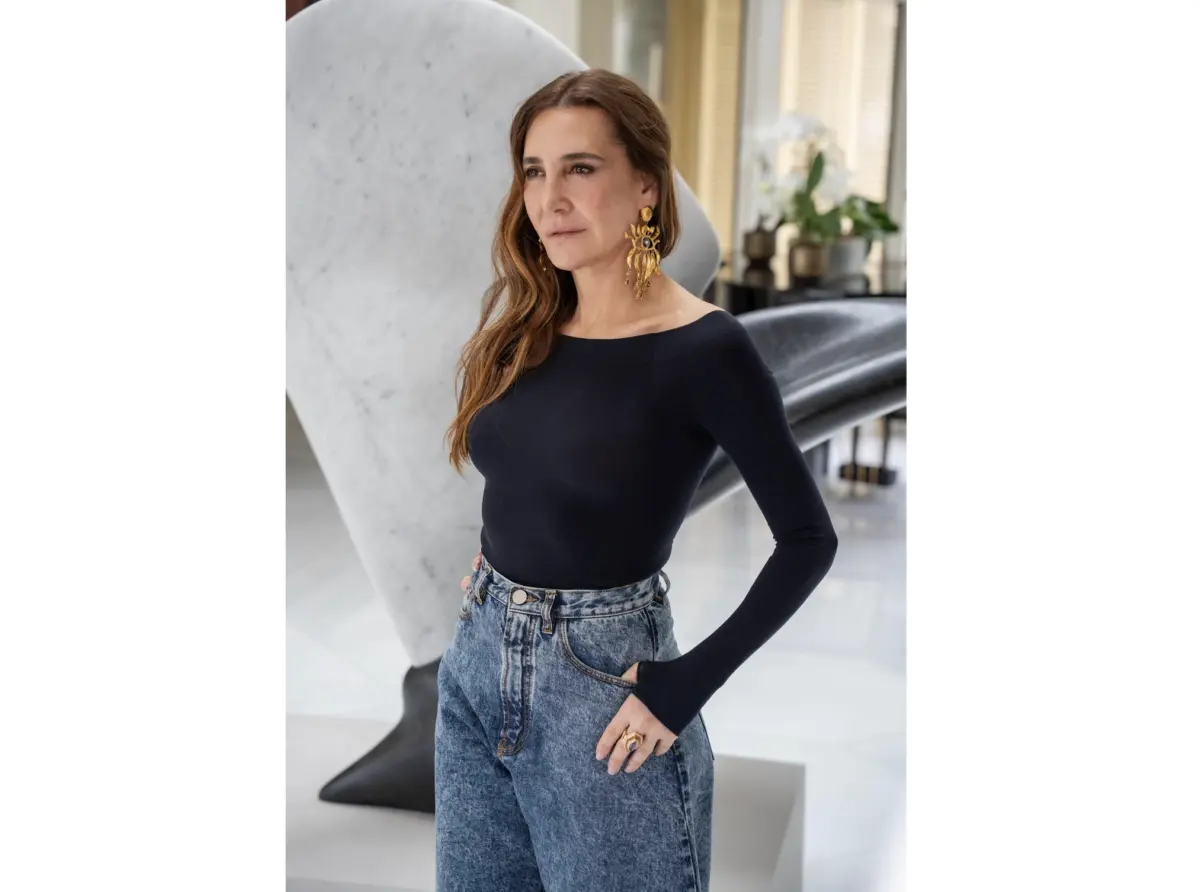
For nearly two decades, Vuslat Doğan Sabancı lived a dual existence that few could sustain. By day, she operated at the apex of Turkish corporate and media life, steering Hürriyet—the nation’s largest and most influential newspaper—as its chief executive. In this high-stakes arena, she championed freedom of expression, gender equality, and human rights, navigating the treacherous waters of a rapidly polarizing political and social landscape.
Yet, by night, after the boardrooms cleared, the executive duties concluded, and her children were put to sleep, Vuslat retreated into a different kind of discipline. Descending into her private studio, she worked with clay, marble, bronze, and raw earth, often sculpting until six in the morning. For nearly twenty years, this clandestine creative life remained entirely unseen. There were no gallery representation talks, no preview exhibitions, and no ambition to court the contemporary art market.
That prolonged incubation period finally broke open in 2022 with her debut exhibition at London’s Pi Artworks. In the years since, Vuslat—who goes professionally by her first name—has experienced a meteoric rise through the global art world. This summer alone, her work spanned continents, featuring a room-sized installation titled House of Silence at New York’s Conductor art fair and dozens of clay sculptures installed within a medieval former Greek Orthodox church in Rhodes for the Biennale of Contemporary Keramics. Accompanying these institutional milestones is the release of her first monograph, May We Meet in the Silence of Our Souls, published by DISTANZ and the University of Chicago Press.
Read Also
To the casual observer, her rapid ascension might look like the privileged pivot of a high-society newcomer. However, a deeper examination reveals an artist whose foundational practice predates her public entry into the art world by two decades. As British art critic Andrew Graham-Dixon observed in her monograph, Vuslat is a paradox: "a novice and an old hand rolled into one."
Detailed Chronology: Two Decades in the Shadows
The trajectory of Vuslat’s artistic development defies standard art-world narratives, which typically involve MFA programs, grueling years of portfolio reviews, and a slow climb through project spaces and group shows.
Phase I: The Nocturnal Studio (The 2000s–2020)
Long before the art market became aware of her sculptural output, Vuslat was quietly building a rigorous, private studio practice. Born into one of Turkey’s most prominent publishing and industrial families, her professional obligations at Hürriyet demanded relentless public visibility, political acumen, and emotional endurance.
To counterbalance the hyper-connected, metrics-driven pressure of modern journalism, Vuslat turned inward. Working entirely in private, she experimented with materials ranging from traditional marble and bronze to unconventional mediums like felt and electroplated plants. She drew monumental works using pigments gathered directly from the earth of the locations where she traveled.

Crucially, this work was not made for public consumption. In an era when even hobbyist artists immediately publish their processes on social media, Vuslat maintained total creative isolation. This isolation allowed her to develop a deeply personal iconography centered on texture, form, and, above all, silence.
Phase II: The Public Unveiling (2022–2025)
By the time Vuslat stepped down from her executive roles to dedicate herself fully to creative pursuits, her artistic foundation was already fully formed. In 2022, she staged her debut exhibition at Pi Artworks in London, stunning critics who expected the tentative steps of an amateur, only to encounter the fully realized vision of a mature sculptor.
Over the next three years, her exhibition calendar accelerated dramatically. She mounted major presentations across institutional spaces in Turkey, including the Baksı Museum, Istanbul’s historic Tophane-i Amire, and the Museum of Troy. Her sculptural vocabulary evolved to encompass site-specific, room-sized environments. For Tower of Babel (2025), she incorporated trees harvested directly from the ashes of the devastating Los Angeles wildfires, transforming scarred organic material into towering monuments of ecological and personal trauma.
Phase III: Global Institutional Recognition (2026–Present)
The year 2026 marks a watershed moment for Vuslat, solidifying her transition from a regional breakout artist to an international figure. This summer, her presence was anchored by two major international projects:
- New York (Conductor Art Fair): Collaborating with Tunisian architect Sana Frini, Vuslat unveiled House of Silence, an immersive, room-sized architectural installation designed to strip away the sensory overload of contemporary urban life.
- Rhodes (Biennale of Contemporary Keramics): Participating in the second iteration of the biennial, she installed May We Meet in the Silence of Our Souls inside Our Lady of the Castle—a historic architectural hybrid that previously served as a Greek Orthodox church and later as an Ottoman mosque. Using raw earth, water, and air, her organic clay sculptures lined the threshold, guiding viewers into the sacred space.
Supporting Context & Metrics: The Philosophy of Emanet
To understand Vuslat’s art, one must understand her philosophical framework. Central to her practice is emanet, a traditional Turkish concept that resists neat translation into English.
The Weight of Emanet
In Vuslat’s interpretation, emanet refers to something entrusted to an individual’s temporary care, which they do not truly own. This can manifest as an artifact, a memory, a story, a child, or the natural world itself. The ethical and spiritual obligation under emanet is not to conquer, commodify, or permanently possess, but rather to nurture, preserve, and eventually pass along in a renewed state.
This philosophy directly challenges the prevailing metrics of the modern art market—such as speculative pricing, branding, and permanent ownership. While corporate media rewards the loudest voice and the most rapid engagement metrics, Vuslat’s art demands slowness, humility, and active stewardship.

The Audacity of Silence
"The effect was simple: you shut up and sat in silence," Vuslat noted during a Zoom interview with ARTnews from her studio in Istanbul.
Yet, her conceptualization of silence is far from a passive, romanticized retreat. She describes silence as an active, sometimes uncomfortable crucible. When an individual sits in prolonged quietude, the initial psychological waves are rarely peaceful; instead, they bring forward internal judgment, guilt, and self-criticism.
"If I stay patient," she explained, "clarity emerges—like clear water."
Her choice of materials mirrors this philosophy. Working with clay, stone, bronze, and burnt wood, she allows the natural physical properties of the medium to guide the final form. Her sculptures often avoid rigid geometric perfection, favoring organic contours that echo breath, geological strata, and natural decay.
Official Statements & Critical Reception
The sudden emergence of a prominent corporate executive into the upper echelons of the international art world has naturally sparked curiosity and scrutiny. Institutional curators and critics have closely examined whether her swift institutional embrace—exhibiting at major museums and international fairs within just four years of her public debut—is a byproduct of her social standing or the intrinsic merit of her work.
Art historians and critics, however, point to the internal coherence of her studio output as the definitive answer.
Writing in Vuslat’s monograph, acclaimed critic Andrew Graham-Dixon addressed this tension directly. He noted that while her public timeline suggests an overnight success story, the physical evidence in her studio tells a radically different story. To Graham-Dixon, Vuslat possesses the unjaded, exploratory drive of "a novice" combined with the technical mastery and emotional depth of "an old hand."

Curatorial statements surrounding her recent installations emphasize her ability to bridge historical divisions. At the Biennale of Contemporary Keramics in Rhodes, curators highlighted how her clay forms—resembling what Vuslat describes as "the formless shape of breath"—interact with the layered religious and cultural history of Our Lady of the Castle. By placing fragile, unglazed earthen sculptures inside a contested sacred space, her work invites viewers of all backgrounds to drop their ideological armor and engage in collective reflection.
Future Outlook
As Vuslat looks beyond her 2026 summer exhibitions, her trajectory points toward an increasingly globalized institutional footprint. With her first monograph published jointly by DISTANZ and the University of Chicago Press, her theoretical framework and sculptural catalog have been permanently anchored within academic and critical discourse.
The transition from the executive suite of Hürriyet to the global contemporary art circuit might appear dramatic from the outside, but for Vuslat, it represents a continuous journey. Whether she was advocating for human rights in the pages of a major daily newspaper or molding burnt timber and raw clay in her nocturnal studio, her ultimate vocation has remained unchanged: creating spaces for forgotten voices, fostering deep listening, and honoring the fragile emanet of human consciousness.
As the contemporary art world grapples with burnout, hyper-commercialization, and sensory saturation, Vuslat’s radical insistence on silence, patience, and material stewardship offers a compelling, necessary counterweight. Her dual legacy—as both a builder of public discourse and a sculptor of private quietude—proves that true artistic maturity cannot be rushed, even when its arrival catches the world by surprise.

Comments
Facebook App ID not configured. Please add it in the Customizer.