
Executive Overview
The international cultural sector finds itself at a profound intersection of loss, legal accountability, and historical reckoning. In recent weeks, the global arts community has mourned the passing of towering figures like Puerto Rican visionary Rafael Ferrer while simultaneously confronting systemic vulnerabilities that threaten institutional heritage. From the high-stakes preliminary investigations surrounding the plundered Villena Treasure in Spain to municipal controversies over Holocaust remembrance in Germany, questions of stewardship, ethics, and preservation have taken center stage.
Concurrently, diplomatic channels continue to address the deep scars of 20th-century conflicts through landmark restitutions, such as the repatriation of a looted Alfred Wierusz-Kowalski masterpiece to the National Museum in Warsaw and a reciprocal cultural exchange between Greece and Bulgaria. Yet, even as institutions work to correct historical injustices, internal labor crises—exemplified by high-level resignations at the Eiffel Tower—and legislative battles over the protection of national monuments in the United States underscore the fragile equilibrium governing public trust in cultural governance. This report provides a comprehensive, authoritative examination of these pivotal developments, synthesizing the operational, legal, and sociopolitical forces shaping the contemporary art world.
Detailed Chronology
The Passing of Rafael Ferrer (1933–2024)
The international art world lost a peerless boundary-pusher with the death of Rafael Ferrer at the age of 93, as announced by El Museo del Barrio. Born in Puerto Rico and based for decades in New York, Ferrer’s artistic trajectory was as unorthodox as it was influential. His early professional life began behind a drum kit as a jazz musician, an improvisational ethos that would permanently inform his approach to the visual arts. Following a formative 1954 trip to Paris—where he encountered the philosophies and works of Surrealist writers and artists—Ferrer pivoted definitively toward fine arts.
Read Also
Throughout the 1960s and 1970s, Ferrer became a central figure in the avant-garde, pioneering ephemeral Process Art installations that utilized unconventional materials such as straw, dried leaves, and ice. He frequently deployed everyday objects—ranging from paper bags to calabash gourds and garbage can lids—in hanging, Dada-inspired assemblages that defied traditional categorization. Despite his inclusion in major institutions like the Whitney Museum of American Art, widespread institutional recognition arrived late in his career.
The turning point occurred in 2010 when El Museo del Barrio mounted “Retro/Active: The Work of Rafael Ferrer,” a comprehensive survey spanning five decades. Reviewing the exhibition in The New York Times, critics deemed the retrospective “almost criminally overdue,” noting that Ferrer possessed the rare ability to “figure out how to make art if confined to a nearly empty room.” This belated spotlight catalyzed a succession of major institutional solos, including presentations at Guild Hall in East Hampton (2011), the Lancaster Museum of Art (2012), and the Museum of Contemporary Art, Chicago (2015). By the 1980s, Ferrer returned decisively to painting, producing vibrant “faux-naive” canvases that captured tropical domesticity and figures. A recipient of the prestigious Guggenheim Fellowship (1975) and the Pew Fellowship in the Arts (1993), Ferrer leaves behind a legacy deeply embedded in global museum collections.
The Villena Treasure Legal Proceedings
In Spain, judicial authorities have initiated preliminary proceedings against the mayor of Villena and the director of its municipal museum (MUVI) following the devastating theft of the Villena Treasure—widely regarded as one of Europe’s most significant Bronze Age gold collections. The Association for the Defense of the Rule of Law and the Fight Against Corruption (ADED) filed formal criminal complaints alleging gross negligence of security protocols against both municipal leadership and museum security personnel.
The heist, executed on August 27, targeted a collection comprising 66 invaluable artifacts, including 11 gold bowls and 28 gold bracelets, totaling approximately 10 kilograms (22 pounds) of pure gold. Investigators report that thieves made off with nearly the entire collection, leaving behind only a sparse assortment of silver vessels, a single bracelet, minor ornaments, and one of four historical crowns, which appeared to have been dropped during the perpetrators’ escape. Because the museum operates under municipal jurisdiction, ADED has directly implicated left-leaning Mayor Fulgencio Cerdán and local officials for systemic failures in asset protection, framing the lapse as a direct violation of historical heritage laws. The presiding judge has formally requested that the public prosecutor’s office evaluate whether the case merits proceeding to a full trial.
Restitution and Bilateral Cultural Accords
Efforts to rectify historical art looting gained significant momentum across Europe through both private restitution and state-level diplomacy:
- The National Museum in Warsaw: A private owner voluntarily restituted Alfred Wierusz-Kowalski’s late 19th- to early 20th-century masterwork, Winter – Napoleon’s Retreat from Moscow, to Poland’s National Museum. The painting had been systematically looted by Nazi forces during World War World War II and subsequently displayed in an SS officers’ club before disappearing into private hands for decades.
- Greece and Bulgaria Bilateral Exchange: Athens and Sofia concluded a groundbreaking Memorandum of Understanding designed to heal historical wounds dating back to World War I. Under the accord, Bulgaria will return 48 cultural relics looted from Greece during the conflict. In reciprocity, Greece will transfer the mortal remains of Tsar Samuel of Bulgaria—who reigned from 997 to 1014 and whose remains have long been housed in a Greek museum—back to Bulgarian soil.
Supporting Context & Metrics
Financial and Material Metrics in Review
- Villena Treasure Loss: Approximately 10 kg (22 lbs) of Bronze Age gold artifacts stolen, encompassing 66 total items (including 11 gold bowls and 28 gold bracelets).
- MUNCH Award Endowment: The Sámi art collective Dáddadállu secured the prestigious MUNCH Award, accompanied by a cash prize of NOK 300,000 (approx. $31,270 USD).
- Rafael Ferrer Career Span: A career exceeding six decades, transitioning from jazz percussionist in the 1950s to Process Art pioneer and master painter, recognized formally by the Guggenheim Foundation (1975) and the Pew Fellowships (1993).
Municipal Backlash and Labor Turmoil
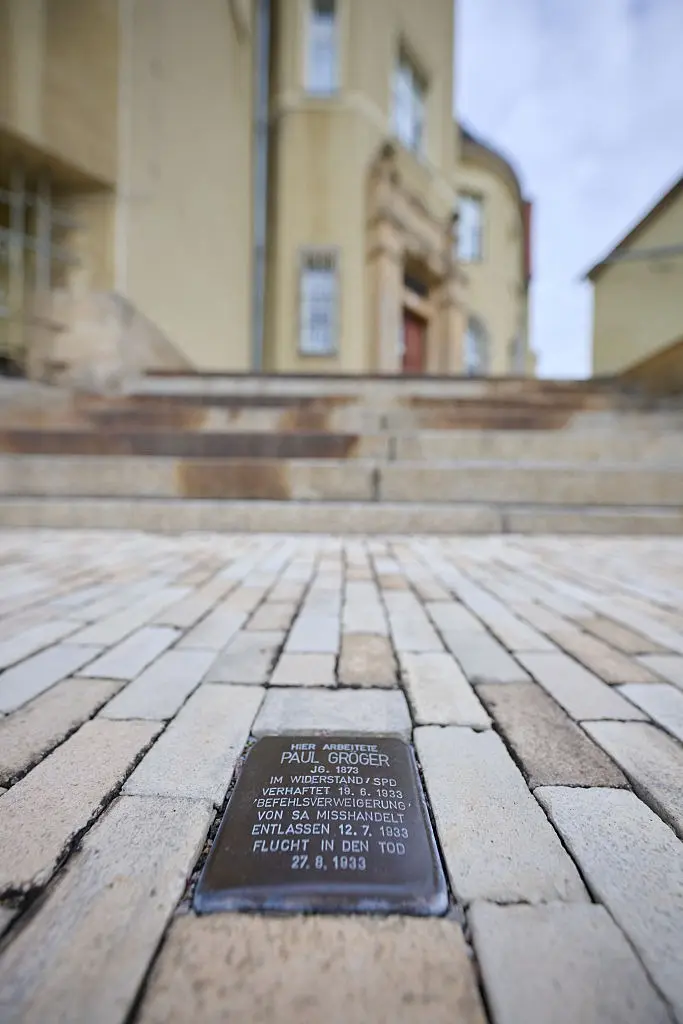
The preservation of historical memory faced a troubling setback in Germany, where the city council of Heidenau voted to discontinue the installation of new Stolpersteine ("stumbling stones"). Conceived by artist Gunter Demnig, these small, engraved brass plaques are embedded in pavements outside the former homes of Holocaust victims, serving as intimate, localized memorials. The council’s decision has drawn sharp rebukes from human rights advocates and international media outlets.
Meanwhile, in Paris, structural leadership turbulence has hit the Eiffel Tower. Patrick Branco Ruivo, the director of the operating company managing the monument, announced his resignation effective at the end of the year. His departure follows an acute labor strike and public relations crisis in September, sparked by management’s decision to temporarily remove female frontline workers from the monument and replace them with male staff to accommodate a visiting religious delegation. The incident triggered severe backlash regarding workplace equity and operational governance at one of the world’s most visited cultural landmarks.
Official Statements
-
El Museo del Barrio (On the passing of Rafael Ferrer):
"Rafael Ferrer was a groundbreaking artist whose singular and influential practice challenged boundaries across multiple mediums and disciplines. His legacy of inventive improvisation and deep conceptual rigor remains a cornerstone of Latin American and American contemporary art."
-
Association for the Defense of the Rule of Law and the Fight Against Corruption (ADED, regarding the Villena Museum):
"The catastrophic loss of the Villena Treasure is not merely a localized robbery; it is a profound institutional failure. Gross negligence in basic security infrastructure constitutes a direct crime against our collective historical heritage, demanding full accountability from municipal leadership."
-
Art Review & MUNCH Award Committee (On Dáddadállu):
"The Sámi art collective Dáddadállu demonstrates an uncompromising commitment to indigenous sovereignty, community-based artistic production, and ecological consciousness that redefines the parameters of contemporary Nordic art."
Future Outlook
As the global cultural sector navigates the remainder of the decade, several critical trajectories are poised to redefine institutional practices:
- Heightened Security Audits for Regional Museums: The Villena Treasure scandal will likely trigger mandatory security compliance reviews across municipal and regional museums throughout Europe. Smaller institutions with invaluable antiquities will face mounting pressure from national heritage bodies to upgrade surveillance and physical protection protocols to prevent opportunistic thefts.
- Expansion of Bi-lateral Restitution Frameworks: The successful negotiation between Greece and Bulgaria establishes a pragmatic precedent for resolving complex, cross-border heritage disputes. By trading wartime spoils for historical mortal remains, these states have opened a diplomatic blueprint that other European nations may adopt to untangle contentious repatriation claims.
- Legislative and Curatorial Vigilance in the U.S.: Political skirmishes over monument preservation—exemplified by legislative standoffs involving figures like Senator Mike Lee and debates surrounding the preservation of mid-century architectural and cultural landmarks—signal an increasingly polarized landscape for American public art governance. Institutions must brace for heightened legislative scrutiny regarding federal support and monument protection.
- Documentary Legacy and Critical Re-evaluation: Projects like Marie Valentine Regan’s forthcoming feature documentary Adnan being and time (slated for broader dissemination following its deep dive into Etel Adnan’s poetic universe) highlight a growing appetite for immersive, biographical examinations of mid-to-late 20th-century masters. These cinematic archival efforts will continue to drive market and scholarly re-evaluations of artists who operated on the margins of mainstream canons during their lifetimes.



Comments
Facebook App ID not configured. Please add it in the Customizer.