
Executive Overview
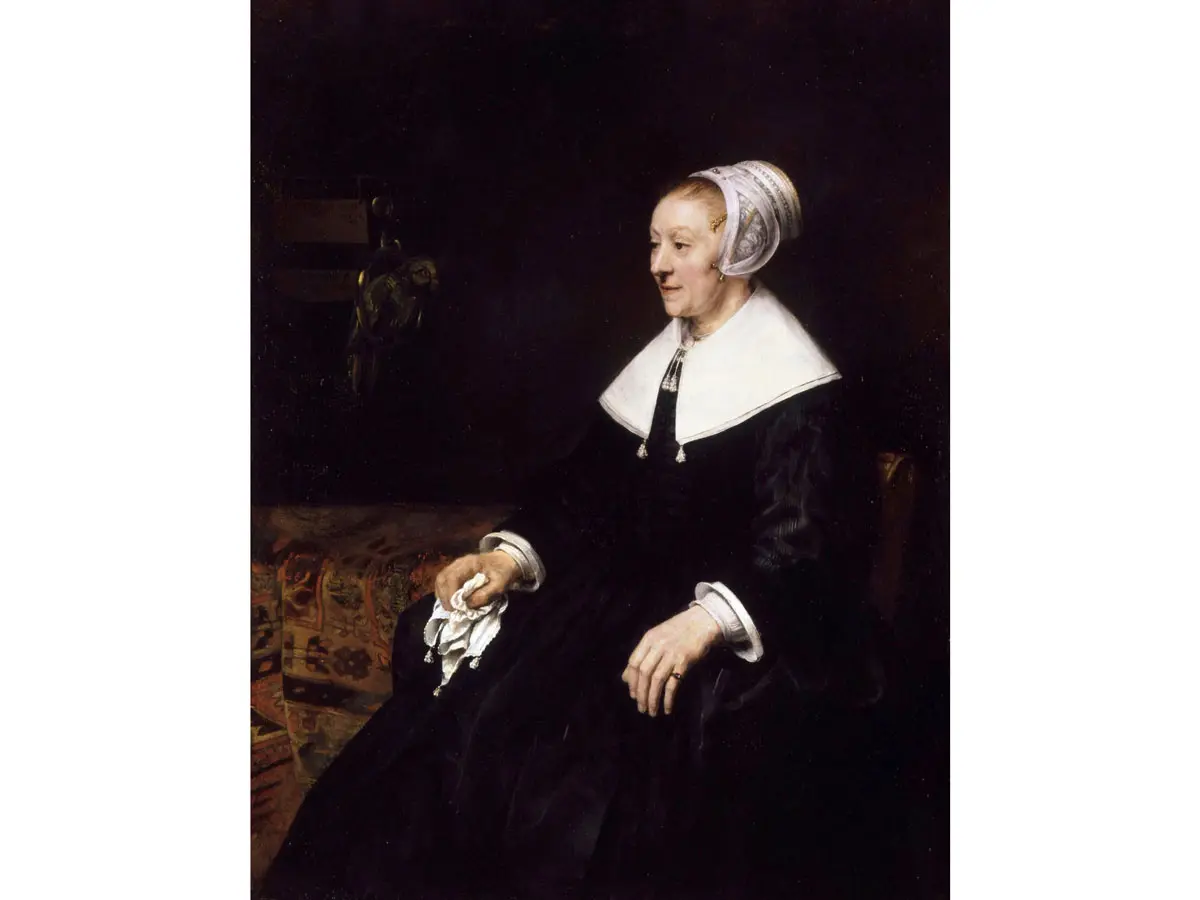
In a dramatic move that underscores the fierce global competition for supreme cultural artifacts, the United Kingdom government has slapped a temporary export ban on one of the most prized seventeenth-century paintings in private hands: Rembrandt van Rijn’s Portrait of Catrina Hooghsaet (1657). Valued at a staggering £71.7 million (approximately $97.2 million USD), this monumental work of Dutch Golden Age portraiture has been a fixture of British cultural life since the mid-eighteenth century.
The emergency intervention, enacted following recommendations from the Reviewing Committee on the Export of Works of Art and Objects of Cultural Interest (RCEWA), is designed to grant British museums, institutions, and philanthropists a critical window of time to raise the capital required to purchase the painting and secure it "for the nation."
Carrying a price tag of £71,696,324.90—plus an additional VAT liability of £754,698.15—this acquisition dwarfs all previous items granted "national treasure" status in the UK. Should British institutions fail to muster the funds before the statutory deadlines expire, this irreplaceable masterpiece could be permanently exported, likely vanishing into a private international collection or an overseas museum.
Read Also
This unfolding cultural drama highlights the delicate balance between private property rights and the preservation of national heritage, shining a spotlight on the shifting geography of the global art market, the soaring valuations of Old Masters, and the institutional race to save history before it slips away.
Detailed Chronology: A Multi-Century Odyssey
From Amsterdam to Kent: The Early Provenance
The subject of the canvas, Catrina Hooghsaet, was a wealthy, independent-minded member of Amsterdam’s seventeenth-century Mennonite community. Renowned for living separately from her husband—a remarkable social stance for a woman of her era—Hooghsaet sat for Rembrandt in 1657 during the final, most introspective phase of his career. She retained ownership of the portrait until her death in 1685, at which point the canvas passed to her third husband, Jan Schildt, who died the following year in 1686.
What followed is a six-decade vacuum in the historical record. The painting’s movements between 1686 and the mid-eighteenth century remain shrouded in mystery. However, by 1752, the portrait had crossed the English Channel and entered the United Kingdom. It was likely acquired around this time by John Fane, the 7th Earl of Westmorland, to grace his ancestral estate, Mereworth House in Kent.
The painting remained within the aristocratic Fane family network for generations until it surfaced at an 1831 estate sale. Over the subsequent decades, the canvas changed hands through major auction houses, appearing at Christie’s in 1846 and again in 1860.
The Penrhyn Era and Modern Market Transactions
Following the 1860 Christie’s sale, the portrait entered the distinguished collection of Colonel the Hon. Edward Douglas-Pennant, later the 1st Baron Penrhyn of Llandegai. The work remained securely anchored within the Penrhyn family collections for well over a century, shielded from the hyper-inflated volatility of the twentieth-century art market.
That quiet existence came to an end in 2015, when the painting was quietly offered in a private sale brokered by Sotheby’s. It changed hands once more in 2025 through a private transaction facilitated by Christie’s—a transaction that ultimately triggered the current regulatory crisis.
Art market insiders and trade publications, including Artnet News, have widely speculated that the seller in the recent 2025 deal is Rosaline Wong, a prominent Hong Kong-based art adviser. Wong has previously orchestrated acquisitions for some of Asia’s most formidable collectors, including billionaire Joseph Lau and property scion Henry Cheng Kar-shun. While Christie’s has maintained strict confidentiality regarding the identities of the buyer and seller, the involvement of international wealth underscores the immense gravity of the UK government’s intervention.
Supporting Context & Metrics: The Anatomy of a Masterpiece
Artistic Significance and Technical Brilliance
Measuring approximately 49 inches by 37 inches, Portrait of Catrina Hooghsaet is a rare example of Rembrandt’s large-scale, three-quarter-length portraiture. The composition captures Hooghsaet seated in a dignified, contemplative pose, staring thoughtfully into the middle distance while delicately clutching a piece of white lace in one hand. Behind her, an intricate oriental rug functions as a luxurious tablecloth—a hallmark of affluent Dutch domesticity during the period.
Andrew Hochhauser, chair of the committee that recommended the export ban, emphasized the technical and psychological mastery of the piece:
"Painted in the final phase of his career, Rembrandt’s portrait of Catrina Hooghsaet ranks amongst his finest achievements. It belongs to a rare group of large-scale three-quarter-length portraits and stands out for its delicacy, refinement, and exceptional finish. Rembrandt transforms her relatively ordinary features into a striking image of beauty through his sensitivity, honesty and profound psychological insight."
Valuation Controversies and Market Realities
The official valuation of £71.7 million ($97.2 million USD) makes the painting the most expensive object ever designated as a national treasure in the United Kingdom. Yet, even at this astronomical figure, some market experts argue that the valuation is conservative.
Renowned Old Master dealer Otto Naumann has publicly estimated that Portrait of Catrina Hooghsaet could command upwards of $150 million on the open market—more than double the government-assessed value. This valuation disparity reflects both the extreme rarity of late-period Rembrandt canvases available for private acquisition and the insatiable demand from ultra-high-net-worth collectors worldwide.
To meet the legal threshold for an export ban, the RCEWA evaluated the painting against the strict "Waverley criteria," established in 1952:
- Close connection with British history and national life: The painting has resided in the UK since at least 1752, shaping British aesthetic sensibilities and public museum collections for nearly three centuries.
- Aesthetic importance: The canvas is recognized as an apex of seventeenth-century European portraiture.
- Scholarly significance: The work is deemed vital for the continued study of Rembrandt’s artistic evolution, workshop practices, and the history of art collecting in Britain.
Official Statements and Institutional Perspectives
The announcement of the temporary export ban has elicited strong reactions from cultural leaders, government officials, and preservation advocates across the United Kingdom.
Ruth Mackenzie, the recently appointed UK Arts Minister, emphasized the cultural imperative of retaining the painting:
“The Portrait of Catrina Hooghsaet has been part of the UK’s cultural life for centuries. The scale, beauty and history of this masterpiece make it a priority for cultural partners, funders, philanthropists, and lovers of Rembrandt to help this masterpiece keep its historical place in the UK.”
Echoing these sentiments, RCEWA Chair Andrew Hochhauser warned against the complacency of losing such foundational works to foreign buyers:
“This is a painting of outstanding aesthetic importance, of outstanding significance to our cultural history. It is also of outstanding significance to the study of the history of portraiture, the oeuvre of Rembrandt and the history of collecting his work in Britain. This enormously important painting should be saved for the nation and kept on public display in this country.”
Future Outlook: The Race Against the Calendar
The Statutory Timeline
The temporary export deferral is legally structured to give British institutions a fighting chance, though the clock is ticking loudly:
- Phase 1 (Initial Deferral): The export ban runs through December 26 (inclusive). During this initial period, no export license can be granted.
- Phase 2 (Negotiation Window): Following the expiration of the initial ban, the current owners are legally obligated to grant a 15-business-day window to accept formal purchase offers matching the recommended price of £71,696,324.90 (plus VAT of £754,698.15).
- Phase 3 (Extended Deferral): If a qualified British institution—such as the National Gallery, the National Portrait Gallery, or a major regional museum—enters into an option agreement during this window, a second deferral period lasting an additional nine months can be triggered to allow for formal fundraising campaigns, philanthropic solicitation, and grants from bodies like the National Heritage Memorial Fund (NHMF) and the Art Fund.
Precedent and Precedents of Success
The UK government has increasingly utilized temporary export bans to safeguard generational treasures from permanent expatriation. A notable precedent occurred in 2022 with Sir Joshua Reynolds’s masterpiece, Portrait of Omai (Mai) (c. 1776). Faced with a steep export ban, London’s National Gallery joined forces with the Getty Museum in Los Angeles to jointly acquire the portrait for £50 million ($61.9 million USD) in 2023.
While joint international acquisitions allow institutions to share financial burdens, the sheer scale of the Rembrandt price tag—nearly £72 million before taxes—makes a purely domestic rescue mission exceptionally challenging, particularly in an era of constrained public arts funding.
Conclusion: A Defining Test for British Cultural Policy
As the December 26 deadline approaches, the fate of Portrait of Catrina Hooghsaet hangs in the balance. Whether British galleries, private philanthropists, and public funding bodies can coordinate a historic fundraising campaign of this magnitude remains to be seen.
If successful, the acquisition will secure a crowning jewel of the Dutch Golden Age for generations of future museumgoers. If unsuccessful, Rembrandt’s haunting, psychological masterpiece will pack its bags, crossing borders to a private vault or foreign gallery, and leaving a permanent void in the tapestry of British art history.


Comments
Facebook App ID not configured. Please add it in the Customizer.