
Executive Overview
In an era where red carpets and festival stages are increasingly leveraged as platforms for sociopolitical commentary, global entertainment icons are finding powerful ways to make statements without uttering a single word. The intersection of haute couture, red-carpet styling, and geopolitical solidarity has given rise to a profound cultural movement: the elevation of Palestinian craftsmanship, heritage, and identity onto the world’s most visible stages.
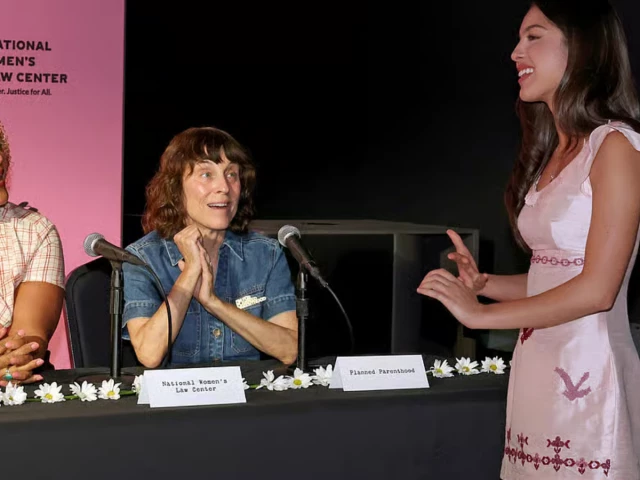
Grammy-winning American singer Olivia Rodrigo recently became the latest global superstar to champion this paradigm. Ahead of her inaugural Daisy Chain Fields festival, Rodrigo stepped out in a custom-made, hand-embroidered pale pink minidress crafted by the Ramallah-based Palestinian fashion label Nöl Collective. Adorned with traditional tatreez embroidery—a centuries-old needlecraft deeply rooted in Palestinian history—the garment served as both an aesthetic centerpiece and a quiet political and cultural nod.
Rodrigo’s choice places her alongside a growing cadre of high-profile public figures who have transformed fashion into a medium for solidarity amid the ongoing humanitarian crisis in Gaza. From Bella Hadid’s historic appearance in a vintage keffiyeh-inspired dress at the Cannes Film Festival to Cate Blanchett’s color-blocked statement, Saja Kilani’s striking thobe-inspired Golden Globes gown, and the ubiquitous Artists4Ceasefire red carpet pins, the global entertainment industry is witnessing a paradigm shift. Fashion is no longer merely decorative; it is a canvas for bearing witness, preserving endangered cultural heritage, and demanding global accountability.
Read Also
Detailed Chronology of Recent High-Fashion Statements
The conscious integration of Palestinian motifs, textiles, and political symbolism into elite fashion spaces has accelerated significantly over recent years. Below is a detailed chronological mapping of the watershed moments that have defined this movement.
1. The Genesis of the Movement: Early Red Carpet Advocacy and Pins (Late 2023 – Early 2024)
As the humanitarian crisis in Gaza intensified in late 2023, artists and public figures sought immediate ways to voice calls for peace and humanitarian aid. By the time the 2024 award season arrived, these sentiments crystallized into visible actions.
- The Academy Awards (March 2024): A coalition of prominent Hollywood figures—including Grammy-winner Billie Eilish, her brother Finneas, Academy Award nominees Mark Ruffalo and Ramy Youssef, and acclaimed filmmaker Ava DuVernay—arrived at the Oscars wearing red enamel pins emblazoned with an orange hand and heart. Distributed by the Artists4Ceasefire collective, these pins immediately signaled a unified demand for an immediate, permanent ceasefire, the safe return of hostages, and the unimpeded delivery of humanitarian aid to Gaza.
2. Bella Hadid’s Keffiyeh Masterclass at Cannes (May 2024)
Perhaps no single celebrity has championed Palestinian heritage with as much consistency and global visibility as Palestinian-Dutch supermodel Bella Hadid.
- The 77th Cannes Film Festival: Hadid turned the Croisette into a site of profound cultural expression when she wore a vintage red-and-white dress fashioned entirely from keffiyeh fabric. Originally designed in 2001 by the renowned design duo Michael and Hushi, the dress was re-contextualized by Hadid to honor Palestinian resilience and identity. The distinct chequered weave of the keffiyeh—historically a peasant headscarf that evolved into a global symbol of anti-colonial resistance and solidarity—became the focal point of international fashion media coverage, cementing the garment’s status in modern style history.
3. Cate Blanchett’s Subtly Code-Framed Statement at Cannes (May 2024)
Concurrently at the 2024 Cannes Film Festival, decorated Australian actress and UNHCR Goodwill Ambassador Cate Blanchett sparked intense global media analysis with her red-carpet attire.
- The Visual Reference: Blanchett walked the red carpet in a sleek, custom-tailored black gown featuring an emerald-green interior panel and a pale pink section at the back. When viewed against the stark backdrop of the festival’s famous crimson carpet, the interplay of black, green, white (her skin/dress contrast), and red generated a striking visual matrix that social media users and political commentators widely interpreted as a deliberate nod to the pan-Arab colors of the Palestinian flag. While Blanchett maintained stylistic ambiguity and did not issue a formal political declaration regarding the dress, the moment underscored how public figures’ long-standing humanitarian associations—such as her work with displaced populations—shape the public interpretation of their sartorial choices.
4. Saja Kilani and the Return of the Thobe at the Golden Globes (January 2026)
As the movement matured from general symbolism into specific heritage curation, Palestinian actors began explicitly utilizing traditional attire for major Hollywood ceremonies.
- The Golden Globes: Palestinian-Jordanian-Canadian actress Saja Kilani delivered one of the most direct and poignant homages to Palestinian textile arts in recent memory. Best known for her work in the harrowing project The Voice of Hind Rajab—a film centering on the tragic death of a young girl in Gaza—Kilani wore a bespoke black gown created by Jordanian designer Reema Dahbour. The dress masterfully modernized the traditional Palestinian thobe, incorporating intricate, hand-stitched tatreez embroidery around the neckline. The garment bridged ancestral history with contemporary haute couture, allowing Kilani to carry the narrative of Palestinian endurance onto one of Hollywood’s most-watched stages.
5. Olivia Rodrigo’s Tatreez Debut at Daisy Chain Fields (Late 2024 / 2025 Cycle)
Most recently, pop superstar Olivia Rodrigo brought Palestinian artistry to the alternative music festival circuit.
- The Daisy Chain Fields Premiere: During press events for her inaugural women-led festival at Great Park in Irvine, California, Rodrigo donned a custom pale pink minidress crafted by Nöl Collective. Featuring embroidered motifs of birds and interconnected daisy chains, the dress was paired with vintage Gucci Mary Jane heels and a minimalist silver pendant. By choosing a garment rooted in cooperative Palestinian craftsmanship, Rodrigo bridged mainstream pop culture with grassroots artisan preservation.
Supporting Context & Metrics: The Mechanics of Palestinian Fashion Advocacy
To fully understand the weight of these fashion statements, one must examine the socio-economic and historical fabric behind the garments. The revival of Palestinian textiles on global red carpets is not merely an aesthetic trend; it is an act of economic preservation and cultural reclamation against systemic erasure.
The Art and Economics of Tatreez
Tatreez is a traditional form of cross-stitch embroidery practiced by Palestinian women for generations. Historically, a woman’s thobe (dress) served as a visual passport: the specific patterns, color palettes, and stitching densities communicated her village of origin, marital status, and social standing.
In the wake of displacement and occupation, preserving tatreez has evolved into an act of cultural resistance. Organizations such as Nöl Collective, founded by Palestinian-American designer Yasmeen Mjalli in Ramallah, function as vital economic engines. By partnering directly with family-run sewing workshops, independent artisan studios, and women-led cooperatives across the West Bank, these labels ensure that traditional techniques—including handweaving, natural plant dyeing, and intricate embroidery—survive while providing sustainable, dignified livelihoods to local artisans whose communities face severe economic hardships.
The Keffiyeh: From Agricultural Utility to Global Symbol
The keffiyeh, worn prominently by Bella Hadid at Cannes, carries its own deep historical resonance. Originally utilized by rural farmers in Palestine to protect against the sun, dust, and wind, the black-and-white (and later red-and-white) checkered scarf became a unifying symbol during the 1936–1939 Arab revolt against British colonial rule. Over the decades, it evolved into an international emblem of solidarity with the Palestinian liberation movement.
When high-fashion houses and supermodels reconfigure the keffiyeh into couture silhouettes, they disrupt the historical marginalization of Palestinian culture, projecting an enduring symbol of identity into elite, Eurocentric fashion spaces that have historically sanitized or ignored non-Western political histories.
Official Statements and Industry Reactions
The intersection of celebrity advocacy and geopolitical fashion has generated varied responses from cultural institutions, designers, industry insiders, and the public.
The Designers’ Perspective
Yasmeen Mjalli, founder of Nöl Collective, has frequently spoken about the importance of reclaiming the narrative around Palestinian goods. In past interviews regarding her work with local artisans, Mjalli emphasized that fashion is inherently political because it concerns bodily autonomy, labor rights, and cultural memory:
"When we put traditional craftsmanship into the hands of global consumers via contemporary platforms, we are asserting that Palestinian culture is not a relic of the past destined for a museum archive, but a living, breathing, evolving art form worthy of high-fashion validation."
Similarly, designers like Reema Dahbour have noted that integrating heritage pieces like the thobe into international red-carpet events allows marginalized cultures to set their own terms of representation, shifting the gaze from passive victimhood to active, sophisticated cultural production.
Public and Media Reception
Reactions from the global press and digital audiences have highlighted a profound generational divide in how red-carpet statements are received. While traditional mainstream fashion outlets have occasionally navigated the tightrope of covering political fashion with caution, social media platforms—particularly TikTok, Instagram, and X (formerly Twitter)—have amplified these moments instantly.
For younger demographics, acts like Olivia Rodrigo wearing Nöl Collective or Saja Kilani donning a tatreez-embellished thobe serve as educational gateways. Hashtags associated with Palestinian embroidery and designers spike exponentially following these red-carpet appearances, driving direct consumer traffic to cooperatives and independent artisans in the West Bank and diaspora.
Conversely, some critics and political watchdog groups have scrutinized the corporate nature of red-carpet activism, questioning whether high-fashion statements can truly effect material change or if they risk reducing a complex humanitarian crisis to a transient aesthetic trend. However, proponents argue that the tangible economic support funneled back to artisan cooperatives through custom commissions provides an undeniable, practical benefit to communities under duress.
Future Outlook: The Evolution of Conscientious Red-Carpet Culture
As the entertainment industry moves further into an era of heightened social consciousness, the phenomenon of utilizing high fashion as a vehicle for political and cultural solidarity is unlikely to fade. Several key trajectories are emerging for the future of conscientious styling:
- Rise of the Ethical Cooperative Partnership: Celebrities and their styling teams are increasingly bypassing mass-market luxury conglomerates in favor of independent, artisan-led collectives from conflict zones and marginalized regions. This shift promises to democratize red-carpet credits, turning styling into a form of economic philanthropy.
- Institutional Pushback and Adaptation: As major awards shows and film festivals grapple with the politics of visibility, stylists and publicists are becoming more intentional. The strategy is evolving from subtle, deniable visual cues (such as color-blocking) toward explicit, unapologetic heritage collaborations that celebrate specific regional craftsmanship.
- The Digital Archive of Resistance: Social media has ensured that red-carpet fashion statements outlive the fleeting moments of a flashbulb. Platforms now allow audiences to trace a garment from an artisan’s workshop in Ramallah or Amman directly to a festival stage in California or the south of France, fostering a direct line of digital solidarity and cultural literacy.
Ultimately, whether through Olivia Rodrigo’s pink tatreez minidress, Bella Hadid’s keffiyeh gown, Saja Kilani’s Golden Globes tribute, or the quiet defiance of an Artists4Ceasefire lapel pin, the modern red carpet has become a battleground for cultural memory. By threading heritage into high fashion, global stars are ensuring that the stories, struggles, and artistic triumphs of Palestine remain impossible to ignore on the world stage.





Comments
Facebook App ID not configured. Please add it in the Customizer.