In contemporary literature, few subjects challenge a writer quite as intensely as the convergence of familial trauma, mental illness, and the quiet, agonizing helplessness of parenthood. Award-winning poet Michael Broek confronts this raw intersection head-on in his powerful piece, "Stem," which has been officially selected as the Poem of the Week for August 24, 2026.
Broek, celebrated for his deft navigation of human vulnerability across works like Refuge/es—winner of the prestigious Kinereth Gensler Award—and chapbooks such as The Logic of Yoo, The Amputation Artist, and The Window Light, brings a devastatingly honest lens to the modern domestic landscape. In "Stem," the poet avoids sentimental platitudes, opting instead for a visceral exploration of a father confronting his son’s self-harm, addiction, and emotional withdrawal.
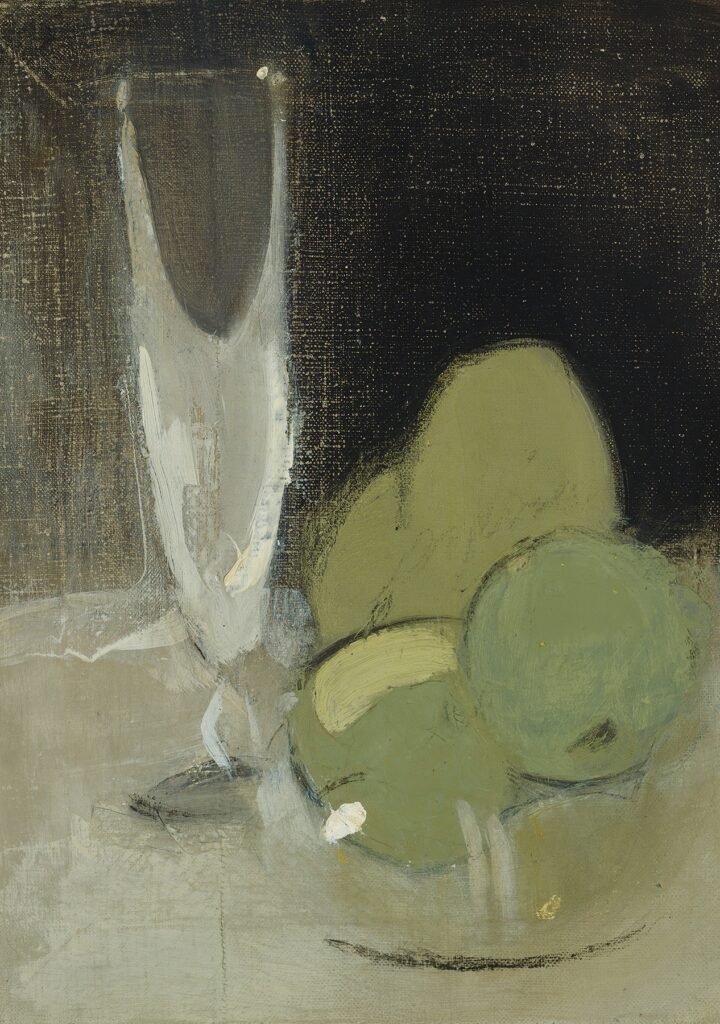
Set against the muted, indifferent backdrop of the gray Navesink River—and visually accompanied by Helene Schjerfbeck’s 1934 modernist painting Green Apples And Champagne Glass—the poem serves as a masterclass in modern elegiac verse. Through careful structural pacing, stark imagery, and literary allusions ranging from Samuel Beckett to the quiet violence of everyday household debris, "Stem" challenges readers to reevaluate the boundaries of love, despair, and endurance. This review offers an in-depth examination of the poem, its literary lineage, the author’s creative motivations, and its resonance within contemporary poetic discourse.
Detailed Chronology and Literary Context of the Release
The release of "Stem" on August 24, 2026, marks another significant milestone in Michael Broek’s prolific literary trajectory. To understand the weight of this poem, one must trace the developmental arc of Broek’s career—a trajectory defined by prestigious fellowships, critical acclaim, and a relentless interrogation of personal and collective displacement.
The Evolution of Broek’s Poetic Voice
Broek’s artistic foundations were forged through rigorous institutional and creative engagements. His credentials include fellowships at the prestigious MacDowell Colony and the Marble House Project, a competitive scholarship to the Bread Loaf Writers Conference, and three separate grants from the New Jersey State Council on the Arts. These accolades reflect an artist deeply embedded in the American literary establishment, yet uniquely attuned to marginalized or fracturing human experiences.
His debut full-length collection, Refuge/es, published by Alice James Books, established his reputation for tackling large-scale geopolitical and existential displacement. However, his subsequent chapbooks—The Logic of Yoo (Beloit Poetry Journal), The Amputation Artist (ELJ Publications), and The Window Light—signaled a distinct pivot inward. Broek began increasingly to train his poetic eye on domestic spaces, examining how macro-level societal fractures manifest inside the fragile architecture of the home.
The Genesis of "Stem"
The selection of "Stem" as Poem of the Week crowns a sustained creative period during which Broek has focused heavily on the mechanics of mental illness within families. The poem’s title itself serves as a dual anchor. While visually and physically evoking the fragile stem of a champagne glass—borrowed from the thematic resonance of Helene Schjerfbeck’s accompanying 1934 artwork—the title’s profound conceptual roots lie in theatrical history.
In an illuminating author’s note, Broek reveals that the title and thematic undercurrents were directly inspired by Samuel Beckett’s seminal play, Krapp’s Last Tape. In Beckett’s work, the protagonist listens to audio recordings of his younger self, realizing that his lifetime of relentless ambition has culminated in isolation and regret. Krapp clings to a single, poignant memory of drifting in a small boat with a past lover:
"We drifted in among the flags and stuck. The way they went down, sighing, before the stem! […] We lay there without moving. But under us all moved, and moved us, gently, up and down, and from side to side."
By channeling Beckett, Broek draws a direct line between Krapp’s realization of a wasted life and the modern parent’s realization of an unraveling familial bond. The poem captures both the absolute insularity of human suffering and the desperate, unavoidable necessity of intimacy.
Supporting Context, Textual Analysis, and Metrics
To fully appreciate the architectural brilliance of "Stem," one must analyze its text, stanza by stanza, examining how Broek constructs an emotional landscape of dread, exhaustion, and enduring awe.
Text of the Poem
Stem
There must be a name
for the trauma of walking
into my son’s bedroom
when shirtless he rises from sleep
and the cuts on his arms
his shoulders
resemble war wounds
or the red gashes
of a lash.
Maybe it’s just another name for tired—
stealing his sister’s cash & stash.
Endless walks
to the therapist’s door & him saying
no—not today. Maybe
tomorrow there’ll be a new argument
knowing it’s not—
just more dishes caked with waste
There must be a name
for giving up while also
grasping. This is not some glass
I’d thought I’d hold—
its thin stem, mouth opened
upward like a gull’s beak
swallowing everything, even dark.
Yet, I have some awe
for the scars—the marks some love
leaves when it fails. Still, I’m here
and I’d kiss that skin
though mostly
he’d like me to disappear. That’s okay.
Gulls refuse reason
and fly above the millionaire’s yacht
and fly above the rusted dredge
dawdling in the gray Navesink
not caring that one is a lie—
the other a hurt.
Deep-Dive Textual Analysis
1. The Shock of the Domestic (Stanza 1)
The poem opens with a stark, declarative weariness: "There must be a name / for the trauma of walking / into my son’s bedroom…" Broek immediately grounds the reader in a space that should be safe—a child’s bedroom—and turns it into a theater of quiet horror. The visual of the son rising from sleep shirtless exposes the raw reality of self-harm. By comparing the self-inflicted cuts on his arms and shoulders to "war wounds / or the red gashes / of a lash," Broek elevates domestic pain to historical and epic proportions, while acknowledging the agonizing paradox of a child waging war against his own body.
2. The Exhaustion of Routine (Stanza 2)
Moving away from grand metaphors, the second stanza plummets into the mundane degradation of active addiction and mental illness. It is not just about grand tragedies; it is about "stealing his sister’s cash & stash," missed therapy appointments, and the hollow cycle of tomorrow’s arguments. The stanza concludes with a brilliant pivot to the domestic mundane: "just more dishes caked with waste." This line brilliantly encapsulates the unglamorous, grinding exhaustion of caregiving—where emotional crises are punctuated by the endless chore of cleaning up physical debris.
3. The Fragility of the Vessel (Stanza 3)
The central metaphor of the poem arrives in the third stanza, bridging the title with the visual art that accompanies the piece. Broek writes of "giving up while also / grasping." The father holds a vessel he never intended to inherit: "its thin stem, mouth opened / upward like a gull’s beak / swallowing everything, even dark." This striking image captures the bottomless appetite of mental illness—a gaping maw that consumes light, hope, and reason, leaving the caregiver clutching a dangerously fragile stem that could snap at any moment.
4. Unconditional Acceptance and Rejection (Stanza 4)
Despite the pain, the fourth stanza introduces a complex emotional register: awe. Broek writes, "Yet, I have some awe / for the scars—the marks some love / leaves when it fails." This is a profound meditation on the residue of affection. The father remains steadfast, willing to kiss the wounded skin even though he knows "mostly / he’d like me to disappear. That’s okay." This final, resigned acceptance breaks the reader’s heart, stripping parental love of its ego and leaving only unconditional endurance.
5. The Indifference of Nature (Stanza 5)
The poem closes by panning outward to the natural world. Gulls "refuse reason" as they fly impartially over the wealth of a millionaire’s yacht and the decay of a "rusted dredge / dawdling in the gray Navesink." Nature does not moralize or differentiate; it simply exists. By noting that the gulls do not care "that one is a lie— / the other a hurt," Broek places human suffering within a vast, indifferent universe, suggesting that while our pains are monumental to us, the world continues its indifferent, rhythmic motion.
Official Statements and Author Insights
In discussing the conceptual framework of "Stem," Michael Broek has emphasized the urgent necessity of bringing mental health struggles out of the shadows of domestic shame and into the light of poetic inquiry.
"When we speak of mental illness in families, we often focus on the clinical definitions or the institutional failures," Broek noted in reflections surrounding his recent body of work. "But the true epicenter of the crisis is often found in the kitchen, in the hallway, in the terrifying silence outside a closed bedroom door. Poetry gives us a vocabulary for the things that clinical language flattens out—the specific texture of a father’s exhaustion, the strange beauty and terror of a scar, and the Beckettian realization that we are all drifting in boats of our own, trying to keep from sinking."
Critics and literary scholars have lauded Broek’s ability to weave classical theatrical allusions—such as Beckett’s Krapp’s Last Tape—with stark, contemporary realism. The integration of Helene Schjerfbeck’s modernist painting Green Apples And Champagne Glass (1934) further enriches the poem’s thematic dialogue, linking the fragility of the glassware in Schjerfbeck’s still life to the precarious emotional equilibrium of the modern family unit.
Future Outlook and Broek’s Ongoing Literary Impact
The selection of "Stem" as Poem of the Week by The Missouri Review solidifies Michael Broek’s standing as one of the most vital and empathetic voices in contemporary American poetry. As readers and critics continue to dissect the layers of "Stem," its resonance extends far beyond the page, speaking directly to the millions of families navigating the invisible wars of mental illness and addiction.
Looking forward, Broek’s exploration of domestic trauma and existential endurance points toward a new collection that promises to redefine how contemporary verse addresses the complexities of modern parenthood. In a literary culture that occasionally prioritizes abstraction over emotional truth, "Stem" stands as a towering reminder of poetry’s highest calling: to bear witness to human suffering, to name the unnamable, and to extend a hand of radical, unyielding empathy into the dark.





Comments
Facebook App ID not configured. Please add it in the Customizer.