
Executive Overview
In a political pivot that has sent ripples through the international art and heritage communities, UK Prime Minister Andy Burnham—who assumed office in July—has officially reversed his long-standing position on one of the world’s most contentious cultural property disputes: the restitution of the Parthenon Marbles. For over two decades, Burnham was an outspoken advocate for the return of the 5th-century BCE sculptures to Greece, repeatedly calling for their unconditional repatriation to Athens. However, in a recent interview with the Financial Times, the newly installed Prime Minister decisively distanced himself from his prior activism, framing the issue as an internal matter for the British Museum while championing a pivot toward broader "British cultural diplomacy."
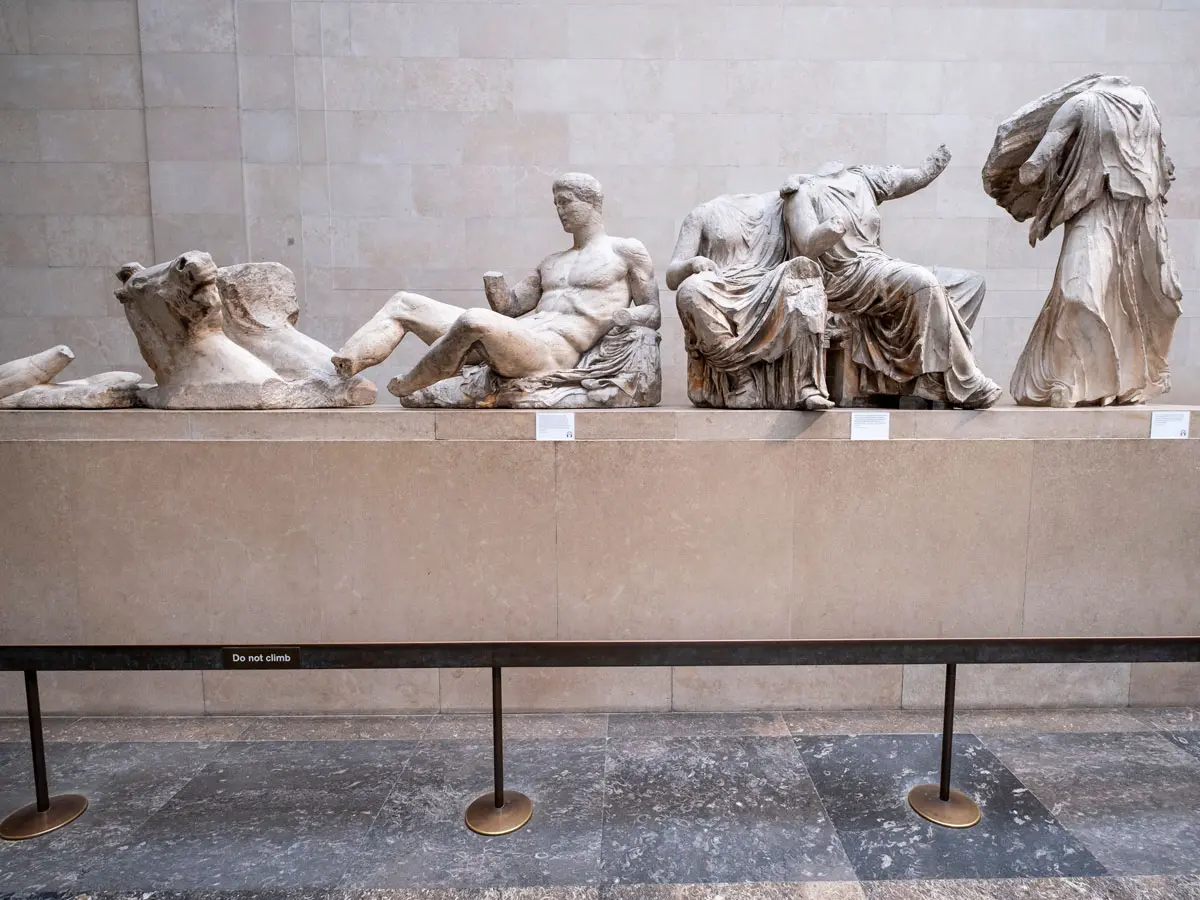
This high-profile reversal comes at a time of renewed global scrutiny regarding colonial-era acquisitions, museum ethics, and international cultural restitution. The Parthenon Marbles—comprising roughly half of the surviving sculptural decoration of the Parthenon on the Athenian Acropolis—have been housed in the British Museum since the early 19th century. While successive Greek governments have waged a decades-long diplomatic campaign for their permanent return, successive British administrations and the leadership of the British Museum have maintained a steadfast defense of the collection’s London domicile.
Burnham’s shift from an uncompromising proponent of restitution to a passive observer highlights the complex interplay between domestic political ideology, international relations, and statutory heritage law in the United Kingdom. This in-depth report explores the evolution of Burnham’s political trajectory, the intricate historical provenance of the Marbles, the legal and institutional barriers governing the British Museum, and the broader implications this policy shift holds for the future of global cultural diplomacy.
Read Also
Detailed Chronology: From Radical Activism to Realpolitik
To fully understand the gravity of Prime Minister Andy Burnham’s recent policy pivot, one must trace the trajectory of his public statements over the past twenty-two years. His engagement with the Parthenon Marbles debate was not merely a passing remark; it was a consistent feature of his political identity as a champion of progressive causes within British politics.
The Early Advocacy (2002–2023)
As early as 2002, emerging political figures like Burnham began facing questions regarding Britain’s colonial legacy and the rightful home of contested antiquities. During his early years in national prominence, Burnham expressed clear, unvarnished support for the Greek government’s position: that the sculptures rightfully belonged in Athens, reunited with their physical context at the foot of the Acropolis.
This stance was not abandoned as he climbed the ministerial ranks. As recently as 2023, Burnham reaffirmed his position in public forums, doubling down on the premise that the removal and retention of the sculptures constituted a historical injustice that required remediation. Crucially, during his 2023 statements, Burnham emphasized that the return of the Marbles should occur with "no strings attached"—explicitly rejecting proposals for long-term loans or reciprocal artifact exchanges that have frequently been floated as compromise solutions by cultural bureaucrats. For advocates of restitution, Burnham was viewed as a sympathetic voice within the British political establishment—someone who understood that moral imperatives should supersede bureaucratic inertia.
The July Premiership and the Financial Times Interview
Upon taking office as Prime Minister in July, observers within the heritage sector wondered how Burnham’s long-held personal convictions would translate into state policy. Those questions were answered during an interview with the Financial Times last month, when the paper directly pressed him on his current stance regarding the Parthenon Marbles.
Diverging sharply from his rhetoric of 2002 and 2023, Burnham offered a measured, hands-off assessment:
"Ultimately it’s an issue for the British Museum, isn’t it? Legally that’s where that issue rests, but I’m all in favour of using British cultural diplomacy. That’s something that I’m hugely in favour of."
This statement represents a profound ideological retreat. By shifting the locus of responsibility entirely onto the trustees of the British Museum, Burnham effectively washed his hands of executive intervention. Furthermore, by invoking "British cultural diplomacy," he signaled a preference for utilizing the disputed artifacts as instruments of soft power and international negotiation rather than yielding to moral claims of ownership.
Historical Context & Provenance: The Journey from Athens to Bloomsbury
To appreciate the intractable nature of the dispute, one must examine the physical reality and historical mechanics of how the sculptures left Greece and arrived in London.
Creation and the Ottoman Era
Dating to the 5th century BCE—the Golden Age of Athens—the sculptures were originally crafted under the supervision of the master sculptor Phidias to adorn the Parthenon, a temple dedicated to the goddess Athena on the Acropolis. Over the subsequent centuries, the monument suffered damage from various conflicts, sieges, and conversions (serving successively as a Christian church and an Islamic mosque).
By the early 19th century, Greece was under the control of the Ottoman Empire, a dominion that had held sway over the region for some 350 years. It was during this geopolitical configuration that Thomas Bruce, 7th Earl of Elgin and British ambassador to the Ottoman Empire, arrived in Athens.
The Elgin Permits and Removal
Between 1801 and 1805, Lord Elgin utilized his diplomatic standing to secure a controversial legal document—known as a firman—from the Ottoman authorities. This permit granted his agents permission to enter the Acropolis, measure the ruins, make casts, and remove architectural fragments and sculptures. Under this authorization, Elgin’s team systematically removed roughly half of the remaining sculptural fabric of the Parthenon.
The physical collection that eventually made its way to British shores is staggering in scale and artistic significance:
- 15 Metopes: Sculpted relief panels depicting mythical battles, such as the Centauromachy.
- 17 Pedimental Figures: Large, fully or partially three-dimensional statues that once filled the triangular gables of the temple.
- 247 Feet of Original Frieze: A continuous low-relief band depicting the Panathenaic procession, showcasing the civic and religious life of ancient Athens.
Legal Vindication and Acquisition
Transported to the UK by sea (with one ship, the Mentor, famously sinking off the coast of Kythera, requiring a costly salvage operation), the marbles were purchased from a financially beleaguered Lord Elgin by the British Parliament in 1816 for £35,000.
Before the purchase was finalized, the British Museum and Parliament subjected Elgin’s actions to intense regulatory scrutiny. A Parliamentary Select Committee was convened in 1816 to investigate the acquisition. The committee concluded that Elgin’s actions were "entirely legal" under the sovereign jurisdiction of the Ottoman authorities who governed Athens at the time. Following this parliamentary blessing, the collection was transferred to the British Museum in Bloomsbury, where it has since been colloquially referred to as the "Elgin Marbles."
Official Statements and Institutional Positions
The debate over the Parthenon Marbles is defined by two entrenched institutional positions: the moral and national crusade waged by the Hellenic Republic, and the statutory defense maintained by the British Museum.
The Greek Claim and the Acropolis Museum
The government of Greece made its first formal, diplomatic request for the restitution of the Parthenon Marbles in 1983, spearheaded by the charismatic Minister of Culture, Melina Mercouri. Since then, the Greek stance has remained unwavering: the sculptures were detached under foreign occupation, representing an act of colonial spoliation that fragmented a singular, organic work of architectural art.
For decades, British institutions deflected these requests by pointing to the lack of adequate, climate-controlled museum infrastructure in Athens. However, that counter-argument was decisively neutralized in 2009 with the grand opening of the state-of-the-art Acropolis Museum. Situated at the foot of the sacred rock and featuring a top-floor glass gallery designed to mirror the exact dimensions of the Parthenon’s pediment, the museum offers a breathtaking display where the surviving Athenian marbles are juxtaposed with plaster casts of the pieces held in London. Should the British Museum ever agree to return its collection, the physical infrastructure is fully prepared to receive, house, and display them in their intended spatial context.
The British Museum’s Defense
Conversely, the Trustees of the British Museum have consistently rebuffed all formal requests for repatriation. Operating under the British Museum Act of 1963 (which legally prohibits the institution from deaccessioning objects from its collection except under very narrow, specific conditions), the museum views itself not merely as a British repository, but as a "universal museum" serving all of humanity.
In previous official statements, the trustees have articulated a philosophical justification for keeping the sculptures divided:
"The Trustees firmly believe that there’s a positive advantage and public benefit in having the sculptures divided between two great museums, each telling a complementary but different story."
According to this narrative, housing the marbles in London allows millions of international visitors free access to view them alongside artifacts from ancient Mesopotamia, Egypt, and Rome, thereby contextualizing Greek civilization within a broader global tapestry.
Supporting Context & Metrics: The Global Restitution Landscape
To grasp the weight of Prime Minister Burnham’s policy reversal, one must view the Parthenon Marbles dispute within the broader, rapidly evolving landscape of international cultural heritage law and museum ethics.
The Changing Tide of Restitution
Over the past decade, European museums have faced mounting pressure to reckon with colonial-era acquisitions. High-profile returns—such as the restitution of the Benin Bronzes by German institutions and various French museums returning African royal regalia to Benin and Senegal—have established new precedents.
| Metric / Fact | Detail |
|---|---|
| Date of Creation | 5th Century BCE (Golden Age of Athens) |
| Removal Period | 1801–1805 by Lord Elgin under Ottoman firman |
| Parliamentary Purchase | 1816 for £35,000 following a Select Committee inquiry |
| Composition of London Collection | 15 metopes, 17 pedimental figures, 247 feet of frieze |
| First Formal Greek Request | 1983 (led by Minister of Culture Melina Mercouri) |
| Acropolis Museum Opening | 2009 (designed to house the complete frieze) |
| Legal Constraint | British Museum Act of 1963 (prohibits deaccessioning) |
Despite these global shifts, the British Museum remains uniquely insulated by domestic legislation. Unlike continental institutions whose governing boards possess greater administrative flexibility, the British Museum is bound by an act of Parliament. Any permanent transfer of the Parthenon Marbles would require a legislative amendment passed by the UK Parliament—making executive political will and primeval parliamentary backing essential prerequisites for change. By stepping back and declaring the issue an internal matter for the museum, Burnham has effectively signaled that his government will not introduce the necessary legislation to unlock the legal deadlock.
Future Outlook: Cultural Diplomacy Over Restitution
Prime Minister Andy Burnham’s recalibration of his stance on the Parthenon Marbles signals a pragmatic retreat from idealism into the cold calculus of realpolitik. By framing the sculptures as instruments of "British cultural diplomacy," Burnham suggests that his administration views the dispute not as an ethical wrong to be righted through unconditional surrender of state property, but as a diplomatic card to be played in bilateral relations with Athens.
What does this mean for the immediate future of the Marbles?
- The Death of Unconditional Return: Burnham’s pivot effectively kills any prospect of a swift, "no strings attached" restitution under his premiership. Activists who once counted him as an ally can no longer look to the Prime Minister’s office for executive leadership on the issue.
- The Rise of Loan Diplomacy: With permanent repatriation off the table for the foreseeable future, attention will likely pivot back toward long-term loan arrangements. Discussions between the British Museum and Greek officials have periodically explored creative workarounds—such as rotating exhibitions where portions of the Marbles are sent to Athens in exchange for other treasures that have never left Greece. While Greek authorities have historically resisted arrangements that imply British ownership, financial and diplomatic pressures may force a compromise.
- Institutional Autonomy Reinforced: By deferring entirely to the trustees of the British Museum, Burnham has reinforced the firewall between executive governance and cultural administration. The museum’s leadership, emboldened by political neutrality from Downing Street, is unlikely to alter its long-held statutory defense of the universal museum model.
Ultimately, the Parthenon Marbles remain suspended between two irreconcilable visions: Athens’ demand for moral and physical reunification, and London’s insistence on global stewardship and legal permanence. As Andy Burnham’s recent comments demonstrate, the political winds in Westminster have shifted away from restitution, leaving the sculptures locked as securely in British political rhetoric as they are in the galleries of Bloomsbury.



Comments
Facebook App ID not configured. Please add it in the Customizer.