The global art community continues to mourn the loss of Yayoi Kusama, one of the most transformative, visionary, and commercially iconic creators of the modern era. Passing away at a time when her name was synonymous with immersive wonder, Kusama’s footprint extended far beyond the traditional confines of white-cube galleries and institutional museums. She cultivated an entirely distinct visual vocabulary, translating the hallucinations and psychological landscapes of her inner world into universal statements on existence, infinity, and love.
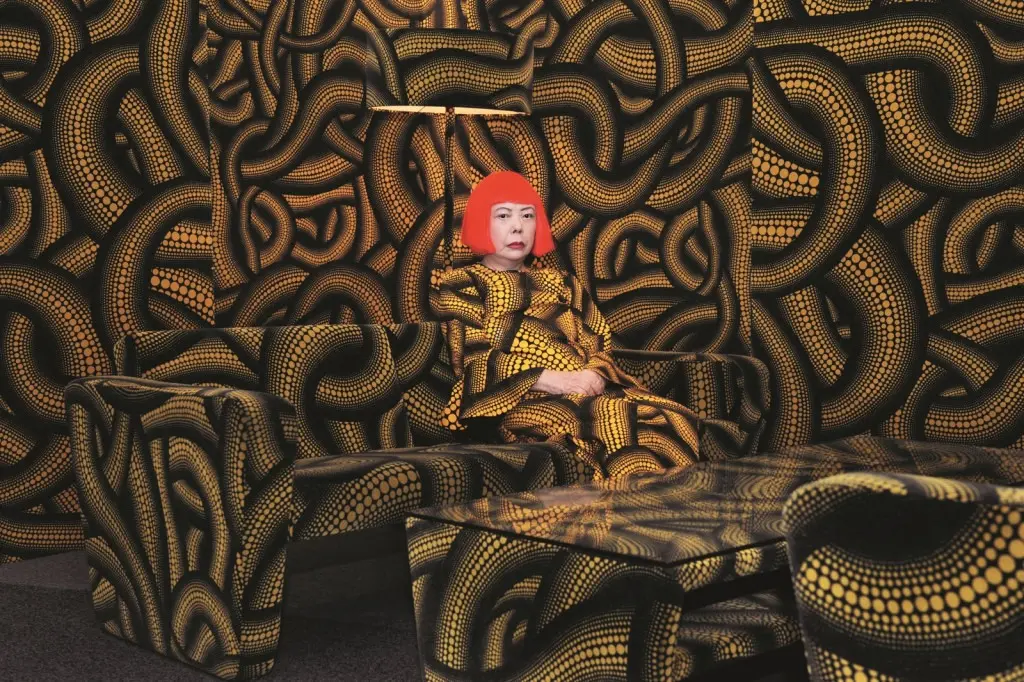
While her career spans over seven decades—stretching from post-war Japan to the avant-garde battlegrounds of 1960s New York and into the digital era of globalized social media—she remains etched in the public consciousness chiefly through her dazzling "Infinity Mirror Rooms." These jewel-box installations, which invite viewers to step past the threshold of the finite world and into an unending abyss, redefined experiential art. Yet, restricting Kusama’s legacy solely to these Instagram-era sensations diminishes a relentless, barrier-breaking career defined by pioneering "Infinity Net" paintings, transgressive political and social happenings, avant-garde fashion ventures, and a profound philosophical commitment to what she termed "self-obliteration."
This comprehensive retrospective explores Kusama’s monumental trajectory, drawing upon institutional milestones, the critical efforts to contextualize her broader oeuvre, and a rare, reflective interview conducted shortly before her passing. As major international institutions—including the Fondation Beyeler, Museum Ludwig, and the Stedelijk Museum—organize sweeping successive exhibitions, and as David Zwirner prepares to unveil her final works, the art world pauses to evaluate the permanent imprint of a creator who lived entirely for her craft.
Detailed Chronology: From Post-War Japan to Global Iconoclasm
To understand Yayoi Kusama is to trace an unwavering, lifelong crusade against personal trauma and institutional boundaries. Born in Matsumoto, Japan, in 1929, Kusama experienced severe visual and auditory hallucinations from an early age, often seeing the world covered in dense fields of dots or nets. Rather than retreating from these terrifying psychological disturbances, she weaponized them through art, transforming her visions into an idiosyncratic defense mechanism and a mode of survival. By age five, she was already rendering these patterns on paper; by ten, she harbored a fierce, unshakeable ambition to become a professional painter.
The Transatlantic Leap and the New York Avant-Garde
In 1957, seeking escape from the stifling conservatism of post-war Japan and her traditional family, Kusama made a pivotal, life-altering flight across the Pacific to the United States. Looking out the airplane window, she watched the vast, unbroken expanse of the Pacific Ocean—an experience that directly inspired her early, mesmerizing Infinity Net paintings. These canvases featured obsessive, repetitive arcs of paint that seemed to stretch infinitely across the surface, anticipating the Minimalist and Conceptual movements that would soon dominate the American landscape.
Upon settling in New York City during the tumultuous 1960s, Kusama immersed herself in the downtown avant-garde scene. Operating alongside contemporaries like Donald Judd, Andy Warhol, and Claes Oldenburg, she carved out a radical space for herself. She staged provocative, anti-war, and pro-equality "happenings"—often featuring naked participants painted with her signature polka dots—challenging the Vietnam War, capitalist commodification, and sexual repression. Despite her central role in shaping the era’s avant-garde, structural sexism and xenophobia frequently marginalized her contributions, with male peers occasionally co-opting ideas she had pioneered. Refusing to be sidelined, Kusama painted day and night, driven by an unyielding compulsion to push artistic boundaries.
The 2010s Renaissance and the Digital Age
For decades, Kusama’s genius remained appreciated primarily by art-world insiders and critics. That dynamic shifted seismically in the 2010s. Having returned to Japan in the 1970s—where she voluntarily checked herself into a psychiatric hospital in Tokyo, a residence she maintained for the rest of her life while walking daily to her nearby studio—she engineered a staggering global renaissance.
Her 2012 retrospective at the Tate Modern in London arrived at a historically perfect intersection: the meteoric rise of Instagram. The mind-bending optical illusions and endless reflections of her Infinity Mirror Rooms offered a tailor-made experience for the digital age. Almost overnight, Kusama transformed from a revered historical avant-garde figure into a ubiquitous global pop-cultural icon. Queues wrapped around city blocks worldwide, with visitors eagerly waiting hours just to spend a fleeting sixty seconds inside her shimmering, infinite spaces.
Supporting Context & Metrics: The Mechanics of "Self-Obliteration"
The phenomenal popular success of the Infinity Mirror Rooms created a double-edged sword for the artist’s legacy. While museums reaped record-breaking attendance figures, curators and critics grew concerned that the general public was reducing a complex, radical career to a series of photogenic backdrops.
[Early Visions: 1930s-1950s]
       │
       ▼
[Transatlantic Migration & NY Avant-Garde: 1957-1970s]
       │
       ▼
[The Institutional & Digital Boom: 2010s]
       │
       ▼
[Re-centering the Oeuvre: "Yayoi Kusama: 1945 to Now" (2022)]
       │
       ▼
[The Final Chapter & Eternal Legacy: 2025-2026]
To correct this imbalance and restore the historical record, international curators spearheaded comprehensive reappraisals. Landmark exhibitions, most notably the 2022 touring survey Yayoi Kusama: 1945 to Now co-curated by Doryun Chong and Mika Yoshitake at M+ in Hong Kong, systematically mapped out the expansive scope of her creative output. These exhibitions traced her arc from the foundational Infinity Nets and early works on paper through her 1960s performance art, radical soft-sculpture environments, fashion ventures, and poetry.
Central to understanding this broader oeuvre is Kusama’s foundational concept of "self-obliteration." Far from being a mere aesthetic trick, self-obliteration is rooted in a profound philosophical and spiritual worldview. As M+ assistant curator Kary Woo observed, Kusama’s immersive environments posit that to truly comprehend an infinite universe, humans must "blend in with sublime nature, to observe everything, and to realise how the self is finite, at one, and interconnected with other things." By dissolving the ego within an endless sea of dots or mirrored reflections, individuals could achieve a psychological rebirth grounded in radical love, equality, and peace.
Official Statements: In Her Own Words
On the occasion of a major multi-institution European museum survey—originating at the Fondation Beyeler in Basel, traveling to the Museum Ludwig in Cologne, and opening to the public at the Stedelijk Museum in Amsterdam—representatives conducted an exclusive interview with the artist. Offering profound insight into her worldview, creative rituals, and lifelong psychological motivations, Kusama’s responses encapsulate the fire that drove her until her final days.
When asked about what continuously sparked her imagination, Kusama remarked with characteristic directness:
"Thoughts and images bubble up in my consciousness incessantly. And I am unable to refrain from depicting them."
Addressing her legendary work ethic and the boundary between her personal life and artistic production, she explained:
"I live for my art. That’s really all there is to it. I make no distinction between daily life and my work."
Reflecting on her motivations and the emotional resonance of her career, Kusama emphasized her pursuit of fundamental truths:
"I’ve always approached the production of artwork as a quest for truth. As an artist, I’ve endeavored to instill such qualities as dignity, vitality, and humanity in all my work. I experience joy whenever I finish a good piece."
Addressing the socio-political crises of the modern world and the burden borne by younger generations navigating rampant uncertainty, Kusama offered an enduring philosophical blueprint:
"One needs to forge a creativity-driven, highly humanistic philosophy in relation to love and peace, maintaining reverence for all life, facing global crises head-on, and sharing wonderful messages with the world to help others overcome prejudice and confusion."
Finally, reflecting on her trials within a historically male-dominated art world and her relentless drive despite declining health, she noted:
"I don’t think in terms of male versus female, but I struggled mightily in those days, painting day and night for all I was worth. Now, having cultivated a life stance of my own, and well aware that the time remaining grows ever shorter, I’m still constantly seeking something new, urgently reaching for unexplored heights in the realm of art."
Future Outlook
The institutional life of Yayoi Kusama’s art is far from over. Following the current presentation at the Stedelijk Museum in Amsterdam—which runs alongside ongoing international presentations of her retrospective survey—the global art market and scholarly community are bracing for a deeply emotional milestone.
In the spring, her longtime primary gallery, David Zwirner, will present a dedicated solo exhibition in New York featuring Kusama’s final works. Created in the twilight of her life, these pieces promise to offer a poignant final chapter to a career that continually pushed the boundaries of perceptual endurance.
Ultimately, Yayoi Kusama’s legacy transcends the physical materials of paint, mirror, and fabric. She successfully translated her inner psychological turmoil into an expansive, generous gift to humanity. By inviting millions of viewers to lose themselves in her boundless polka dots and infinite reflections, she offered a radical proposition: that in confronting the infinite, we do not vanish into nothingness, but rather find our truest connection to one another and to the universe at large. As her passionate paean to humanity echoes forward through time, "Kusama-ism" remains a permanent, glowing constellation in the firmament of human culture.








Comments
Facebook App ID not configured. Please add it in the Customizer.