
Executive Overview
The intersection of geographic reality and artistic representation forms the core of contemporary critical inquiry into both documentary film and modern fiction. Recent evaluations of legendary documentarian Frederick Wiseman—spanning his comprehensive forty-six-film oeuvre—and Gillian Linden’s precision-driven prose highlight a shared obsession with the granular. Whether examining the institutional mechanisms captured in Wiseman’s 24-hour cinematic canvas or tracking the uncanny local fidelity of Linden’s Connecticut-set fiction, critics and fact-checkers are increasingly discovering that art’s deepest truths reside in micro-details.
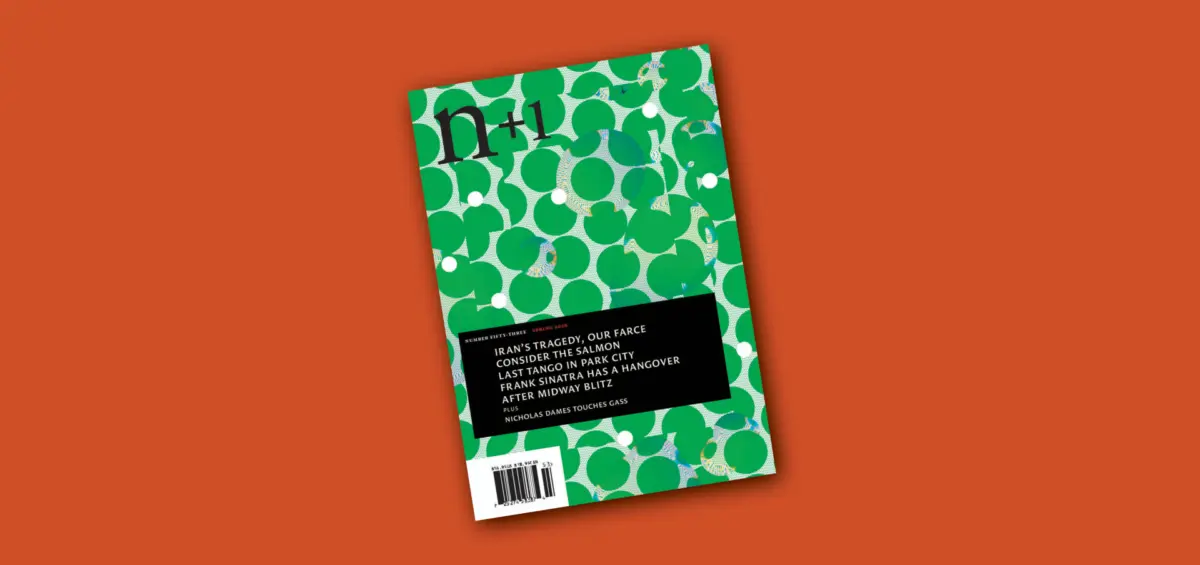
This report synthesizes critical responses to Issue 53 of n+1, focusing specifically on Caleb Stern’s forensic examination of Wiseman’s editing methods and Tommy Tower’s geographic reckoning with Linden’s short fiction. By looking at how these two artists construct space—one through the methodical assembly of institutional footage, the other through the evocative deployment of regional markers—we gain a clearer understanding of how rigorous observation anchors the modern artistic project.
Detailed Chronology
The discourse surrounding these works has evolved through distinct phases of creation, editorial fact-checking, and reader reception.
Read Also
- The Wiseman Retrospective Era: Spanning over half a century of filmmaking, Frederick Wiseman’s career established a standard for observational documentary. His method bypassed traditional narrative framing and sentimental tropes in favor of structural sociology.
- Publication of Issue 53: Mariana Mogilevich published her critical essay, "Looking Like a State," offering a sweeping survey of Wiseman’s legacy. This piece served as the catalyst for Caleb Stern’s subsequent shadow retrospective during the fact-checking process.
- The Fact-Checking Process: Entrusted with verifying every event, name, and dialogue timestamp in Mogilevich’s essay, Stern undertook an intensive 24-hour viewing marathon across Wiseman’s filmography. This micro-analytical approach revealed anomalies, unique needle-drops, and structural habits hidden beneath the macro-sociological surface.
- Linden’s Regional Mapping: Simultaneously, Tommy Tower encountered Gillian Linden’s short story "Beckley Furnace Road" while reading Issue 53 in a rural Connecticut backyard. The striking alignment between the story’s atmospheric descriptions and the physical reality of the Housatonic River valley prompted an investigation into literary geography, culminating in Tower’s exploration of Linden’s 2024 novel, Negative Space.
Supporting Context & Metrics
To appreciate the weight of these artistic achievements, one must examine the quantitative and qualitative metrics underlying their creation.
The Wiseman Metrics: A Life in Cinema
- Total Output: 46 completed documentary films.
- Span of Career: Over five decades of continuous production, ending with Wiseman’s passing at age 96.
- Fact-Checking Scope: Approximately 24 hours of cinematic runtime rigorously parsed for time stamps, dialogue accuracy, and background environmental elements.
- Key Institutional Milestones:
- Titicut Follies (Massachusetts mental institution; featured physical boundaries and intake procedures cataloged at specific time stamps such as 17:11 and 04:25).
- High School (featuring the sole nondiegetic needle-drop in Wiseman’s catalog: Otis Redding’s "(Sittin’ On) The Dock of the Bay").
- Public Housing (examining the aftermath of Eric Morse’s murder at the Ida B. Wells Homes).
- Belfast, Maine (a four-hour-plus magnum opus concluding with an artist expanding a forest landscape).
The Geography of Fiction: Linden’s Coordinates
- Literary Anchors: Gillian Linden’s "Beckley Furnace Road" and her 2024 novel Negative Space.
- Geographic Convergence: The alignment between fictional tropes of western Connecticut’s WASP class and real-world locations such as Beckley Iron Furnace State Park in East Canaan, Connecticut.
- Comparative Realism: Placing Linden’s work alongside the location-sharing traditions of Nathanael West (Southern California), V.S. Naipaul (English countryside), and Eudora Welty (American South).
Official Statements & Critical Perspectives
The artistic philosophies of both Frederick Wiseman and the critics who decode his work reveal a shared disdain for didacticism and an embrace of structural complexity.
Frederick Wiseman on Sociological Comparison
When once compared to institutional sociologist Erving Goffman—whose concepts of bounded environments and degradation ceremonies heavily map onto Titicut Follies—Wiseman resisted simplistic equivalencies. Recalling an inauspicious encounter where Goffman failed to notice that a filmed subject was actually a corpse during a ritual washing scene, Wiseman stated:
"The human experience is complicated, and I try to reflect this complexity in my editing. I abhor didacticism, the scourge of documentaries."
This paradox—abhorring didacticism while actively cutting between conflicting human realities like medical procedures and embalming—underpins Wiseman’s genius. Rather than providing a neat moral thesis, his edits function with immediate, kinetic force.
Caleb Stern on the Dual Impulses of Cinema
Reflecting on Wiseman’s editorial technique, Stern notes the director’s ability to maintain dual perspectives:
"Wiseman’s gift was that he could obey dual impulses. He could hold in focus both the weight of the world and the touch of the hand; the painting and the brushstroke; the forest and the trees."
Tommy Tower on Literary "Pin-Dropping"
Describing the uncanny experience of reading regional fiction in the exact geographic milieu it evokes, Tower emphasizes the hyper-observant nature of Linden’s prose:
"This was literature as dropping a pin… Above all she is so observant and exacting, her descriptive abilities so fine-tuned, that you can read a two-line description of a sky and a tree and know exactly where you are."
Future Outlook
As digital tools alter how we map our physical and cultural environments—from desktop games like GeoGuessr to algorithmic film archiving—the demand for authentic, localized granularity remains high. The methodologies highlighted in these critiques point toward several emerging trends in cultural consumption and analysis:
- Hyper-Contextual Media Verification: As demonstrated by the rigorous frame-by-frame verification required for Wiseman’s documentaries, archival scholarship is moving toward a hyper-vigilant model where background ephemera (coffee cups, specific phrasing, environmental soundscapes) are treated as primary textual evidence.
- Geolocated Reading Experiences: The phenomenon of reading fiction in its exact physical setting—such as experiencing Connecticut regionalist literature along the Housatonic River—suggests a growing appreciation for place-based immersion in contemporary book culture.
- The Rejection of Sentimentality: Both Wiseman’s cinematic sociology and Linden’s bourgeois-adjacent realism signal a continuing fatigue with manipulative emotional arcs in modern art. Audiences and critics increasingly reward creators who allow social structures and landscapes to speak for themselves through precise, unblinking observation.
Ultimately, whether through the lens of a 16mm camera moving down a Massachusetts corridor or the ink of a description tracing a lavender sky in New England, the pursuit of artistic truth relies on holding the macro-structure and the micro-detail in simultaneous, perfect focus.

Comments
Facebook App ID not configured. Please add it in the Customizer.