
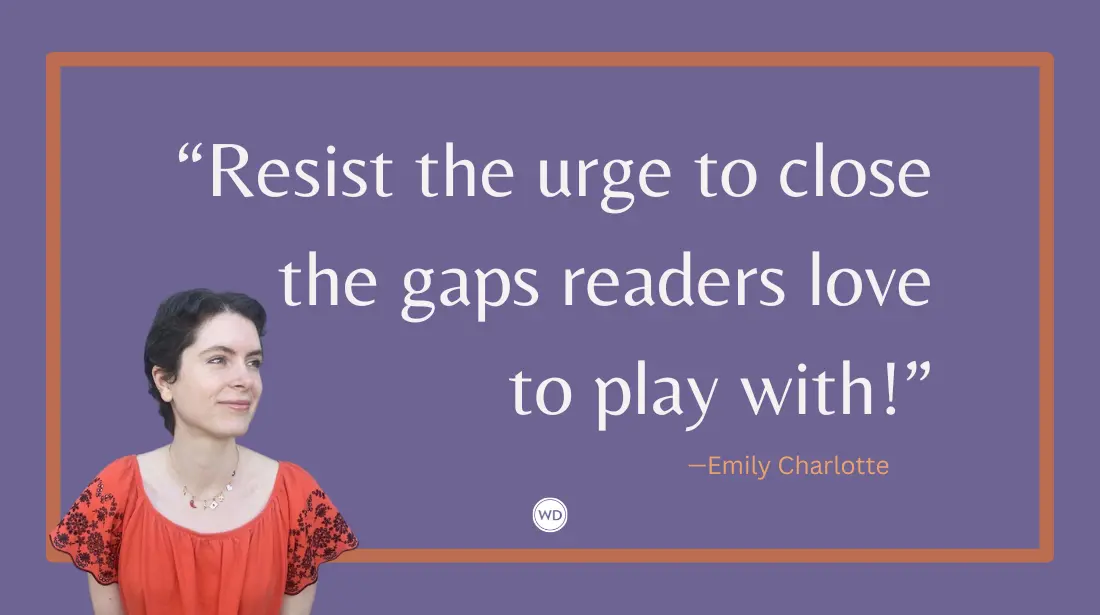
Writing a sophomore novel is widely recognized as one of the most daunting milestones in an author’s career. However, tackling a standalone "sequel"—a companion book set within the same universe, featuring an overlapping cast, yet anchored by an entirely new central romance—presents a uniquely complex creative labyrinth. For author Emily Charlotte, navigating this challenge meant returning to the drawing board to carefully balance fan expectations, narrative expansion, and structural cohesion in her latest release, Catching Feelings.
Building upon the foundations laid in her debut hit, Heart Check, Catching Feelings steps back into the fictional, sports-obsessed enclave of Hamilton Lakes, Michigan. The novel shifts its primary lens to a fresh romantic pairing: Sabrina, a seemingly one-dimensional high-school go-getter harboring hidden complexities, and Tyler, a guarded new recruit on the town’s revered football team.
Rather than relying purely on intuition, Charlotte approached the architecture of her Varsity series through an academically informed lens. Drawing inspiration from the psychological frameworks of fandom studies—most notably the theories of author and PhD psychologist Jennifer Lynn Barnes (The Inheritance Games)—Charlotte engineered a narrative designed to active-participate readers. By strategically applying principles of co-authoring, gap-filling, and the "need to belong," the author transformed the fictional town of Hamilton Lakes into an immersive, living ecosystem. This comprehensive journalistic report explores the structural mechanics behind Charlotte’s world-building, examining how contemporary romance authors can leverage fandom psychology to craft enduring, highly engaging shared universes.
Read Also
Detailed Chronology: From Debut Foundations to Sophomore Expansion
The journey of Catching Feelings from concept to bookshelves illustrates the meticulous planning required to sustain an interconnected romance series without alienating newcomers or boring returning fans.
Phase 1: Establishing the Blueprint (Heart Check)
When Charlotte penned her debut novel, Heart Check, she intentionally incorporated the core tropes and sensory details standard to the hockey romance subgenre. Utilizing Jennifer Lynn Barnes’s concept of the "id list"—an inventory of elements that satisfy a writer’s and reader’s deepest storytelling cravings—she populated the book with high-stakes athletic dynamics, beloved golden-boy archetypes, and tight-knit community spaces like the Lakeside Diner. This established a recognizable framework, giving readers a clear map of Hamilton Lakes and introducing characters whose lives extended far beyond the margins of the page.
Phase 2: The Sophomore Dilemma
With the commercial success of Heart Check, the pressure for a follow-up mounted. The creative hurdles were threefold:
- Accessibility: Ensuring readers could pick up Catching Feelings mid-stream without requiring a mandatory read of the first installment.
- Familiarity: Satisfying established fans who craved cameos and updates on favorite characters like Luke and Harper.
- Innovation: Avoiding a formulaic retread of the original plot while still delivering the comforting tropes readers expect from a contemporary romance.
Phase 3: The Integration of Sabrina and Tyler
To solve these narrative hurdles, Charlotte shifted focus to secondary characters who had previously occupied the background. Sabrina, who appeared in book one as a polished, hyper-spirited overachiever, is introduced in Catching Feelings under a cloud of mystery: specifically, a fractured relationship with Ryan and internal struggles that humanize her public persona. Meanwhile, Tyler enters the town as an outsider carrying a high-stakes secret. By weaving these character arcs through both familiar locations (the diner, the football field) and new territory (the Spirit Committee office), Charlotte advanced the timeline of the universe while keeping the emotional stakes fresh.
Supporting Context & Metrics: The Psychology of Fandom in Modern Fiction
To understand why interconnected romance series hold such a powerful grip on contemporary readers, one must examine the intersection of cognitive psychology and literary engagement. Modern readership trends indicate that books functioning as part of a shared universe enjoy significantly higher retention and community-driven marketing than isolated standalone novels.
The Barnes Doctrine: Structure and Permission
Jennifer Lynn Barnes, celebrated for The Inheritance Games trilogy, transitioned her academic background in cognitive psychology and social behavior into highly successful commercial storytelling. Barnes’s research suggests that reader engagement spikes exponentially when an audience is required to perform mental work. This phenomenon relies on three core psychological mechanisms:
- Co-Authoring: Readers interpret subtext, decode character expressions, and theorize about unspoken backstories. When an author leaves subtle narrative breadcrumbs, the reader actively "co-authors" the emotional reality of the scene.
- Gap-Filling: Readers naturally fill in narrative blanks. Whether it is wondering what happens to a couple after they walk out of a diner frame or imagining an off-page conversation, leaving structural gaps increases emotional ownership.
- Theory of Mind: This psychological capacity allows readers to attribute mental states—beliefs, intents, desires, and emotions—to fictional characters, imagining how they might act under different scenarios.
The "Need to Belong"
According to foundational psychological research, humans possess an innate drive to form lasting, positive, and significant interpersonal relationships. Charlotte explicitly targeted this "need to belong" during the composition of the Varsity series. By cultivating tight-knit sports teams, overlapping friend groups, and localized town gossip, the author engineered a reading experience that mimics the comforting social structures of a small town. When readers return to Hamilton Lakes, they are not merely opening a book; they are visiting a familiar neighborhood.
Official Insights & Authorial Principles
In discussions surrounding the craft of writing Catching Feelings, Emily Charlotte outlined four foundational principles derived from fandom studies that guided her world-building process. These principles serve as a masterclass for authors aiming to expand contemporary fictional universes.
1. Build an Expansive World
While expansive world-building is historically associated with fantasy and sci-fi genres—where distinct magic systems allow readers to categorize themselves—contemporary settings require a different touch. Charlotte engineered Hamilton Lakes with a precise balance of structure and permission.
- Structure: Familiar set-pieces like the Lakeside Diner give readers a physical anchor.
- Permission: New locations—such as the pep rally, fundraising car washes, and the football field—provide the canvas for new characters to make their mark, signaling to the reader that the map of this world is vast and continuously growing.
2. Populate Locations with Characters That Feel Real
A vibrant community requires inhabitants who possess lives independent of the protagonist’s direct line of sight. Hamilton Lakes is populated by dynamic secondary figures: Ms. Moore, a challenging calculus teacher; Shannon Bittle, a gluten-free diner regular; and Sam, a superstitious hockey goalie whose pre-game rituals mask hidden depths.
Furthermore, handling legacy characters requires finesse. When Harper and Luke make a cameo appearance or are referenced via inside jokes, it rewards returning fans without alienating newcomers. By dropping subtle hints about what legacy characters do off-page, Charlotte ensures that the characters remain communal property shared between the writer and the audience.
3. Construct Organic, Expectation-Satisfying Plots
Writing a companion novel demands a delicate calibration of expectations. If a reader picks up a sports romance, certain tropes—tension between golden boys and skeptical leads, high-stakes local fandoms, and emotionally charged resolutions—are practically mandatory.
Charlotte utilized Barnes’s "id list" to identify these essential storytelling itches. However, to prevent repetition in book two, she inverted the dynamics: her hero is a star player struggling to regain lost confidence, and the central conflict hinges on a damaging secret rather than standard miscommunication. This grounds the plot firmly in the emotional continuity of the series while exploring fresh psychological territory.
4. Hint at More (The Art of the Slow Burn)
A masterclass in series retention relies on leaving strategic open loops. By deliberately planting narrative seeds for future romantic dynamics—much like the legendary slow-burn tactics employed by the writers of The Office regarding Jim and Pam—Charlotte encourages aggressive reader speculation. The slower the emotional burn and the thicker the narrative tension, the stronger the community theorizing becomes. This ensures that when the next installment is announced, the audience is already emotionally primed and invested.
Future Outlook: The Evolution of the Varsity Universe
As the romance genre continues to dominate bestseller lists across global markets, the demand for interconnected, binge-able contemporary series shows no signs of slowing down. Authors are increasingly moving away from isolated one-offs in favor of sprawling, cinematic universes that reward deep fan engagement.
Emily Charlotte’s methodological approach to Catching Feelings points toward a broader evolution in how contemporary romance is written and consumed. By treating the reader not as a passive consumer, but as an active participant in a shared psychological space, authors can build self-sustaining fandoms that turn books into immersive lifestyle experiences.
While Varsity 3 remains unannounced at the time of this publication, the meticulously planted narrative breadcrumbs at the conclusion of Catching Feelings guarantee one thing: the residents of Hamilton Lakes will continue to live rent-free in the imaginations of readers everywhere. As the boundaries between authorial intent and fan interpretation continue to blur, the future of the romance genre belongs to those who know how to build a world wide enough to get lost in, and open enough to call home.




Comments
Facebook App ID not configured. Please add it in the Customizer.