
Executive Overview
For much of the past decade, the staggering accumulation of the United States national debt has been treated as background noise—a persistent, distant hum that occasionally surfaces during partisan budget battles but rarely registers as a defining issue for voters. Heading into the 2026 midterm elections, the topic remains largely overshadowed by immediate cost-of-living concerns, healthcare, and immigration.
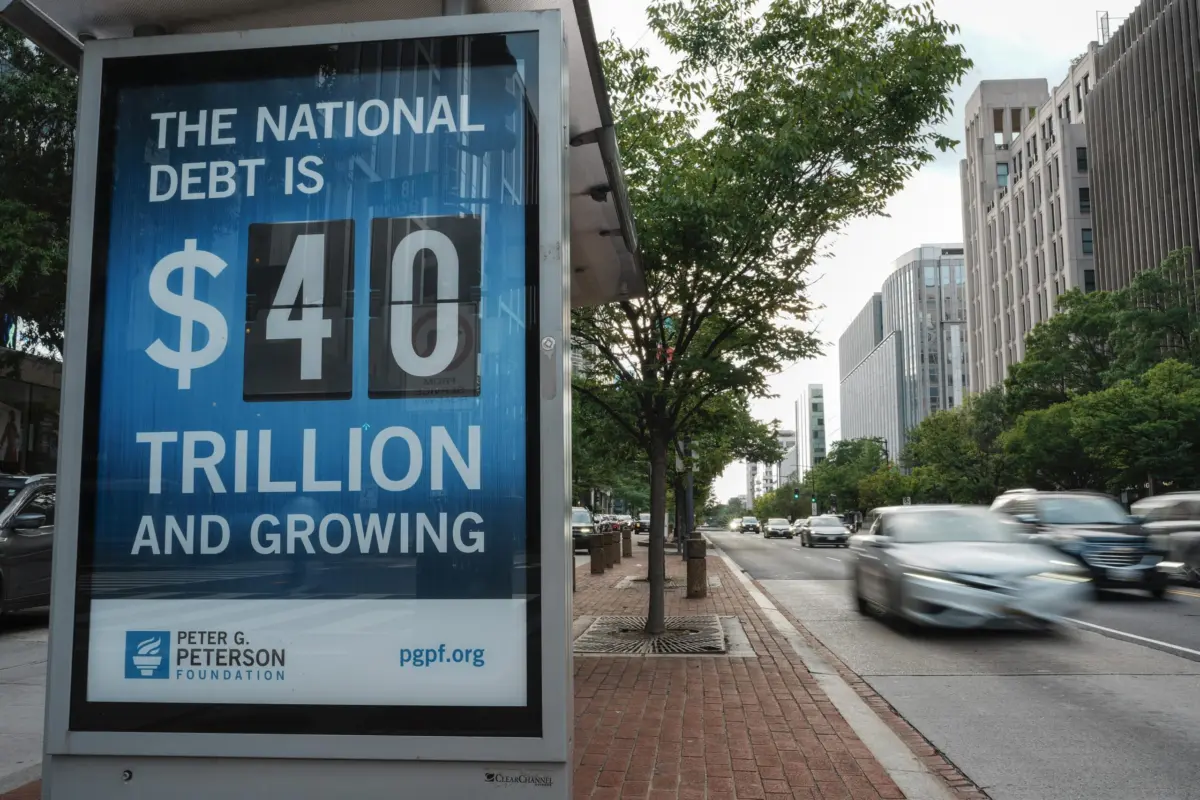
Yet, beneath the surface of political apathy, a quiet alarm has been sounded. Last month, the United States officially crossed a historic and sobering economic Rubicon: the national debt eclipsed $40 trillion. To put this figure into perspective, it represents twelve zeros, translating to roughly $116,000 of debt for every man, woman, and child living in the country.
Even more striking than the milestone itself is the shift in perspective among the architects of modern American fiscal policy. Jared Bernstein, who served as the chair of the U.S. Council of Economic Advisers under President Joe Biden, has long been a leading voice in the camp that downplayed the immediate dangers of high borrowing. For years, Bernstein and his contemporaries argued that as long as economic growth outpaced the cost of servicing the debt—paying the interest on the accumulated IOUs—the absolute size of the ledger was secondary.
Read Also
Today, Bernstein has changed his tune.
In a revealing interview on the Today, Explained podcast with co-host Sean Rameswaram, Bernstein admitted that while the headline-grabbing $40 trillion figure can be a "big distraction," a confluence of structural failures has fundamentally altered his outlook. Pointing to prolonged congressional inaction, a persistent upward drift in interest rates, and deficits characteristic of a recession during a period of economic expansion, Bernstein warns that the nation’s fiscal trajectory has become unsustainable.
While stressing that an immediate economic apocalypse is not around the corner, Bernstein and other macroeconomic experts argue that the window to "stop digging the hole" is rapidly narrowing. This article examines the anatomy of America’s $40 trillion debt milestone, the evolution of economic thought surrounding deficits, the shared culpability of both major political parties, and what experts believe must be done to avert a long-term debt spiral.
Detailed Chronology: How the U.S. Arrived at $40 Trillion
To understand how the United States reached this unprecedented fiscal juncture, it is necessary to examine how economic paradigms regarding debt have shifted over the last thirty years.
The Era of "Low-Interest" Complacency
For decades following the turn of the millennium, mainstream macroeconomic consensus—anchored by models showing robust productivity and historically low borrowing costs—treated large national debts with relative equanimity. The core philosophy relied on a simple metaphor: think of the total national debt as the water sitting in a bathtub, and the annual budget deficit or surplus as the water flowing into it.
Under this framework, carrying a massive stock of debt was not inherently dangerous, provided two conditions were met:
- Low Interest Rates: The cost of servicing the debt remained minimal.
- Economic Growth: The nation’s Gross Domestic Product (GDP)—the denominator in the debt-to-GDP ratio—expanded at a rate faster than the accumulation of new debt.
As long as these conditions held, governments could comfortably borrow to finance wars, infrastructure projects, and economic stimulus packages without triggering catastrophic inflation or crowding out private investment. Bernstein notes that he was part of an economic consensus that viewed the situation with calm, even as political opponents and perpetual "budget hawks" predicted imminent economic doom.
The Partisan Divide and "Chicken Hawks"
During this period, warnings about the debt often split Washington into two distinct camps. On one side were economists and analysts offering nuanced, long-term warnings about fiscal sustainability. On the other side were politicians who utilized the debt as a rhetorical weapon.
Bernstein characterizes many of these vocal fiscal conservatives as "chicken hawks"—politicians who expressed apocalyptic concern over the deficit on the campaign trail, yet consistently voted for policies that expanded it, most notably through aggressive tax cuts. This political posturing created a climate of fatigue, where cries of fiscal wolf were so frequently weaponized for partisan gain that genuine warnings began to lose their urgency.
The Tipping Point
The intellectual shift for economists like Bernstein did not happen at a precise hour or day. Instead, it was an erosion driven by three converging realities:
- The Death of Congressional Reaction Functions: Academic research began to demonstrate that Congress had fundamentally broken its feedback loop. Lawmakers no longer adjusted fiscal policy in response to unsustainable long-term debt projections.
- The Rise of Interest Rates: As global inflation pressures forced central banks to raise interest rates, the cost of servicing a ballooning $40 trillion debt stock skyrocketed, changing the math of debt sustainability overnight.
- Abnormal Deficits in Good Times: Historically, budget deficits during periods of economic expansion hover around 2 to 3 percent of GDP. In recent years, U.S. deficits have stubbornly remained at 4, 5, and 6 percent—levels typically reserved for deep recessions.
When these three factors collided, the old economic models broke down, forcing a reluctant re-evaluation among even the most steadfast defenders of modern fiscal policy.
Supporting Context & Metrics: Decoding the Numbers
Critics of fiscal alarmism often emphasize that raw nominal debt figures can be misleading. To accurately gauge the health of the U.S. economy, experts rely on specific metrics that measure capability rather than sheer volume.
Debt-to-GDP Ratio: The Ultimate Barometer
As Bernstein emphasizes, getting hung up on the round number of $40 trillion misses the forest for the trees.
"Don’t get hung up on the big, round number. It’s okay if your debt grows. It’s just not okay if your debt grows faster than your economy."
The debt-to-GDP ratio compares the country’s total obligations to the total value of goods and services it produces. When the denominator (GDP) grows faster than the numerator (debt), the ratio shrinks, making the debt progressively easier to manage. Conversely, when debt outpaces economic growth over sustained periods, the nation enters a dangerous debt spiral.
The Cost of Debt Servicing
A critical metric in assessing risk is the federal government’s net interest payments. As interest rates climb, a growing percentage of federal tax revenues must be diverted away from vital public investments—such as education, infrastructure, and defense—solely to pay the interest on past borrowing. When debt service consumes an outsized portion of the federal budget, it constrains government flexibility during future crises.
Official Statements and Perspectives
The debate over the national debt is marked by finger-pointing and mutual accountability across the political aisle. When asked whether decades of economists assuring the public that "debt is okay" contributed to congressional indifference, Bernstein offers a balanced critique:
"Let me flip that on you, because I don’t want to hold myself or my colleagues unaccountable, but I actually think the other side may be even more to blame… they were saying the economy is about to explode for 30 years. And it didn’t."
Bernstein acknowledges that while his camp tried to introduce nuance—arguing that fiscal order was necessary eventually, but not an immediate crisis—American politics rejected nuance.
When examining political culpability for the current $40 trillion reality, Bernstein points out that while both parties share blame, their contributions differ in scale:
- The Republican Contribution: GOP administrations and congressional caucuses have made the largest structural contribution to the unsustainable path through relentless, deficit-funded tax cuts for upper-income earners and corporations.
- The Democratic Complicity: Despite criticisms of Republican tax policy, Democrats have frequently failed to roll back these measures when in power, and in some cases, have endorsed extensions, perpetuating the fiscal shortfall.
Future Outlook: Is There a Way Out?
Despite the gravity of the $40 trillion milestone, economists emphasize that the United States is not facing an immediate economic collapse. The crisis is structural and unfolding over a decade-long horizon, which provides a window for corrective action.
Stopping the Bleeding vs. Filling the Hole
Experts agree that at this stage, completely paying off the national debt is mathematically implausible. The immediate objective must be to "stop digging the hole."
According to fiscal policy analysts, stabilization is achievable through a combination of targeted revenue enhancements and expenditure reforms. Key policy prescriptions frequently include:
- Reversing Upper-End Tax Cuts: Letting provisions of past tax cuts expire for high-income earners and corporations to restore vital baseline federal revenues.
- Restoring Congressional Fiscal Rules: Re-establishing statutory frameworks that force lawmakers to offset new spending or tax cuts with equivalent revenue sources.
- Enhancing Economic Productivity: Fostering long-term economic growth through investments in technology, clean energy, and workforce development to ensure the GDP denominator outpaces debt accumulation.
The Political Hurdle
Ultimately, solving the debt crisis is less an economic puzzle and more a political challenge. As Bernstein notes, achieving a sustainable debt-to-GDP path requires a fundamental shift in political will and a different composition of leadership in Congress and the White House.
Until voters demand comprehensive fiscal responsibility—and until lawmakers abandon short-term electoral pandering in favor of long-term economic stewardship—the national debt will continue its march upward, remaining the defining silent partner in America’s economic future.





Comments
Facebook App ID not configured. Please add it in the Customizer.