
Executive Overview
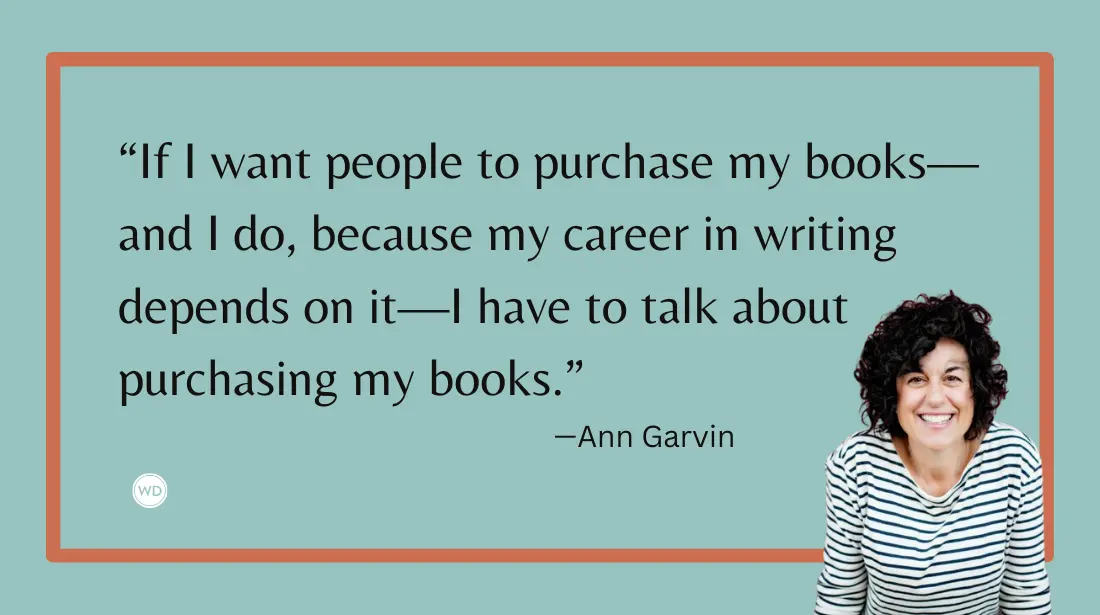
In the contemporary literary marketplace, the boundary separating genuine human connection from transactional manipulation has been almost entirely obliterated. Authors are no longer judged solely on the merit of their prose, their narrative pacing, or their thematic depth; instead, they are evaluated on the strength of their "funnels," the density of their mailing lists, and their capacity to manufacture intimacy at scale.
For many writers, this convergence of commerce and artistry evokes a vague, persistent unease—a quiet alarm that sounds whenever a seminar speaker invokes Seth Godin or pivots seamlessly into the aggressive, "Always Be Closing" cadence of Glengarry Glen Ross. But for some, particularly women and survivors of interpersonal violence, this discomfort transcends professional anxiety. It activates the nervous system’s primal threat-detection mechanisms.
The vocabulary of modern marketing—replete with its emphasis on "capturing leads," "nurturing connections," weaponizing "authenticity," and identifying consumer "pain points"—bears an uncanny, unsettling resemblance to the behavioral red flags cataloged by security experts and threat-assessment specialists like Gavin de Becker. When charm and manufactured empathy are deployed as stealth vectors to secure a financial transaction, the underlying grammar sounds less like business strategy and more like grooming.
Read Also
This investigative essay explores the dark roots of modern sales pitches, examines the moral theater required of authors navigating the digital marketplace, and asks a fundamental question: Can an artist survive in the twenty-first-century economy without adopting the manipulative tactics of the predator?
Detailed Chronology: The Evolution of the Author-Salesman
2010: The Conference Room and the Red Bull Pitch
The setting is a standard writers’ conference room in 2010. The session promises instruction on marketing a debut novel, but it opens with sobering realities: dismal average sales figures and the statistical near-impossibility of an Oprah Winfrey endorsement rescuing a mid-list title.
The speaker, sharply dressed and energized by caffeine, begins by referencing Seth Godin’s seminal text on community-building, Tribes. Yet, as the chemical stimulants take hold, the discourse swerves sharply into aggressive sales territory.
"Once you hook ’em, you’re in. Tell them what they need. Create desire. Do not let them go," the presenter instructs, radiating the unearned confidence of a natural-born pitchman.
In the audience, a creeping physical anxiety takes hold of one debut novelist. Her nervous system reacts before her conscious mind can articulate why. Around her, attendees scribble frantic shorthand notes: "Capture the lead" transmutes into "Capture Lede," and "nurture connections" blossoms into Nurture!! underscored with multiple exclamation points.
The speaker offers advice that now reads as historically quaint: get a Twitter account, be "authentic," and build relationships.
"Authenticity and relationships are the key to book sales," he declares.
Attendees exchange business cards, launch rudimentary newsletters, and make pleasant small talk. Yet a cynical, underlying current undercuts the camaraderie. Are these new colleagues, or are they prospective "leads"? The reality is both and neither. Contact information is exchanged, emails are harvested, and soon most of these hastily scrawled paper slips will find their way into the trash.
The Sixteen-Year Arc: From Overt Pitch to "Respectful Urgency"
Over the next sixteen years and seven published books, that initial conference-room unease does not dissipate; it hardens into critical clarity.
During this period, the peddlers of sales messaging softened their rhetoric. They traded the aggressive, one-sided coercion of past decades—You have problems that need my fix—for a pseudo-collaborative vocabulary: Let’s identify your pain points.
These careful euphemisms are engineered to bypass psychological resistance. They present as acts of service while quietly eroding the consumer’s—and the creator’s—innate intuition.
Supporting Context & Metrics: The Psychology of the Pitch
To understand why contemporary marketing language triggers a somatic trauma response in certain individuals, one must examine the intersection of sales strategy and behavioral psychology.
The Overlap Between Sales Tactics and Threat Indicators
In his definitive work on human safety, The Gift of Fear, security expert Gavin de Becker outlines the predictable behavioral markers that precede violence. Among the most reliable predictors of predatory intent are specific psychological tactics designed to manufacture artificial safety:
- Forced Teaming: Establishing premature camaraderie ("We’re in this together," "Let’s figure this out").
- Charm and Niceness: Utilizing excessive agreeableness as a tool to disarm skepticism and make refusal feel socially costly.
- Reluctance to Accept "No": Treating boundaries as negotiation points rather than absolute limits.
- The Offer of Help: Providing unsolicited assistance to create an immediate sense of social debt or dependency.
In the modern marketing ecosystem, these exact behaviors are institutionalized, monetized, and taught as best practices. Authors are instructed to "charm" their audiences, to "force team" prospective readers via intimate newsletter intros, and to frame commercial transactions as acts of mutual empowerment.
When a writer who has survived interpersonal violence hears a marketer say, "You can trust me," or "I’m only trying to help you build your platform," the nervous system registers a familiar, dangerous pattern. Charm is weaponized. As criminological history demonstrates, even the most notorious predators—such as Ted Bundy—relied heavily on superficial charm and an aura of trustworthy accessibility to gain compliance.
The Moral Theater of Authorial Authenticity
For authors attempting to navigate this landscape ethically, the demand to perform "authenticity" creates a profound moral hazard.
Digital marketing demands constant visibility, emotional accessibility, and the simulation of friendship. Authors are advised to share personal vulnerabilities, family anecdotes, and behind-the-scenes struggles not because those disclosures serve an artistic purpose, but because vulnerability converts impressions into pre-orders.
This dynamic places creative workers in an impossible double bind:
- Refuse the Playbook: If an author rejects the algorithmic demand for manufactured intimacy and refuses to harvest data under the guise of friendship, their visibility plummets, directly impacting their ability to sustain a professional writing career.
- Adopt the Playbook: If they participate in the charade, they risk crossing ethical boundaries, leading to genuine interpersonal misunderstandings with readers who mistake professional accessibility for deep, reciprocal friendship.
This tension often manifests in painful real-world friction. Consider the author who routinely signs books with a warm smile, tells readers to "keep in touch," and invites them to sign a mailing list. To the author, these phrases are professional courtesies—automated pleasantries deployed in high-volume settings. To the reader, however, "keep in touch" is interpreted as an invitation to a sustained, personal correspondence.
When that reader reaches out months later for emotional support or deep engagement and encounters a boundary—or silence—the resulting disillusionment can be devastating.
"You’ve encouraged me to keep in touch, and then you don’t get back to me," a reader once confronted an author.
When the author awkwardly confessed that their invitations were marketing-adjacent gestures rather than promises of deep personal friendship, the reader’s reaction—a look of profound pity—pierced the author’s conscience. The transaction had unmasked itself, exposing the hollowness at the heart of transactional "authenticity."
Official Perspectives & Industry Realities
The literary marketplace operates under a persistent illusion: that art and commerce can merge seamlessly if creators simply learn to "market themselves well." Industry veterans, independent publishers, and literary critics offer varying perspectives on this friction.
The Myth of Organic Discovery
For decades, traditional publishing operated on the assumption that a good book, backed by institutional distribution and critical reviews, would find its audience. In the twenty-first-century media ecosystem, that model has largely fractured. With millions of titles published annually, discoverability has become the primary bottleneck for new literature.
Publishers now expect debut and mid-list authors to arrive with pre-built platforms—effectively outsourcing the machinery of marketing to the artists themselves. This structural shift forces writers to spend less time drafting manuscripts and more time cultivating digital real estate.
The Critique of the "Personal Brand"
Cultural critics and media theorists argue that reducing an author to a personal brand fundamentally distorts the literary enterprise. When literature is marketed as an extension of the author’s personality, readers no longer engage with the text as an autonomous work of art; instead, they consume the author as a product.
This parasocial relationship creates immense psychological pressure on writers, who must constantly perform accessibility while guarding their private lives. It also distorts readership dynamics: readers who buy a book because they feel emotionally obligated to a charismatic online persona are not necessarily readers who value the artistic integrity of the work itself.
Future Outlook: Finding a Path Through Transparency
As the digital landscape evolves—choked by algorithmic saturation, artificial intelligence-generated content, and increasingly aggressive data-harvesting techniques—the traditional playbook of digital marketing is showing signs of exhaustion. Audiences are becoming fatigued by the performative vulnerability of influencers and creators alike.
So, what lies ahead for authors who wish to make a living without adopting the psychological manipulation of the corporate sales funnel?
1. Reclaiming Honest Language
The alternative to manipulative marketing is not silence; it is radical transparency. It requires discarding the euphemistic vocabulary of "pain points" and "funnels" in favor of direct, unvarnished communication.
An honest pitch looks like this:
"Here is a book I spent years writing. Here are the themes that obsessed me, and here is why I believe it matters. I hope you will buy it and read it. If it’s not for you, that is entirely okay."
This approach strips away the false promise of intimacy, replacing coercion with mutual respect. It treats the reader not as a "lead" to be captured, but as an autonomous adult capable of making an independent economic choice.
2. Acknowledging the Economic Reality
Can an author survive and scale in the modern marketplace while entirely rejecting aggressive marketing strategy? The honest answer is complicated.
Data suggests that purely organic discovery rarely generates the volume required to sustain a full-time writing career in a consolidated publishing market. Yet, survival that requires the compromise of one’s intuition, peace of mind, and ethical boundaries is a hollow victory.
Conclusion: The Unresolved Tension
Sixteen years after sitting in that conference room staring at the word Authenticity, many writers find themselves in the exact same psychological position. They are still handing out business cards, still attempting to balance professional visibility with personal boundaries, and still wondering whether the person standing next to them is a friend, a collaborator, or someone evaluating how to bypass their defenses.
The tension will likely never be fully resolved. As long as artists must participate in a capitalist marketplace to share their work with the world, the friction between commerce and creation will remain.
However, by recognizing the dark roots of modern sales pitches—and by refusing to let the language of predation masquerade as connection—writers can protect their psychological integrity. They can choose to market their work not by manufacturing fake intimacy, but by standing firmly in the daylight of honesty, offering their stories to the world on clean, unambiguous terms.


Comments
Facebook App ID not configured. Please add it in the Customizer.