
Executive Overview
In the hyper-competitive landscape of the modern publishing industry, aspiring and established authors alike are constantly bombarded with advice on how to build their platforms. From chasing high-profile morning television spots and securing billboards in Times Square to mimicking the rapid-fire social media trends of viral sensations, the pressure to "do it all" has never been greater. However, a seismic shift is occurring in how successful writers approach media outreach. Industry veterans and bestselling authors are increasingly advocating for a radical departure from generalized promotion, championing a philosophy anchored in a single, powerful concept: intention.
Rather than spreading themselves thin across mediums that feel unnatural or fail to connect with actual book buyers, authors are learning to decode their personal "why." This strategic evolution requires a granular understanding of target demographics, a realistic assessment of individual comfort zones, a pivot toward high-conversion virtual ecosystems, and an unwavering clarity of purpose. Ultimately, this comprehensive guide explores how authors can cut through the industry noise, leverage authentic media opportunities, and transform passive listeners into dedicated readers and purchasers.
Detailed Chronology: The Evolution of Author Promotion
To understand where modern book marketing stands today, it is instructive to examine how the relationship between authors, media, and readers has transformed over the past few decades.
Read Also
Era 1: The Traditional Gatekeeper Model (Pre-2010s)
For decades, author promotion was strictly dictated by traditional publishing houses. The standard playbook relied heavily on print reviews in major newspapers, scheduled cross-country book tour bookstore signings, and the holy grail of media appearances: national morning television programs like The Today Show or Good Morning America. During this era, marketing budgets were allocated by publishers based on predicted breakout titles. Authors had limited autonomy over their public-facing strategies and were often forced into high-stress, physically exhausting travel schedules that frequently yielded unpredictable returns on investment in actual book sales.
Era 2: The Digital Gold Rush and Platform Panic (2010–2018)
With the democratization of self-publishing and the explosive growth of social media platforms like Facebook, Twitter, and early Instagram, the paradigm shifted dramatically. Authors were suddenly told they needed to be everywhere, all the time. This gave rise to "platform panic"—an exhausting phase where writers felt compelled to blog daily, post multiple times a day on social channels, and master every emerging digital tool. Unfortunately, much of this activity lacked strategic direction. Authors chased follower counts rather than engaged readers, resulting in high burnout rates and very little correlation to sustained, long-term book sales.
Era 3: The Rise of Intentional, Niche Media (2019–Present)
As the digital media landscape matured—marked by the meteoric rise of podcasting, niche newsletters, and community-driven virtual events—smart authors began to course-correct. The realization set in that mass-market visibility does not equal conversion. Authors like Listful Living author and productivity expert have pioneered a return to authentic, instinct-driven promotion. Today’s sophisticated marketing chronology is defined by selective engagement: choosing platforms that directly mirror reader habits, prioritizing long-form audio conversations over distracted visual snapshots, and treating the author’s personal strengths as the ultimate strategic asset.
Supporting Context & Metrics: Why Mass Media Fails to Drive Book Sales
One of the most persistent misconceptions in author marketing is the belief that high-profile, mass-market media placements are the ultimate metric of success. While securing a spot on a national morning show or buying a flashy digital billboard in Times Square provides an undeniable ego boost and generates impressive content for an author’s Instagram grid, empirical observations and marketing metrics tell a sobering story regarding direct book sales.
The Attention Economy vs. The Action Economy
Consider the typical consumer environment during a morning news segment. Viewers are rarely sitting in rapt, undisturbed silence; instead, they are juggling morning routines—making breakfast, dressing children, rushing out the door, or half-listening while preparing for the workday.
- Low-Intent Environments: When a book is flashed on screen during a fast-paced morning broadcast, the friction between exposure and purchase is exceptionally high. The viewer is distracted, lacks a direct link to purchase, and will almost certainly forget the title by the time they reach a bookstore or e-commerce platform. Statistically, unless the author is already a household-name celebrity, morning show appearances generate negligible spikes in long-term book sales.
- High-Intent Environments: Conversely, niche media such as specialized podcasts, targeted book-review blogs, and genre-specific virtual panels operate within a "high-intent" ecosystem. Listeners tune into podcasts specifically looking for recommendations, education, or deep-dive conversations. When a guest author articulates their message in this space, the listener is primed to act immediately—often pausing the episode to click a show-note link and purchase the book.
Demographic Alignment Metrics
Data consistently shows that marketing efficacy depends entirely on matching the medium to the target demographic:
| Target Audience Demographic | Most Effective Media Channel | Low-Yield Media Channel |
|---|---|---|
| Older Adults (Ages 55+) | Print magazines (AARP: The Magazine), targeted Facebook groups, talk radio podcasts | TikTok, Gen-Z focused short-form video apps |
| Teens & Young Adults (Ages 13–24) | TikTok, Instagram Reels, BookTok creator collaborations, Discord communities | Traditional print newspapers, morning television, linear cable |
| Professionals & Working Parents | Niche long-form podcasts, LinkedIn newsletters, virtual lunchtime webinars | Late-night talk shows, generic highway billboards |
By aligning media strategies with these behavioral metrics, authors can optimize their time and financial resources, focusing exclusively on avenues where their ideal readers actively spend their time.
Official Insights & Methodologies for Strategic Outreach
To implement a successful, stress-free media campaign, authors must follow a structured, introspective methodology. Experts break this down into four foundational pillars:
1. Define and Humanize Your Audience (The Reader Avatar)
Before pitching a single journalist, podcast host, or event organizer, an author must answer a fundamental question: Who are my readers?
- Holistic Profiling: Move beyond basic demographics (age, location, profession) to explore psychographics—what are their free-time habits, their deeply held passions, their personal pain points, and their long-term aspirations?
- The Reader Avatar: Create a detailed profile of an idealized reader. Give them a name, visualize their daily routine, and evaluate what media formats they naturally consume. Pitching media that does not reach this specific avatar is a waste of vital creative energy.
2. Leverage Your Natural Comfort Zone
Media creation is endlessly flexible, meaning authors are never locked into a single format that causes anxiety or discomfort.
- Playing to Strengths: Not every writer is comfortable on camera or adept at performing in high-pressure visual environments. For those who experience performance anxiety on video, pivoting to audio-only podcasts, voice-narrated essays, or animated audio formats allows them to share their expertise with confidence and authenticity.
- Conducting an Internal Audit: Authors should evaluate past speaking engagements, interviews, or presentations where they felt most confident. Analyzing the environment (virtual vs. in-person), the format (panel vs. solo interview), and the preparation style provides a blueprint for future media engagements.
3. Embrace the Power of Virtual Opportunities
The obsession with costly, logistically demanding in-person book tours is rapidly fading. Virtual events—conducted via platforms like Zoom, StreamYard, and Instagram Live—offer unparalleled advantages:
- Global Reach: Virtual events eliminate geographical boundaries, allowing readers from different cities, states, and countries to participate seamlessly.
- Early Adoption Success: Industry leaders have demonstrated that virtual book launches, executed with high engagement and thoughtful interaction, can outperform traditional physical bookstore events in both attendance and book sales conversion.
4. Ground Every Action in Authentic Intention
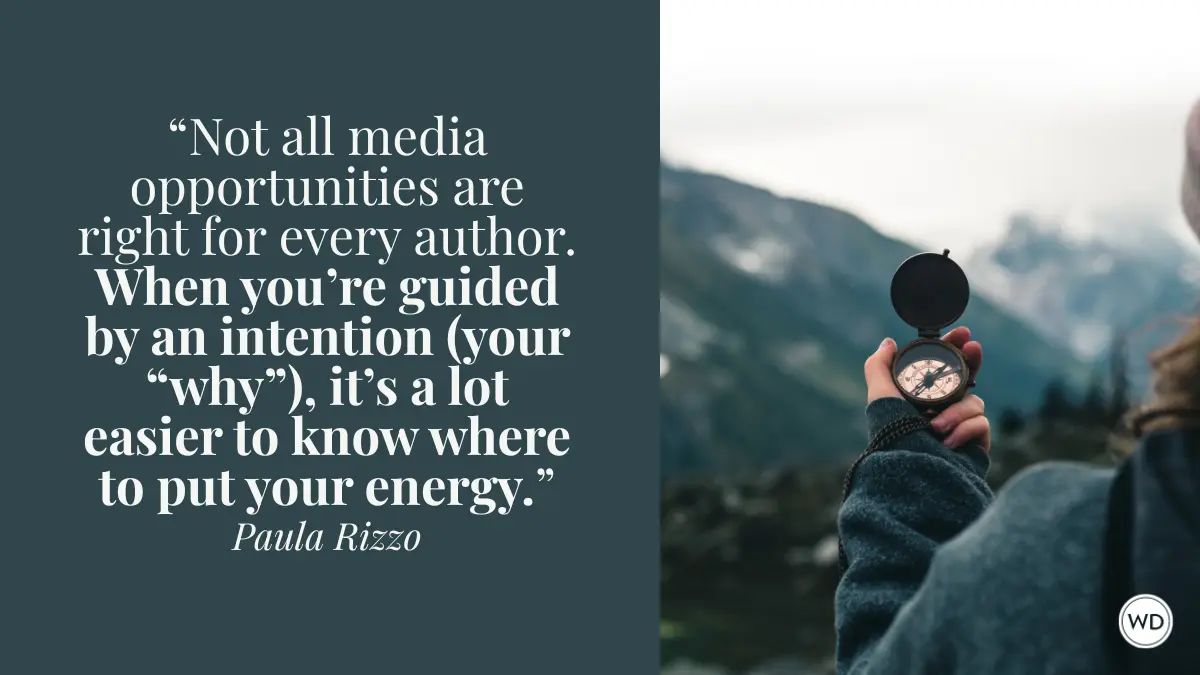
The ultimate anchor for any promotional campaign is the author’s personal "why." When the publishing market is saturated with conflicting advice, trends, and aggressive tactics, returning to core intentions acts as a reliable navigational compass. Recognizing that every book and every author journey is entirely unique frees writers from the trap of comparison, allowing them to build a sustainable, fulfilling career on their own terms.
Future Outlook: The Sustainable Author Career
As artificial intelligence, shifting social algorithms, and changing consumer habits continue to disrupt the media landscape, the future of author promotion will undoubtedly favor authenticity over volume.
The era of the stressed-out author desperately chasing every fleeting digital trend is giving way to a more grounded, sustainable professional model. Future-proof authors will build resilient, direct-to-reader communities, leaning into specialized media partnerships that foster genuine human connection. By anchoring their promotional efforts in deep self-awareness, rigorous audience alignment, and crystal-clear professional goals, writers can transcend the endless cycle of industry noise—ensuring that their message not only reaches the right ears, but inspires lasting literary success.



Comments
Facebook App ID not configured. Please add it in the Customizer.