
Executive Overview
For the past two decades, the overarching promise of the digital age has been a frictionless existence. From grocery delivery algorithms that anticipate our weekly cravings to streaming platforms designed to eliminate the agony of choice, modern consumer technology exists to smooth away life’s rough edges. Yet, beneath the veneer of seamless efficiency lies a growing, quiet realization: in our relentless pursuit of ease, we may have traded our autonomy, our community, and our financial well-being for mere convenience.
Enter veteran journalist, Nieman Fellow, and seasoned media producer Gabe Bullard. In his upcoming debut nonfiction book, Against Convenience: Embracing Friction in an Age of Endless Ease—scheduled for publication on September 15, 2026, by Hanover Square Press—Bullard mounts a compelling, deeply researched critique of our hyper-optimized reality. Far from a Luddite manifesto, Against Convenience is an investigative examination of how the hidden side effects of modern technological conveniences leave us increasingly isolated, financially strained, and starved of meaningful engagement.
In this comprehensive profile, we explore the origins of Bullard’s literary debut, the arduous yet rewarding multi-year journey from concept to final page proofs under the guidance of literary agent Mark Tavani, and the profound questions the book raises about how we invite technology into our daily lives.
Read Also
Detailed Chronology: From Concept to Publication
The journey of Against Convenience spans more than a decade of professional observation, evolving from disparate journalistic curiosities into a unified, cohesive thesis on modern digital culture.
The Seeds of Observation (2011–2021)
Bullard’s path to writing his debut book was not paved overnight. As a public radio reporter in Kentucky, a digital newsroom leader at National Geographic, and a key launch producer for NPR’s talk show 1A and Here & Now, Bullard spent years documenting societal shifts.
The building blocks of the book took root across different phases of his career:
- The Urban Landscape (Over 10 Years Ago): While reporting on urban development, Bullard first began tracking how shifting technologies were fundamentally altering the architecture and social fabric of modern cities.
- The Streaming Era (6–7 Years Ago): As he deepened his focus on media criticism—culminating in his tech column for Harvard University’s Nieman Reports and co-founding the television criticism magazine Together, Alone—Bullard noticed a systemic shift in how entertainment consumption fractured shared cultural experiences.
- The News Ecosystem (Approx. 15 Years Ago): Early insights regarding the commodification and rapid-fire delivery of digital information began forming in his notebooks a decade and a half prior to publication.
For a long time, these varied observations sat in notebooks and digital files, operating as standalone critiques. It was only when Bullard began interrogating these phenomena through the singular lens of "convenience" that the disparate threads snapped into place, forming the structural backbone of a book-length manuscript.
Pitch to Page Proofs (2024–2026)
Once the conceptual framework crystallized, the physical journey of bringing Against Convenience to life moved swiftly. Represented by literary agent Mark Tavani, Bullard secured a deal with Hanover Square Press. The elapsed time between pitching the book to the publisher and reviewing the final page proofs spanned a little over two years.
For a first-time book author, the traditional publishing landscape presented a steep learning curve. Bullard credits his editorial team and agent with steering him through the labyrinth of strict deadlines, structural revisions, and the intricacies of the modern publishing schedule.
One of the most valuable lessons Bullard learned during the process involved timing. Writing about technology presents a unique paradox: an author must grapple with timely, fast-moving topics without risking obsolescence by the time the book hits shelves. Navigating this meant learning precisely when macro-level adjustments—such as shifting the focus of an entire section—could be executed most painlessly during the editing lifecycle.
Supporting Context & Metrics: The Cost of Endless Ease
To understand the urgency of Bullard’s thesis, one must examine the broader socio-economic and psychological data surrounding modern technological consumption.
The Loneliness Epidemic and Digital Isolation
Public health authorities, including the U.S. Surgeon General, have increasingly classified loneliness as a public health crisis comparable to smoking 15 cigarettes a day. Bullard’s work directly intersects with this data, examining how automated services—from self-checkouts and food delivery apps to algorithmic dating and remote work infrastructure—systematically strip away the micro-interactions that weave the fabric of community life.
When every physical errand is outsourced to an unseen gig worker via an app, the incidental human contact that combats social isolation vanishes. The "friction" of leaving the house, interacting with a local merchant, or negotiating physical space with neighbors is engineered out of existence, leaving behind an atomized consumer base vulnerable to chronic isolation.
The Financial Toll of Convenience Culture
While technology markets convenience as a time-saving mechanism, it frequently functions as a wealth extraction model. Subscription models, convenience fees, dynamic pricing algorithms, and micro-transactions quietly drain household budgets. By removing the physical friction of handling cash or calculating the cumulative cost of single-use digital services, consumers spend significantly more. Against Convenience interrogates this dynamic, asking whether the minutes saved are truly worth the mounting financial and psychic costs.
Official Statements & Insights from Gabe Bullard
In an exclusive discussion, Gabe Bullard opened up about the personal frustrations that sparked the project, the unexpected challenges of long-form revision, and his ultimate hopes for his readers.
On the Impetus for the Book
"Frustration with technology, mostly," Bullard explains when asked what prompted him to write Against Convenience. "For years, I’d been noticing how my relationship to my phone and other devices was getting to be fairly toxic. I also saw how certain services were cutting down on social time and not making me any happier."
On the Surprises of the Writing Process
Even with two decades of professional journalism under his belt—spanning public radio, digital magazines, and literary analysis that earned American University’s Kessler-Roberts Award—writing a book-length manuscript presented distinct hurdles.
"I was surprised at how I could read a line 15 or 20 times while writing and revising, then not realize until weeks later that I should change it," Bullard notes. "There was a better way to say what I was trying to say, it was restating something I’d already said, or I just didn’t like the phrasing."
This realization struck forcefully after he submitted his first draft to his editor. Following cycles of revision and consultations with early readers, Bullard found himself waking up each morning with new ideas for minor turns of phrase. Maintaining a dedicated revision log became his primary survival tool during the polishing phase.
On the Value of Journalistic Research
Drawing from his extensive background in investigative and cultural reporting, Bullard emphasizes that the core joy—and professional obligation—of journalism is the mandate to become a temporary expert.
"Research! I come from a journalism background, and part of the joy of journalism is that you have this opportunity—or obligation, really—to become an expert in a topic you’re writing about," he reflects. "That happens through research—reading books, articles, academic papers, and by talking to a lot of people. It might sometimes seem like you have more research than you need, but the process of learning as much as you can will inform your writing in a lot of unexpected ways."
Future Outlook: Reclaiming Intentionality in a Digital Age
As society marches toward an automated horizon dominated by generative artificial intelligence, ambient computing, and hyper-personalized algorithms, the questions raised by Against Convenience are more pressing than ever.
Bullard’s book does not advocate for a wholesale rejection of technology. Instead, it serves as an invitation to deliberate recalibration. As he notes:
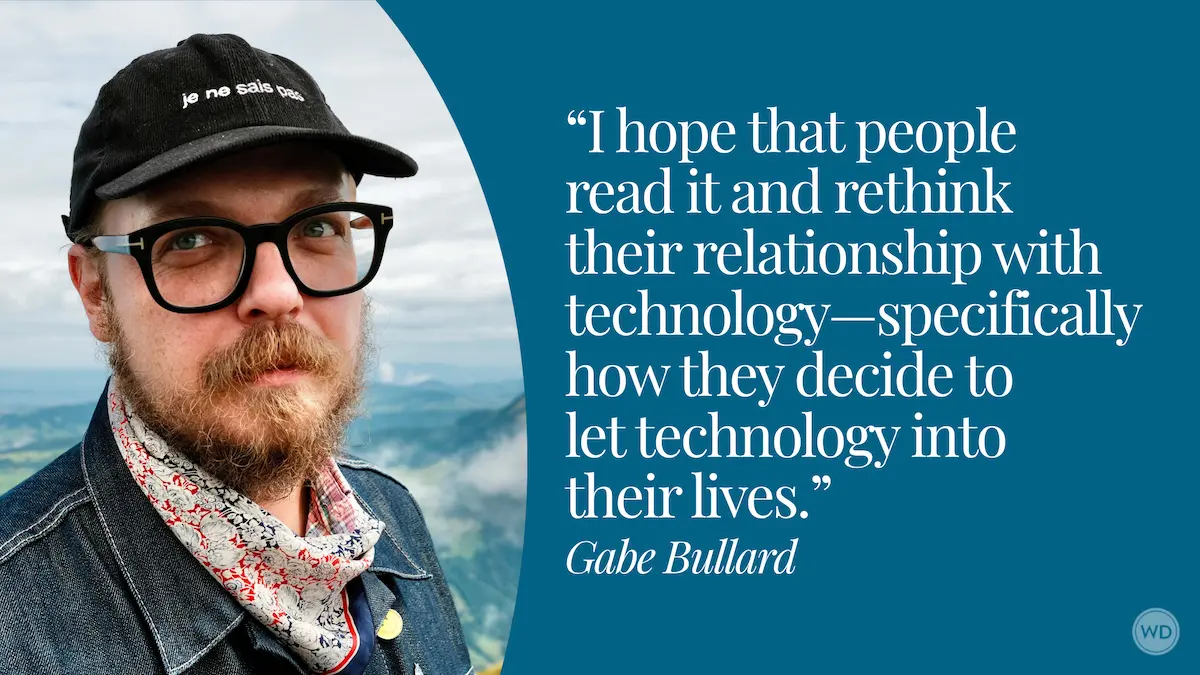
"I hope that people read it and rethink their relationship with technology—specifically how they decide to let technology into their lives. I try not to be overly prescriptive or didactic in the book, because everyone has a different relationship to the technology in their lives. But that relationship can be better—more productive, more inclined to make us happy—if we’re more deliberate about what we use and how we use it."
When Against Convenience: Embracing Friction in an Age of Endless Ease arrives in bookstores on September 15, 2026, it will arrive not a moment too soon. In a cultural moment addicted to the dopamine hit of the path of least resistance, Bullard’s work provides a vital intellectual counterweight, reminding us that growth, connection, and human satisfaction are often forged precisely where life resists our shortcuts.
To stay updated on Gabe Bullard’s writing and upcoming book release, you can follow him on Instagram and Bluesky, or read his ongoing technology columns in Nieman Reports.





Comments
Facebook App ID not configured. Please add it in the Customizer.