
Executive Overview
In a dramatic shift that underscores the complex friction of the British parliamentary system, the House of Commons has decisively rejected an assisted suicide bill, voting it down 286 to 270. The decisive defeat—driven by a combination of shifting political consciences, intense parliamentary scrutiny, and profound institutional checks and balances—marks a major turning point in one of the most fraught ethical debates of modern British history.
The legislation, which initially breezed through the House of Commons in June 2025 with a comfortable 55-vote majority, was undone by a two-year process of forensic legislative analysis. Spearheaded initially by a wave of public relations goodwill and broad appeals to "bodily autonomy," the bill steadily collapsed under the weight of its own unintended consequences. As experts, medical authorities, and members of the House of Lords exposed the perilous intersections of the proposal with Britain’s strained health and social care systems, support eroded.
Crucially, not a single Member of Parliament switched their vote in favor of the bill during the final reading. Instead, a wave of abstentions and high-profile conversions—typified by MPs like Janet Daby, who suffered deep personal misgivings after voting "aye" the first time—flipped the arithmetic. The ultimate defeat of the legislation stands as a testament to the resilience of Britain’s bicameral system, proving that slow-moving institutional deliberation can successfully arrest legislation born of emotional haste.
Read Also
Detailed Chronology: The Two-Year Battle Over the Right to Die
June 2025: The Initial Surge and the Seeds of Doubt
The legislative journey began in June 2025, when 312 MPs—including Lewisham East MP Janet Daby—voted to pass an assisted suicide bill through its initial stages in the House of Commons. Buoyed by expensive public relations campaigns and framing focused squarely on personal autonomy, the bill sailed past its first major hurdle, leaving a 291-strong opposition trailing in its wake.
Yet, for Daby and several of her colleagues, the victory immediately curdled into conscience. Plagued by nightmares and troubling reflections, Daby began questioning the permanence of her vote. Her doubts crystallized around personal acquaintances: individuals who, at their lowest and most medically desperate points, might have chosen a state-administered exit, only to later find effective medical treatments and reclaim meaningful lives. The fear that vulnerable citizens would be swallowed up by a streamlined state suicide service before receiving adequate help began to haunt the architects of the bill’s early success.
Late 2025 to Early 2026: The House of Lords Intervenes
Saved from immediate enactment, the bill moved to the House of Lords—an appointed chamber rich with institutional memory and heavy with genuine medical and administrative authority. While conventional political theory often dictates that the unelected Lords should defer to the elected Commons on matters of major social policy, the peers refused to act as a mere rubber stamp.
Over months of meticulous committee hearings, the Lords systematically dismantled the assumptions underpinning the legislation. Testimony from the Royal College of Psychiatrists revealed a terrifying prospect: depressed individuals could access state-assisted suicide without rigorous examination of underlying mental health needs. Coercion experts warned that victims of domestic abuse and psychological terror could be maneuvered into ending their lives. Social welfare advocates pointed out the glaring moral hazard of offering state-assisted death as an alternative to filling the cracks in a deteriorating health and social care system.
Rather than soothing these concerns, proponents of the bill doubled down. Lord Falconer, a prominent figure from the Blair political era and the bill’s chief champion in the Lords, offered answers that alarmed critics. When pressed on whether impoverished citizens might choose assisted death simply due to destitution or a lack of palliative care, Falconer conceded that if they met broad medical criteria, it was "their choice" based on "the way the world is for them." This frank admission shocked neutral observers and stripped the legislation of its progressive veneer, framing it instead as a stark abdication of state responsibility toward the vulnerable.
The Reintroduction and the Gradual Erosion of Support
Emboldened by the Lords’ refusal to pass the bill, and pushed by indignant MPs who viewed the upper house’s resistance as an affront to democracy, the legislation was reintroduced to the Commons. This kicked off a grueling period of parliamentary back-and-forth, public testimony, and ferocious debate.
Over two years of scrutiny, the initial pro-change majority of 55 steadily withered away. Hospices and care homes faced overt threats of closure or defunding from radical proponents of the system; disabled advocates mobilized en masse against societal pressures to economize on care; and the foundational purpose of the National Health Service (NHS) appeared dangerously close to being redefined.
When confronted with the reality of an overstretched NHS administering lethal doses, supporters offered candid, if fatalistic, justifications. Labour MP Jess Phillips openly acknowledged the system’s shortcomings, telling interviewers: "Of course the NHS isn’t in a fit enough state . . . but you cannot stop progress happening."
For a critical mass of parliamentarians, however, this was a form of "progress" Britain could neither afford nor morally justify.
The Final Vote
On the day of the decisive vote, the legislative momentum completely inverted. The bill was defeated 286 to 270. A substantial contingent of MPs who had previously supported the legislation chose to stay away or abstain entirely. A smaller, pivotal group actively switched sides to join the opposition. With zero MPs switching in favor, the final tally delivered a definitive verdict on the limits of state-sanctioned dying.
Supporting Context & Metrics: The Anatomy of a Legislative Reversal
To understand how a bill with a commanding initial majority collapsed, one must examine the shifting metrics of the parliamentary debate and the institutional environment that enabled it.
- The Initial Majority vs. Final Deficit: The legislation started its parliamentary life in June 2025 with a comfortable cushion of 312 votes to 291 (a net pro-bill majority of 21, though early readings reflected broader margins depending on the specific clause votes, peaking at a 55-vote advantage during key procedural motions). By the final reading, this had inverted into a 16-vote deficit (286 to 270) against the bill.
- The Shift in Attendance and Conversions: While floor-crossing in British politics is rare, the invisible shift—manifested through active abstentions and conscious vote-switching—was unprecedented in scope for a social policy bill. MPs like Janet Daby moved from the "Aye" column to the "No" column, while scores of former supporters chose quiet absence over public validation of the regime.
- Institutional Gravity: The bicameral structure proved to be the ultimate safety valve. While the House of Commons operates in an atmosphere of fast-paced partisan urgency and media pressure, the House of Lords provided an insulated forum where specialists—former CEOs of the NHS, leaders of royal medical colleges, and legal scholars—could evaluate downstream consequences without immediate electoral anxiety.
Official Statements & Key Rhetorical Positions
The debate was defined by starkly contrasting philosophies regarding personal autonomy, state duty, and institutional realism.
-
Lord Falconer (Proponent, House of Lords):
Defending the bill against charges that it preyed on the poor and medically underserved, Falconer argued that restrictions could not be imposed simply because society was imperfect:"We have to give everybody this choice on the basis of the way the world is for them."
-
Jess Phillips, MP (Proponent, House of Commons):
Confronted directly with warnings that Britain’s crumbling health and social infrastructure was entirely unsuited to police and protect an assisted dying framework, Phillips embraced the inevitability of the reform regardless of systemic readiness:"Of course the NHS isn’t in a fit enough state . . . but you cannot stop progress happening."
-
Janet Daby, MP for Lewisham East (Converted Opponent):
Reflecting on the psychological and moral toll of her initial vote, Daby’s shift highlighted the central fear of the anti-bill coalition: that state-assisted suicide would act as a trapdoor for society’s most vulnerable before they could access true healing and support. Her personal realization—catalyzed by the memory of friends with severe prognoses who went on to live fulfilling lives—became a symbol of the broader parliamentary awakening.
Future Outlook: What the Defeat Means for Britain
The rejection of the assisted suicide bill leaves profound implications for British politics, healthcare, and constitutional design.
1. A Respite for the Vulnerable and the NHS
By defeating the bill, Parliament has avoided a profound restructuring of the National Health Service. Critics argued that turning medical professionals into facilitators of death would irrevocably damage the foundational trust between doctor and patient—particularly for elderly, disabled, and chronically ill Britons who already feel like financial burdens on a creaking welfare state. The vote ensures that palliative care, rather than expedited dying, remains the state’s primary obligation to the suffering.
2. Vindication for the Bicameral System
The episode serves as a powerful defense of the much-maligned House of Lords. In an era where populist politics frequently disparages unelected institutions, the upper house demonstrated its indispensable utility. Without the granular, expert-led committee work conducted in late 2025 and early 2026, the bill likely would have slipped into law on a wave of unexamined emotional sentiment.
3. A Precedent for Future Social Debates
The defeat establishes a high-water mark for forensic legislative pushback in modern Westminster. It proves that even when popular culture, heavy public relations spending, and initial parliamentary majorities align behind sweeping social changes, sustained, rigorous interrogation can expose fatal flaws and alter the course of national legislation.
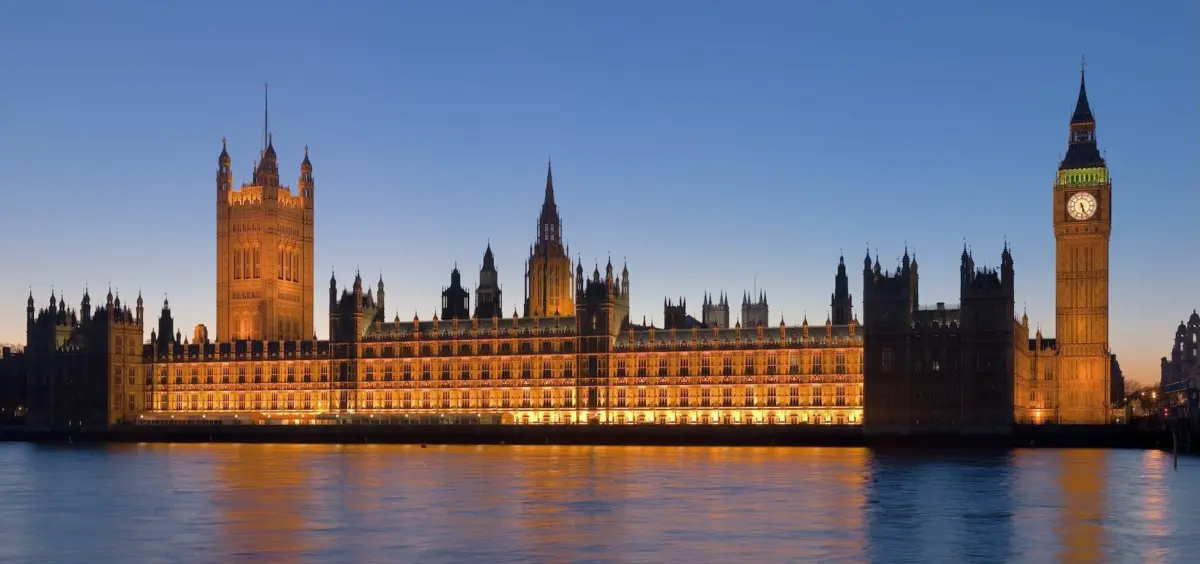
As the physical Palace of Westminster continues to crumble into the Thames—a literal monument to deferred maintenance and structural neglect—the parliamentary machinery housed within its walls has proven that, on rare and critical evenings, it can still rise to the defense of the vulnerable, proving itself worthy of its deep historical inheritance.





Comments
Facebook App ID not configured. Please add it in the Customizer.