
Executive Overview
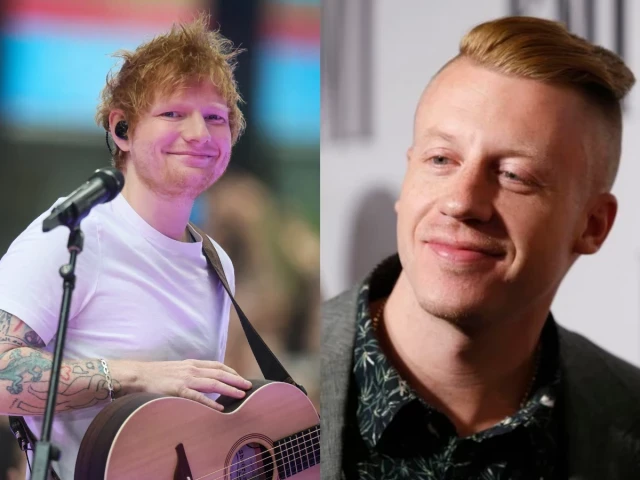
The intersection of global geopolitics and the contemporary entertainment industry has once again resulted in high-profile fallout, as Grammy Award-winning rapper Macklemore has been officially removed from the remaining U.S. dates of Ed Sheeran’s blockbuster Loop Tour. The decision, finalized and announced by the Messina Touring Group (MTG) on Monday, comes in the wake of intense controversy sparked by Macklemore’s outspoken support for Palestine during a stadium performance earlier this month.
The abrupt dismissal highlights the mounting pressures faced by major concert promoters, venue owners, and multinational tour operators as political activism increasingly spills onto mainstream entertainment stages. According to tour organizers, the presence of the rapper—known as much for his vocal political stances as his multi-platinum chart-toppers—created an untenable logistical and security environment. Promoters stated that multiple major venues threatened to cancel shows outright if Macklemore remained on the bill, a move that could have jeopardized the concert experiences of hundreds of thousands of ticket holders and triggered massive financial losses.
This high-profile ouster is not an isolated incident within the music industry, but rather a bellwether for how deeply polarized international conflicts can disrupt commercial touring operations. Macklemore, who has spent years establishing himself as a prominent artistic voice for Palestinian rights—most notably through his 2024 viral protest anthem "Hind’s Hall"—found himself at the center of an immediate, coordinated backlash. The controversy escalated rapidly via pressure campaigns from advocacy groups, ultimatums from stadium operators, and public divisions among fellow music industry elites.
Read Also
As Ed Sheeran’s massive stadium trek presses forward through November, the fallout from this cancellation raises critical questions regarding free expression in the arts, the corporate governance of live entertainment, and the growing financial risks associated with political discourse on world stages. This comprehensive report examines the chronology of the dispute, the economic realities driving the tour promoter’s decision, Macklemore’s history of activism, and the broader cultural implications of merging pop stardom with geopolitical advocacy.
Detailed Chronology: From MetLife Stadium to Tour Dismissal
The sequence of events leading to Macklemore’s removal from the Loop Tour unspooled rapidly over a span of less than two weeks, transforming a routine stadium opening set into a national flashpoint.
The Spark: MetLife Stadium Performances
The controversy crystallized during Macklemore’s opening set at New Jersey’s sprawling MetLife Stadium. Performing before tens of thousands of Ed Sheeran fans, the rapper used his platform to deliver direct commentary on the ongoing Israel-Hamas conflict. Addressing the massive crowd, Macklemore explicitly stated that one of his primary motivations for joining Sheeran’s tour was to utilize major stadium stages to declare “Free Palestine.”
During the set, he also performed his politically charged single "Hind’s Hall"—a track explicitly dedicated to the pro-Palestinian student protests that swept university campuses earlier in the year. While the performance drew cheers from sections of the audience, it immediately triggered shockwaves across digital platforms and set off alarm bells within the tour’s administrative machinery.
The Ultimatum and Corporate Panic
Behind the scenes, the reaction from venue operators and stakeholders was swift and uncompromising. According to statements later shared by Macklemore and corroborated by industry insiders, influential venue ownership groups—most notably the Kraft Group, operators of major sports and entertainment complexes—rallied stadium owners and delivered a hardline ultimatum to Ed Sheeran and his management team.
The message was clear: either Macklemore was removed from the bill, or upcoming stadium dates would be canceled entirely. Promoters faced the daunting prospect of logistical gridlock, breached contracts, and severe financial penalties. The Messina Touring Group was forced to weigh the artistic contributions of an opening act against the operational viability of an entire national tour leg.
The Official Announcement
On Monday, MTG released an official statement confirming that Macklemore would no longer serve as the supporting act for the remainder of the U.S. tour dates. The statement underscored that the decision was driven entirely by venue constraints rather than artistic differences, noting that upcoming hosts simply refused to allow concerts to proceed with the rapper on the lineup.
Macklemore subsequently took to social media, specifically utilizing X (formerly Twitter), to break his silence on the decision. He detailed how Sheeran and his team were placed in an impossible position by venue ownership and corporate stakeholders.
"[Ed] told me that the words ‘Free Palestine’ and the image of the Palestinian flag were…" — Macklemore, detailing the ultimatum delivered to tour organizers by stadium stakeholders.
Supporting Context & Metrics: The Activism and the Backlash
To fully understand the dismissal, one must examine Macklemore’s long-standing trajectory as a political artist and the fierce opposition that his activism has continuously generated.
A History of Outspoken Advocacy
Macklemore, born Benjamin Hammond Haggerty, has transitioned over the past decade from a pop-rap hitmaker ("Thrift Shop," "Can’t Hold Us") into one of the music industry’s most persistent political voices. His willingness to tackle systemic racism, LGBTQ+ rights, and economic inequality has long defined his public brand.
However, his focus on the Israeli-Palestinian conflict represents his most polarizing campaign to date. In 2024, he released "Hind’s Hall," named after Hind Rajab, a six-year-old Palestinian girl killed in Gaza, and honoring the renaming of Hamilton Hall by student protesters at Columbia University. The song became an anthem for anti-war activists globally, garnering millions of streams and cementing his status as a central cultural figure in the pro-Palestinian movement.
The Counter-Mobilization and Petitions
Macklemore’s inclusion on Ed Sheeran’s tour was met with immediate resistance from pro-Israel organizations and advocacy groups as soon as the lineup was announced. Following his remarks at MetLife Stadium, the Israeli-American Council (IAC) launched a formal petition demanding his removal, citing concerns over antisemitism and the divisive nature of his rhetoric.
The pressure campaign quickly expanded beyond localized petitions. The controversy even drew commentary from other pop icons, such as singer Pink, who faced her own wave of social media criticism after resharing a post supporting the decision to drop Macklemore from the tour.
Macklemore’s Defense and Clarifications
In response to the mounting criticism and his eventual dismissal, Macklemore issued statements attempting to draw a distinct line between political critique and bigotry. He argued that opposition to the policies of the Israeli government and condemnation of humanitarian crises should never be conflated with prejudice against Jewish people as an ethnic or religious group.
Furthermore, he asserted on social media that advocating for universal human rights and equal treatment for Palestinians should be a universally accepted humanitarian goal rather than a controversial statement capable of triggering tour cancellations. Despite these clarifications, the corporate entities controlling the infrastructure of American stadium tours chose to prioritize risk mitigation over ideological debate.
Official Statements and Industry Impact
The fallout from Macklemore’s removal has sent ripples across the live music business, prompting statements from promoters, legal observers, and industry analysts.
The Messina Touring Group’s Perspective
In its official communication, MTG framed the decision as a painful economic and logistical necessity. The promoter emphasized that keeping Macklemore on the tour risked cascading cancellations that would have disrupted the plans of hundreds of thousands of fans who purchased tickets primarily to see Ed Sheeran.
+-------------------------------------------------------------------+
|               TOUR PROMOTER DECISION MATRIX                       |
+---------------------------+---------------------------------------+
| Primary Objective         | Ensure uninterrupted tour operations  |
| External Pressure         | Venue ultimatums & stakeholder groups |
| Financial Risk            | Massive cancellations across U.S. leg |
| Result                    | Removal of opening act (Macklemore)   |
+---------------------------+---------------------------------------+
Industry analysts note that modern stadium tours operate on razor-thin margins of coordination involving transport, local municipal permits, stadium security, and corporate sponsorships. A single high-profile controversy can threaten millions of dollars in insured revenue, giving venue operators immense leverage over touring acts.
The Precedent for Live Entertainment
Entertainment lawyers and music business historians have pointed out that while artists have long used the stage for political protest—dating back to the anti-war movements of the 1960s and 1970s—the modern corporate-controlled stadium ecosystem is far less tolerant of friction. Major venues are frequently owned or managed by massive conglomerates, sports franchises, and investment groups that are highly sensitive to public relations crises and state-level political pressures.
By bowing to venue ultimatums, the tour’s management demonstrated that corporate risk management will routinely override artistic freedom when stadium leases and commercial partnerships are put on the line.
Future Outlook: The Road Ahead for the Loop Tour and the Artist
As the dust settles on the immediate controversy, both Ed Sheeran’s tour and Macklemore’s career face distinct trajectories in an increasingly polarized cultural landscape.
Ed Sheeran’s Loop Tour Resumes
Ed Sheeran’s U.S. Loop Tour continues its relentless schedule without missing a beat, though the shadow of the controversy will likely linger. The next major stop is scheduled for September 19 in Philadelphia. To fill the vacancy left by Macklemore, tour organizers have slotted in replacement opening acts: acclaimed singer-songwriter Lukas Graham and emerging artist Aaron Rowe.
Sheeran’s management has largely kept public comments minimal, focusing instead on delivering the remaining performances of the tour, which is slated to run through November 7. Ticket holders in upcoming cities can expect heightened security protocols and intensified media scrutiny surrounding any stage remarks made by supporting acts.
Macklemore’s Path Forward
For Macklemore, being dropped from a major mainstream package tour is unlikely to silence his activism. Given his established independent streak and dedicated fan base, the controversy may even reinforce his credibility within progressive and activist circles. However, the incident serves as a stark warning regarding the commercial limits placed upon mainstream artists who choose to engage in high-stakes geopolitical commentary.
As live entertainment venues become increasingly scrutinized ideological battlegrounds, artists, managers, and promoters will be forced to navigate a treacherous path between freedom of expression and the rigid corporate demands of commercial stadium touring. The removal of Macklemore from Ed Sheeran’s tour will undoubtedly be referenced as a watershed moment in the ongoing collision between modern pop culture and international politics.




Comments
Facebook App ID not configured. Please add it in the Customizer.